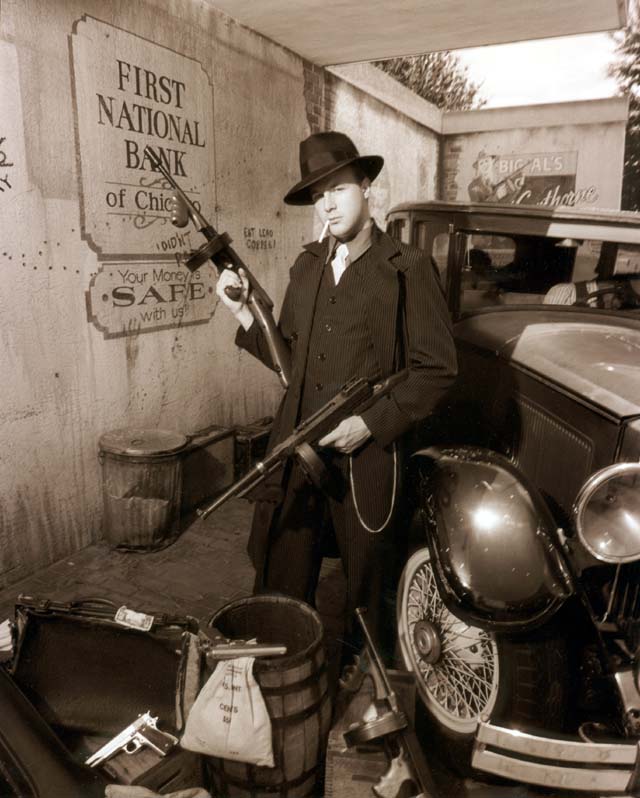
TomDispatch notes the takeover of the research arm of the government's nuclear program by Bechtel. This is an interesting development. The most obvious motivation is major league Pork, but that's just part of the pie.
Privatizing the Apocalypse
By Frida Berrigan
...Started as the super-secret "Project Y" in 1943, the Los Alamos National Laboratory in New Mexico has long been the keystone institution of the American nuclear-weapons producing complex. It was the birthplace of Fat Man and Little Boy, the two nuclear bombs the U.S. dropped on Hiroshima and Nagasaki in August 1945. Last year, the University of California, which has managed the lab for the Department of Energy since its inception, decided to put Los Alamos on the auction block. In December 2005, construction giant Bechtel won a $553 million seven-year management contract to run the sprawling complex, which employs more than 13,000 people and has an estimated $2.2 billion annual budget...
At Los Alamos, the University of California has already been replaced by a "limited liability corporation," says Tyler Przybylek of the Department of Energy's Evaluation Board; and, more generally, the writing is on the containment wall. Nuclear laboratories are no longer to be intellectual institutions devoted to science but part of a corporate-business model where research, design, and ultimately the weapons themselves will become products to be marketed. The new dress code will be suits and ties, not lab coats and safety glasses. Under Bechtel, new management will lead to a "tightly structured organization" that will "drive efficiency," predicts John Browne, who directed the lab at Los Alamos from 1997-2003. "If there is a product the government wants," he concludes, "they will necessarily be focused on that. A lot more money will be at stake."
Los Alamos was the first to go. Now, the management contract for the Lawrence Livermore National Laboratory, is on the auction block as well...
...The California-based construction giant has a long history of big projects, big promises, bigger budgets and even bigger failures.
In Boston, Bechtel was put in charge of the "Big Dig," the reconstruction of Interstate 93 beneath the city. In 1985, the price tag for the project was estimated at about $2.5 billion. Now, it is a whopping $14.6 billion (or $1.8 billion a mile), making it the most expensive stretch of highway in the world. Near San Diego, citizens are still paying the bills for cost over-runs at a nuclear power plant where Bechtel installed one of the reactors backwards.
In 2003, Bechtel took this winning track record to Baghdad, where it blew billions in a string of unfinished projects and unfathomable errors. The company reaped tens of millions of dollars in contracts to repair Iraq's schools, for example, but an independent report found that many of the schools Bechtel claimed to have completely refitted, "haven't been touched," and a number of schools remained "in shambles." One "repaired" school was found by inspectors be overflowing with "unflushed sewage."
Bechtel also has a $1.03 billion contract to oversee important aspects of Iraq's infrastructure reconstruction, including water and sewage. Despite many promises, startling numbers of Iraqi families continue to lack access to clean water, according to information gathered by independent journalist Dahr Jamail. The company made providing potable water to southern Iraq one of its top priorities, promising delivery within the first 60 days of the program. One year later, rising epidemics of water-borne illnesses like cholera, kidney stones and diarrhea pointed to the failure of Bechtel's mission.
Outside of its ill-fated reconstruction contracts in Iraq, Bechtel is not known as a large military contractor, but the company has been quietly moving into the nuclear arena. It helped build a missile-defense site in the South Pacific, runs the Nevada Test Site where the United States once performed hundreds of above-and underground nuclear tests. Bechtel is also the "environmental manager" at the Oak Ridge National Lab, which stores highly-enriched uranium, and is carrying out design work at the Yucca Mountain repository where the plan to store 77,000 tons of nuclear waste has environmentalists and community activists up in arms.
At Washington State's Hanford Waste Treatment Plant, Bechtel is working on technology to turn nuclear waste into glass. But the estimated costs of building the facility to do that have doubled in one year to about $10 billion while the completion date slipped from 2011 to 2017. Members of Congress have proposed that the Nuclear Regulatory Commission take over management of the project from Bechtel because of its cost overruns and delays...
Given this track record, it's hard to make the case that Bechtel assumes the helm at Los Alamos out of an altruistic, even patriotic, desire to impose clean, lean corporate management on a complacent institution long overfed at the public trough. The question remains: Why this urge to privatize the apocalypse?
To answer that question, you have to begin with the post-Cold War quest of the nuclear laboratories for a new identity and raison d'être. The dismantling of the Berlin Wall, the loss of the other superpower as a nuclear twin and target, and an international shift in favor of nuclear disarmament sent Los Alamos and the whole U.S. nuclear complex into existential crisis: Who are we? What is our role? What do we do now that nuclear weapons have no obvious role in a world of, at best, medium-sized military enemies? Throughout the Clinton years, these questions multiplied while the nuclear arsenal remained relatively stable. More recently, with a lot of fancy footwork, a few friends in Congress, and the ear of a White House eager to be known for something other than the Long War on global terrorism, the labs finally came up with a winning solution that has Bechtel and other military contractors seeing dollar signs.
They found their salvation in a few lines of the Nuclear Posture Review, released in January 2002, where the Bush administration asserted: "The need is clear for a revitalized nuclear weapons complex that will be able, if directed, to design, develop, manufacture, and certify new warheads in response to new national requirements; and maintain readiness to resume underground testing if required."
There's gold in that there sentence. During the Cold War, spending on nuclear weapons averaged $4.2 billion a year (in current dollars). Almost two decades after the "nuclear animosity" between the two great superpowers ended, the United States is spending one-and-a-half times the Cold War average on nuclear weapons. In 2001, the weapons-activities budget of the Department of Energy, which oversees the nuclear weapons complex through its "semi-autonomous" National Nuclear Security Administration (NNSA), totaled $5.19 billion; and a "revitalized nuclear weapons complex," ready to "design, develop, manufacture, and certify new warheads," means a more than billion-dollar jump in spending to $6.4 billion by fiscal year 2006...
And that's just the beginning. The NNSA's five-year "National Security Plan" calls for annual increases to reach $7.76 billion by 2009...
Now that's not chump change, but that's likely not the whole story either.
Bechtel leading the nuclear weapons production research arm means the rest of the Company known as the Carlyle Group, the world's largest private equity firm, has an "in" on the ultimate tools for projecting Corporate clout into the world.
If they can manage to avoid any hostile takeovers, that is.
Friday, March 31, 2006


Rumsfeld Goes Gently into the Night?
Thursday, March 30, 2006
The Transformation from Capitalism to Corporate Feudalism
Undermining the ownership society
David Sirota
Wednesday, March 29, 2006
Away from the cameras covering the Enron trial and largely hidden from view on the evening news, a war is being waged over the most basic rights of ownership that undergird our economy.
Most economic conflicts arise between those who own property and those who do not. Management versus labor. Landlords versus tenants. Rich versus poor. But now, the persecution is being directed at owners from those who manage what is owned. It is corporate executives versus stockholders.
Today, trillions of shares of stock are owned by pension funds and 401(k) plans -- that is, owned by millions of workers. Politicians say we need to move toward an "ownership society" -- but, we, the citizens, already own a pretty big share of Corporate America. For years, much of that ownership was passive -- many investors made gains, and didn't ask questions. But since Enron and other corporate scandals damaged the economy, many citizen investors, primarily through their pension and union funds, have tried to exercise their rights to demand reforms at the companies they own -- reforms that would increase companies' bottom line by cracking down on executive abuses.
For instance, the Coca-Cola Company recently agreed to obtain stockholder permission before approving large executive severance packages. Since 2000, three departing Coke executives were given $180 million in severance pay. Though opposed to the new policy, management was forced to accept it, thanks to a shareholder resolution by the International Brotherhood of Teamsters. The union owns shares of the company, and thus has a fiduciary responsibility to help make the company as efficient and profitable as possible. Reining in exorbitant executive pay packages that are draining resources is one way to do that.
Similarly, New York City's public pension funds are demanding that six major firms -- Wal-Mart, Chevron, Southern Company, Union Pacific, AmSouth Bancorporation and Cinergy -- start disclosing political contributions made with company cash. The pension funds own $1 billion of these companies' stock, and the demands follow agreements by other corporations to disclose political expenditures...
In December, the Financial Times reported that major companies are now "hiring shareholder surveillance companies to find out who their shareholders are and which might be likely to cause trouble." As if out of a cloak-and-dagger film, the Financial Times quoted Tim Vaeth, an analyst, as saying, "Companies want to know who owns their stock, what their investors' intentions are and what their voting history is." His firm, Shareholder Intelligence, issued a report fretting that shareholders have "taken critical steps toward increasing their influence in the boardroom."
Following up last month, the Financial Times reported that "Merrill Lynch is poised to become the first investment bank to dedicate a team to advise companies on the growing threat of activist investors." Meanwhile, in an interview with Business Week this month, the U.S. Chamber of Commerce angrily denounced shareholders "who want to have some degree of leverage over companies."
The language is telling. Shareholders -- the actual owners of companies -- are now seen by executives as "threats" who dare to desire "leverage over companies" they own. That is seen as "causing trouble," and thus requiring "surveillance" by company management -- or worse, from America's corrupt government.
Yes, federal and state officials have forcefully backed executives' war on owners. For example, in Congress, Republican and Democratic lawmakers joined hands in 1996 to override President Bill Clinton's veto of the Private Securities and Litigation Reform Act -- a bill limiting shareholders' ability to file lawsuits against executives who are abusing power. As one market analyst noted, the bill "paved the way for corporate chieftains basically to lie without fear of being sued." Last year, a U.S. Senate highway funding bill included language forcing corporate executives to personally certify the accuracy of their companies' tax statements. The provisions were aimed at deterring financial shell games that might put companies in legal jeopardy. But when the final legislation was negotiated behind closed doors, the measures were deleted.
The executive branch is no different. The Securities and Exchange Commission -- the agency whose purpose is to protect shareholders -- got an injection of anti-owner ideology in 2005 when its reformist chairman William Donaldson was forced out. In his place, President Bush appointed Chris Cox, a corporate-lawyer-turned-California-congressman, who authored the Private Securities and Litigation Reform Act. Now, the U.S. Supreme Court is joining in. Last year, justices issued a unanimous ruling making it more difficult for shareholders to win damages when executives deceive them about company finances. Last week, justices interpreted a 1998 law as barring shareholders from bringing class-action suits against company management when management commits stock fraud.
Politicians, of course, claim they want an "ownership society" -- while aggressively helping corporate executives undermine the rights and privileges that make ownership so attractive. They are, in short, helping disenfranchise owners from their property, meaning an even greater chance that citizen investors will be bilked in the future.
David Sirota
Wednesday, March 29, 2006
Away from the cameras covering the Enron trial and largely hidden from view on the evening news, a war is being waged over the most basic rights of ownership that undergird our economy.
Most economic conflicts arise between those who own property and those who do not. Management versus labor. Landlords versus tenants. Rich versus poor. But now, the persecution is being directed at owners from those who manage what is owned. It is corporate executives versus stockholders.
Today, trillions of shares of stock are owned by pension funds and 401(k) plans -- that is, owned by millions of workers. Politicians say we need to move toward an "ownership society" -- but, we, the citizens, already own a pretty big share of Corporate America. For years, much of that ownership was passive -- many investors made gains, and didn't ask questions. But since Enron and other corporate scandals damaged the economy, many citizen investors, primarily through their pension and union funds, have tried to exercise their rights to demand reforms at the companies they own -- reforms that would increase companies' bottom line by cracking down on executive abuses.
For instance, the Coca-Cola Company recently agreed to obtain stockholder permission before approving large executive severance packages. Since 2000, three departing Coke executives were given $180 million in severance pay. Though opposed to the new policy, management was forced to accept it, thanks to a shareholder resolution by the International Brotherhood of Teamsters. The union owns shares of the company, and thus has a fiduciary responsibility to help make the company as efficient and profitable as possible. Reining in exorbitant executive pay packages that are draining resources is one way to do that.
Similarly, New York City's public pension funds are demanding that six major firms -- Wal-Mart, Chevron, Southern Company, Union Pacific, AmSouth Bancorporation and Cinergy -- start disclosing political contributions made with company cash. The pension funds own $1 billion of these companies' stock, and the demands follow agreements by other corporations to disclose political expenditures...
In December, the Financial Times reported that major companies are now "hiring shareholder surveillance companies to find out who their shareholders are and which might be likely to cause trouble." As if out of a cloak-and-dagger film, the Financial Times quoted Tim Vaeth, an analyst, as saying, "Companies want to know who owns their stock, what their investors' intentions are and what their voting history is." His firm, Shareholder Intelligence, issued a report fretting that shareholders have "taken critical steps toward increasing their influence in the boardroom."
Following up last month, the Financial Times reported that "Merrill Lynch is poised to become the first investment bank to dedicate a team to advise companies on the growing threat of activist investors." Meanwhile, in an interview with Business Week this month, the U.S. Chamber of Commerce angrily denounced shareholders "who want to have some degree of leverage over companies."
The language is telling. Shareholders -- the actual owners of companies -- are now seen by executives as "threats" who dare to desire "leverage over companies" they own. That is seen as "causing trouble," and thus requiring "surveillance" by company management -- or worse, from America's corrupt government.
Yes, federal and state officials have forcefully backed executives' war on owners. For example, in Congress, Republican and Democratic lawmakers joined hands in 1996 to override President Bill Clinton's veto of the Private Securities and Litigation Reform Act -- a bill limiting shareholders' ability to file lawsuits against executives who are abusing power. As one market analyst noted, the bill "paved the way for corporate chieftains basically to lie without fear of being sued." Last year, a U.S. Senate highway funding bill included language forcing corporate executives to personally certify the accuracy of their companies' tax statements. The provisions were aimed at deterring financial shell games that might put companies in legal jeopardy. But when the final legislation was negotiated behind closed doors, the measures were deleted.
The executive branch is no different. The Securities and Exchange Commission -- the agency whose purpose is to protect shareholders -- got an injection of anti-owner ideology in 2005 when its reformist chairman William Donaldson was forced out. In his place, President Bush appointed Chris Cox, a corporate-lawyer-turned-California-congressman, who authored the Private Securities and Litigation Reform Act. Now, the U.S. Supreme Court is joining in. Last year, justices issued a unanimous ruling making it more difficult for shareholders to win damages when executives deceive them about company finances. Last week, justices interpreted a 1998 law as barring shareholders from bringing class-action suits against company management when management commits stock fraud.
Politicians, of course, claim they want an "ownership society" -- while aggressively helping corporate executives undermine the rights and privileges that make ownership so attractive. They are, in short, helping disenfranchise owners from their property, meaning an even greater chance that citizen investors will be bilked in the future.
The Downhill Slide From Soldier to Company Man
From Amanda at Think Progress
This week at a conference in Jordan, Blackwater USA vice chairman Cofer Black announced that the private security company is ready to shift from a security role to a more “overt combat role,” essentially becoming an army for hire.
The Bush administration has shown itself more than willing to call in Blackwater in place of U.S. troops.
In Aug. 2003, the Bush administration awarded Blackwater a $21.3 million contract to guard then Amb. Paul Bremer. The average senior special operations officer makes $50,000 a year from the U.S. government. Employees in private security firms in Iraq often make more than $1,000 a day from government contracts. This arrangement is “depleting the ranks of the special forces,” luring them into lucrative private jobs.
Some military analysts initially welcomed the administration’s private security arrangement with Blackwater because it allowed “regular military troops to concentrate on fighting.” But Blackwater’s new proposal would shift some of the fighting to the private sector, further diminishing the role of the all-volunteer army.
But they aren't mercenaries, oh no.
And they're only the people whose atrocities ticked off the insurgency in the first place.
Something tells me this is going to get much worse.
Something else tells me it's supposed to get much worse.
This week at a conference in Jordan, Blackwater USA vice chairman Cofer Black announced that the private security company is ready to shift from a security role to a more “overt combat role,” essentially becoming an army for hire.
The Bush administration has shown itself more than willing to call in Blackwater in place of U.S. troops.
In Aug. 2003, the Bush administration awarded Blackwater a $21.3 million contract to guard then Amb. Paul Bremer. The average senior special operations officer makes $50,000 a year from the U.S. government. Employees in private security firms in Iraq often make more than $1,000 a day from government contracts. This arrangement is “depleting the ranks of the special forces,” luring them into lucrative private jobs.
Some military analysts initially welcomed the administration’s private security arrangement with Blackwater because it allowed “regular military troops to concentrate on fighting.” But Blackwater’s new proposal would shift some of the fighting to the private sector, further diminishing the role of the all-volunteer army.
But they aren't mercenaries, oh no.
And they're only the people whose atrocities ticked off the insurgency in the first place.
Something tells me this is going to get much worse.
Something else tells me it's supposed to get much worse.
So when do we invade?
BERLIN (AFX) - Saudi Arabia is working secretly on a nuclear program, with help from Pakistani experts, the German magazine Cicero reported in its latest edition, citing Western security sources.
It says that during the Haj pilgrimages to Mecca in 2003 through 2005, Pakistani scientists posed as pilgrims to come to Saudi Arabia.
Between October 2004 and January 2005, some of them slipped off from pilgrimages, sometimes for up to three weeks, the report quoted German security expert Udo Ulfkotte as saying.
According to Western security services, the magazine added, Saudi scientists have been working since the mid-1990s in Pakistan, a nuclear power since 1998.
Cicero, which will appear on newstands tomorrow, also quoted a US military analyst, John Pike, as saying that Saudi bar codes can be found on half of Pakistan's nuclear weapons 'because it is Saudi Arabia which ultimately co-financed the Pakistani atomic nuclear program.'
The magazine also said satellite images indicate that Saudi Arabia has set up a program in Al-Sulaiyil, south of Riyadh, a secret underground city and dozens of underground silos for missiles.
According to some Western security services, long-range Ghauri-type missiles of Pakistani-origin are housed inside the silos.
To be used only for goodness and niceness and jihad, I'm sure.
Thanks to Holden for the heads up.
It says that during the Haj pilgrimages to Mecca in 2003 through 2005, Pakistani scientists posed as pilgrims to come to Saudi Arabia.
Between October 2004 and January 2005, some of them slipped off from pilgrimages, sometimes for up to three weeks, the report quoted German security expert Udo Ulfkotte as saying.
According to Western security services, the magazine added, Saudi scientists have been working since the mid-1990s in Pakistan, a nuclear power since 1998.
Cicero, which will appear on newstands tomorrow, also quoted a US military analyst, John Pike, as saying that Saudi bar codes can be found on half of Pakistan's nuclear weapons 'because it is Saudi Arabia which ultimately co-financed the Pakistani atomic nuclear program.'
The magazine also said satellite images indicate that Saudi Arabia has set up a program in Al-Sulaiyil, south of Riyadh, a secret underground city and dozens of underground silos for missiles.
According to some Western security services, long-range Ghauri-type missiles of Pakistani-origin are housed inside the silos.
To be used only for goodness and niceness and jihad, I'm sure.
Thanks to Holden for the heads up.
Wednesday, March 29, 2006
Let It Happen or Made It Happen?
For awhile, I've been "they let it happen".
After reviewing this and watching this video (take the whole hour and a half- it's free, and be patient), no more.
There are traitors running loose and running this country, make no mistake.
Made it happen.
After reviewing this and watching this video (take the whole hour and a half- it's free, and be patient), no more.
There are traitors running loose and running this country, make no mistake.
Made it happen.
Tuesday, March 28, 2006
"We Don' Need No Steenkin' WMDs..."
The New York Pravda delivers the most damning report of Dear Leader's excellent adventure to date:
...behind closed doors, the president was certain that war was inevitable. During a private two-hour meeting in the Oval Office on Jan. 31, 2003, he made clear to Prime Minister Tony Blair of Britain that he was determined to invade Iraq without the second resolution, or even if international arms inspectors failed to find unconventional weapons...
Although the United States and Britain aggressively sought a second United Nations resolution against Iraq — which they failed to obtain — the president said repeatedly that he did not believe he needed it for an invasion.
Stamped "extremely sensitive," the five-page memorandum, which was circulated among a handful of Mr. Blair's most senior aides, had not been made public. Several highlights were first published in January in the book "Lawless World," which was written by a British lawyer and international law professor, Philippe Sands...
The memo indicates the two leaders envisioned a quick victory and a transition to a new Iraqi government that would be complicated, but manageable. Mr. Bush predicted that it was "unlikely there would be internecine warfare between the different religious and ethnic groups." Mr. Blair agreed with that assessment.
The memo also shows that the president and the prime minister acknowledged that no unconventional weapons had been found inside Iraq. Faced with the possibility of not finding any before the planned invasion, Mr. Bush talked about several ways to provoke a confrontation, including a proposal to paint a United States surveillance plane in the colors of the United Nations in hopes of drawing fire, or assassinating Mr. Hussein...
It's a rare occasion when a Northwoods Operation sees the the light of day. The AfterDowningStreet.org people have the memo here. In the end, of course, no Gulf of Tonkin incident was needed.
Although the information is being leaked now to the main$tream media, whether it will be sustained or will be simply the harbinger of a new disinformation campaign is questionable.
Not to mention the motivations of the leakers, or the willingness of the Company to see it in press.
Perhaps what we're seeing is a good spanking of some members of the Group by the Board, or of Junior by Poppy, or an oversized tiff between Poppy and Babs.
Perhaps the Company professionals don't like to see amateurs working for the Mayberry Machiavellis getting their dirty fingers on the tapestry of global hegemony.
Perhaps it's the old bait and switch in a Congressional $election year.
...behind closed doors, the president was certain that war was inevitable. During a private two-hour meeting in the Oval Office on Jan. 31, 2003, he made clear to Prime Minister Tony Blair of Britain that he was determined to invade Iraq without the second resolution, or even if international arms inspectors failed to find unconventional weapons...
Although the United States and Britain aggressively sought a second United Nations resolution against Iraq — which they failed to obtain — the president said repeatedly that he did not believe he needed it for an invasion.
Stamped "extremely sensitive," the five-page memorandum, which was circulated among a handful of Mr. Blair's most senior aides, had not been made public. Several highlights were first published in January in the book "Lawless World," which was written by a British lawyer and international law professor, Philippe Sands...
The memo indicates the two leaders envisioned a quick victory and a transition to a new Iraqi government that would be complicated, but manageable. Mr. Bush predicted that it was "unlikely there would be internecine warfare between the different religious and ethnic groups." Mr. Blair agreed with that assessment.
The memo also shows that the president and the prime minister acknowledged that no unconventional weapons had been found inside Iraq. Faced with the possibility of not finding any before the planned invasion, Mr. Bush talked about several ways to provoke a confrontation, including a proposal to paint a United States surveillance plane in the colors of the United Nations in hopes of drawing fire, or assassinating Mr. Hussein...
It's a rare occasion when a Northwoods Operation sees the the light of day. The AfterDowningStreet.org people have the memo here. In the end, of course, no Gulf of Tonkin incident was needed.
Although the information is being leaked now to the main$tream media, whether it will be sustained or will be simply the harbinger of a new disinformation campaign is questionable.
Not to mention the motivations of the leakers, or the willingness of the Company to see it in press.
Perhaps what we're seeing is a good spanking of some members of the Group by the Board, or of Junior by Poppy, or an oversized tiff between Poppy and Babs.
Perhaps the Company professionals don't like to see amateurs working for the Mayberry Machiavellis getting their dirty fingers on the tapestry of global hegemony.
Perhaps it's the old bait and switch in a Congressional $election year.
Monday, March 27, 2006
They Can Only Kill You
The farmer links to Out of Fear, a review of four documentaries about Argentina's recent brush with fascism.
If you don't know this story, you should, if you want to keep your freedom here at home.
If you don't know this story, you should, if you want to keep your freedom here at home.
More Atrocity, Right on Time
BAGHDAD (Reuters) - Iraq's ruling parties demanded U.S. forces cede control of security on Monday as the government launched an inquiry into a raid on a Shi'ite mosque that ministers said saw "cold blooded" killings by U.S.-led troops.
As Shi'ite militiamen fulminated over Sunday's deaths of 20 or more people in Baghdad, an al Qaeda-led group said it carried out one of the bloodiest Sunni insurgent attacks in months. A suicide bomber killed 40 Iraqi army recruits in northern Iraq.
The Iraqi Defence Ministry said a suicide bomber wearing an explosive belt also wounded 30 at a base near Mosul.
After a confusing 24 hours following the bloodshed around Baghdad's Mustafa mosque in which the U.S. military restricted itself to issuing one somewhat opaque statement, U.S. officials distanced themselves from the operation, calling it Iraqi-led.
Officials in Baghdad appeared to wait for input from Washington, underlining the sensitivity of the confrontation between Iraq's Iranian-linked Shi'ite Islamist leaders and the U.S. forces at a time when Washington is pressing them to forge a unity government with minority Sunnis to avert civil war.
A day later, three broad versions of the events that led to the deaths of some 20 -- or possibly more -- people persisted.
Iraq's security minister accused U.S. and Iraqi forces of killing 37 unarmed civilians in the mosque after tying them up.
Residents and police, who put the death toll among the troops' opponents at around 20, spoke of a fierce battle between the soldiers and gunmen from the Mehdi Army militia of Shi'ite cleric Moqtada al-Sadr, whose followers ran the mosque.
And U.S. officials, finally confirming they were describing the same incident, stuck by a statement saying Iraqi special forces, advised by U.S. troops, killed 16 "insurgents" who fired on them first. They also insisted no troops entered any mosque and had freed an Iraqi being held prisoner...
It looks like Darth Rumsfeld's excellent strategery is working just like Black Spot planned.
Given all the newvictimsinsurgents they're about to create right here at home, it looks like those new guest worker camps will get plenty of use.
As Shi'ite militiamen fulminated over Sunday's deaths of 20 or more people in Baghdad, an al Qaeda-led group said it carried out one of the bloodiest Sunni insurgent attacks in months. A suicide bomber killed 40 Iraqi army recruits in northern Iraq.
The Iraqi Defence Ministry said a suicide bomber wearing an explosive belt also wounded 30 at a base near Mosul.
After a confusing 24 hours following the bloodshed around Baghdad's Mustafa mosque in which the U.S. military restricted itself to issuing one somewhat opaque statement, U.S. officials distanced themselves from the operation, calling it Iraqi-led.
Officials in Baghdad appeared to wait for input from Washington, underlining the sensitivity of the confrontation between Iraq's Iranian-linked Shi'ite Islamist leaders and the U.S. forces at a time when Washington is pressing them to forge a unity government with minority Sunnis to avert civil war.
A day later, three broad versions of the events that led to the deaths of some 20 -- or possibly more -- people persisted.
Iraq's security minister accused U.S. and Iraqi forces of killing 37 unarmed civilians in the mosque after tying them up.
Residents and police, who put the death toll among the troops' opponents at around 20, spoke of a fierce battle between the soldiers and gunmen from the Mehdi Army militia of Shi'ite cleric Moqtada al-Sadr, whose followers ran the mosque.
And U.S. officials, finally confirming they were describing the same incident, stuck by a statement saying Iraqi special forces, advised by U.S. troops, killed 16 "insurgents" who fired on them first. They also insisted no troops entered any mosque and had freed an Iraqi being held prisoner...
It looks like Darth Rumsfeld's excellent strategery is working just like Black Spot planned.
Given all the new
"...a self-perpetuating justification..."
from Incompetent Design
By William Rivers Pitt
t r u t h o u t | Perspective
Monday 27 March 2006
... I am going to find a china shop somewhere in the city and walk in with a free-swinging baseball bat. My goal, which will be clearly stated, will be to improve upon the place. I will spend the next three years meticulously destroying everything I see inside, from the cash registers to the display cases to the nice Royal Albert tea sets in the corner. Along the way, I will batter the brains out of any poor sod unfortunate enough to get in my way. When I am done, I will claim with as much self-righteousness as I can muster that none of the mess is my responsibility. I will then, of course, refuse to leave.
Hey, if the president can do it, it must be legal, right? Unfortunately, the difference between my china shop analogy and what the Bush administration is doing in Iraq is that I won't get anything out of it except an arrest record and a chance to enjoy my state's municipal accommodations. Bush and crew are reaping far better benefits from the mayhem they have caused.
Here's the deal, in case anyone is wondering: none of this, not one bit of it, can be or should be chalked up to "incompetence" on the part of Bush or anyone else within his administration. This was not a mishandled situation. Bush and the boys have gotten exactly, precisely what they wanted out of Iraq, and are now looking forward to fobbing it off on the next poor dupe who staggers into the Oval Office. They got what they came for, and have quit.
Consider the facts. For two elections in a row, 2002 and 2004, the GOP was able to successfully demagogue the rafters off the roof about supporting the troops and being patriotic, placing anyone who questioned the merits of the invasion squarely into the category of "traitor." Meanwhile, military contractors with umbilical ties to the administration have cashed in to the tune of hundreds of billions of dollars.
The same goes for the petroleum industries; did you know there are gas lines today in oil-rich Iraq? It's true. The oil infrastructure is fine; indeed, it is the most well-guarded point of pressure in Iraq. There are gas lines because companies like Halliburton are not pumping the oil. They are sitting on it, keeping it as a nice little nest egg.
One would think this administration would be worried about the violence and chaos in Iraq. They aren't, because the violence has become the justification for "staying the course." Bush will mouth platitudes about bring democracy to the region, but that is merely the billboard. What he and his friends from the Project for the New American Century wanted in the first place, and what they have now, is a permanent military presence over there. There was never any consideration of a timetable for withdrawal, because there was never any intention to withdraw. The violence today is a self-perpetuating justification, a perfect circle lubricated by blood, oil and currency...
Pitt seems to disagree with his title. By his own estimate, given what Dear Leader really wants, he's quite competent indeed.
By William Rivers Pitt
t r u t h o u t | Perspective
Monday 27 March 2006
... I am going to find a china shop somewhere in the city and walk in with a free-swinging baseball bat. My goal, which will be clearly stated, will be to improve upon the place. I will spend the next three years meticulously destroying everything I see inside, from the cash registers to the display cases to the nice Royal Albert tea sets in the corner. Along the way, I will batter the brains out of any poor sod unfortunate enough to get in my way. When I am done, I will claim with as much self-righteousness as I can muster that none of the mess is my responsibility. I will then, of course, refuse to leave.
Hey, if the president can do it, it must be legal, right? Unfortunately, the difference between my china shop analogy and what the Bush administration is doing in Iraq is that I won't get anything out of it except an arrest record and a chance to enjoy my state's municipal accommodations. Bush and crew are reaping far better benefits from the mayhem they have caused.
Here's the deal, in case anyone is wondering: none of this, not one bit of it, can be or should be chalked up to "incompetence" on the part of Bush or anyone else within his administration. This was not a mishandled situation. Bush and the boys have gotten exactly, precisely what they wanted out of Iraq, and are now looking forward to fobbing it off on the next poor dupe who staggers into the Oval Office. They got what they came for, and have quit.
Consider the facts. For two elections in a row, 2002 and 2004, the GOP was able to successfully demagogue the rafters off the roof about supporting the troops and being patriotic, placing anyone who questioned the merits of the invasion squarely into the category of "traitor." Meanwhile, military contractors with umbilical ties to the administration have cashed in to the tune of hundreds of billions of dollars.
The same goes for the petroleum industries; did you know there are gas lines today in oil-rich Iraq? It's true. The oil infrastructure is fine; indeed, it is the most well-guarded point of pressure in Iraq. There are gas lines because companies like Halliburton are not pumping the oil. They are sitting on it, keeping it as a nice little nest egg.
One would think this administration would be worried about the violence and chaos in Iraq. They aren't, because the violence has become the justification for "staying the course." Bush will mouth platitudes about bring democracy to the region, but that is merely the billboard. What he and his friends from the Project for the New American Century wanted in the first place, and what they have now, is a permanent military presence over there. There was never any consideration of a timetable for withdrawal, because there was never any intention to withdraw. The violence today is a self-perpetuating justification, a perfect circle lubricated by blood, oil and currency...
Pitt seems to disagree with his title. By his own estimate, given what Dear Leader really wants, he's quite competent indeed.
Sunday, March 26, 2006
The Evolution of the NeoCon into Neo-Confederate
More from the Los Angeles Pravda:
More Than 500,000 Rally in L.A. for Immigrants' Rights
By Teresa Watanabe and Anna Gorman, Times Staff Writer
2:51 PM PST, March 25, 2006
Joining what some are calling the nation's largest mobilization of immigrants ever, hundreds of thousands of people boisterously marched in downtown Los Angeles Saturday to protest federal legislation that would crack down on undocumented immigrants, penalize those who help them and build a security wall on the U.S. southern border. Spirited crowds representing labor, religious groups, civil-rights advocates and ordinary immigrants stretched over 26 blocks of downtown Los Angeles from Adams Blvd. along Spring Street and Broadway to City Hall, tooting kazoos, waving American flags and chanting "Si se puede!" (Yes we can!). The crowd, estimated by police at more than 500.000, represented one of the largest protest marches in Los Angeles history, surpassing Vietnam War demonstrations and the 70,000 who rallied downtown against Proposition 187, a 1994 state initiative that denied public benefits to undocumented migrants...
Saturday's rally, spurred by anger over legislation passed by the U.S. House of Representatives last December, was part of what many say is an unprecedented effort to organize immigrants and their supporters across the nation. The U.S. Senate Judiciary Committee is to take up efforts Monday to complete work on a comprehensive immigration reform proposal. Unlike the House bill, which beefed up border security and toughened immigration laws, the Senate committee's version is expected to include a guest worker program and a path to legalization for the nation's 10 to 12 million undocumented immigrants...
Throughout the afternoon, protesters heard speakers demand a path toward legalization and denounce HR 4437, which would tighten border enforcement and crack down on employers who hire undocumented workers...
If by "tightened border enforcement" you mean an iron curtain between America and Mexico and "crack down" you mean turn the undocumented- and everyone who helps them- into felons, why, yes, that.
Mr. Sensenbrenner is a piece of work. This is the same clown of a Representative that wanted to abolish the 22nd Amendment and make Bu$hie preznit for life. That wanted to subject the Katrina victims to more stringent bankruptcy laws. The same intellect that wanted everyone to carry a national ID- with all their information on a single chip. The same charitable individual who wanted to draft every man, woman, and child into the War on Drugs- and make a felony if you didn't co-operate.
The man's a republican from Wisconsin, but he might as well be a Dixiecrat.
This tool of a Wrethuglican is definitely playing a Neo-Confederate race card:
...Hispanics are immigrating in large numbers now into the Southeast, or I should say the former Confederate states, excepting Texas and Southern Florida. It isn't something largely confined to the Southwest and major urban centers outside the South. This is where the base of the Republican party is. There has developed a reaction against this immigration in these areas. The Neo-Confederate movement and a lot of other movements have taken up this issue...
These reactionary elements and others see immigration as an issue to take control of conservatism in the South, if not the nation...
Suddenly the Republican party is going to have to try to get votes from two groups that will be increasingly at odds with each other. Also, what happens to Hispanics in Alabama will get back to Hispanics in California.
Hispanic immigrants didn't grow up as minorities and don't have the habits of deference or accomodations to prejudice. They may be poor or disadvantaged materially, but they don't have internalized anti-Hispanic values.
They will have no inclination to accommodate themselves to a subordinated role, and no prior history of accomodation to subordination. They will challenge anti-Hispanic tactics and efforts in the Southeast, not give in to them. They will not have religious leaders saying that some anti-Hispanic measure is okay.
Of course, illegal immigration in America is caused by the same forces that cause massive unemployment in Detroit.
The Corporate States of America want slaves, not workers earning a real wage.
But here's the rub: without real wages, there's no real consumption. No real consumption is deadly for big business. Correction: for consumer-based big business. The Carlyle boys will be happy as long as there's a strongman somewhere who wants what they sell.
More Than 500,000 Rally in L.A. for Immigrants' Rights
By Teresa Watanabe and Anna Gorman, Times Staff Writer
2:51 PM PST, March 25, 2006
Joining what some are calling the nation's largest mobilization of immigrants ever, hundreds of thousands of people boisterously marched in downtown Los Angeles Saturday to protest federal legislation that would crack down on undocumented immigrants, penalize those who help them and build a security wall on the U.S. southern border. Spirited crowds representing labor, religious groups, civil-rights advocates and ordinary immigrants stretched over 26 blocks of downtown Los Angeles from Adams Blvd. along Spring Street and Broadway to City Hall, tooting kazoos, waving American flags and chanting "Si se puede!" (Yes we can!). The crowd, estimated by police at more than 500.000, represented one of the largest protest marches in Los Angeles history, surpassing Vietnam War demonstrations and the 70,000 who rallied downtown against Proposition 187, a 1994 state initiative that denied public benefits to undocumented migrants...
Saturday's rally, spurred by anger over legislation passed by the U.S. House of Representatives last December, was part of what many say is an unprecedented effort to organize immigrants and their supporters across the nation. The U.S. Senate Judiciary Committee is to take up efforts Monday to complete work on a comprehensive immigration reform proposal. Unlike the House bill, which beefed up border security and toughened immigration laws, the Senate committee's version is expected to include a guest worker program and a path to legalization for the nation's 10 to 12 million undocumented immigrants...
Throughout the afternoon, protesters heard speakers demand a path toward legalization and denounce HR 4437, which would tighten border enforcement and crack down on employers who hire undocumented workers...
If by "tightened border enforcement" you mean an iron curtain between America and Mexico and "crack down" you mean turn the undocumented- and everyone who helps them- into felons, why, yes, that.
Mr. Sensenbrenner is a piece of work. This is the same clown of a Representative that wanted to abolish the 22nd Amendment and make Bu$hie preznit for life. That wanted to subject the Katrina victims to more stringent bankruptcy laws. The same intellect that wanted everyone to carry a national ID- with all their information on a single chip. The same charitable individual who wanted to draft every man, woman, and child into the War on Drugs- and make a felony if you didn't co-operate.
The man's a republican from Wisconsin, but he might as well be a Dixiecrat.
This tool of a Wrethuglican is definitely playing a Neo-Confederate race card:
...Hispanics are immigrating in large numbers now into the Southeast, or I should say the former Confederate states, excepting Texas and Southern Florida. It isn't something largely confined to the Southwest and major urban centers outside the South. This is where the base of the Republican party is. There has developed a reaction against this immigration in these areas. The Neo-Confederate movement and a lot of other movements have taken up this issue...
These reactionary elements and others see immigration as an issue to take control of conservatism in the South, if not the nation...
Suddenly the Republican party is going to have to try to get votes from two groups that will be increasingly at odds with each other. Also, what happens to Hispanics in Alabama will get back to Hispanics in California.
Hispanic immigrants didn't grow up as minorities and don't have the habits of deference or accomodations to prejudice. They may be poor or disadvantaged materially, but they don't have internalized anti-Hispanic values.
They will have no inclination to accommodate themselves to a subordinated role, and no prior history of accomodation to subordination. They will challenge anti-Hispanic tactics and efforts in the Southeast, not give in to them. They will not have religious leaders saying that some anti-Hispanic measure is okay.
Of course, illegal immigration in America is caused by the same forces that cause massive unemployment in Detroit.
The Corporate States of America want slaves, not workers earning a real wage.
But here's the rub: without real wages, there's no real consumption. No real consumption is deadly for big business. Correction: for consumer-based big business. The Carlyle boys will be happy as long as there's a strongman somewhere who wants what they sell.
Ownership Society
Cookie Jill at skippy's place points to an LA Pravda article:
The national group that oversees organ transplants placed UCI Medical Center on probation Thursday after a scandal that closed its liver transplant program, but stopped short of a more severe penalty that could have closed other transplant services.
This marks just the second time the United Network for Organ Sharing, a federal contractor, has publicly disciplined a transplant center. The probationary status means the UC Irvine hospital, in Orange, will be allowed to continue performing kidney and pancreas transplants but will have to ensure that it has adequate staffing and meets patient care standards. The probation will last until UCI can show it has corrected its problems...
UCI closed its liver transplant program in November after The Times reported that 32 patients had died awaiting operations in 2004 and 2005, when the hospital turned down scores of organs, sometimes because no surgeon was available. Though the hospital often cited poor organ quality or patient unsuitability in the rejections, most of the organs were successfully transplanted into patients at other facilities...
St. Vincent conceded in September that its doctors had improperly arranged for a liver transplant to a Saudi national, bypassing 50 people on a regional waiting list whose conditions were more dire, and that hospital staff falsified records to hide the arrangement. The Saudi Embassy paid $339,000 for the operation, as much as 30% more than the hospital would have received from the government or insurance.
Delmonico said the lying made the St. Vincent case worse than UCI's. "It was the intentional falsification of data which was so egregious about St. Vincent," he said.
Separately, the organ network board took steps to increase its oversight in light of the problems at St. Vincent and UCI. It will require transplant centers to notify the network within five days when regulators take action that threatens the programs' ability to perform transplants. UCI had not notified the network of a highly critical inspection last summer by federal regulators...
But free enterprise makes the American medical system the best in the world!
For those that can afford it- and obviously being able to meet the market rate with a little raise helps, too.
The national group that oversees organ transplants placed UCI Medical Center on probation Thursday after a scandal that closed its liver transplant program, but stopped short of a more severe penalty that could have closed other transplant services.
This marks just the second time the United Network for Organ Sharing, a federal contractor, has publicly disciplined a transplant center. The probationary status means the UC Irvine hospital, in Orange, will be allowed to continue performing kidney and pancreas transplants but will have to ensure that it has adequate staffing and meets patient care standards. The probation will last until UCI can show it has corrected its problems...
UCI closed its liver transplant program in November after The Times reported that 32 patients had died awaiting operations in 2004 and 2005, when the hospital turned down scores of organs, sometimes because no surgeon was available. Though the hospital often cited poor organ quality or patient unsuitability in the rejections, most of the organs were successfully transplanted into patients at other facilities...
St. Vincent conceded in September that its doctors had improperly arranged for a liver transplant to a Saudi national, bypassing 50 people on a regional waiting list whose conditions were more dire, and that hospital staff falsified records to hide the arrangement. The Saudi Embassy paid $339,000 for the operation, as much as 30% more than the hospital would have received from the government or insurance.
Delmonico said the lying made the St. Vincent case worse than UCI's. "It was the intentional falsification of data which was so egregious about St. Vincent," he said.
Separately, the organ network board took steps to increase its oversight in light of the problems at St. Vincent and UCI. It will require transplant centers to notify the network within five days when regulators take action that threatens the programs' ability to perform transplants. UCI had not notified the network of a highly critical inspection last summer by federal regulators...
But free enterprise makes the American medical system the best in the world!
For those that can afford it- and obviously being able to meet the market rate with a little raise helps, too.
Intelligence Startups and Hostile Takeovers
When your own spies insist on giving you the reality-based facts and telling you where to go if you don't heed them, while you're more interested in spinning your own reality, Dear Leader knows you just hire your own intelligence.
But if you're going to set up a super duper secret private spy company, it helps if you simply circumvent the patriots, work with the proper Company connections, listen to Poppy for strategery, and don't work closely with a Boss Hawg on the cheap.
SAN DIEGO - Rep. Randy "Duke" Cunningham tearfully resigned Monday after pleading guilty to bribery and admitting he took $2.4 million to steer defense contracts to conspirators using his leadership position on a congressional subcommittee...
Authorities said Cunningham secured defense contracts worth tens of millions of dollars for the people who bribed him. The case grew from an investigation into the sale of his home in wealthy Del Mar to a wide-ranging conspiracy involving payments in cash, vacations and antiques from unidentified conspirators...
The case began when authorities started investigating whether Cunningham and his wife, Nancy, used proceeds from the $1,675,000 sale of their home in Del Mar to defense contractor Mitchell Wade to buy a $2.55 million mansion in ritzy Rancho Santa Fe. Wade put the Del Mar house back on the market and sold it after nearly a year for $975,000 - a loss of $700,000...
In addition to buying Cunningham's home at an inflated price, Wade let him live rent-free on his yacht, the Duke Stir, at the Capital Yacht Club. His firm, MZM Inc., donated generously to Cunningham's campaigns. Prosecutors did not specify if those allegations were part of Cunningham's guilty pleas.
Around the same time, MZM was winning valuable defense contracts, and Cunningham sat on the House Appropriations subcommittee that controls defense dollars. In 2004 the little-known company based in Washington, D.C., tripled its revenue and nearly quadrupled its staff, according to information posted on the company Web site before Wade stepped down as president and the company was sold to a private equity firm.
An associate of Wade, Brent Wilkes, president of a Poway company called ADCS Inc., also gave Cunningham campaign cash and favors. Wilkes reportedly flew Cunningham in a corporate jet to go hunting in Idaho and golfing in Hawaii, and a charitable foundation Wilkes started spent $36,000 hosting a black tie "Tribute to Heroes" gala in 2002 that feted Cunningham with a trophy naming him a hero.
ADCS, which specializes into turning paper records into digital files, has received tens of millions in Defense Department contracts since the late 1990s.
Laura Rozen's been following this story closely from the beginning.
This is a rough game. Every player, from the Pentagon on down has a hand in it. They're all competing with each other as much as anyone else for hegemony.
When you don't play the game by the unwritten rules, getting voted off the island often lands you in jail.
If you're still breathing, that is.
But if you're going to set up a super duper secret private spy company, it helps if you simply circumvent the patriots, work with the proper Company connections, listen to Poppy for strategery, and don't work closely with a Boss Hawg on the cheap.
SAN DIEGO - Rep. Randy "Duke" Cunningham tearfully resigned Monday after pleading guilty to bribery and admitting he took $2.4 million to steer defense contracts to conspirators using his leadership position on a congressional subcommittee...
Authorities said Cunningham secured defense contracts worth tens of millions of dollars for the people who bribed him. The case grew from an investigation into the sale of his home in wealthy Del Mar to a wide-ranging conspiracy involving payments in cash, vacations and antiques from unidentified conspirators...
The case began when authorities started investigating whether Cunningham and his wife, Nancy, used proceeds from the $1,675,000 sale of their home in Del Mar to defense contractor Mitchell Wade to buy a $2.55 million mansion in ritzy Rancho Santa Fe. Wade put the Del Mar house back on the market and sold it after nearly a year for $975,000 - a loss of $700,000...
In addition to buying Cunningham's home at an inflated price, Wade let him live rent-free on his yacht, the Duke Stir, at the Capital Yacht Club. His firm, MZM Inc., donated generously to Cunningham's campaigns. Prosecutors did not specify if those allegations were part of Cunningham's guilty pleas.
Around the same time, MZM was winning valuable defense contracts, and Cunningham sat on the House Appropriations subcommittee that controls defense dollars. In 2004 the little-known company based in Washington, D.C., tripled its revenue and nearly quadrupled its staff, according to information posted on the company Web site before Wade stepped down as president and the company was sold to a private equity firm.
An associate of Wade, Brent Wilkes, president of a Poway company called ADCS Inc., also gave Cunningham campaign cash and favors. Wilkes reportedly flew Cunningham in a corporate jet to go hunting in Idaho and golfing in Hawaii, and a charitable foundation Wilkes started spent $36,000 hosting a black tie "Tribute to Heroes" gala in 2002 that feted Cunningham with a trophy naming him a hero.
ADCS, which specializes into turning paper records into digital files, has received tens of millions in Defense Department contracts since the late 1990s.
Laura Rozen's been following this story closely from the beginning.
This is a rough game. Every player, from the Pentagon on down has a hand in it. They're all competing with each other as much as anyone else for hegemony.
When you don't play the game by the unwritten rules, getting voted off the island often lands you in jail.
If you're still breathing, that is.
Saturday, March 25, 2006
The Impeachable Offense
Running out of gas and making money off of it.
Richard Heinberg, via James Wolcott, via Avedon Carol... "it's not exactly reassuring to know that, as with 9/11 and Katrina, George Bush has been told - and doesn't seem to care."
Dear Leader isn't alone with his policymakers in this, on any given day 95% of our elected representatives in Congress are acting the same way. Democrats or Republicans, they're both exploiting their constituents, and the difference is only one of degree. Admittedly, if you're scimming a few hundred billion out of the Treasury, you're a bigger crook than if you're only scamming Uncle Sugar for a few hundred thousand here and there.
But if you're creating a system that enables Halliburton and DynCorp to set up global feudal empires so your casino buddies can operate legally in the desert without hassle, guess what? That's aiding and abetting all the crimes all down the line.
Richard Heinberg, via James Wolcott, via Avedon Carol... "it's not exactly reassuring to know that, as with 9/11 and Katrina, George Bush has been told - and doesn't seem to care."
Dear Leader isn't alone with his policymakers in this, on any given day 95% of our elected representatives in Congress are acting the same way. Democrats or Republicans, they're both exploiting their constituents, and the difference is only one of degree. Admittedly, if you're scimming a few hundred billion out of the Treasury, you're a bigger crook than if you're only scamming Uncle Sugar for a few hundred thousand here and there.
But if you're creating a system that enables Halliburton and DynCorp to set up global feudal empires so your casino buddies can operate legally in the desert without hassle, guess what? That's aiding and abetting all the crimes all down the line.
Thursday, March 23, 2006
High Tide in the Lower South
The latest issue of Science has a series of leading articles devoted to climate change. Some of them are dramatic enough to get the attention of the main$tream media. This, today:
WASHINGTON - The Earth is already shaking beneath melting ice as rising temperatures threaten to shrink polar glaciers and raise sea levels around the world.
By the end of this century, Arctic readings could rise to levels not seen in 130,000 years — when the oceans were several feet higher than now, according to new research appearing in Friday's issue of the journal Science.
Even now, giant glaciers lubricated by melting water have begun causing earthquakes in Greenland as they lurch toward the ocean, other scientists report in the same journal.
In principal findings:
• At the current warming rate, Earth's temperature by 2100 will probably be at least 4 degrees warmer than now, with the Arctic at least as warm as it was 130,000 years ago, reports a research group led by Jonathan T. Overpeck of the University of Arizona.
• Computer models indicate that warming could raise the average temperature in parts of Greenland above freezing for multiple months and could have a substantial impact on melting of the polar ice sheets, says a second paper by researchers led by Bette Otto-Bliesner of the National Center for Atmospheric Research. Melting could raise sea level one to three feet over the next 100 to 150 years, she said.
• And a team led by Goeran Ekstroem of Harvard University reported an increase in "glacial earthquakes," which occur when giant rivers of ice — some as big as Manhattan — move suddenly as meltwater eases their path. That sudden movement causes the ground to tremble.
Otto-Bliesner and Overpeck wrote separate papers and also worked together, studying ancient climate and whether modern computer climate models correctly reflect those earlier times. That allowed them to use the models to look at possible future conditions. The researchers studied ancient coral reefs, ice cores and other natural climate records.
"Although the focus of our work is polar, the implications are global," Otto-Bliesner said. "These ice sheets have melted before and sea levels rose. The warmth needed isn't that much above present conditions."
According to the studies, increases in greenhouse gases in the atmosphere over the next century could raise Arctic temperatures as much as 5 to 8 degrees...
So what do our coastlines look like if Greenland melts? Let's look at what's being said.

Going under? Global warming might trigger a 6-meter rise in sea level that would inundate coasts (red) worldwide. Southern Louisiana (left) and South Florida (lower right) would be hard hit.
CREDIT: IMAGE BY JEREMY L. WEISS AND JONATHAN T. OVERPECK/UNIVERSITY OF ARIZONA
...If the recent behavior of ice sheets is not fully understood, their future is largely a blank. "We don't actually understand what's driving these higher velocities," says Dowdeswell, so "it's difficult to say whether that's going to continue," or spread.
At the moment, ice loss from Greenland and West Antarctica combined is contributing less than half of the ongoing 2-millimetersper- year rise in sea level; the rest comes from melting mountain glaciers and the simple thermal expansion of seawater. If the recent surge of ice to the sea continues, sea level might reach something like half a meter higher by 2100. That would be substantial but not catastrophic. To produce really scary rises really fast (say, a meter or more per century), the air and water will have to continue warming in the right--or wrong--places. The temperature rise will have to spread northward around Greenland and in the south around West Antarctica, reaching the big ice shelves where most of that ice sheet drains. And glacier accelerations triggered near the sea must propagate far inland to draw on the bulk of an ice sheet.
Faced with uncertainty about the present, paleoclimatologists look to the past. About 130,000 years ago, between the last two ice ages, the poles may have warmed as much as they will with only a couple of degrees of global warming. But sea level was considerably higher then, something like 3 to 4 meters higher...
The Figure above is using the model discussed in this paper. The paper is reproduced here in part for educational purposes only:
Paleoclimatic Evidence for Future Ice-Sheet Instability and Rapid Sea-Level Rise
Jonathan T. Overpeck, Bette L. Otto-Bliesner, Gifford H. Miller, Daniel R. Muhs, Richard B. Alley, Jeffrey T. Kiehl
Science 24 March 2006:
Vol. 311. no. 5768, pp. 1747 - 1750
DOI: 10.1126/science.1115159
Sea-level rise from melting of polar ice sheets is one of the largest potential threats of future climate change. Polar warming by the year 2100 may reach levels similar to those of 130,000 to 127,000 years ago that were associated with sea levels several meters above modern levels; both the Greenland Ice Sheet and portions of the Antarctic Ice Sheet may be vulnerable. The record of past ice-sheet melting indicates that the rate of future melting and related sea-level rise could be faster than widely thought...

Simulated climate for each of four time periods, from left to right: present day (Modern), 130,000 years ago (anomalies from present day, {Delta} LIG), 2100 A.D. (the time atmosphere reaches three times preindustrial CO2 levels, climate anomalies from present day, {Delta} AD 2100), and 2130 A.D. (four times preindustrial CO2 levels, climate anomalies from present day, {Delta} AD 2130). Shown for each time period are peak summertime (July to August and January to February means) surface air temperature and annual snow depth. Note significant warming at north polar latitudes and the lack of any summer warming over Antarctic at 130,000 years ago. LIG stands for the Latest InterGlacial period, from about 150,000 to 116,000 years ago.
These rates of change assume the current linear accumulations of carbon dioxide in the atmosphere. If some other models are right, and the rate of change itself accelerates, the sea level rises will be faster than these models predict. They might also be more extensive, because the warmer it gets, the more likely other reservoirs of deep ice will melt. Continental Antarctica is the size of North America, and with an ice shield two miles high.
The other parameter to bear in mind is that this won't be a steady creep of the sea level upwards. Land loss will occur one hurricane at a time. Given last year, and the way this year's begun, I'd say we have a stormy ride ahead.
WASHINGTON - The Earth is already shaking beneath melting ice as rising temperatures threaten to shrink polar glaciers and raise sea levels around the world.
By the end of this century, Arctic readings could rise to levels not seen in 130,000 years — when the oceans were several feet higher than now, according to new research appearing in Friday's issue of the journal Science.
Even now, giant glaciers lubricated by melting water have begun causing earthquakes in Greenland as they lurch toward the ocean, other scientists report in the same journal.
In principal findings:
• At the current warming rate, Earth's temperature by 2100 will probably be at least 4 degrees warmer than now, with the Arctic at least as warm as it was 130,000 years ago, reports a research group led by Jonathan T. Overpeck of the University of Arizona.
• Computer models indicate that warming could raise the average temperature in parts of Greenland above freezing for multiple months and could have a substantial impact on melting of the polar ice sheets, says a second paper by researchers led by Bette Otto-Bliesner of the National Center for Atmospheric Research. Melting could raise sea level one to three feet over the next 100 to 150 years, she said.
• And a team led by Goeran Ekstroem of Harvard University reported an increase in "glacial earthquakes," which occur when giant rivers of ice — some as big as Manhattan — move suddenly as meltwater eases their path. That sudden movement causes the ground to tremble.
Otto-Bliesner and Overpeck wrote separate papers and also worked together, studying ancient climate and whether modern computer climate models correctly reflect those earlier times. That allowed them to use the models to look at possible future conditions. The researchers studied ancient coral reefs, ice cores and other natural climate records.
"Although the focus of our work is polar, the implications are global," Otto-Bliesner said. "These ice sheets have melted before and sea levels rose. The warmth needed isn't that much above present conditions."
According to the studies, increases in greenhouse gases in the atmosphere over the next century could raise Arctic temperatures as much as 5 to 8 degrees...
So what do our coastlines look like if Greenland melts? Let's look at what's being said.
Going under? Global warming might trigger a 6-meter rise in sea level that would inundate coasts (red) worldwide. Southern Louisiana (left) and South Florida (lower right) would be hard hit.
CREDIT: IMAGE BY JEREMY L. WEISS AND JONATHAN T. OVERPECK/UNIVERSITY OF ARIZONA
...If the recent behavior of ice sheets is not fully understood, their future is largely a blank. "We don't actually understand what's driving these higher velocities," says Dowdeswell, so "it's difficult to say whether that's going to continue," or spread.
At the moment, ice loss from Greenland and West Antarctica combined is contributing less than half of the ongoing 2-millimetersper- year rise in sea level; the rest comes from melting mountain glaciers and the simple thermal expansion of seawater. If the recent surge of ice to the sea continues, sea level might reach something like half a meter higher by 2100. That would be substantial but not catastrophic. To produce really scary rises really fast (say, a meter or more per century), the air and water will have to continue warming in the right--or wrong--places. The temperature rise will have to spread northward around Greenland and in the south around West Antarctica, reaching the big ice shelves where most of that ice sheet drains. And glacier accelerations triggered near the sea must propagate far inland to draw on the bulk of an ice sheet.
Faced with uncertainty about the present, paleoclimatologists look to the past. About 130,000 years ago, between the last two ice ages, the poles may have warmed as much as they will with only a couple of degrees of global warming. But sea level was considerably higher then, something like 3 to 4 meters higher...
The Figure above is using the model discussed in this paper. The paper is reproduced here in part for educational purposes only:
Paleoclimatic Evidence for Future Ice-Sheet Instability and Rapid Sea-Level Rise
Jonathan T. Overpeck, Bette L. Otto-Bliesner, Gifford H. Miller, Daniel R. Muhs, Richard B. Alley, Jeffrey T. Kiehl
Science 24 March 2006:
Vol. 311. no. 5768, pp. 1747 - 1750
DOI: 10.1126/science.1115159
Sea-level rise from melting of polar ice sheets is one of the largest potential threats of future climate change. Polar warming by the year 2100 may reach levels similar to those of 130,000 to 127,000 years ago that were associated with sea levels several meters above modern levels; both the Greenland Ice Sheet and portions of the Antarctic Ice Sheet may be vulnerable. The record of past ice-sheet melting indicates that the rate of future melting and related sea-level rise could be faster than widely thought...
Simulated climate for each of four time periods, from left to right: present day (Modern), 130,000 years ago (anomalies from present day, {Delta} LIG), 2100 A.D. (the time atmosphere reaches three times preindustrial CO2 levels, climate anomalies from present day, {Delta} AD 2100), and 2130 A.D. (four times preindustrial CO2 levels, climate anomalies from present day, {Delta} AD 2130). Shown for each time period are peak summertime (July to August and January to February means) surface air temperature and annual snow depth. Note significant warming at north polar latitudes and the lack of any summer warming over Antarctic at 130,000 years ago. LIG stands for the Latest InterGlacial period, from about 150,000 to 116,000 years ago.
These rates of change assume the current linear accumulations of carbon dioxide in the atmosphere. If some other models are right, and the rate of change itself accelerates, the sea level rises will be faster than these models predict. They might also be more extensive, because the warmer it gets, the more likely other reservoirs of deep ice will melt. Continental Antarctica is the size of North America, and with an ice shield two miles high.
The other parameter to bear in mind is that this won't be a steady creep of the sea level upwards. Land loss will occur one hurricane at a time. Given last year, and the way this year's begun, I'd say we have a stormy ride ahead.
Rewriting History One Press Conference at a Time
...but isn't that what cheerleading C-average history majors from Yale do?
So there you have it.
There's so much water under the bridge at this point. But the president just won't stop lying about the immediate exigencies of his decision to go to war. Here's how he described it this morning in an exchange with Helen Thomas ...
"I also saw a threat in Iraq. I was hoping to solve this problem diplomatically. That's why I went to the Security Council; that's why it was important to pass 1441, which was unanimously passed. And the world said, disarm, disclose, or face serious consequences ... and therefore, we worked with the world, we worked to make sure that Saddam Hussein heard the message of the world. And when he chose to deny inspectors, when he chose not to disclose, then I had the difficult decision to make to remove him. And we did, and the world is safer for it."
Of course, that's not what happened. We were there. We remember. It wasn't a century ago. We got the resolution passed. Saddam called our bluff and allowed the inspectors in. President Bush pressed ahead with the invasion.
His lies are so blatant that I must constantly check myself so as not to assume that he is simply delusional or has blocked out whole chains of events from the past.
For those who are interested, here's the complete exchange ...
So there you have it.
There's so much water under the bridge at this point. But the president just won't stop lying about the immediate exigencies of his decision to go to war. Here's how he described it this morning in an exchange with Helen Thomas ...
"I also saw a threat in Iraq. I was hoping to solve this problem diplomatically. That's why I went to the Security Council; that's why it was important to pass 1441, which was unanimously passed. And the world said, disarm, disclose, or face serious consequences ... and therefore, we worked with the world, we worked to make sure that Saddam Hussein heard the message of the world. And when he chose to deny inspectors, when he chose not to disclose, then I had the difficult decision to make to remove him. And we did, and the world is safer for it."
Of course, that's not what happened. We were there. We remember. It wasn't a century ago. We got the resolution passed. Saddam called our bluff and allowed the inspectors in. President Bush pressed ahead with the invasion.
His lies are so blatant that I must constantly check myself so as not to assume that he is simply delusional or has blocked out whole chains of events from the past.
For those who are interested, here's the complete exchange ...
Wednesday, March 22, 2006
Malpractice from Dr. Frist a.k.a. "Quicksilver Cat"
Top Republican so-called leaders—Senate Majority Leader Bill Frist (R-TN) and House Speaker Dennis Hastert (R-IL)—recently sold the future of our children to Big Pharma for a paltry $4 bucks a pop. That’s the additional cost to produce a safe vaccine, a vaccine minus the mercury-based preservative thimerosal. Mercury is a deadly neurotoxin that has long been known to cause serious learning disabilities, autism, and death.
According to the California Public Schools Autism Prevalence Report for the School Years 1992-2003, the increase in autism prevalence is systemic across the entire United States “and should be an urgent public health concern…The disease frequency of autism now surpasses that of all types of cancer combined.” The report notes a 1,086% cumulative growth rate of autism over the period, with a 23% average annual growth rate.
A recent study published in the Spring 2006 volume of the peer-reviewed Journal of American Physicians and Surgeons shows that the rate of neurodevelopmental disorders in children has decreased following the removal of thimerosal from most American childhood vaccines. However, only about a third of the 11 million children vaccinated for influenza this year will receive mercury-free vaccines.
At the end of last year, President Bush signed the Public Readiness and Emergency Preparedness Act (PREPA), granting blanket immunity to pharmaceutical companies for vaccine-induced injuries. The measure is a carte blanche for industry, allowing it even to reintroduce mercury in vaccines that are currently clean, and under the behest of the World Health Organization, to continue shipping tainted vaccine to the “developing world.”
The federal government has known enough to stop the use of mercury in vaccines for more than a decade. Industry has known of the dangers of thimerosal since at least 1991.[1] But using the preservative made the sale of vaccines more profitable. In fact, the Centers for Disease Control (CDC) has at times seemed just as concerned about these profits as the companies themselves! Cynics have noted the “revolving door” between industry and government that seems to alter the perspective of both.
In 1999, the Centers for Disease Control (CDC) recommended “the elimination of thimerosal as soon as possible.” In 2002, the CDC stated in a press release “all vaccines will be thimerosal-free as soon as adequate supplies are available.” Yet, last year the CDC rejected an offer from vaccine manufacturer Sanofi Pasteur to supply the entire country with safe influenza vaccines, claiming “no preference for thimerosal-free vaccines.”
In order to secure passage of the PREPA, Senators Frist and Ted Stevens (R-AL), joined by Speaker Hastert, lied to members of the House-Senate conference committee. These leaders assured their colleagues that immunity for the drug companies would not go forward as a tack-on to the 2006 defense appropriations bill. There were no public hearings on the immunity provision, no debate, no disclosure of the proceedings of the committee. Press coverage was virtually non-existent.
According to one prominent member of the committee, Rep. David Obey (D-WI), “This legislation was unilaterally and arrogantly inserted into the bill after the conference committee was over. It was a blatant power play by the two most powerful men in Congress.” Sen. Ted Kennedy called the legislation “a blank check for the industry.” Sen. Robert Byrd, dean of Senate rules, opined: “There should be no dispute. The processes leading to passage of this bill [was] an absolute travesty.”[2]
The PREPA is unconstitutional. It removes the right to due process and judicial review for persons injured by vaccines, thus granting a virtual license to kill. Under the new law, companies making vaccines can be grossly negligent and act with wanton recklessness and still escape liability as long as they can show that their misconduct wasn’t “willful.”
It is impossible to conceive of a lower standard for the drug companies or a higher burden of proof for injured parties.
The refusal of the drug companies to take responsibility for the products they produce, and the complicity of the highest levels of government in their refusal, will diminish public confidence in the entire US vaccination program. Already, thousands of mothers, including our own daughters, are fearful of having their infants and toddlers vaccinated.
The PREPA also preempts the laws of states like California that have passed legislation outlawing mercury in childhood vaccinations. Meanwhile, the CDC continues to send its henchmen into state legislatures around the country in attempts to abort measures banning mercury...
[1] Dr. Thomas Verstraeten, Vaccine Safety Datalink study for the CDC, 1999. Other major studies include: the 1994 study done by the Institute of Medicine that concluded “the balance of evidence is consistent with a causal relationship between mercury and autism;” the 1996 study by the National Childhood Encephalopathy Institute demonstrating that “a significant association exists between mercury and autism;” and the 2006 study by Dr. Mark R. Geier and David A. Geier published in the Journal of American Physicians and Surgeons that noted a marked decrease in reported cases of autism with the removal of thimerosal from most childhood vaccinations after 2003.
[2] “Hastert, Frist said to rig bill for drug firms,” Bill Theobald, The Tennessean, Feb. 9, 2006
Thimerosal (ethylmercurithiosalicylic acid) is an organo-mercurial compound that dissociates as 49.6% ethyl mercury by weight, and thiosalicylic acid.
FDA publications acknowledge the neurotoxicity of organomercurials but go to great lengths to assure that thimerosal is safe.
I question that this is unbiased. The compound spontaneously breaks down to produce a mole of ethyl mercury per mole thimerosal. This compound is unsafe to give anyone although it's still used in many vaccines.
According to the California Public Schools Autism Prevalence Report for the School Years 1992-2003, the increase in autism prevalence is systemic across the entire United States “and should be an urgent public health concern…The disease frequency of autism now surpasses that of all types of cancer combined.” The report notes a 1,086% cumulative growth rate of autism over the period, with a 23% average annual growth rate.
A recent study published in the Spring 2006 volume of the peer-reviewed Journal of American Physicians and Surgeons shows that the rate of neurodevelopmental disorders in children has decreased following the removal of thimerosal from most American childhood vaccines. However, only about a third of the 11 million children vaccinated for influenza this year will receive mercury-free vaccines.
At the end of last year, President Bush signed the Public Readiness and Emergency Preparedness Act (PREPA), granting blanket immunity to pharmaceutical companies for vaccine-induced injuries. The measure is a carte blanche for industry, allowing it even to reintroduce mercury in vaccines that are currently clean, and under the behest of the World Health Organization, to continue shipping tainted vaccine to the “developing world.”
The federal government has known enough to stop the use of mercury in vaccines for more than a decade. Industry has known of the dangers of thimerosal since at least 1991.[1] But using the preservative made the sale of vaccines more profitable. In fact, the Centers for Disease Control (CDC) has at times seemed just as concerned about these profits as the companies themselves! Cynics have noted the “revolving door” between industry and government that seems to alter the perspective of both.
In 1999, the Centers for Disease Control (CDC) recommended “the elimination of thimerosal as soon as possible.” In 2002, the CDC stated in a press release “all vaccines will be thimerosal-free as soon as adequate supplies are available.” Yet, last year the CDC rejected an offer from vaccine manufacturer Sanofi Pasteur to supply the entire country with safe influenza vaccines, claiming “no preference for thimerosal-free vaccines.”
In order to secure passage of the PREPA, Senators Frist and Ted Stevens (R-AL), joined by Speaker Hastert, lied to members of the House-Senate conference committee. These leaders assured their colleagues that immunity for the drug companies would not go forward as a tack-on to the 2006 defense appropriations bill. There were no public hearings on the immunity provision, no debate, no disclosure of the proceedings of the committee. Press coverage was virtually non-existent.
According to one prominent member of the committee, Rep. David Obey (D-WI), “This legislation was unilaterally and arrogantly inserted into the bill after the conference committee was over. It was a blatant power play by the two most powerful men in Congress.” Sen. Ted Kennedy called the legislation “a blank check for the industry.” Sen. Robert Byrd, dean of Senate rules, opined: “There should be no dispute. The processes leading to passage of this bill [was] an absolute travesty.”[2]
The PREPA is unconstitutional. It removes the right to due process and judicial review for persons injured by vaccines, thus granting a virtual license to kill. Under the new law, companies making vaccines can be grossly negligent and act with wanton recklessness and still escape liability as long as they can show that their misconduct wasn’t “willful.”
It is impossible to conceive of a lower standard for the drug companies or a higher burden of proof for injured parties.
The refusal of the drug companies to take responsibility for the products they produce, and the complicity of the highest levels of government in their refusal, will diminish public confidence in the entire US vaccination program. Already, thousands of mothers, including our own daughters, are fearful of having their infants and toddlers vaccinated.
The PREPA also preempts the laws of states like California that have passed legislation outlawing mercury in childhood vaccinations. Meanwhile, the CDC continues to send its henchmen into state legislatures around the country in attempts to abort measures banning mercury...
[1] Dr. Thomas Verstraeten, Vaccine Safety Datalink study for the CDC, 1999. Other major studies include: the 1994 study done by the Institute of Medicine that concluded “the balance of evidence is consistent with a causal relationship between mercury and autism;” the 1996 study by the National Childhood Encephalopathy Institute demonstrating that “a significant association exists between mercury and autism;” and the 2006 study by Dr. Mark R. Geier and David A. Geier published in the Journal of American Physicians and Surgeons that noted a marked decrease in reported cases of autism with the removal of thimerosal from most childhood vaccinations after 2003.
[2] “Hastert, Frist said to rig bill for drug firms,” Bill Theobald, The Tennessean, Feb. 9, 2006
Thimerosal (ethylmercurithiosalicylic acid) is an organo-mercurial compound that dissociates as 49.6% ethyl mercury by weight, and thiosalicylic acid.
FDA publications acknowledge the neurotoxicity of organomercurials but go to great lengths to assure that thimerosal is safe.
I question that this is unbiased. The compound spontaneously breaks down to produce a mole of ethyl mercury per mole thimerosal. This compound is unsafe to give anyone although it's still used in many vaccines.
Corporate Objective Analysis and Other Oxymorons
Drug trials: Stacking the deck
by Jim Giles
Nature 440, 270-272 (16 March 2006) | doi:10.1038/440270a
They answer only the questions they want to answer. They ignore evidence that does not fit with their story. They set up and knock down straw men. Levelled at politicians, such accusations would come as no surprise. But what if the target were the researchers who test drugs? And what if the allegations came not from the tabloid press, but from studies published in prestigious medical journals?
...Although outright deception is rare, there is now ample evidence to show that our view of drugs' effectiveness is being subtly distorted. And the motivation, say the researchers, is financial gain and personal ambition.
"Patients volunteer for trials, but finances and career motives decide what gets published," says Peter Gøtzsche, an expert in clinical trials and director of the Nordic Cochrane Centre in Copenhagen. "This is ethically indefensible. Change is not easy, but we must get there."
It is a dramatic conclusion to come from a field of study with no proper name, staffed by part-time volunteers. Most are journal editors, medical statisticians or public-health experts, united by fears for the integrity of clinical trials. For the devotees of 'journalology' or 'research into research', the literature on clinical trials is their raw data and patterns of bias are their results.
Some of these researchers are using their findings to change medical journals and make it harder for authors to misrepresent results. Others are working on what could become the biggest reform of clinical-trial reporting for decades: the creation of a comprehensive international registry of all clinical trials. It is a powerful idea, which could one day make all trial information public. It is also an idea that has pitched pharmaceutical companies against advocates for reform, in a tussle over whether transparency or commercial confidentiality best serves medical science.
One of the biggest problems with clinical-trial reporting, the suppression of negative results, shows the importance of such debates. Because clinical researchers are not obliged to publish their findings, ambiguous or negative results can languish in filing cabinets, resulting in what Christine Laine, an editor at the Annals of Internal Medicine in Philadelphia, Pennsylvania, calls "phantom papers". If that happens, the journal record will give an over-optimistic impression of the treatments studied, with consequences for peer reviewers, government regulators and patients.
One alleged example hit the headlines in 2004. At that time, the antidepressant Paxil (paroxetine), made by London-based drug giant GlaxoSmithKline, was a popular treatment for adolescents in the United States. But doctors have now been warned off prescribing Paxil to youngsters, after evidence emerged that it increases the risk of suicidal behaviour. It was claimed in a court case brought in the United States that GlaxoSmithKline had suppressed data showing this since 1998. Rick Koenig, a spokesman for GlaxoSmithKline, says the company thought the charges unfounded, but agreed to pay $2.5 million to avoid the costs and time of litigation.
Phantom papers can be tracked down through trial protocols — the document describing how a trial will be run and what outcomes will be measured — which have to be registered with local ethics committees. By matching papers with protocols, several groups have shown that many trials are completed but not published. And that, notes Laine, makes it impossible for journals and health agencies to assess potential drugs. "You never quite know if other data are out there that would influence your conclusions," she says.
Last year, for example, a French team showed that only 40% of trials registered with its country's ethics committees in 1984 had been published by 2002, despite more than twice as many having been completed [Decullier, E. , Lhéritier, V. & Chapuis, F. Br. Med. J. 331, 19–22 (2005)]. Crucially, papers with inconclusive results not only took longer to publish (see graph), they were less likely to see the light of day at all. Researchers in any field can sit on negative or inconclusive results. But critics say that clinical researchers carry a greater ethical burden, as their findings inform decisions about the licensing of drugs.
Nor do the problems end when a trial hits an editor's desk. Results from a trial of the arthritis drug Celebrex (celecoxib) looked good when they were published in 2000, for example, but less so when physicians scrutinized the full data set. The original paper, which appeared in the Journal of the American Medical Association (JAMA), dismissed fears that Celebrex could cause ulcers. But that was based on data collected over six months. When other physicians analysed a full year's worth — which the authors already had at the time of their JAMA submission — they claimed that Celebrex seemed to cause ulcers just as often as other treatments [Hrachovec, J. B. & Mora, M. J. Am. Med. Assoc. 286, 2398 (2001)]. The original study's authors say that the later data were too unreliable to be included, but acknowledge that they could have "avoided confusion" by explaining to editors why they had omitted them.
But even with all the data, journal editors face another challenge: hype...
The hype shows up in a paper's conclusions. In 2003, epidemiologist Bodil Als-Nielsen and her colleagues at the University of Copenhagen looked at factors that might influence researchers' conclusions about a drug's efficacy or safety [Als-Nielsen, B. , Chen, W. , Gluud, C. & Kjaergard, L. L. J. Am. Med. Assoc. 290, 921–928 (2003)]. Their analysis of 370 trials showed that the strongest predictor of the authors' conclusions was not the nature of the data, but the type of sponsor.
Trials funded by for-profit organizations were significantly more likely to reach a favourable verdict than those sponsored by charities or governments. Critically, the association was not explained by the papers having more positive results. In a study under review, Gøtzsche and his colleagues show that industry-funded meta-analyses — studies that combine results from several clinical trials of a drug — are similarly prone to draw positive conclusions that are not supported by the data.
For many clinical-trials experts, these funding biases explain all the others. For each act, be it the suppression of results or the omission of outcomes, there is a financial motive for the company whose drug is being tested. In many cases, the company funding the study also employs one or more of the authors. Given the combination of motive and opportunity, many see drug-company influence as an inevitably distorting factor...
by Jim Giles
Nature 440, 270-272 (16 March 2006) | doi:10.1038/440270a
They answer only the questions they want to answer. They ignore evidence that does not fit with their story. They set up and knock down straw men. Levelled at politicians, such accusations would come as no surprise. But what if the target were the researchers who test drugs? And what if the allegations came not from the tabloid press, but from studies published in prestigious medical journals?
...Although outright deception is rare, there is now ample evidence to show that our view of drugs' effectiveness is being subtly distorted. And the motivation, say the researchers, is financial gain and personal ambition.
"Patients volunteer for trials, but finances and career motives decide what gets published," says Peter Gøtzsche, an expert in clinical trials and director of the Nordic Cochrane Centre in Copenhagen. "This is ethically indefensible. Change is not easy, but we must get there."
It is a dramatic conclusion to come from a field of study with no proper name, staffed by part-time volunteers. Most are journal editors, medical statisticians or public-health experts, united by fears for the integrity of clinical trials. For the devotees of 'journalology' or 'research into research', the literature on clinical trials is their raw data and patterns of bias are their results.
Some of these researchers are using their findings to change medical journals and make it harder for authors to misrepresent results. Others are working on what could become the biggest reform of clinical-trial reporting for decades: the creation of a comprehensive international registry of all clinical trials. It is a powerful idea, which could one day make all trial information public. It is also an idea that has pitched pharmaceutical companies against advocates for reform, in a tussle over whether transparency or commercial confidentiality best serves medical science.
One of the biggest problems with clinical-trial reporting, the suppression of negative results, shows the importance of such debates. Because clinical researchers are not obliged to publish their findings, ambiguous or negative results can languish in filing cabinets, resulting in what Christine Laine, an editor at the Annals of Internal Medicine in Philadelphia, Pennsylvania, calls "phantom papers". If that happens, the journal record will give an over-optimistic impression of the treatments studied, with consequences for peer reviewers, government regulators and patients.
One alleged example hit the headlines in 2004. At that time, the antidepressant Paxil (paroxetine), made by London-based drug giant GlaxoSmithKline, was a popular treatment for adolescents in the United States. But doctors have now been warned off prescribing Paxil to youngsters, after evidence emerged that it increases the risk of suicidal behaviour. It was claimed in a court case brought in the United States that GlaxoSmithKline had suppressed data showing this since 1998. Rick Koenig, a spokesman for GlaxoSmithKline, says the company thought the charges unfounded, but agreed to pay $2.5 million to avoid the costs and time of litigation.
Phantom papers can be tracked down through trial protocols — the document describing how a trial will be run and what outcomes will be measured — which have to be registered with local ethics committees. By matching papers with protocols, several groups have shown that many trials are completed but not published. And that, notes Laine, makes it impossible for journals and health agencies to assess potential drugs. "You never quite know if other data are out there that would influence your conclusions," she says.
Last year, for example, a French team showed that only 40% of trials registered with its country's ethics committees in 1984 had been published by 2002, despite more than twice as many having been completed [Decullier, E. , Lhéritier, V. & Chapuis, F. Br. Med. J. 331, 19–22 (2005)]. Crucially, papers with inconclusive results not only took longer to publish (see graph), they were less likely to see the light of day at all. Researchers in any field can sit on negative or inconclusive results. But critics say that clinical researchers carry a greater ethical burden, as their findings inform decisions about the licensing of drugs.
Nor do the problems end when a trial hits an editor's desk. Results from a trial of the arthritis drug Celebrex (celecoxib) looked good when they were published in 2000, for example, but less so when physicians scrutinized the full data set. The original paper, which appeared in the Journal of the American Medical Association (JAMA), dismissed fears that Celebrex could cause ulcers. But that was based on data collected over six months. When other physicians analysed a full year's worth — which the authors already had at the time of their JAMA submission — they claimed that Celebrex seemed to cause ulcers just as often as other treatments [Hrachovec, J. B. & Mora, M. J. Am. Med. Assoc. 286, 2398 (2001)]. The original study's authors say that the later data were too unreliable to be included, but acknowledge that they could have "avoided confusion" by explaining to editors why they had omitted them.
But even with all the data, journal editors face another challenge: hype...
The hype shows up in a paper's conclusions. In 2003, epidemiologist Bodil Als-Nielsen and her colleagues at the University of Copenhagen looked at factors that might influence researchers' conclusions about a drug's efficacy or safety [Als-Nielsen, B. , Chen, W. , Gluud, C. & Kjaergard, L. L. J. Am. Med. Assoc. 290, 921–928 (2003)]. Their analysis of 370 trials showed that the strongest predictor of the authors' conclusions was not the nature of the data, but the type of sponsor.
Trials funded by for-profit organizations were significantly more likely to reach a favourable verdict than those sponsored by charities or governments. Critically, the association was not explained by the papers having more positive results. In a study under review, Gøtzsche and his colleagues show that industry-funded meta-analyses — studies that combine results from several clinical trials of a drug — are similarly prone to draw positive conclusions that are not supported by the data.
For many clinical-trials experts, these funding biases explain all the others. For each act, be it the suppression of results or the omission of outcomes, there is a financial motive for the company whose drug is being tested. In many cases, the company funding the study also employs one or more of the authors. Given the combination of motive and opportunity, many see drug-company influence as an inevitably distorting factor...
Tuesday, March 21, 2006
They Let It Happen
Via Laura Rozen:
The FBI agent who arrested Zacarias Moussaoui weeks before Sept. 11 told a federal jury Monday that his own superiors were guilty of "criminal negligence and obstruction" for blocking his attempts to learn whether the terrorist was part of a larger cell about to hijack planes in the United States.
During intense cross-examination, Special Agent Harry Samit — a witness for the prosecution — accused his bosses of acting only to protect their positions within the FBI...
Samit wanted to seek a criminal search warrant, and later one from a special intelligence court. But officials at the FBI headquarters refused to let him, because they did not believe he had enough evidence to prove Moussaoui was anything but a wealthy man who had come to this country to follow his dream of becoming a pilot.
He said that as Washington kept telling him there was "no urgency and no threat," his FBI superiors sent him on "wild goose chases."
For a while, Samit said, they did not even believe Moussaoui was the same person whom French intelligence sources had identified as a Muslim extremist. Samit said that FBI headquarters wanted him and his fellow agents to spend days poring through Paris phone books to make sure they had the right Moussaoui.
Samit said that when he asked permission to place an Arabic-speaking federal officer as a plant inside Moussaoui's cell to find out what Moussaoui was up to, Washington said no.
And he said that when he prepared a lengthy memo about Moussaoui for Federal Aviation Administration officials, Washington deleted key sections, including a part connecting Moussaoui with Al Qaeda leader Osama bin Laden. [...]
Samit said his immediate boss in Minneapolis, FBI Special Agent Greg Jones, did urge Washington to be more receptive.
Samit said he once overheard Jones on the phone with headquarters, telling FBI superiors that Minneapolis was trying to keep Zacarias Moussaoui "from flying an airplane into the World Trade Center."
The Bush administration let it happen.
The FBI agent who arrested Zacarias Moussaoui weeks before Sept. 11 told a federal jury Monday that his own superiors were guilty of "criminal negligence and obstruction" for blocking his attempts to learn whether the terrorist was part of a larger cell about to hijack planes in the United States.
During intense cross-examination, Special Agent Harry Samit — a witness for the prosecution — accused his bosses of acting only to protect their positions within the FBI...
Samit wanted to seek a criminal search warrant, and later one from a special intelligence court. But officials at the FBI headquarters refused to let him, because they did not believe he had enough evidence to prove Moussaoui was anything but a wealthy man who had come to this country to follow his dream of becoming a pilot.
He said that as Washington kept telling him there was "no urgency and no threat," his FBI superiors sent him on "wild goose chases."
For a while, Samit said, they did not even believe Moussaoui was the same person whom French intelligence sources had identified as a Muslim extremist. Samit said that FBI headquarters wanted him and his fellow agents to spend days poring through Paris phone books to make sure they had the right Moussaoui.
Samit said that when he asked permission to place an Arabic-speaking federal officer as a plant inside Moussaoui's cell to find out what Moussaoui was up to, Washington said no.
And he said that when he prepared a lengthy memo about Moussaoui for Federal Aviation Administration officials, Washington deleted key sections, including a part connecting Moussaoui with Al Qaeda leader Osama bin Laden. [...]
Samit said his immediate boss in Minneapolis, FBI Special Agent Greg Jones, did urge Washington to be more receptive.
Samit said he once overheard Jones on the phone with headquarters, telling FBI superiors that Minneapolis was trying to keep Zacarias Moussaoui "from flying an airplane into the World Trade Center."
The Bush administration let it happen.
Monday, March 20, 2006
Hacking Skynet for Fun and Profit and Global Domination
Defense Tech:
It's bad enough that the $10 billion a year missile shield -- especially its ground-based interceptors -- routinely flunk their test runs.
But what's potentially worse is that the anti-missile system may have been left wide open to hackers, with "such serious security flaws that the agency and its contractor, Boeing, may not be able to prevent misuse of the system, according to a Defense Department Inspector General’s report.
The report, released late last month, said MDA [the Missile Defense Agency] and Boeing allowed the use of group passwords on the unencrypted portion of MDA’s Ground-based Midcourse Defense (GMD) communications network.
The report said that neither MDA nor Boeing officials saw the need to install a system to conduct automated log audits on unencrypted communications and monitoring systems. Even though current DOD policies require such automated network monitoring, such a requirement “was not in the contract."
The network, which was also developed to conform to more than 20-year-old DOD security policies rather than more recent guidelines, lacks a comprehensive user account management process, the report said. Neither MDA nor Boeing conducted required Information Assurance (IA) training for users before they were granted access to the network, the report stated.
You knew this was coming. The Pentagon has yanked the Inspector General's report off of its website. Luckily, Federal Computer Week saved itself a copy.
It's bad enough that the $10 billion a year missile shield -- especially its ground-based interceptors -- routinely flunk their test runs.
But what's potentially worse is that the anti-missile system may have been left wide open to hackers, with "such serious security flaws that the agency and its contractor, Boeing, may not be able to prevent misuse of the system, according to a Defense Department Inspector General’s report.
The report, released late last month, said MDA [the Missile Defense Agency] and Boeing allowed the use of group passwords on the unencrypted portion of MDA’s Ground-based Midcourse Defense (GMD) communications network.
The report said that neither MDA nor Boeing officials saw the need to install a system to conduct automated log audits on unencrypted communications and monitoring systems. Even though current DOD policies require such automated network monitoring, such a requirement “was not in the contract."
The network, which was also developed to conform to more than 20-year-old DOD security policies rather than more recent guidelines, lacks a comprehensive user account management process, the report said. Neither MDA nor Boeing conducted required Information Assurance (IA) training for users before they were granted access to the network, the report stated.
You knew this was coming. The Pentagon has yanked the Inspector General's report off of its website. Luckily, Federal Computer Week saved itself a copy.
Category 5 hits Australia Today
Super Cyclone Hits Northeastern Australia
by Staff Writers
Brisbane, Australia (AFP) Mar 20, 2006
A super cyclone smashed into tropical northeastern Australia Monday, with winds of up to 290 kilometres an hour (180 mph) causing casualties and ripping homes apart, officials said.
Tropical Cyclone Larry hit land near Innisfail in the far north of Queensland state as a top category five, but had since been downgraded to a category four, the Queensland weather bureau said.
It is the strongest cyclone to strike Australia in more than 30 years and was seen as potentially more dangerous than Cyclone Tracy, which devastated the northern city of Darwin in 1974, killing 71 people and leaving 20,000 homeless.
Innisfail police said they had been inundated with calls from terrified residents whose "homes are literally crumbling around them".
"We have roofs flying off in Fly Fish Point, Silkwood and in the city centre," an Innisfail police spokeswoman said. "And we have trees across roads."
Police had been unable to leave the station despite hundreds of calls for help, she said.
"We've had reports of some casualties at Cairns hospital, some 20 or so," weather bureau forecaster Jonty Hall said. "There's also some reports of a few people missing as well."
Queensland state Premier Peter Beattie declared a state of emergency ahead of the storm's landfall late Sunday, opening the way for mandatory evacuations in several coastal areas, where tidal surges of up to two metres (6.6 feet) were expected.
Hundreds of people evacuated coastal towns in the area and major airlines cancelled all flights into Cairns and Townsville, the two biggest cities in the region.
The weather bureau describes a category five cyclone as "extremely dangerous with widespread destruction". It said Larry posed a very serious threat to life and property...
Apparently it was much stronger than Katrina.
March 21 (Bloomberg) -- Cyclone Larry, the strongest storm to hit Australia in 30 years, smashed into the Queensland coast today with about 40 percent more force than Hurricane Katrina at landfall.
The highest recorded winds for Cyclone Larry, a category 5 storm, were about 180 miles per hour (290 kilometers per hour), compared with 125 mile per hour winds for the Category 3 Katrina when it struck land, said James Vasilj, a spokesman with the National Weather Service in New Orleans.
``If a Category 5 hurricane like Larry hit any populated area of the United States, the damage would be absolutely catastrophic,'' said Frank Lepore, spokesman for the National Hurricane Center in Miami.
``You're talking major wall failure on high-rise buildings. A Category 5 hurricane could lift a 2000-pound car and deposit it on a 4-foot-high wall,'' Lepore said in an interview. ``A 150-160 pound person wouldn't stand a chance.''
More than half the buildings in Innisfail, Queensland, a town of 8,000 people, were damaged by Larry, and about 30 people suffered minor injuries, according to Queensland's Department of Emergency Services.
``It looks like an atomic bomb hit the place,'' Innisfail Mayor Neil Clarke said on Australian television, the Associated Press reported. ``This is more than a local disaster, this is a national disaster.''
by Staff Writers
Brisbane, Australia (AFP) Mar 20, 2006
A super cyclone smashed into tropical northeastern Australia Monday, with winds of up to 290 kilometres an hour (180 mph) causing casualties and ripping homes apart, officials said.
Tropical Cyclone Larry hit land near Innisfail in the far north of Queensland state as a top category five, but had since been downgraded to a category four, the Queensland weather bureau said.
It is the strongest cyclone to strike Australia in more than 30 years and was seen as potentially more dangerous than Cyclone Tracy, which devastated the northern city of Darwin in 1974, killing 71 people and leaving 20,000 homeless.
Innisfail police said they had been inundated with calls from terrified residents whose "homes are literally crumbling around them".
"We have roofs flying off in Fly Fish Point, Silkwood and in the city centre," an Innisfail police spokeswoman said. "And we have trees across roads."
Police had been unable to leave the station despite hundreds of calls for help, she said.
"We've had reports of some casualties at Cairns hospital, some 20 or so," weather bureau forecaster Jonty Hall said. "There's also some reports of a few people missing as well."
Queensland state Premier Peter Beattie declared a state of emergency ahead of the storm's landfall late Sunday, opening the way for mandatory evacuations in several coastal areas, where tidal surges of up to two metres (6.6 feet) were expected.
Hundreds of people evacuated coastal towns in the area and major airlines cancelled all flights into Cairns and Townsville, the two biggest cities in the region.
The weather bureau describes a category five cyclone as "extremely dangerous with widespread destruction". It said Larry posed a very serious threat to life and property...
Apparently it was much stronger than Katrina.
March 21 (Bloomberg) -- Cyclone Larry, the strongest storm to hit Australia in 30 years, smashed into the Queensland coast today with about 40 percent more force than Hurricane Katrina at landfall.
The highest recorded winds for Cyclone Larry, a category 5 storm, were about 180 miles per hour (290 kilometers per hour), compared with 125 mile per hour winds for the Category 3 Katrina when it struck land, said James Vasilj, a spokesman with the National Weather Service in New Orleans.
``If a Category 5 hurricane like Larry hit any populated area of the United States, the damage would be absolutely catastrophic,'' said Frank Lepore, spokesman for the National Hurricane Center in Miami.
``You're talking major wall failure on high-rise buildings. A Category 5 hurricane could lift a 2000-pound car and deposit it on a 4-foot-high wall,'' Lepore said in an interview. ``A 150-160 pound person wouldn't stand a chance.''
More than half the buildings in Innisfail, Queensland, a town of 8,000 people, were damaged by Larry, and about 30 people suffered minor injuries, according to Queensland's Department of Emergency Services.
``It looks like an atomic bomb hit the place,'' Innisfail Mayor Neil Clarke said on Australian television, the Associated Press reported. ``This is more than a local disaster, this is a national disaster.''
Morning in America with the Chop Shop Entrepreneurs
NEW YORK- A macabre scandal in which corpses were plundered for body parts could be even bigger than previously disclosed, with one company alone saying it has distributed thousands of pieces of human tissue that authorities fear could be tainted with disease.
In addition, three other companies have reported quarantining or destroying more than $5 million in tissue from Biomedical Tissue Services — the now-defunct New Jersey supply house at the center of the scandal...
BTS has been accused of collecting body parts without donor consent and selling them for use in transplants performed at hospitals and other medical facilities across the country. The owner of BTS and three others were charged in a scheme that earned them millions of dollars. All four have pleaded not guilty.
BTS supplied bone, skin and tendons to various processors, who in turn provided them to distributors. Those companies are not accused of any wrongdoing.
Minneapolis-based distributor Medtronic Inc. reported that at least 8,000 pieces that came from BTS were implanted, and others are being recalled, according to documents filed January in a federal lawsuit in Ohio.
The number was revealed in a question-and-answer form the company sent to surgeons around the country in November 2005 shortly after it was notified that the tissue had dubious origins...
The FDA will not say whether any patients have ailments that might be linked with suspect tissue. The FDA has also refused to reveal how many people received BTS tissue...
Free enterprise, you know.
Chop shops seem all the rage these days, and victims seem to come from all over and all lifestyles.
Although the dead seem the easiest victims, one has to wonder how many people and especially teenagers (healthy parts) who disappear meet this fate.
Not to mention the contribution of human traffic, which next to drugs is the most lucrative international criminal activity. Or it was in 1999 anyway.
Current statistics are harder to find.
It seems the Bush administration has removed this from the Department of Justice website priorities.
In addition, three other companies have reported quarantining or destroying more than $5 million in tissue from Biomedical Tissue Services — the now-defunct New Jersey supply house at the center of the scandal...
BTS has been accused of collecting body parts without donor consent and selling them for use in transplants performed at hospitals and other medical facilities across the country. The owner of BTS and three others were charged in a scheme that earned them millions of dollars. All four have pleaded not guilty.
BTS supplied bone, skin and tendons to various processors, who in turn provided them to distributors. Those companies are not accused of any wrongdoing.
Minneapolis-based distributor Medtronic Inc. reported that at least 8,000 pieces that came from BTS were implanted, and others are being recalled, according to documents filed January in a federal lawsuit in Ohio.
The number was revealed in a question-and-answer form the company sent to surgeons around the country in November 2005 shortly after it was notified that the tissue had dubious origins...
The FDA will not say whether any patients have ailments that might be linked with suspect tissue. The FDA has also refused to reveal how many people received BTS tissue...
Free enterprise, you know.
Chop shops seem all the rage these days, and victims seem to come from all over and all lifestyles.
Although the dead seem the easiest victims, one has to wonder how many people and especially teenagers (healthy parts) who disappear meet this fate.
Not to mention the contribution of human traffic, which next to drugs is the most lucrative international criminal activity. Or it was in 1999 anyway.
Current statistics are harder to find.
It seems the Bush administration has removed this from the Department of Justice website priorities.
Atrocity
This link says it all.
At 230 of 15/3/2006, according to the telegram (report) of the Ishaqi police directorate, American forces used helicopters to drop troops on the house of Faiz Harat Khalaf situated in the Abu Sifa village of the Ishaqi district. The American forces gathered the family members in one room and executed 11 people, including 5 children, 4 women and 2 men, then they bombed the house, burned three vehicles and killed their animals (map coordinates 098702).
They were:
Turkiya Muhammed Ali, 75 years
Faiza Harat Khalaf, 30 years
Faiz Harat Khalaf, 28 years
Um Ahmad, 23 years
Sumaya Abdulrazak, 22 years
Aziz Khalil Jarmoot, 22 years
Hawra Harat Khalaf, 5 years
Asma Yousef Maruf, 5 years
Osama Yousef Maruf, 3 years
Aisha Harat Khalaf, 3 years
Husam Harat Khalaf, 6 months
(Signed)
Staff Colonel
Fadhil Muhammed Khalaf
Assistant Chief of the Joint Coordination Center
The problem being, death squads don't get air support. Somebody forgot to read Negroponte's playbook. Dropping nuns from helicopters is what exposed them in the Honduras and El Salvador.
Eager beavers. Six foot tall rabid beavers with high tech murder in their hearts. You want endless war?
I suspect you've got it.
At 230 of 15/3/2006, according to the telegram (report) of the Ishaqi police directorate, American forces used helicopters to drop troops on the house of Faiz Harat Khalaf situated in the Abu Sifa village of the Ishaqi district. The American forces gathered the family members in one room and executed 11 people, including 5 children, 4 women and 2 men, then they bombed the house, burned three vehicles and killed their animals (map coordinates 098702).
They were:
Turkiya Muhammed Ali, 75 years
Faiza Harat Khalaf, 30 years
Faiz Harat Khalaf, 28 years
Um Ahmad, 23 years
Sumaya Abdulrazak, 22 years
Aziz Khalil Jarmoot, 22 years
Hawra Harat Khalaf, 5 years
Asma Yousef Maruf, 5 years
Osama Yousef Maruf, 3 years
Aisha Harat Khalaf, 3 years
Husam Harat Khalaf, 6 months
(Signed)
Staff Colonel
Fadhil Muhammed Khalaf
Assistant Chief of the Joint Coordination Center
The problem being, death squads don't get air support. Somebody forgot to read Negroponte's playbook. Dropping nuns from helicopters is what exposed them in the Honduras and El Salvador.
Eager beavers. Six foot tall rabid beavers with high tech murder in their hearts. You want endless war?
I suspect you've got it.
Sunday, March 19, 2006
Why Did WTC-7 Collapse?
I know, I know, old question.
But check it out again. It's one of the best loose threads about 9-11. It wasn't hit by a plane- and collapsed just like controlled demolition.
Emergent conspiracy theory indeed.
But check it out again. It's one of the best loose threads about 9-11. It wasn't hit by a plane- and collapsed just like controlled demolition.
Emergent conspiracy theory indeed.
Private Contractor Praetorians
Lest any undesirables like the bona fide Secret Service be in the position to step in if Dear Leader decides he's tired of waiting for the Second Coming and pushes the Button, it seems there is a Bubble Squad designed to help him maintain his clarity of vision.
This guard of private security seems to surround Dear Leader. Its presence preceeds him, and seems to inspect his environment carefully. Although the real Secret Service seems to allow them to run the Bubble of the boy-king, they won't own up to their illegal actions.
No wonder. I don't think the goons choose their Caesar, but their owners likely do.
This guard of private security seems to surround Dear Leader. Its presence preceeds him, and seems to inspect his environment carefully. Although the real Secret Service seems to allow them to run the Bubble of the boy-king, they won't own up to their illegal actions.
No wonder. I don't think the goons choose their Caesar, but their owners likely do.
American Theocracy
by Kevin Phillips, reviewed today by Alan Brinkley. Reproduced here for educational purposes only, of course.
...Phillips... long ago abandoned his enthusiasm for the Republican coalition he helped to build. His latest book (his 13th) looks broadly and historically at the political world the conservative coalition has painstakingly constructed over the last several decades. No longer does he see Republican government as a source of stability and order. Instead, he presents a nightmarish vision of ideological extremism, catastrophic fiscal irresponsibility, rampant greed and dangerous shortsightedness.
Although Phillips is scathingly critical of what he considers the dangerous policies of the Bush administration, he does not spend much time examining the ideas and behavior of the president and his advisers. Instead, he identifies three broad and related trends — none of them new to the Bush years but all of them, he believes, exacerbated by this administration's policies — that together threaten the future of the United States and the world. One is the role of oil in defining and, as Phillips sees it, distorting American foreign and domestic policy. The second is the ominous intrusion of radical Christianity into politics and government. And the third is the astonishing levels of debt — current and prospective — that both the government and the American people have been heedlessly accumulating. If there is a single, if implicit, theme running through the three linked essays that form this book, it is the failure of leaders to look beyond their own and the country's immediate ambitions and desires so as to plan prudently for a darkening future.
The American press in the first days of the Iraq war reported extensively on the Pentagon's failure to post American troops in front of the National Museum in Baghdad, which, as a result, was looted of many of its great archaeological treasures. Less widely reported, but to Phillips far more meaningful, was the immediate posting of troops around the Iraqi Oil Ministry, which held the maps and charts that were the key to effective oil production. Phillips fully supports an explanation of the Iraq war that the Bush administration dismisses as conspiracy theory — that its principal purpose was to secure vast oil reserves that would enable the United States to control production and to lower prices. ("Think of Iraq as a military base with a very large oil reserve underneath," an oil analyst said a couple of years ago. "You can't ask for better than that.") Terrorism, weapons of mass destruction, tyranny, democracy and other public rationales were, Phillips says, simply ruses to disguise the real motivation for the invasion.
...it is hard to dismiss Phillips's larger argument: that the pursuit of oil has for at least 30 years been one of the defining elements of American policy in the world; and that the Bush administration — unusually dominated by oilmen — has taken what the president deplored recently as the nation's addiction to oil to new and terrifying levels. The United States has embraced a kind of "petro-imperialism," Phillips writes, "the key aspect of which is the U.S. military's transformation into a global oil-protection force," and which "puts up a democratic facade, emphasizes freedom of the seas (or pipeline routes) and seeks to secure, protect, drill and ship oil, not administer everyday affairs."
Phillips is especially passionate in his discussion of the second great force that he sees shaping contemporary American life — radical Christianity and its growing intrusion into government and politics. The political rise of evangelical Christian groups is hardly a secret to most Americans after the 2004 election, but Phillips brings together an enormous range of information from scholars and journalists and presents a remarkably comprehensive and chilling picture of the goals and achievements of the religious right.
He points in particular to the Southern Baptist Convention, once a scorned seceding minority of the American Baptist Church but now so large that it dominates not just Baptism itself but American Protestantism generally. The Southern Baptist Convention does not speak with one voice, but almost all of its voices, Phillips argues, are to one degree or another highly conservative. On the far right is a still obscure but, Phillips says, rapidly growing group of "Christian Reconstructionists" who believe in a "Taliban-like" reversal of women's rights, who describe the separation of church and state as a "myth" and who call openly for a theocratic government shaped by Christian doctrine. A much larger group of Protestants, perhaps as many as a third of the population, claims to believe in the supposed biblical prophecies of an imminent "rapture" — the return of Jesus to the world and the elevation of believers to heaven.
Prophetic Christians, Phillips writes, often shape their view of politics and the world around signs that charlatan biblical scholars have identified as predictors of the apocalypse — among them a war in Iraq, the Jewish settlement of the whole of biblical Israel, even the rise of terrorism. He convincingly demonstrates that the Bush administration has calculatedly reached out to such believers and encouraged them to see the president's policies as a response to premillennialist thought. He also suggests that the president and other members of his administration may actually believe these things themselves, that religious belief is the basis of policy, not just a tactic for selling it to the public. Phillips's evidence for this disturbing claim is significant, but not conclusive.
THE third great impending crisis that Phillips identifies is also, perhaps, the best known — the astonishing rise of debt as the precarious underpinning of the American economy. He is not, of course, the only observer who has noted the dangers of indebtedness. The New York Times columnist Paul Krugman, for example, frequently writes about the looming catastrophe. So do many more-conservative economists, who point especially to future debt — particularly the enormous obligation, which Phillips estimates at between $30 trillion and $40 trillion, that Social Security and health care demands will create in the coming decades. The most familiar debt is that of the United States government, fueled by soaring federal budget deficits that have continued (with a brief pause in the late 1990's) for more than two decades. But the national debt — currently over $8 trillion — is only the tip of the iceberg. There has also been an explosion of corporate debt, state and local bonded debt, international debt through huge trade imbalances, and consumer debt (mostly in the form of credit-card balances and aggressively marketed home-mortgage packages). Taken together, this present and future debt may exceed $70 trillion.
The creation of a national-debt culture, Phillips argues, although exacerbated by the policies of the Bush administration, has been the work of many people over many decades — among them Alan Greenspan, who, he acidly notes, blithely and irresponsibly ignored the rising debt to avoid pricking the stock-market bubble it helped produce. It is most of all a product of the "financialization" of the American economy — the turn away from manufacturing and toward an economy based on moving and managing money, a trend encouraged, Phillips argues persuasively, by the preoccupation with oil and (somewhat less persuasively) with evangelical belief in the imminent rapture, which makes planning for the future unnecessary.
Phillips' American Dynasty clearly outlines the history of the Bush crime family.
This promises to be equally as good.
...Phillips... long ago abandoned his enthusiasm for the Republican coalition he helped to build. His latest book (his 13th) looks broadly and historically at the political world the conservative coalition has painstakingly constructed over the last several decades. No longer does he see Republican government as a source of stability and order. Instead, he presents a nightmarish vision of ideological extremism, catastrophic fiscal irresponsibility, rampant greed and dangerous shortsightedness.
Although Phillips is scathingly critical of what he considers the dangerous policies of the Bush administration, he does not spend much time examining the ideas and behavior of the president and his advisers. Instead, he identifies three broad and related trends — none of them new to the Bush years but all of them, he believes, exacerbated by this administration's policies — that together threaten the future of the United States and the world. One is the role of oil in defining and, as Phillips sees it, distorting American foreign and domestic policy. The second is the ominous intrusion of radical Christianity into politics and government. And the third is the astonishing levels of debt — current and prospective — that both the government and the American people have been heedlessly accumulating. If there is a single, if implicit, theme running through the three linked essays that form this book, it is the failure of leaders to look beyond their own and the country's immediate ambitions and desires so as to plan prudently for a darkening future.
The American press in the first days of the Iraq war reported extensively on the Pentagon's failure to post American troops in front of the National Museum in Baghdad, which, as a result, was looted of many of its great archaeological treasures. Less widely reported, but to Phillips far more meaningful, was the immediate posting of troops around the Iraqi Oil Ministry, which held the maps and charts that were the key to effective oil production. Phillips fully supports an explanation of the Iraq war that the Bush administration dismisses as conspiracy theory — that its principal purpose was to secure vast oil reserves that would enable the United States to control production and to lower prices. ("Think of Iraq as a military base with a very large oil reserve underneath," an oil analyst said a couple of years ago. "You can't ask for better than that.") Terrorism, weapons of mass destruction, tyranny, democracy and other public rationales were, Phillips says, simply ruses to disguise the real motivation for the invasion.
...it is hard to dismiss Phillips's larger argument: that the pursuit of oil has for at least 30 years been one of the defining elements of American policy in the world; and that the Bush administration — unusually dominated by oilmen — has taken what the president deplored recently as the nation's addiction to oil to new and terrifying levels. The United States has embraced a kind of "petro-imperialism," Phillips writes, "the key aspect of which is the U.S. military's transformation into a global oil-protection force," and which "puts up a democratic facade, emphasizes freedom of the seas (or pipeline routes) and seeks to secure, protect, drill and ship oil, not administer everyday affairs."
Phillips is especially passionate in his discussion of the second great force that he sees shaping contemporary American life — radical Christianity and its growing intrusion into government and politics. The political rise of evangelical Christian groups is hardly a secret to most Americans after the 2004 election, but Phillips brings together an enormous range of information from scholars and journalists and presents a remarkably comprehensive and chilling picture of the goals and achievements of the religious right.
He points in particular to the Southern Baptist Convention, once a scorned seceding minority of the American Baptist Church but now so large that it dominates not just Baptism itself but American Protestantism generally. The Southern Baptist Convention does not speak with one voice, but almost all of its voices, Phillips argues, are to one degree or another highly conservative. On the far right is a still obscure but, Phillips says, rapidly growing group of "Christian Reconstructionists" who believe in a "Taliban-like" reversal of women's rights, who describe the separation of church and state as a "myth" and who call openly for a theocratic government shaped by Christian doctrine. A much larger group of Protestants, perhaps as many as a third of the population, claims to believe in the supposed biblical prophecies of an imminent "rapture" — the return of Jesus to the world and the elevation of believers to heaven.
Prophetic Christians, Phillips writes, often shape their view of politics and the world around signs that charlatan biblical scholars have identified as predictors of the apocalypse — among them a war in Iraq, the Jewish settlement of the whole of biblical Israel, even the rise of terrorism. He convincingly demonstrates that the Bush administration has calculatedly reached out to such believers and encouraged them to see the president's policies as a response to premillennialist thought. He also suggests that the president and other members of his administration may actually believe these things themselves, that religious belief is the basis of policy, not just a tactic for selling it to the public. Phillips's evidence for this disturbing claim is significant, but not conclusive.
THE third great impending crisis that Phillips identifies is also, perhaps, the best known — the astonishing rise of debt as the precarious underpinning of the American economy. He is not, of course, the only observer who has noted the dangers of indebtedness. The New York Times columnist Paul Krugman, for example, frequently writes about the looming catastrophe. So do many more-conservative economists, who point especially to future debt — particularly the enormous obligation, which Phillips estimates at between $30 trillion and $40 trillion, that Social Security and health care demands will create in the coming decades. The most familiar debt is that of the United States government, fueled by soaring federal budget deficits that have continued (with a brief pause in the late 1990's) for more than two decades. But the national debt — currently over $8 trillion — is only the tip of the iceberg. There has also been an explosion of corporate debt, state and local bonded debt, international debt through huge trade imbalances, and consumer debt (mostly in the form of credit-card balances and aggressively marketed home-mortgage packages). Taken together, this present and future debt may exceed $70 trillion.
The creation of a national-debt culture, Phillips argues, although exacerbated by the policies of the Bush administration, has been the work of many people over many decades — among them Alan Greenspan, who, he acidly notes, blithely and irresponsibly ignored the rising debt to avoid pricking the stock-market bubble it helped produce. It is most of all a product of the "financialization" of the American economy — the turn away from manufacturing and toward an economy based on moving and managing money, a trend encouraged, Phillips argues persuasively, by the preoccupation with oil and (somewhat less persuasively) with evangelical belief in the imminent rapture, which makes planning for the future unnecessary.
Phillips' American Dynasty clearly outlines the history of the Bush crime family.
This promises to be equally as good.
The Surgin' General Warns Against a Land War in Asia
Recent news says it's all good except for a few bad apples:
2003
Middle East Online, September 3, 2003: "Meanwhile, Chancellor Gerhard Schroeder and French President Jacques Chirac were to meet in Germany on Thursday to discuss ways for the West to respond to the recent surge in violence in Iraq and the Middle East."
UK Telegraph, October 31, 2003: "Ansar is believed to be channeling into Iraq the foreign fighters who are behind a recent surge in violence in the country, officials say."
KNI News, November 3, 2003: "Bush blamed loyalists to ousted Iraqi President Saddam Hussein and foreign terrorists for the recent surge in violence in Iraq."
2004
Reuters, March 4, 2004: "A wave of bomb attacks in Baghdad and Karbala killing at least 171 people earlier this week has highlighted the difficulties in rebuilding the country and restoring peace. But Mr. Blair, speaking after a meeting in Rome with his Italian counterpart, Silvio Berlusconi, said the recent surge in violence in Iraq did not constitute civil war."
Radio Free Europe, April 14, 2004: "US President George W. Bush held a major news conference at the White House on 13 April in the middle of the deadliest month for Americans in Iraq since Baghdad fell a year ago. He spoke of the recent surge in violence there, but urged his countrymen not to lose faith. He also said he would adhere to the 30 June deadline for handing over sovereignty to Iraqis."
US State Department, April 15, 2004: "Pace said the recent surge in violence in Iraq is being driven by 'terrorists' who see the June 30 deadline for turnover of sovereignty approaching rapidly and are petrified by the promise of democracy."
CBS News, April 26, 2004: "Lt. Gen. David Barno, the top American commander in Afghanistan, said Monday that the military has seen a recent surge in violence, but that most attacks were directed against soft targets, such as civilians or isolated Afghan security outposts."
Pew Research Center, May 12, 2004: "Despite the prison abuse scandal and the recent surge in violence in Iraq, a majority of the public (53%) continues to support keeping troops in Iraq until a stable government is established."
China Daily, May 25, 2004: "In his speech to the Army War College here, Bush warned that 'there are difficult days ahead and the way forward may sometimes appear chaotic.' Yet he vowed the handover would take place on schedule and that the US-led coalition would not be defeated by insurgents blamed for the recent surge in violence."
The New Standard, June 24, 2004: "Compelled by the recent surge in violence, US Central Command (CentCom) has informally asked Army planners for as many as 25,000 more troops in Iraq, the Baltimore Sun reports."
The Washington Post, July 22, 2004: "Despite a recent surge in violence, including kidnappings, car bombings and assassinations, senior US and Iraqi officials gave a relatively optimistic assessment on Wednesday of the security situation in Iraq since the transfer of political authority from US to Iraqi authorities June 28."
Progress Magazine, July/August, 2004: "In the short term, ongoing help will be required with the maintenance of security within the country. The response to the recent surge in violence must emphasize political solutions and not be just a simple deployment of military power."
The Washington Post, September 9, 2004: "'The recent surge in violence has been especially surprising because in the weeks after the transfer of power there was a phase that, for Iraq, felt to some almost like a lull.'"
Al Jazeera, September 17, 2004: "The assessments, made before the recent surge in violence in Iraq and the US military death toll there topping 1000, appear to conflict with Bush's upbeat description of the US-led effort to stabilize and democratize Iraq."
The Washington Times, September 22, 2004: "The Iraqi leader also said that despite a recent surge in violence in Iraq, it is 'very important for the people of the world really to know that we are winning, we are making progress in Iraq, we are defeating terrorists.'"
Al Jazeera, December 18, 2004: "Mosul has experienced a recent surge in violence. On Friday, a car carrying Turkish security guards was attacked in the city, in Iraq's far north near the Turkish border, and four people were killed, one of them decapitated."
2005
Radio Free Europe, January 4, 2005: "The incident marks the most senior assassination since the death in May of Governing Council president Abd al-Zahra Uthman Muhammad and should be seen within the context of the recent surge in violence ahead of national and provincial elections slated for 30 January."
CBS Chicago, January 17, 2005: "The area around Kut has seen a recent surge in violence. In a separate attack, two Iraqi provincial government auditors were shot to death late Sunday after armed gunmen stopped their car in Suwaira, about 25 miles southeast of Baghdad, an official at a Kut hospital said."
ABC News, March 2, 2005: "Most of the victims were Shiites, the targets of a recent surge in violence, most notably a series of suicide bombings and other attacks that killed nearly 100 people during the Shiite religious commemoration known as Ashoura."
The BBC, April 27, 2005: "But he added it was too early to say if a recent surge in violence amounted to a concerted campaign, and insisted that US-backed forces were 'winning.'"
The International Herald-Tribune, May 16, 2005: "The insurgents' choice of adversary is unusual. But the recent surge in violence, at least, follows a time-tested pattern."
The Washington Post, May 19, 2005: "A senior US military official told reporters Wednesday that the recent surge in violence in Iraq followed a meeting in Syria last month of associates of the Jordanian insurgent leader Abu Musab Zarqawi."
The Council on Foreign Relations, May 20, 2005: "It's unclear how much of the recent surge in violence stems from tribal leaders, but as Metz points out: 'Local elites recognize that in a secular, modernized Iraq, their power would be challenged.'"
Salon, May 23, 2005: "Even despite the recent surge in violence, in some areas - downtown Mosul, for example - Iraqi forces have begun limited independent operations."
Associated Press, June 17, 2005: "It is also believed to be the main hideout of Abu Musab al-Zarqawi, the Jordanian militant whose al Qaeda-linked group has carried out many of the deadliest attacks in Iraq and who US forces believe is behind a recent surge in violence."
White House press conference, June 20, 2005: "Mr. President, we were told that you planned to sharpen your focus on Iraq. Why did this become necessary? And given the recent surge in violence, do you agree with Vice President Dick Cheney's assessment that the insurgency is in its last throes?"
Iran Focus Online, August 4, 2005: "His comments came as the 15-nation council unanimously adopted a US-drafted resolution condemning a recent surge in violence in Iraq that has killed hundreds ..."
Radio Free Europe, August 12, 2005: "But a recent surge in violence and reports of growing public hostility to the Japanese presence are prompting many to question the prospects for continued humanitarian assistance there."
Associated Press, September 17, 2005: "Abu Musab al-Zarqawi, leader of al Qaeda in Iraq, has reportedly said the recent surge in violence is in retaliation for a coalition offensive against the group's stronghold in the northern city of Tal Afar."
The Washington Times, October 31, 2005: "The fresh US effort to crack down on insurgents followed a recent surge in violence caused by the passing of the new Iraqi constitution in a referendum held earlier this month."
2006
Agence France Presse, January 7, 2006: "US officials have sought to downplay a recent surge in violence that on Thursday alone claimed the lives of more than 115 Iraqis and 11 US servicemen."
The Sidney Morning Herald, January 8, 2006: "The recent surge in violence is "an anomaly" and Iraq is not on the verge of civil war, the top US commander there said yesterday, after one of the country's bloodiest days since the fall of Saddam Hussein."
The American Chronicle, February 1, 2006: "Recently, five other members of Congress and I sat on a C-130 transport plane surrounded by soldiers going from Kuwait to Baghdad. The backdrop is a recent surge in violence."
The Associated Press, February 4, 2006: "Dozens of bodies have been discovered in various parts of Baghdad gagged, bound and shot repeatedly in the past week, amid recent surge in violence, which analysts have repeatedly described as initial stages of an open-ended civil war between Iraq's ethnic groups."
Associated Press, March 1, 2006: "AP reports that he was giving an unusually frank assessment of the stakes in the country's recent surge in violence."
The Baltimore Sun, March 4, 2006: "The top US commander in Iraq said yesterday that he hopes to make an assessment this spring about whether to reduce the number of American troops in Iraq. But Pentagon officials speaking anonymously said a recent surge in violence there has dampened hopes that force levels can be cut anytime soon."
Associated Press, March 6, 2006: "The training at the desert village is especially important for the Marines of the First Battalion, 14th Marine Regiment, 4th Marine Division. The battalion, made up mostly of Marine reservists, is leaving soon for Iraq, where sectarian tensions have brought a recent surge in violence - and growing concerns about civil war."
Reuters, March 10, 2006: "Iraqi forces, not American troops, would deal with a civil war if one erupts in Iraq and US troop cuts remained possible despite a recent surge in violence, Defense Secretary Donald Rumsfeld said on Thursday."
Al Jazeera, March 11, 2006: "Moving to the recent surge in violence that has swept Iraq, Ritter said he wasn't surprised as the only thing holding the three infighting ethnic and religious groups (Kurds, Shia, and Sunnis) together since the end of the Ottoman Empire after World War I was Saddam Hussein's Ba'athist Party."
The New York Times, March 13, 2006: "Despite the recent surge in violence in Iraq, Mr. Reid said he believed that civil war was "neither imminent nor inevitable." He said Iraqi security forces now numbered around 235,000, with 5,000 more volunteering to join every month."
As long as things don't get out of hand, anyway.
2003
Middle East Online, September 3, 2003: "Meanwhile, Chancellor Gerhard Schroeder and French President Jacques Chirac were to meet in Germany on Thursday to discuss ways for the West to respond to the recent surge in violence in Iraq and the Middle East."
UK Telegraph, October 31, 2003: "Ansar is believed to be channeling into Iraq the foreign fighters who are behind a recent surge in violence in the country, officials say."
KNI News, November 3, 2003: "Bush blamed loyalists to ousted Iraqi President Saddam Hussein and foreign terrorists for the recent surge in violence in Iraq."
2004
Reuters, March 4, 2004: "A wave of bomb attacks in Baghdad and Karbala killing at least 171 people earlier this week has highlighted the difficulties in rebuilding the country and restoring peace. But Mr. Blair, speaking after a meeting in Rome with his Italian counterpart, Silvio Berlusconi, said the recent surge in violence in Iraq did not constitute civil war."
Radio Free Europe, April 14, 2004: "US President George W. Bush held a major news conference at the White House on 13 April in the middle of the deadliest month for Americans in Iraq since Baghdad fell a year ago. He spoke of the recent surge in violence there, but urged his countrymen not to lose faith. He also said he would adhere to the 30 June deadline for handing over sovereignty to Iraqis."
US State Department, April 15, 2004: "Pace said the recent surge in violence in Iraq is being driven by 'terrorists' who see the June 30 deadline for turnover of sovereignty approaching rapidly and are petrified by the promise of democracy."
CBS News, April 26, 2004: "Lt. Gen. David Barno, the top American commander in Afghanistan, said Monday that the military has seen a recent surge in violence, but that most attacks were directed against soft targets, such as civilians or isolated Afghan security outposts."
Pew Research Center, May 12, 2004: "Despite the prison abuse scandal and the recent surge in violence in Iraq, a majority of the public (53%) continues to support keeping troops in Iraq until a stable government is established."
China Daily, May 25, 2004: "In his speech to the Army War College here, Bush warned that 'there are difficult days ahead and the way forward may sometimes appear chaotic.' Yet he vowed the handover would take place on schedule and that the US-led coalition would not be defeated by insurgents blamed for the recent surge in violence."
The New Standard, June 24, 2004: "Compelled by the recent surge in violence, US Central Command (CentCom) has informally asked Army planners for as many as 25,000 more troops in Iraq, the Baltimore Sun reports."
The Washington Post, July 22, 2004: "Despite a recent surge in violence, including kidnappings, car bombings and assassinations, senior US and Iraqi officials gave a relatively optimistic assessment on Wednesday of the security situation in Iraq since the transfer of political authority from US to Iraqi authorities June 28."
Progress Magazine, July/August, 2004: "In the short term, ongoing help will be required with the maintenance of security within the country. The response to the recent surge in violence must emphasize political solutions and not be just a simple deployment of military power."
The Washington Post, September 9, 2004: "'The recent surge in violence has been especially surprising because in the weeks after the transfer of power there was a phase that, for Iraq, felt to some almost like a lull.'"
Al Jazeera, September 17, 2004: "The assessments, made before the recent surge in violence in Iraq and the US military death toll there topping 1000, appear to conflict with Bush's upbeat description of the US-led effort to stabilize and democratize Iraq."
The Washington Times, September 22, 2004: "The Iraqi leader also said that despite a recent surge in violence in Iraq, it is 'very important for the people of the world really to know that we are winning, we are making progress in Iraq, we are defeating terrorists.'"
Al Jazeera, December 18, 2004: "Mosul has experienced a recent surge in violence. On Friday, a car carrying Turkish security guards was attacked in the city, in Iraq's far north near the Turkish border, and four people were killed, one of them decapitated."
2005
Radio Free Europe, January 4, 2005: "The incident marks the most senior assassination since the death in May of Governing Council president Abd al-Zahra Uthman Muhammad and should be seen within the context of the recent surge in violence ahead of national and provincial elections slated for 30 January."
CBS Chicago, January 17, 2005: "The area around Kut has seen a recent surge in violence. In a separate attack, two Iraqi provincial government auditors were shot to death late Sunday after armed gunmen stopped their car in Suwaira, about 25 miles southeast of Baghdad, an official at a Kut hospital said."
ABC News, March 2, 2005: "Most of the victims were Shiites, the targets of a recent surge in violence, most notably a series of suicide bombings and other attacks that killed nearly 100 people during the Shiite religious commemoration known as Ashoura."
The BBC, April 27, 2005: "But he added it was too early to say if a recent surge in violence amounted to a concerted campaign, and insisted that US-backed forces were 'winning.'"
The International Herald-Tribune, May 16, 2005: "The insurgents' choice of adversary is unusual. But the recent surge in violence, at least, follows a time-tested pattern."
The Washington Post, May 19, 2005: "A senior US military official told reporters Wednesday that the recent surge in violence in Iraq followed a meeting in Syria last month of associates of the Jordanian insurgent leader Abu Musab Zarqawi."
The Council on Foreign Relations, May 20, 2005: "It's unclear how much of the recent surge in violence stems from tribal leaders, but as Metz points out: 'Local elites recognize that in a secular, modernized Iraq, their power would be challenged.'"
Salon, May 23, 2005: "Even despite the recent surge in violence, in some areas - downtown Mosul, for example - Iraqi forces have begun limited independent operations."
Associated Press, June 17, 2005: "It is also believed to be the main hideout of Abu Musab al-Zarqawi, the Jordanian militant whose al Qaeda-linked group has carried out many of the deadliest attacks in Iraq and who US forces believe is behind a recent surge in violence."
White House press conference, June 20, 2005: "Mr. President, we were told that you planned to sharpen your focus on Iraq. Why did this become necessary? And given the recent surge in violence, do you agree with Vice President Dick Cheney's assessment that the insurgency is in its last throes?"
Iran Focus Online, August 4, 2005: "His comments came as the 15-nation council unanimously adopted a US-drafted resolution condemning a recent surge in violence in Iraq that has killed hundreds ..."
Radio Free Europe, August 12, 2005: "But a recent surge in violence and reports of growing public hostility to the Japanese presence are prompting many to question the prospects for continued humanitarian assistance there."
Associated Press, September 17, 2005: "Abu Musab al-Zarqawi, leader of al Qaeda in Iraq, has reportedly said the recent surge in violence is in retaliation for a coalition offensive against the group's stronghold in the northern city of Tal Afar."
The Washington Times, October 31, 2005: "The fresh US effort to crack down on insurgents followed a recent surge in violence caused by the passing of the new Iraqi constitution in a referendum held earlier this month."
2006
Agence France Presse, January 7, 2006: "US officials have sought to downplay a recent surge in violence that on Thursday alone claimed the lives of more than 115 Iraqis and 11 US servicemen."
The Sidney Morning Herald, January 8, 2006: "The recent surge in violence is "an anomaly" and Iraq is not on the verge of civil war, the top US commander there said yesterday, after one of the country's bloodiest days since the fall of Saddam Hussein."
The American Chronicle, February 1, 2006: "Recently, five other members of Congress and I sat on a C-130 transport plane surrounded by soldiers going from Kuwait to Baghdad. The backdrop is a recent surge in violence."
The Associated Press, February 4, 2006: "Dozens of bodies have been discovered in various parts of Baghdad gagged, bound and shot repeatedly in the past week, amid recent surge in violence, which analysts have repeatedly described as initial stages of an open-ended civil war between Iraq's ethnic groups."
Associated Press, March 1, 2006: "AP reports that he was giving an unusually frank assessment of the stakes in the country's recent surge in violence."
The Baltimore Sun, March 4, 2006: "The top US commander in Iraq said yesterday that he hopes to make an assessment this spring about whether to reduce the number of American troops in Iraq. But Pentagon officials speaking anonymously said a recent surge in violence there has dampened hopes that force levels can be cut anytime soon."
Associated Press, March 6, 2006: "The training at the desert village is especially important for the Marines of the First Battalion, 14th Marine Regiment, 4th Marine Division. The battalion, made up mostly of Marine reservists, is leaving soon for Iraq, where sectarian tensions have brought a recent surge in violence - and growing concerns about civil war."
Reuters, March 10, 2006: "Iraqi forces, not American troops, would deal with a civil war if one erupts in Iraq and US troop cuts remained possible despite a recent surge in violence, Defense Secretary Donald Rumsfeld said on Thursday."
Al Jazeera, March 11, 2006: "Moving to the recent surge in violence that has swept Iraq, Ritter said he wasn't surprised as the only thing holding the three infighting ethnic and religious groups (Kurds, Shia, and Sunnis) together since the end of the Ottoman Empire after World War I was Saddam Hussein's Ba'athist Party."
The New York Times, March 13, 2006: "Despite the recent surge in violence in Iraq, Mr. Reid said he believed that civil war was "neither imminent nor inevitable." He said Iraqi security forces now numbered around 235,000, with 5,000 more volunteering to join every month."
As long as things don't get out of hand, anyway.
Saturday, March 18, 2006
Who Watches the Watchers? They Make You an Offer You Cannot Refuse
The Mob controls everything.
Of course, the people Darth Rumsfeld has hired to go through your garbage and your hard drive for National Security have the highest credentials and integrity.
WASHINGTON - A Pentagon intelligence agency that kept files on American anti-war activists hired one of the contractors who bribed former Rep. Randy "Duke" Cunningham, R-Calif., to help it collect data on houses of worship, schools, power plants and other locations in the United States.
MZM Inc., headed by Mitchell Wade, also received three contracts totaling more than $250,000 to provide unspecified "intelligence services" to the White House, according to documents obtained by Knight Ridder. The White House didn't respond to an inquiry about what those intelligence services entailed.
MZM's Pentagon and White House deals were part of tens of millions of dollars in federal government business that Wade's company attracted beginning in 2002.
MZM and Wade, who pleaded guilty last month to bribing Cunningham and unnamed Defense Department officials to steer work to his firm, are the focus of ongoing probes by Pentagon and Department of Justice investigators.
In February 2003, MZM won a two-month contract worth $503,144.70 to provide technical support to the Pentagon's Joint Counter-Intelligence Field Activity, or CIFA. The top-secret agency was created five months earlier primarily to protect U.S. defense personnel and facilities from foreign terrorists...
According to a "statement of work," the data that CIFA was interested in obtaining included "maps, street addresses, lines of communication, critical infrastructure elements, demographic and other pertinent sources that would support geocoding and multi-level analysis."
Geocoding involves assigning latitudes and longitudes to locations, such as street addresses, so they can be displayed as points on maps. Such tools increasingly are being used by U.S. corporations and law enforcement agencies.
MZM was to "assist the government in identifying and procuring data" on maps, as well as "airports, ports, dams, churches/mosques/synagogues, schools (and) power plants," said the statement of work.
"In many cases, the government already owns such data, and for reasons of economy, government-owned data is preferred," said the statement. It isn't clear why U.S. intelligence agencies couldn't do the work themselves...
The disclosure that CIFA was storing information on anti-war activities added to concerns that the Bush administration may have used its war on terrorism to give government agencies expanded power to monitor Americans' finances, associations, travel and other activities.
The administration's domestic eavesdropping program and FBI monitoring of environmental, animal rights and anti-war groups have also fueled such fears. The administration contends that its programs are legal and insists that they're designed to ensure civil liberties while protecting national security.
A Washington Post story last year contained a brief reference to the White House contracts in a report on the company's dealings with the Pentagon.
Wade, who faces up to 20 years in prison, was one of four men charged in the Cunningham case. Cunningham, who resigned from Congress in November after serving for 15 years, was sentenced to eight years and four months in prison earlier this month.
Thanks to Jane Hamsher for the link.
Of course, the people Darth Rumsfeld has hired to go through your garbage and your hard drive for National Security have the highest credentials and integrity.
WASHINGTON - A Pentagon intelligence agency that kept files on American anti-war activists hired one of the contractors who bribed former Rep. Randy "Duke" Cunningham, R-Calif., to help it collect data on houses of worship, schools, power plants and other locations in the United States.
MZM Inc., headed by Mitchell Wade, also received three contracts totaling more than $250,000 to provide unspecified "intelligence services" to the White House, according to documents obtained by Knight Ridder. The White House didn't respond to an inquiry about what those intelligence services entailed.
MZM's Pentagon and White House deals were part of tens of millions of dollars in federal government business that Wade's company attracted beginning in 2002.
MZM and Wade, who pleaded guilty last month to bribing Cunningham and unnamed Defense Department officials to steer work to his firm, are the focus of ongoing probes by Pentagon and Department of Justice investigators.
In February 2003, MZM won a two-month contract worth $503,144.70 to provide technical support to the Pentagon's Joint Counter-Intelligence Field Activity, or CIFA. The top-secret agency was created five months earlier primarily to protect U.S. defense personnel and facilities from foreign terrorists...
According to a "statement of work," the data that CIFA was interested in obtaining included "maps, street addresses, lines of communication, critical infrastructure elements, demographic and other pertinent sources that would support geocoding and multi-level analysis."
Geocoding involves assigning latitudes and longitudes to locations, such as street addresses, so they can be displayed as points on maps. Such tools increasingly are being used by U.S. corporations and law enforcement agencies.
MZM was to "assist the government in identifying and procuring data" on maps, as well as "airports, ports, dams, churches/mosques/synagogues, schools (and) power plants," said the statement of work.
"In many cases, the government already owns such data, and for reasons of economy, government-owned data is preferred," said the statement. It isn't clear why U.S. intelligence agencies couldn't do the work themselves...
The disclosure that CIFA was storing information on anti-war activities added to concerns that the Bush administration may have used its war on terrorism to give government agencies expanded power to monitor Americans' finances, associations, travel and other activities.
The administration's domestic eavesdropping program and FBI monitoring of environmental, animal rights and anti-war groups have also fueled such fears. The administration contends that its programs are legal and insists that they're designed to ensure civil liberties while protecting national security.
A Washington Post story last year contained a brief reference to the White House contracts in a report on the company's dealings with the Pentagon.
Wade, who faces up to 20 years in prison, was one of four men charged in the Cunningham case. Cunningham, who resigned from Congress in November after serving for 15 years, was sentenced to eight years and four months in prison earlier this month.
Thanks to Jane Hamsher for the link.
Subscribe to:
Posts (Atom)