:On "Fox News Sunday" Feb. 25, Secretary of State Condoleezza Rice paralleled World War II with the state of Iraq when discussing what would happen if Congress were to revise the Iraq authorization:
... If Congress were now to revise the Iraq authorization, she said, out loud, with an adult present: "... it would be like saying that after Adolf Hitler was overthrown, we needed to change, then, the resolution that allowed the United States to do that, so that we could deal with creating a stable environment in Europe after he was overthrown."
The secretary's résumé reads that she has a master's degree and a Ph.D in political science. The interviewer should have demanded to see them, on the spot. Dr. Rice spoke 42 words. She may have made more mistakes in them than did the president in his State of the Union Address in 2003.
There is, obviously, no mistaking Saddam Hussein for a human being. But nor is there any mistaking him for Adolf Hitler.
Invoking the German dictator who subjugated Europe; who tried to exterminate the Jews; who sought to overtake the world is not just in the poorest of taste, but in its hyperbole, it insults not merely the victims of the Third Reich, but those in this country who fought it and defeated it.
Saddam Hussein was not Adolf Hitler. And George W. Bush is not Franklin D. Roosevelt - nor Dwight D. Eisenhower. He isn't even George H.W. Bush, who fought in that war...
And, please, Madame Secretary, if you are going to make that most implausible, subjective, dubious, ridiculous comparison; if you want to be as far off the mark about the Second World War as, say, the pathetic Holocaust-denier from Iran, Ahmadinejad - at least get the easily verifiable facts right: the facts whose home through history lies in your own department.
"The resolution that allowed the United States to" overthrow Hitler?
On the 11th of December, 1941, at 8 o'clock in the morning, two of Hitler's diplomats walked up to the State Department - your office, Secretary Rice - and 90 minutes later they were handing a declaration of war to the chief of the department's European Division. The Japanese had bombed Pearl Harbor four days earlier, and the Germans simply piled on.
Your predecessors, Dr. Rice, didn't spend a year making up phony evidence and mistaking German balloon-inflating trucks for mobile germ warfare labs. They didn't pretend the world was ending because a tin-pot tyrant couldn't hand over the chemical weapons it turned out he'd destroyed a decade earlier. The Germans walked up to the front door of our State Department and said, "We're at war." It was in all the papers. And when that war ended, more than three horrible years later, our troops and the Russians were in Berlin. And we stayed, as an occupying force, well into the 1950s. As an occupying force, Madam Secretary!
If you want to compare what we did to Hitler and in Germany to what we did to Saddam and in Iraq, I'm afraid you're going to have to buy the whole analogy. We were an occupying force in Germany, Dr. Rice, and by your logic, we're now an occupying force in Iraq. And if that's the way you see it, you damn well better come out and tell the American people so. Save your breath telling it to the Iraqis - most of them already buy that part of the comparison.
"It would be like saying that after Adolf Hitler was overthrown, we needed to change then, the resolution that allowed the United States to do that, so that we could deal with creating a stable environment in Europe after he was overthrown."
We already have a subjectively false comparison between Hitler and Saddam. We already have a historically false comparison between Germany and Iraq. We already have blissful ignorance by our secretary of state about how this country got into the war against Hitler. But then there's this part about changing "the resolution" about Iraq; that it would be as ridiculous in the secretary's eyes as saying that after Hitler was defeated, we needed to go back to Congress to "deal with creating a stable environment in Europe after he was overthrown."
Oh, good grief, Secretary Rice, that's exactly what we did do! We went back to Congress to deal with creating a stable environment in Europe after Hitler was overthrown! It was called the Marshall Plan.
Marshall!
Gen. George Catlett Marshall!
Secretary of state!
The job you have now!
C'mon!
Twelve billion, 400 thousand dollars to stabilize all of Europe economically - to keep the next enemies of freedom, the Russians, out and democracy in! And how do you suppose that happened? The president of the United States went back to Congress and asked it for a new authorization and for the money. And do you have any idea, Madame Secretary, who opposed him when he did that? The Republicans!
"We've spent enough money in Europe," said Sen. Robert Taft of Ohio.
"We've spent enough of our resources," said former President Hoover.
It's time to pull out of there! As they stand up, we'll stand down!
This administration has long thought otherwise, but you can't cherry-pick life - whether life in 2007, or life in the history page marked 1945. You can't keep the facts that fit your prejudices and throw out the ones that destroy your theories. And if you're going to try to do that; if you still want to fool some people into thinking that Saddam was Hitler, and once we gave FDR that blank check in Germany he was no longer subject to the laws of Congress or gravity or physics, at least stop humiliating us...
President Bush reportedly met yesterday with Walid Jumblatt, a member of the Lebanese Parliament who has repeatedly called for U.S.-backed regime change in Syria.
After visiting the White House, Jumblatt addressed the neoconservative American Enterprise Institute, which wields significant influence within the administration. “Many people say there won’t be a stable Lebanon without regime change in Syria,” Jumblatt said, adding that he “urged the Bush administration to aid opposition groups fighting the rule” of Syrian President Assad...
– “We are all happy when U.S. soldiers are killed [in Iraq] week in and week out. The killing of U.S. soldiers in Iraq is legitimate and obligatory.”
– “The oil axis is present in most of the U.S. administration, beginning with its president, vice-president and top advisers, including (Condoleezza) Rice, who is oil-colored, while the axis of Jews is present with Paul Wolfowitz, the leading hawk who is inciting (America) to occupy and destroy Iraq.”
– “In November 2003, the United States revoked Jumblatt’s diplomatic visa for wishing out loud that Wolfowitz had been killed in a Baghdad rocket attack.”
While the White House has yet to comment on Jumblatt’s visit, his regime change talk yesterday “drew a round of applause from the AEI audience.”


I think things have gotten so bad inside Iraq, from the standpoint of the Iraqi people, my belief is we will, in fact, be greeted as liberators.
I think they're in the last throes, if you will, of the insurgency.
...Hersh says the U.S. has been “pumping money, a great deal of money, without congressional authority, without any congressional oversight” for covert operations in the Middle East where it wants to “stop the Shiite spread or the Shiite influence.” Hersh says these funds have ended up in the hands of “three Sunni jihadist groups” who are “connected to al Qaeda” but “want to take on Hezbollah.”
Hersh summed up his scoop in stark terms: “We are simply in a situation where this president is really taking his notion of executive privilege to the absolute limit here, running covert operations, using money that was not authorized by Congress, supporting groups indirectly that are involved with the same people that did 9/11...”
THE REDIRECTION
by SEYMOUR M. HERSH
Is the Administration’s new policy benefitting our enemies in the war on terrorism?
Issue of 2007-03-05
Posted 2007-02-25
In the past few months, as the situation in Iraq has deteriorated, the Bush Administration, in both its public diplomacy and its covert operations, has significantly shifted its Middle East strategy. The “redirection,” as some inside the White House have called the new strategy, has brought the United States closer to an open confrontation with Iran and, in parts of the region, propelled it into a widening sectarian conflict between Shiite and Sunni Muslims.
To undermine Iran, which is predominantly Shiite, the Bush Administration has decided, in effect, to reconfigure its priorities in the Middle East. In Lebanon, the Administration has coöperated with Saudi Arabia’s government, which is Sunni, in clandestine operations that are intended to weaken Hezbollah, the Shiite organization that is backed by Iran. The U.S. has also taken part in clandestine operations aimed at Iran and its ally Syria. A by-product of these activities has been the bolstering of Sunni extremist groups that espouse a militant vision of Islam and are hostile to America and sympathetic to Al Qaeda.
One contradictory aspect of the new strategy is that, in Iraq, most of the insurgent violence directed at the American military has come from Sunni forces, and not from Shiites. But, from the Administration’s perspective, the most profound—and unintended—strategic consequence of the Iraq war is the empowerment of Iran. Its President, Mahmoud Ahmadinejad, has made defiant pronouncements about the destruction of Israel and his country’s right to pursue its nuclear program, and last week its supreme religious leader, Ayatollah Ali Khamenei, said on state television that “realities in the region show that the arrogant front, headed by the U.S. and its allies, will be the principal loser in the region.”
After the revolution of 1979 brought a religious government to power, the United States broke with Iran and cultivated closer relations with the leaders of Sunni Arab states such as Jordan, Egypt, and Saudi Arabia. That calculation became more complex after the September 11th attacks, especially with regard to the Saudis. Al Qaeda is Sunni, and many of its operatives came from extremist religious circles inside Saudi Arabia. Before the invasion of Iraq, in 2003, Administration officials, influenced by neoconservative ideologues, assumed that a Shiite government there could provide a pro-American balance to Sunni extremists, since Iraq’s Shiite majority had been oppressed under Saddam Hussein. They ignored warnings from the intelligence community about the ties between Iraqi Shiite leaders and Iran, where some had lived in exile for years. Now, to the distress of the White House, Iran has forged a close relationship with the Shiite-dominated government of Prime Minister Nuri al-Maliki.
The new American policy, in its broad outlines, has been discussed publicly. In testimony before the Senate Foreign Relations Committee in January, Secretary of State Condoleezza Rice said that there is “a new strategic alignment in the Middle East,” separating “reformers” and “extremists”; she pointed to the Sunni states as centers of moderation, and said that Iran, Syria, and Hezbollah were “on the other side of that divide.” (Syria’s Sunni majority is dominated by the Alawi sect.) Iran and Syria, she said, “have made their choice and their choice is to destabilize.”
Some of the core tactics of the redirection are not public, however. The clandestine operations have been kept secret, in some cases, by leaving the execution or the funding to the Saudis, or by finding other ways to work around the normal congressional appropriations process, current and former officials close to the Administration said...
The key players behind the redirection are Vice-President Dick Cheney, the deputy national-security adviser Elliott Abrams, the departing Ambassador to Iraq (and nominee for United Nations Ambassador), Zalmay Khalilzad, and Prince Bandar bin Sultan, the Saudi national-security adviser...
“It seems there has been a debate inside the government over what’s the biggest danger—Iran or Sunni radicals,” Vali Nasr, a senior fellow at the Council on Foreign Relations, who has written widely on Shiites, Iran, and Iraq, told me. “The Saudis and some in the Administration have been arguing that the biggest threat is Iran and the Sunni radicals are the lesser enemies. This is a victory for the Saudi line...”
The Administration’s effort to diminish Iranian authority in the Middle East has relied heavily on Saudi Arabia and on Prince Bandar, the Saudi national-security adviser. Bandar served as the Ambassador to the United States for twenty-two years, until 2005, and has maintained a friendship with President Bush and Vice-President Cheney. In his new post, he continues to meet privately with them. Senior White House officials have made several visits to Saudi Arabia recently, some of them not disclosed.
Last November, Cheney flew to Saudi Arabia for a surprise meeting with King Abdullah and Bandar. The Times reported that the King warned Cheney that Saudi Arabia would back its fellow-Sunnis in Iraq if the United States were to withdraw. A European intelligence official told me that the meeting also focussed on more general Saudi fears about “the rise of the Shiites.” In response, “The Saudis are starting to use their leverage—money.”
In a royal family rife with competition, Bandar has, over the years, built a power base that relies largely on his close relationship with the U.S., which is crucial to the Saudis. Bandar was succeeded as Ambassador by Prince Turki al-Faisal; Turki resigned after eighteen months and was replaced by Adel A. al-Jubeir, a bureaucrat who has worked with Bandar. A former Saudi diplomat told me that during Turki’s tenure he became aware of private meetings involving Bandar and senior White House officials, including Cheney and Abrams. “I assume Turki was not happy with that,” the Saudi said. But, he added, “I don’t think that Bandar is going off on his own.” Although Turki dislikes Bandar, the Saudi said, he shared his goal of challenging the spread of Shiite power in the Middle East.
The split between Shiites and Sunnis goes back to a bitter divide, in the seventh century, over who should succeed the Prophet Muhammad. Sunnis dominated the medieval caliphate and the Ottoman Empire, and Shiites, traditionally, have been regarded more as outsiders. Worldwide, ninety per cent of Muslims are Sunni, but Shiites are a majority in Iran, Iraq, and Bahrain, and are the largest Muslim group in Lebanon. Their concentration in a volatile, oil-rich region has led to concern in the West and among Sunnis about the emergence of a “Shiite crescent”—especially given Iran’s increased geopolitical weight...
The Saudis are driven by their fear that Iran could tilt the balance of power not only in the region but within their own country. Saudi Arabia has a significant Shiite minority in its Eastern Province, a region of major oil fields; sectarian tensions are high in the province. The royal family believes that Iranian operatives, working with local Shiites, have been behind many terrorist attacks inside the kingdom, according to Vali Nasr. “Today, the only army capable of containing Iran”—the Iraqi Army—“has been destroyed by the United States. You’re now dealing with an Iran that could be nuclear-capable and has a standing army of four hundred and fifty thousand soldiers.” (Saudi Arabia has seventy-five thousand troops in its standing army.)
Nasr went on, “The Saudis have considerable financial means, and have deep relations with the Muslim Brotherhood and the Salafis”—Sunni extremists who view Shiites as apostates. “The last time Iran was a threat, the Saudis were able to mobilize the worst kinds of Islamic radicals. Once you get them out of the box, you can’t put them back.”
The Saudi royal family has been, by turns, both a sponsor and a target of Sunni extremists, who object to the corruption and decadence among the family’s myriad princes. The princes are gambling that they will not be overthrown as long as they continue to support religious schools and charities linked to the extremists. The Administration’s new strategy is heavily dependent on this bargain.
Nasr compared the current situation to the period in which Al Qaeda first emerged. In the nineteen-eighties and the early nineties, the Saudi government offered to subsidize the covert American C.I.A. proxy war against the Soviet Union in Afghanistan. Hundreds of young Saudis were sent into the border areas of Pakistan, where they set up religious schools, training bases, and recruiting facilities. Then, as now, many of the operatives who were paid with Saudi money were Salafis. Among them, of course, were Osama bin Laden and his associates, who founded Al Qaeda, in 1988.
This time, the U.S. government consultant told me, Bandar and other Saudis have assured the White House that “they will keep a very close eye on the religious fundamentalists. Their message to us was ‘We’ve created this movement, and we can control it.’ It’s not that we don’t want the Salafis to throw bombs; it’s who they throw them at—Hezbollah, Moqtada al-Sadr, Iran, and at the Syrians, if they continue to work with Hezbollah and Iran...”
The focus of the U.S.-Saudi relationship, after Iran, is Lebanon, where the Saudis have been deeply involved in efforts by the Administration to support the Lebanese government. Prime Minister Fouad Siniora is struggling to stay in power against a persistent opposition led by Hezbollah, the Shiite organization, and its leader, Sheikh Hassan Nasrallah. Hezbollah has an extensive infrastructure, an estimated two to three thousand active fighters, and thousands of additional members.
Hezbollah has been on the State Department’s terrorist list since 1997. The organization has been implicated in the 1983 bombing of a Marine barracks in Beirut that killed two hundred and forty-one military men. It has also been accused of complicity in the kidnapping of Americans, including the C.I.A. station chief in Lebanon, who died in captivity, and a Marine colonel serving on a U.N. peacekeeping mission, who was killed. (Nasrallah has denied that the group was involved in these incidents.) Nasrallah is seen by many as a staunch terrorist, who has said that he regards Israel as a state that has no right to exist. Many in the Arab world, however, especially Shiites, view him as a resistance leader who withstood Israel in last summer’s thirty-three-day war, and Siniora as a weak politician who relies on America’s support but was unable to persuade President Bush to call for an end to the Israeli bombing of Lebanon. (Photographs of Siniora kissing Condoleezza Rice on the cheek when she visited during the war were prominently displayed during street protests in Beirut.)
The Bush Administration has publicly pledged the Siniora government a billion dollars in aid since last summer. A donors’ conference in Paris, in January, which the U.S. helped organize, yielded pledges of almost eight billion more, including a promise of more than a billion from the Saudis. The American pledge includes more than two hundred million dollars in military aid, and forty million dollars for internal security.
The United States has also given clandestine support to the Siniora government, according to the former senior intelligence official and the U.S. government consultant. “We are in a program to enhance the Sunni capability to resist Shiite influence, and we’re spreading the money around as much as we can,” the former senior intelligence official said. The problem was that such money “always gets in more pockets than you think it will,” he said. “In this process, we’re financing a lot of bad guys with some serious potential unintended consequences. We don’t have the ability to determine and get pay vouchers signed by the people we like and avoid the people we don’t like. It’s a very high-risk venture.”
American, European, and Arab officials I spoke to told me that the Siniora government and its allies had allowed some aid to end up in the hands of emerging Sunni radical groups in northern Lebanon, the Bekaa Valley, and around Palestinian refugee camps in the south. These groups, though small, are seen as a buffer to Hezbollah; at the same time, their ideological ties are with Al Qaeda.
During a conversation with me, the former Saudi diplomat accused Nasrallah of attempting “to hijack the state,” but he also objected to the Lebanese and Saudi sponsorship of Sunni jihadists in Lebanon. “Salafis are sick and hateful, and I’m very much against the idea of flirting with them,” he said. “They hate the Shiites, but they hate Americans more. If you try to outsmart them, they will outsmart us. It will be ugly.”
Alastair Crooke, who spent nearly thirty years in MI6, the British intelligence service, and now works for Conflicts Forum, a think tank in Beirut, told me, “The Lebanese government is opening space for these people to come in. It could be very dangerous.” Crooke said that one Sunni extremist group, Fatah al-Islam, had splintered from its pro-Syrian parent group, Fatah al-Intifada, in the Nahr al-Bared refugee camp, in northern Lebanon. Its membership at the time was less than two hundred. “I was told that within twenty-four hours they were being offered weapons and money by people presenting themselves as representatives of the Lebanese government’s interests—presumably to take on Hezbollah,” Crooke said.
The largest of the groups, Asbat al-Ansar, is situated in the Ain al-Hilweh Palestinian refugee camp. Asbat al-Ansar has received arms and supplies from Lebanese internal-security forces and militias associated with the Siniora government.
In 2005, according to a report by the U.S.-based International Crisis Group, Saad Hariri, the Sunni majority leader of the Lebanese parliament and the son of the slain former Prime Minister—Saad inherited more than four billion dollars after his father’s assassination—paid forty-eight thousand dollars in bail for four members of an Islamic militant group from Dinniyeh. The men had been arrested while trying to establish an Islamic mini-state in northern Lebanon. The Crisis Group noted that many of the militants “had trained in al-Qaeda camps in Afghanistan.”
According to the Crisis Group report, Saad Hariri later used his parliamentary majority to obtain amnesty for twenty-two of the Dinniyeh Islamists, as well as for seven militants suspected of plotting to bomb the Italian and Ukrainian embassies in Beirut, the previous year. (He also arranged a pardon for Samir Geagea, a Maronite Christian militia leader, who had been convicted of four political murders, including the assassination, in 1987, of Prime Minister Rashid Karami.) Hariri described his actions to reporters as humanitarian.
In an interview in Beirut, a senior official in the Siniora government acknowledged that there were Sunni jihadists operating inside Lebanon. “We have a liberal attitude that allows Al Qaeda types to have a presence here,” he said.
...Martin Indyk, of the Saban Center, said, however, that the United States “does not have enough pull to stop the moderates in Lebanon from dealing with the extremists.” He added, “The President sees the region as divided between moderates and extremists, but our regional friends see it as divided between Sunnis and Shia. The Sunnis that we view as extremists are regarded by our Sunni allies simply as Sunnis.”
...The Bush Administration’s reliance on clandestine operations that have not been reported to Congress and its dealings with intermediaries with questionable agendas have recalled, for some in Washington, an earlier chapter in history. Two decades ago, the Reagan Administration attempted to fund the Nicaraguan contras illegally, with the help of secret arms sales to Iran. Saudi money was involved in what became known as the Iran-Contra scandal, and a few of the players back then—notably Prince Bandar and Elliott Abrams—are involved in today’s dealings.
Iran-Contra was the subject of an informal “lessons learned” discussion two years ago among veterans of the scandal. Abrams led the discussion. One conclusion was that even though the program was eventually exposed, it had been possible to execute it without telling Congress. As to what the experience taught them, in terms of future covert operations, the participants found: “One, you can’t trust our friends. Two, the C.I.A. has got to be totally out of it. Three, you can’t trust the uniformed military, and four, it’s got to be run out of the Vice-President’s office”—a reference to Cheney’s role, the former senior intelligence official said.
I was subsequently told by the two government consultants and the former senior intelligence official that the echoes of Iran-Contra were a factor in Negroponte’s decision to resign from the National Intelligence directorship and accept a sub-Cabinet position of Deputy Secretary of State. (Negroponte declined to comment.)
The former senior intelligence official also told me that Negroponte did not want a repeat of his experience in the Reagan Administration, when he served as Ambassador to Honduras. “Negroponte said, ‘No way. I’m not going down that road again, with the N.S.C. running operations off the books, with no finding.’ ” (In the case of covert C.I.A. operations, the President must issue a written finding and inform Congress.) Negroponte stayed on as Deputy Secretary of State, he added, because “he believes he can influence the government in a positive way.”
The government consultant said that Negroponte shared the White House’s policy goals but “wanted to do it by the book.” The Pentagon consultant also told me that “there was a sense at the senior-ranks level that he wasn’t fully on board with the more adventurous clandestine initiatives.” It was also true, he said, that Negroponte “had problems with this Rube Goldberg policy contraption for fixing the Middle East.”
The Pentagon consultant added that one difficulty, in terms of oversight, was accounting for covert funds. “There are many, many pots of black money, scattered in many places and used all over the world on a variety of missions,” he said. The budgetary chaos in Iraq, where billions of dollars are unaccounted for, has made it a vehicle for such transactions, according to the former senior intelligence official and the retired four-star general.
“This goes back to Iran-Contra,” a former National Security Council aide told me. “And much of what they’re doing is to keep the agency out of it.” He said that Congress was not being briefed on the full extent of the U.S.-Saudi operations. And, he said, “The C.I.A. is asking, ‘What’s going on?’ They’re concerned, because they think it’s amateur hour.”
he flies have a tendency to develop mechanical problems these days…

Michael Scheuer, the former head of the C.I.A. bin Laden unit, told MSNBC’s Keith Olbermann last week that the Taliban and Al Qaeda, having regrouped in Afghanistan and Pakistan, “are going to detonate a nuclear device inside the United States” (the real United States, that is, not the fictional stand-in where this same scenario can be found on “24”). Al Qaeda is “on the march” rather than on the run, the Georgetown University and West Point terrorism expert Bruce Hoffman told Congress. Tony Blair is pulling troops out of Iraq not because Basra is calm enough to be entrusted to Iraqi forces — it’s “not ready for transition,” according to the Pentagon’s last report — but to shift some British resources to the losing battle against the resurgent Taliban in Afghanistan.
This is why the entire debate about the Iraq “surge” is as much a sideshow as Britney’s scalp. More troops in Baghdad are irrelevant to what’s going down in Afghanistan and Pakistan. . . .
Yet Mr. Bush still denies reality. Ten days ago he told the American Enterprise Institute that “the Taliban have been driven from power” and proposed that America help stabilize the Pakistan border by setting up “Reconstruction Opportunity Zones” (remember that “Gulf Opportunity Zone” he promised after Katrina?) to “give residents the chance to export locally made products to the United States, duty-free.” In other words, let’s fight terrorism not by shifting America’s focus from Iraq to the central front, but by shopping for Taliban souvenirs!
Five years after 9/11, the terrorists would seem to have us just where they want us — asleep — even as the system is blinking red once again.


Can it happen here? Is it happening here already? That depends, as a recent president might have said, on what the meaning of "it" is.
To Sinclair Lewis, who sardonically titled his 1935 dystopian novel "It Can't Happen Here," "it" plainly meant an American version of the totalitarian dictatorships that had seized power in Germany and Italy. Married at the time to the pioneering reporter Dorothy Thompson, who had been expelled from Berlin by the Nazis a year earlier and quickly became one of America's most outspoken critics of fascism, Lewis was acutely aware of the domestic and foreign threats to American freedom. So often did he and Thompson discuss the crisis in Europe and the implications of Europe's fate for the Depression-wracked United States that, according to his biographer, Mark Schorer, Lewis referred to the entire topic somewhat contemptuously as "it."
If "it" denotes the police state American-style as imagined and satirized by Lewis, complete with concentration camps, martial law, and mass executions of strikers and other dissidents, then "it" hasn't happened here and isn't likely to happen anytime soon.
For contemporary Americans, however, "it" could signify our own more gradual and insidious turn toward authoritarian rule. That is why Lewis's darkly funny but grim fable of an authoritarian coup achieved through a democratic election still resonates today - along with all the eerie parallels between what he imagined then and what we live with now.
For the first time since the resignation of Richard M. Nixon more than three decades ago, Americans have had reason to doubt the future of democracy and the rule of law in our own country. Today we live in a state of tension between the enjoyment of traditional freedoms, including the protections afforded to speech and person by the Bill of Rights, and the disturbing realization that those freedoms have been undermined and may be abrogated at any moment.
Such foreboding, which would have been dismissed as paranoia not so long ago, has been intensified by the unfolding crisis of political legitimacy in the capital. George W. Bush has repeatedly asserted and exercised authority that he does not possess under the Constitution he swore to uphold. He has announced that he intends to continue exercising power according to his claim of a mandate that erases the separation and balancing of power among the branches of government, frees him from any real obligation to obey laws passed by Congress, and permits him to ignore any provisions of the Bill of Rights that may prove inconvenient...
Everyone knows - although not everyone necessarily wishes to acknowledge - that the Bush administration misled the American people about the true purposes and likely costs of invading Iraq. It invented a mortal threat to the nation in order to justify illegal aggression. It has repeatedly sought, from the beginning, to exploit the state of war for partisan advantage and presidential image management. It has wasted billions of dollars, and probably tens of billions, on Pentagon contractors with patronage connections to the Republican Party...
Bolstered by political impunity, especially in a time of war, perhaps any group of politicians would be tempted to abuse power. But this party and these politicians, unchecked by normal democratic constraints, proved to be particularly dangerous. The name for what is wrong with them - the threat embedded within the Bush administration, the Republican congressional leadership, and the current leaders of the Republican Party - is authoritarianism.
The most obvious symptoms can be observed in the regime's style, which features an almost casual contempt for democratic and lawful norms; an expanding appetite for executive control at the expense of constitutional balances; a reckless impulse to corrupt national institutions with partisan ideology; and an ugly tendency to smear dissent as disloyalty. The most troubling effects are matters of substance, including the suspension of traditional legal rights for certain citizens; the imposition of secrecy and the inhibition of the free flow of information; the extension of domestic spying without legal sanction or warrant; the promotion of torture and other barbaric practices, in defiance of American and international law; and the collusion of government and party with corporate interests and religious fundamentalists.
What worries many Americans even more is that the authoritarians can excuse their excesses as the necessary response to an enemy that every American knows to be real. For the past five years, the Republican leadership has argued that the attacks of September 11, 2001 - and the continuing threat from jihadist groups such as al Qaeda - demand permanent changes in American government, society, and foreign policy. Are those changes essential to preserve our survival - or merely useful for unscrupulous politicians who still hope to achieve permanent domination by their own narrowly ideological party? Not only liberals and leftists, but centrists, libertarians, and conservatives, of every party and no party, have come to distrust the answers given by those in power.
The most salient dissent to be heard in recent years, and especially since Bush's reelection in 2004, has been voiced not by the liberals and moderates who never trusted the Republican leadership, but by conservatives who once did.
Former Republican congressman Bob Barr of Georgia, who served as one of the managers of the impeachment of Bill Clinton in the House of Representatives, has joined the American Civil Liberties Union he once detested. In the measures taken by the Bush administration and approved by his former colleagues, Barr sees the potential for "a totalitarian type regime..."

The fundamental problem for America and its allies in Iraq is not Iranian interference, it is incoherent US foreign policy in the Middle East. If you think this is just opinion, try comprehending US-Middle East relations.
You will need strong coffee to follow this, and aspirin afterwards.
While no state has friends like people do, officials talk of friendly and enemy states. Though oversimplified, a friends/enemies assessment might be easiest to follow, so let's give it a whirl.
America considers the Shiite-dominated, democratically elected Iraqi government a friend. The anti-democratic insurgency in Iraq is almost completely Sunni and supported by two Sunni-dominated dictatorships in Syria and Saudi Arabia.
US policy is to support the development of democracy in the Middle East, particularly in Iraq. So that should make these states US enemies and Iran, a Shiite-dominated semi-democracy helping the majority Iraqi Shiites fight anti-democratic Sunni insurgents, a US friend, right?
Not according to President George W. Bush. Dictatorial Syria is an enemy because it allegedly helps Sunni insurgents against the Iraqi government. Clear enough. But Iran is doing the opposite. Doesn't that make Iran the enemy of my enemy, and thus my friend?
But Bush considers Shiite-dominated Iran, a friend of the Shiite-dominated Iraqi government, an enemy.
Sunni-dominated Saudi Arabia, on the other hand, has long been proclaimed a US ally. But 15 of 19 hijackers who attacked the United States on 9/11 were Saudis. Saudi Sunnis are assisting Iraqi Sunnis in attacking US troops and the Shiite-dominated Iraqi government.
So if the enemy of my enemy is my friend, but this is not so for Iran, how can the friend of my enemy who attacks me and my friend be my friend?
But Bush argues Saudi Arabia is.
Another Mid-Eastern group, Iraqi Kurds, are friends to America. But the Turks, American allies, regard Kurds as enemies and vice versa. The Iranians are enemies of the Kurds, so the Turks regard Iranians, enemies of their enemies, as friends. Thus Turks treat US allies as enemies and US enemies as friends, so how can they be friends?
But officially, they are.
As Muslims, the Syrians, Iranians, Saudi Arabians and all three factions of Iraqis hate Israelis and regard them as enemies. Democratic Israel has long been supported by US arms and aid, so Muslims attack the United States as friends of their enemy.
But the United States dismisses these sentiments because, it says, Muslim countries are not full democracies while Israel is, and as a fellow democracy, the United States supports Israel. Yet when democratic elections in Palestine return a majority who sees Israelis as enemies, the United States refuses to support the Palestinian democratic government, making its support not a matter of supporting democracy but apparently of supporting Judaism against Islam.
This makes Muslims regard the United States as a friend of their enemy, and thus their enemy. Al-Qaeda, led by Osama bin Laden, who was an American ally against America's Soviet enemy but is now an enemy, explicitly claims this is the basis of enmity. Al- Qaeda, a theocratic Sunni group, hates Shiites and democracy, so it should befriend the majority Sunni dictatorship Syria and be an enemy of Shiite-dominated, semi-democratic Iran.
Yet the opposite is the case. Shiite Iran allegedly shelters al-Qaeda terrorists while Syria kills them.
This explains US-Iran enmity, but not US-Syria enmity.
But if whoever shelters al-Qaeda is a US enemy, why is Pakistan considered a US friend?
Pakistan has agreed with its pro-al- Qaeda, pro-Taleban border tribes not to enter or permit US forces to attack their territory. This makes them shelterers of US enemies. The democratically elected Afghan government has even become hostile to the dictatorship in Pakistan for sheltering its enemies, the Taleban and al-Qaeda.
Since Pakistan is enemy to Afghanistan, America's ally, they are enemies of our friends and friends of our enemies, so they must be enemies, right?
Apparently not. India has been repeatedly attacked by Islamic terrorists like the United States, so they should be friends. Pakistan shelters terrorists who attack India, Afghanistan, Iraq and the United States. But the United States has tilted repeatedly in Pakistan's favor when India and Pakistan have fought.
If you are totally confused by now, you join me, friend.
As my wife's Appalachian ancestors used to say, if you find yourself between a Hatfield and a McCoy - two famously feuding families - get out of the way.
Picking friends and enemies among these feuds and historic Mid-East disputes leads to demonstrable incoherence. It just makes everyone doubt outsiders' intentions.
BAGHDAD, Feb. 23 — American troops seized and then released the eldest son of Abdul Aziz al-Hakim, perhaps the most powerful Shiite political leader in Iraq, after he crossed the border from Iran into Iraq on Friday morning.
Allies of the Hakim family denounced the detention as a serious insult, and a senior adviser to the family asserted that American forces also had assaulted several guards. The Hakims control the Supreme Council for Islamic Revolution in Iraq, the backbone of the Shiite political alliance that has dominated politics during the occupation.
State-run television said Prime Minister Nuri Kamal al-Maliki, a Shiite who depends on Mr. Hakim’s support, intervened to help release the son, Amar Abdul Aziz al-Hakim.
In an interview after he was released from an American military base in Kut, Amar al-Hakim said that American forces had treated him roughly and that their justification for seizing him — that he crossed the border with an invalid passport — was untrue.
An official with the Iraqi force that guards the border said American troops had been lying in wait to apprehend the Hakim convoy as it drove into Iraq...
...The son is himself a senior official in Mr. Hakim’s political movement and has often taken a leading role in building support for his father’s political efforts throughout Shiite-dominated southern Iraq. A Hakim aide suggested that the son was being groomed to take control of the family’s political dynasty.
The detention worsened relations with the Hakims — who spent years in exile in Iran and remain close to Tehran — two months after American forces raided the Hakims’ elaborate Baghdad compound near the Green Zone and detained two Iranians whom they accused of running guns and planning sectarian attacks.
That raid came just a few weeks after the elder Mr. Hakim met with President Bush in Washington. Mr. Hakim has generally been an ally of the United States presence, but he has criticized the Americans for what he said was favoring the interests of Sunnis over Shiites.
The incident comes at a delicate moment in the relationship between the United States and Iran, which American officials have accused of fomenting violence in Iraq and supplying Shiite militias with the deadliest munitions employed against the American military’s armored vehicles, armor-piercing explosives known as explosively formed penetrators, or E.F.P.’s.
One of Amar al-Hakim’s most prominent public roles of late has been canvassing the Shiite provinces of southern Iraq to build support for his father’s controversial plan to cleave nine Shiite provinces into an autonomous region that would have wide authority over its security and natural resources...
A senior adviser to the Hakim family, Haitham al-Husseini, described the son as being in his mid-30s and said he was considered an heir to his father’s political movement. Mr. Hakim also has a younger son, Moshin, who serves as a political adviser, and two daughters.
Amar al-Hakim was in Iran no longer than five days, said Mr. Husseini, who added that he was probably visiting relatives or other people the family knew from their years in exile during the rule of Saddam Hussein. He said the Americans had held Amar al-Hakim a good part of the day. The convoy was stopped “without any justification,” Mr. Husseini said. “Some of the guards were beaten by the U.S. forces.”
An American military official declined to comment on the allegation that Mr. Hakim’s guards had been beaten but said he had been detained because he possessed an expired passport and was traveling with men who had a large number of guns.
But after his release at the provincial governor’s office in Kut, Mr. Hakim said his passport was valid and the Americans detained him a few miles from the Iranian border on Friday morning.
“They arrested me and my guards in an unsuitable way, and they bound my hands and blindfolded me,” he said. “They took our phones, bags, money, documents and the guards’ weapons, and sent us to an American base.”
An Iraqi correspondent for The New York Times said Mr. Hakim showed a passport that had an expiration date of Sept. 17, 2007, and quoted him saying, “They claim the reason for the arrest was because my passport had expired, but as you can see my passport expires on the 17th of September...”
kill all the Jedi all at once?

, but the other Rethuglicans have it out of reach. He'd like to waterboard all of us reality-based soft-on-Terra types, but finally the Custer analogy's closing in on him.VIENNA: Intelligence on Iran's nuclear facilities provided to United Nations inspectors by US spy agencies has mostly turned out to be unfounded, diplomatic sources in Vienna say.
The claims, reminiscent of the intelligence fiasco surrounding the Iraq war, have coincided with a report by the International Atomic Energy Agency that Iran is defying a UN Security Council ultimatum to freeze its nuclear program.
The report sets the stage for a fierce international debate on imposing stricter sanctions on Iran. It also raises the possibility of US military action against Iranian nuclear sites.
At the heart of the debate are accusations that Iran is secretly trying to develop nuclear weapons. But most of the tip-offs have led to dead ends when investigated by the agency's inspectors.
"Most of it has turned out to be incorrect," an agency diplomat said. "They gave us a paper with a list of sites. [The inspectors] did some follow-up, they went to some military sites, but there was no sign of [banned nuclear] activities. Now [the inspectors] don't go in blindly. Only if it passes a credibility test..."
"First of all, if you have a clandestine programme, you don't put it on laptops which can walk away," one official said. "The data is all in English which may be reasonable for some of the technical matters, but at some point you'd have thought there would be at least some notes in Farsi. So there is some doubt over the provenance of the computer."
IAEA officials do not comment on intelligence passed to the watchdog agency by foreign governments, saying all such assistance is confidential...
...Florida's prosecutors are floating a proposal to the Legislature to give them the power to secretly falsify public court records -- with a judge's approval -- for undercover law enforcement purposes.
Spurred by Miami-Dade State Attorney Katherine Fernández Rundle, the draft bill would limit the authority to manufacture and plant fake documents in court files to 180 days. But it also provides for an unlimited number of 30-day extensions...
A second, longer version of the bill has been prefiled with the House. It would convey authority to falsify any public record to prosecutors, judges, mayors, sheriffs, coroners and other public officers unless they were acting corruptly...
The Miami Herald reported late last year how judges and prosecutors in Miami-Dade had official court records altered and kept secret dockets to disguise what was happening in some court cases.
Two cases were uncovered in which court dockets were altered to cover up the felony convictions of informants, but more are known to exist. Chief Assistant State Attorney Jose Arrojo said authorities have altered the public records of informants for two decades...
Oklahoma City bombing conspirator Terry Nichols says a high-ranking FBI official "apparently" was directing Timothy McVeigh in the plot to blow up a government building and might have changed the original target of the attack, according to a new affidavit filed in U.S. District Court in Utah.
The official and other conspirators are being protected by the federal government "in a cover-up to escape its responsibility for the loss of life in Oklahoma," Nichols claims in a Feb. 9 affidavit.
Documents that supposedly help back up his allegations have been sealed to protect information in them, such as Social Security numbers and dates of birth.
The U.S. Attorney's Office in Utah had no comment on the allegations. The FBI and Justice Department in Washington, D.C., also declined comment.
Nichols does not say what motive the government would have to be involved in the bombing.
The affidavit was filed in a lawsuit brought by Salt Lake City attorney Jesse Trentadue, who believes his brother's death in a federal prison was linked to the Oklahoma City bombing. The suit, which seeks documents from the FBI under the federal Freedom of Information Act, alleges that authorities mistook Kenneth Trentadue for a bombing conspirator and that guards killed him in an interrogation that got out of hand.
Trentadue's death a few months after the April 19, 1995, bombing was ruled a suicide after several investigations. The government has adamantly denied any wrongdoing in the death.
In his affidavit, Nichols says he wants to bring closure to the survivors and families of the attack on the Alfred P. Murrah Federal Building, which took 168 lives. He alleges he wrote then-Attorney General John Ashcroft in 2004, offering to help identify all parties who played a role in the bombing but never got a reply.
Nichols is serving a life sentence at the U.S. Penitentiary Administrative Maximum Facility in Florence, Colo. McVeigh, who carried out the bombing, was executed in 2001.
McVeigh and Nichols were the only defendants indicted in the bombing. However, Nichols alleges others were involved.
McVeigh told him he was recruited for undercover missions while serving in the military, according to Nichols. He says he learned sometime in 1995 that there had been a change in the bombing target and that McVeigh was upset by that.
"There, in what I believe was an accidental slip of the tongue, McVeigh revealed the identity of a high-ranking FBI official who was apparently directing McVeigh in the bomb plot," Nichols says in the affidavit.
Nichols also says that McVeigh threatened him and his family to force him to rob Roger Moore, an Arkansas gun dealer, of weapons and explosives. He later learned the robbery was staged so Moore, who was in on the phony heist, could deny any knowledge of the bombing plot if the stolen items were traced back to him, Nichols claims...
... how remote controlled can we make these things? A friend of mine whose job is working with radio controls on commercial ocean-going ships, tells me he could set the hyperblimp up to travel anywhere in the U.S.A., with ham radio repeating stations, sending video images back to yours truly, in hodunk, Utah. And what, I wonder, about cell phone technology? If these are in the realm of feasibility for a sixth grade teacher to develop in his "spare time" (on a teacher's salary!), I suppose that there is a very bright future for hyperblimps...
...I look at the religious right, the radical religious right, those people who want to create a Christian nation, as a mass movement. I don’t give them much religiosity at all. I think they have acculturated the Christian religion with the worst aspects of American imperialism and American capitalism.
They prey on the despair of tens of millions of Americans in this country who have been completely disenfranchised and shunted aside with the creation of this American oligarchy. That is the engine of the movement. These people, their lives have become train wrecks, their communities have been physically obliterated with the flight of manufacturing jobs, or they live in these soulless exurbs, in places like Orange County, with no community center, no community rituals—you know, they don’t even have sidewalks.
And they’re lonely, and they’re alienated, and they’re lost. And that’s the fodder that demagogues use to amass totalitarian movements. And they do that by offering these people a world of magic, of belief in destiny and miracles and angels, that Jesus has a plan for them.
And they essentially remove them from the reality-based world. That’s what creationism is about. And everybody who’s written about despotic movements, from Hannah Arendt to Karl Popper to Fritz Stern to Robert Paxton, cites this despair as being the kindling that allows despotic, totalitarian movements to tear apart the open society.
So for me the radical Christian right is very much a manifestation of the inequities and the injustices that plague American society. We now live in a country where the top 1 percent control more wealth, or have more wealth, than the bottom 90 percent combined. The absolute destruction of the working class—and much of my family has been a victim of this—has now been accompanied by an assault on the middle class. So anything that can be put on software, from engineering to finance to architecture, can get outsourced, where it’ll end up in India, where they’ll work for a third of the wages, with no health insurance, no benefits.
These kinds of assaults against the working and middle class are absolutely deadly to a democratic state. And that’s something that even the Greeks wrote about. I mean, Plutarch and Thucydides understood that...
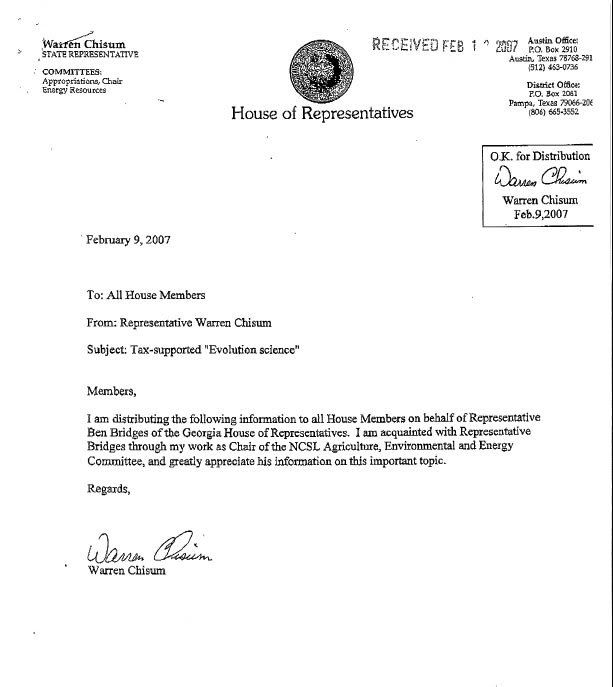
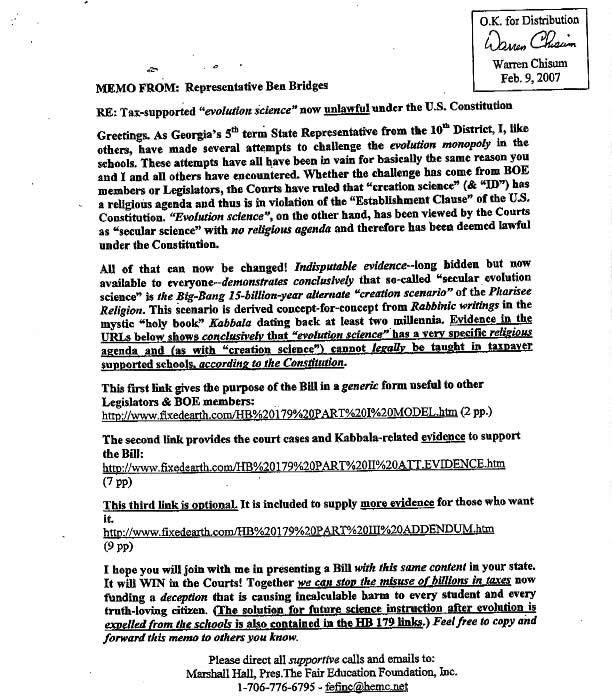

is Chairman of the Texas House Appropriations Committee!
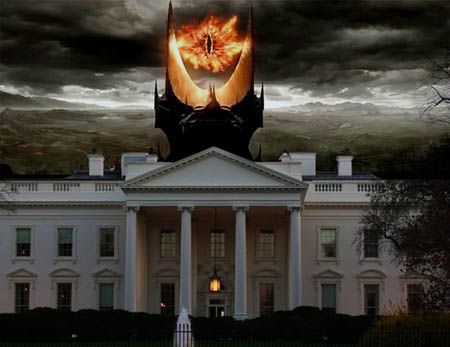
I'm reminded, constantly, of the two-year old remark by the anonymous State Department official: "I just wake up in the morning and tell myself, 'There's been a military coup,' and then it all makes sense."
If only it were that simple, and modestly malevolent. That used to make sense of this world for me, too. Now, it doesn't make enough sense. Now, I'm waking with the crazy notion, "There's been a coup by esoteric Nazis, and it didn't happen yesterday." Or perhaps I'm not truly awake yet. Could be. Hope so. Because my inner life has taken on the complexion of a lucid nightmare.
In other words, what's a poor blogger to do, when Hellboy begins to appear more "reality-based" than Wolf Blitzer Reports...?
A paid FBI informant was the man behind a neo-Nazi march through the streets of Parramore that stirred up anxiety in Orlando's black community and fears of racial unrest that triggered a major police mobilization.
That revelation came Wednesday in an unrelated federal court hearing and has prompted outrage from black leaders, some of whom demanded an investigation into whether the February 2006 march was, itself, an event staged by law-enforcement agencies.
The FBI would not comment on what it knew about the involvement of its informant, 39-year-old David Gletty of Orlando, in the neo-Nazi event. In court Wednesday, an FBI agent said the bureau has paid its informant at least $20,000 during the past two years.
"Wow," Gletty said when reached by phone late Wednesday. "It is what it is. You were there in court. I can't really go into any detail now."
Orlando City Councilwoman Daisy Lynum, whose district includes the march route west of Interstate 4, said she wants to know who was behind the march, the neo-Nazis or the FBI and other law-enforcement agencies.
"If it was staged, I would feel very uncomfortable and would ask for a full-scale investigation," Lynum said. "To come into a predominantly black community which could have resulted in great harm to the black community? I would hate to be part of a game. It's a mockery to the community for someone else to be playing a game with the community..."
...He offers no boldness. Dr. King set out to change the social, economic, and political structures of this country. He described the change as a "third way" beyond capitalism and socialism. King's "third way" is far different than Bill Clinton's "third way," promoted by Obama and all those around Hillary, who tout the Clintons as the second and third coming of Camelot.
The Clinton "third way" is Republican Party politics in slow motion. Under Bill Clinton, U.S. troops weren't trapped in Iraq, but just as many, if not more, Iraqis died as a result of his policies. His destruction of the welfare system, his embrace of capital punishment and other punitive and discriminatory crime policies, his bowing to Wall Street all made him palatable to Republicans.
The hope in Obama's title is for a mixture of Kennedyism, Reaganism, and Clintonism packaged as the new face of multicultural America. At its core, this is what The Audacity of Hope promotes, instead of any fundamental progressive change.
Nonetheless, it comes as no surprise that The Audacity of Hope is a New York Times bestseller. The book arrives amidst the hype of an upcoming and wide-open Presidential race, the collective angst over the country moving in the wrong direction, an economy that working people know isn't as good as they are being told it is, and a war that has washed away - at home and abroad - the country's preexisting false sense of moral superiority. As the line in Ethan and Joel Cohen's 2000 movie, Oh Brother Where Art Thou, goes, "Everybody's looking for answers."
Yet, does Obama's book provide any real answers? It there anything in it that will help stimulate measurable change? Or, is it all just talk, posturing, and positioning for personal political goals? Is it an orchestrated, consciously plotted pretext to inoculate a politician from the perceived liabilities of race, lineage and inexperience?
The answers are no, no, yes, yes...
Give Obama credit for copping to the fact that his "treatment of the issues is often partial and incomplete." Overall, the treatise reads like a very, very long speech of sound bites and clichés arranged by topic and issue and connected by conjunctions, pleasantries, and apologies. Pleasantries like wishing for a return to the days when Republicans and Democrats "met at night for dinner, hashing out a compromise over steaks and cigars." Or, leading with apologias to describe painful parts of United States history or softening a rightfully deserved blow as when he describes racist southern Senator Richard B. Russell as "erudite." Or accusing his mom of having a "incorrigible, sweet-natured romanticism" about the ‘60s and the civil rights era as he waxes romantically about Hubert Humphrey's Democratic Party. It's like he did not have a clue about the 1964 struggles of Fannie Lou Hamer and the Mississippi Freedom Democratic Party.
The shame of Obama's lack of depth is that Hamer's conflict over representation pretty much set the table for how the Democratic Party deals with blacks today. But of course he was only three years old and living in Hawaii when Lyndon Johnson went on national television to give a speech so that Hamer's image and the MFDP challenge would be off the airwaves. Hamer's fight was a precursor to the candidacy of Shirley Chisholm, the first black to seriously run for President in 1972 (if you exclude Dick Gregory's 1968 bid). Chisholm continued Hamer's fight for a greater black and female voice in politics and government.
Throughout, Obama proffers an unnaturally romantic view of the Democratic Party for a person of his age. His appreciation of party seems as times deeper than his understanding of the civil rights movement, which comes across as antiseptic. And he goes out of his way to comfort whites with a critique of black Americans that could tumble out of the mouth of William Bennett. "Many of the social or cultural factors that negatively affect black people, for example, simply mirror in exaggerated form problems that afflict America as whole: too much television (the average black household has the television on more than eleven hours per day), too much consumption of poisons (blacks smoke more and eat more fast food), and a lack of emphasis on educational attainment," he writes. "Then there's the collapse of the two-parent black household, a phenomenon that...reflects a casualness towards sex and child rearing among black men..."
...African Americans will pay a special, historical price if a corporate-molded Black politician becomes the titular leader of an unreconstructed U.S. imperial state - and, make no mistake about it, Barack Obama is an imperialist. No one but a deep-fried imperialist could describe U.S. behavior in Iraq as "coddling" the Iraqis, as Obama said to an establishment foreign policy gathering in Chicago, late last year. His Iraq War De-escalation Act, carefully calibrated to make him appear slightly less belligerent than Hillary Clinton, allows the U.S. to wage war until March 31, 2008, at the very least, and to maintain a military presence in the country thereafter. It is a sham measure, more helpful in buying time for Bush than in encouraging effective dissent.
At his core, Obama is not opposed to U.S. violations of other nations' sovereignty; he simply opposes "dumb wars" - as he told a reporter for the Chicago Reader - meaning, aggressions executed by less-than-bright American Commanders-in-Chief. U.S.-designated "interests," not adherence to international law, are paramount - the fundamental tenet of imperialism...
Both Barack Obama's Republican opponents and the centrist Democrats who support his presidential candidacy agree on one thing. They all agree that black opinion on the senator is both uninformed and irrelevant.
To hear the mainstream media, black dissatisfaction with Senator Obama is all about his black African father, his white American mother, his light complexion and his Columbia and Harvard Law degrees. The day after Rush Limbaugh called the senator a "half-frican" on the air, the term was in the mouths of ignorant black talk show hosts in multiple cities. Black America was then admonished and chided by white Republicans and Democrats of all colors for not embracing Senator Obama based on some foolish standard of black authenticity.
This is a racist calumny and slur of the first magnitude against all of black America...
In many quarters of black America there are sane, solid and sensible reasons for black voters to question whether Barack Obama will represent them at all. Many remember that his first act as a US Senator was to refuse to stand with California Senator Barbara Boxer in opposition to Ohio's nullification of hundreds of thousands of black votes. Obama's second, third and fourth significant acts were when he declined to ask any difficult, pointed or revealing questions of Condoleezza Rice and two of the president's disastrous Supreme Court nominees, and he actually voted for two out of three of these. Obama's sixth and seventh important acts as a senator were to vote for a bill that made it nearly impossible for ordinary people to sue giant corporations who rob, defraud, maim or kill, and another vote to renew the hated Patriot Act which he vigorously campaigned against. And though Senator Obama now claims to oppose the war in Iraq, he remains advocate of bombing Iran to start yet another.
This commentator was at Obama's 2004 Illinois primary election victory party. The white and black people there that night imagined that they had elected another Paul Wellstone or a Harold Washington, a senator who would bring their concerns to the halls of power, whether the powerful were ready to hear them or not. One wonders what they think today.
Black America is rightly worried. We are an eighth the nation's population and half its prisons, but we cannot get a member of the black caucus, Senator Obama included, to question the nation's policy of racially selective mass incarceration in public. We do have issues that matter to us, and if Barack Obama does not address them, he is truly somebody else's candidate, not ours.
President Bush has now definitively stated that bombs known as explosively formed penetrators — EFPs, which have proved especially deadly for U.S. troops in Iraq — are made in Iran and exported to Iraq. But in November, U.S. troops raiding a Baghdad machine shop came across a pile of copper disks, 5 inches in diameter, stamped out as part of what was clearly an ongoing order. This ominous discovery, unreported until now, makes it clear that Iraqi insurgents have no need to rely on Iran as the source of EFPs.
The truth is that EFPs are simple to make for anyone who knows how to do it. Far from a sophisticated assembly operation that might require state supervision, all that is required is one of those disks, some high-powered explosive (which is easy to procure in Iraq) and a container, such as a piece of pipe. I asked a Pentagon analyst specializing in such devices how much each one would cost to make. "Twenty bucks," he answered after a brief calculation. "Thirty at most."
EFPs work by using explosives to compress, melt and shoot a metal projectile — formed from those disks, molded in a concave shape — in a particular direction. They are feared above all else by troops in Iraq because not only can they punch a hole through the armor of an M-1 tank, they are small and light, and thus far easier to carry and plant undetected than the traditional Iraqi improvised explosive device, which is often made from hefty artillery shells.
"You can do as much or more damage with a 5-pound EFP, which is aimed, as with a 200-pound conventional IED, where most of the energy is dissipated away from the target," the Pentagon analyst said. The U.S. has (belatedly) responded to the IED threat by "up-armoring" Humvees and other vulnerable vehicles, but EFPs can cleave through the very thickest armor "like butter," as one Iraq veteran told me.
As of now, these weapons represent only a small fraction of the bombs used against U.S. forces. Last month, according to my Pentagon sources, out of 3,000 IEDs directed at occupation troops, only 2.5% were EFPs. But a further statistic explains why these particular weapons are so feared by soldiers encased in their armored vehicles: Despite the relatively tiny number deployed, since November they have accounted for fully 15% of U.S. bomb casualties, and that percentage is ticking up. Anyone pondering the implications of this trend need only look to the Israeli experience in Lebanon during the 1990s to see where it might end. "These bombs drove the Israelis out of Lebanon," a former Pentagon weapons-effects expert told me unequivocally.
Hezbollah's expertise with EFPs is one reason why the administration, despite minimal intelligence, has been quick to blame Hezbollah's Iranian allies for the proliferation of the devices in Iraq. But EFPs have a venerable history. The IRA used them with lethal effect against British troops in Northern Ireland, as did French resistance fighters against the Germans in World War II. It is only a question of time before someone shows the Taliban how to make them, and then NATO forces in Afghanistan will begin the same ordeal.
Despite their known lethality, these weapons weren't taken into account by former Defense Secretary Donald H. Rumsfeld's program of military "transformation." Indeed, Rumsfeld bequeathed the Army the Future Combat Systems, a $168-billion extravaganza of computers, sensors and robots deemed by its proponents so deadly to a foe that armor on U.S. military vehicles might be dispensed with altogether.
Once it became impossible to ignore the threat of all kinds of "home-made" bombs, and EFPs in particular, Rumsfeld responded in orthodox fashion by throwing money at the problem.
A "joint IED defeat" task force was created to address the issue, and last year it was granted $3.32 billion, but with little result. True, each Humvee patrolling Iraqi roads now carries two specially designed jammers, costing $100,000 apiece, that jam radio signals detonating roadside bombs. The other side has simply switched to wire detonators or infrared systems. One hundred towers spouting remote cameras, at $12 million each, watch main roads for bomb planters, with no improvement in attack and casualty statistics.
Rumsfeld's mentor, defense intellectual Andrew Marshall, marketed the phrase "revolution in military affairs" as a justification for high-tech programs such as Future Combat Systems. But those copper disks represent the real revolution in military affairs, and it is not in our favor.
For more, see David Hambling at Defense Tech, who describes what modern EFPs look like and suggests that "if EFP mines were being supplied by an outside source, you might expect to see something a lot slicker."
Luckily, invading US forces didn't leave entire munition dumps unguarded, for then, tons of high explosives could have been looted by the insurgency.
India, China and Russia account for 40 per cent of the world’s population, a fifth of its economy and more than half of its nuclear warheads. Now they appear to be forming a partnership to challenge the US-dominated world order that has prevailed since the end of the Cold War.
Foreign ministers from the three emerging giants met in Delhi yesterday to discuss ways to build a more democratic “multipolar world”.
It was the second such meeting in the past two years and came after an unprecedented meeting between their respective leaders, Manmohan Singh, Hu Jintao and Vladimir Putin, during the G8 summit in St Petersburg in July.
It also came only four days after Mr Putin stunned Western officials by railing against American foreign policy at a security conference in Munich.
The foreign ministers, Pranab Mukherjee, Li Zhao Xing and Sergei Lavrov, emphasised that theirs was not an alliance against the United States. It was, “on the contrary, intended to promote international harmony and understanding”, a joint communiqué stated.
Their formal agenda covered issues ranging from Iran, Iraq, Afghanistan, the Middle East and North Korea to energy security, nuclear non-proliferation and trade. The subtext, however, was clear: how to use their growing economic and political muscle to prevent Washington from tackling such issues alone.
“In the long term, they feel that the whole structure of international relations has to shift in their direction,” said Vinod C. Khanna, of the Institute of Chinese Studies, Delhi. “What has happened is that quite independently they’ve reacted very similarly to recent international events.”
Mr Mukherjee said: “We agreed that cooperation rather than confrontation should govern approaches to regional and global affairs. We also agreed on the importance of the UN.”
Diplomats say that it is premature to talk of a strategic axis between the world’s largest and two most populous nations because they still have more in common with the West than with each other.
Delhi was close to Moscow in Soviet times, but has forged a new friendship with Washington. Chinese relations were soured by its border wars with India in 1962 and the Soviet Union in 1969, and by its arms sales to Pakistan. Russia appears keener than China or India to challenge American hegemony. But there has been a convergence of interests as each struggles to make the transition from a command economy to free markets. Since 2003 they have found further common ground in opposing the US-led invasion of Iraq.
One area of agreement is opposition to outside interference in separatist conflicts in Chechnya, the northeast of India and the northwestern Chinese region of Xinjiang.
Another is energy. India and China are desperate for Russian oil and gas, and Moscow is worried about its dependence on Western markets. But their most significant common ground is opposition to US military intervention in Iran. The joint statement did not mention Iran, but the three countries have taken a common stance in calling for a negotiated solution through the International Atomic Energy Agency. None of them wants a nuclear-armed Iran, but Russia sells Tehran nuclear technology and India and China need Iranian gas.
Occupation authorities in Iraq have awarded a $293 million contract effectively creating the world's largest private army to a company headed by Lieutenant Colonel Tim Spicer, a former officer with the Scots Guard, an elite regiment of the British military, who has been investigated for illegally smuggling arms and planning military offensives to support mining, oil, and gas operations around the world. On May 25, the Army Transportation command awarded Spicer's company, Aegis Defense Services, the contract to coordinate all the security for Iraqi reconstruction projects.
Under the "cost-plus" contract, the military will cover all of the company's expenses, plus a pre-determined percentage of whatever they spend, which critics say is a license to over-bill. The company has also been asked to provide 75 close protection teams -- comprised of eight men each -- for the high-level staff of companies that are running the oil and gas fields, electricity, and water services in Iraq.
Major Gary Tallman, a spokesperson for the U.S. Army, explained that the contract was to create an "integrator" or coordination hub for the security operation for every single reconstruction contractor and sub-contractor. "Their job is to disseminate information and provide guidance and coordination throughout the four regions of Iraq."
In Iraq, there are currently several dozen groups that provide private security to both the military and the private sector, with more than 20,000 employees altogether. The companies include Erinys, a South African business, that has more than 15,000 local employees charged with guarding the oil pipelines; Control Risks Group, a British company that provides security to Bechtel and Halliburton ; and North Carolina-based Blackwater Consulting, which provides everything from back-up helicopters to bodyguards for Paul Bremer, the American ambassador in charge of the occupation...
In Sierra Leone, Spicer's efforts have been heralded by the private military industry as the "work of angels." In 1998, Sandline was contracted to sell 30 tons of arms to the forces of Ahmad Tejan Kabbah, the former leader of Sierra Leone, in contravention of a UN arms embargo but in apparent cooperation with Craig Murray, a junior staffer at the British Foreign Office.
Doug Brooks, the president of International Peace Operations Association (IPOA), a non-profit advocacy group for private military companies including Sandline, says the company's assistance in Sierra Leone saved the lives of thousands of civilians. "Sandline was remarkably effective," Brooks said. "Their goal of restoring the democratically elected government was achieved. They maintained a low profile but played a critical role in the success."
Nonetheless, Sandline's Sierra Leone project provoked a furor and multiple government investigations in Britain when it was discovered that the contract violated the United Nations embargo on providing arms to either side in the military conflict. Spicer maintains that he was unaware that the scheme was illegal and the government eventually agreed to draw up new rules on arms trafficking and the conduct of private military companies in Britain.
Spicer's work in Papua New Guinea, another public relations fiasco, was not even a military success. The eastern half of the South Pacific island of New Guinea, Papua New Guinea (PNG), was a British and German colony and then an Australian protectorate until 1975. That year, both PNG and the outlying island of Bougainville, some 500 miles northeast of the capital, Port Moresby, declared independence. PNG quickly took over Bougainville, where an Australian company, CRA (now part of Rio Tinto, the world's largest mining company), had begun to mine copper in 1972.
In 1989, local landowners shut down the Bougainville copper mine to protest the environmental destruction it caused and to demand independence. In February 1997, the PNG government, which had received about 44 percent of its revenue from the mine, paid Sandline International $36 million to rout the Bougainvilleans.
The very next month, PNG Prime Minister Julius Chan sacked the military commander, Brigadier General Jerry Singarok, for denouncing the contract with Sandline and arguing that the money would be better spent on his own troops, who were desperately underpaid and ill-equipped. Riots ensued after soldiers loyal to Singarok led protests that included at least 2,000 civilians. The soldiers arrested and deported a number of the Sandline contractors.
Less than a month later, dressed in crumpled jeans, Spicer was led into a Papua New Guinea court. His suitcase, bulging with $400,000 in cash, was produced as evidence of his contract with the disgraced government. At the hearings, Spicer revealed that one aspect of the project (code-named "Operation Oyster") was to wage a psychological campaign against the Bougainvilleans with the help of Russian style attack helicopters (see Give War a Chance: the Life and Times of Tim Spicer for more on Sandline)...

WASHINGTON - A day after the U.S. military charged Iran's government with shipping powerful explosive devices to Shiite Muslim fighters in Iraq to use against American troops, the chairman of the Joint Chiefs of Staff said Monday that he hasn't seen any intelligence to support the claim.
Marine Gen. Peter Pace's comment could make it harder for the Bush administration, its credibility about Iran questioned because of its false pre-war claims about Saddam Hussein, to make its case that Iranian meddling in Iraq is fueling sectarian violence and causing U.S. casualties.
At a briefing Sunday in Baghdad, U.S. military officials said the al-Quds Force, an elite Iranian paramilitary organization, is sending arms into Iraq that include bombs that shoot molten metal jets through the armor of American tanks and Humvees.
They said these "explosively formed projectiles," or EFPs, have killed 170 U.S. troops and wounded more than 600 others and are "coming from the highest level of the Iranian government."
Asked about the briefing during a visit Monday to Canberra, Australia, Pace said he couldn't substantiate the assertion that the clerical regime in Tehran is shipping such devices to Shiite militias in Iraq...

BAGHDAD, Feb. 12 — After weeks of internal debate, senior United States military officials on Sunday literally put on the table their first public evidence of the contentious assertion that Iran supplies Shiite extremist groups in Iraq with some of the most lethal weapons in the war. They said those weapons had been used to kill more than 170 Americans in the past three years.
Never before displayed in public, the weapons included squat canisters designed to explode and spit out molten balls of copper that cut through armor. The canisters, called explosively formed penetrators or E.F.P.’s, are perhaps the most feared weapon faced by American and Iraqi troops here.
In a news briefing held under strict security, the officials spread out on two small tables an E.F.P. and an array of mortar shells and rocket-propelled grenades with visible serial numbers that the officials said link the weapons directly to Iranian arms factories. The officials also asserted, without providing direct evidence, that Iranian leaders had authorized smuggling those weapons into Iraq for use against the Americans. The officials said such an assertion was an inference based on general intelligence assessments...
For one thing, the lettering and numbering isn’t in Farsi (the language used by Iranians); for another, the UK uses 81MM shells, and Iran would be much more likely to use Soviet-style 82MM shells.
In addition: As a commenter at NewsHog noted, the UK uses shells of that type, so there’s a strong likelihood that this was grabbed out of a Brit ammo dump in Iraq, given a cursory rebranding, and then ‘found’ in an insurgents’ den.
as are markings on their Zelzal 3 rocket and their anti-ship missiles....So the administration has always had it in for the Iranian regime. Now, let’s do an O. J. Simpson: if you were determined to start a war with Iran, how would you do it?
First, you’d set up a special intelligence unit to cook up rationales for war. A good model would be the Pentagon’s now-infamous Office of Special Plans, led by Abram Shulsky, that helped sell the Iraq war with false claims about links to Al Qaeda.
Sure enough, last year Donald Rumsfeld set up a new “Iranian directorate” inside the Pentagon’s policy shop. And last September Warren Strobel and John Walcott of McClatchy Newspapers — who were among the few journalists to warn that the administration was hyping evidence on Iraqi W.M.D. — reported that “current and former officials said the Pentagon’s Iranian directorate has been headed by Abram Shulsky.”
Next, you’d go for a repeat of the highly successful strategy by which scare stories about the Iraqi threat were disseminated to the public.
This time, however, the assertions wouldn’t be about W.M.D.; they’d be that Iranian actions are endangering U.S. forces in Iraq. Why? Because there’s no way Congress will approve another war resolution. But if you can claim that Iran is doing evil in Iraq, you can assert that you don’t need authorization to attack — that Congress has already empowered the administration to do whatever is necessary to stabilize Iraq. And by the time the lawyers are finished arguing — well, the war would be in full swing.
Finally, you’d build up forces in the area, both to prepare for the strike and, if necessary, to provoke a casus belli. There’s precedent for the idea of provocation: in a January 2003 meeting with Prime Minster Tony Blair, The New York Times reported last year, President Bush “talked about several ways to provoke a confrontation, including a proposal to paint a United States surveillance plane in the colors of the United Nations in hopes of drawing fire.”
In the end, Mr. Bush decided that he didn’t need a confrontation to start that particular war. But war with Iran is a harder sell, so sending several aircraft carrier groups into the narrow waters of the Persian Gulf, where a Gulf of Tonkin-type incident could all too easily happen, might be just the thing...
This NYT article depends on unnamed USG sources who alleged that 25 percent of US military deaths and woundings in Iraq in October-December of 2006 were from explosively formed penetrator bombs fashioned in Iran and given to Shiite militias:
' In the last three months of 2006, attacks using the weapons accounted for a significant portion of Americans killed and wounded in Iraq, though less than a quarter of the total, military officials say.'
This claim is one hundred percent wrong. Because 25 percent of US troops were not killed fighting Shiites in those three months. Day after day, the casualty reports specify al-Anbar Province or Diyala or Salahuddin or Babil, or Baghdad districts such as al-Dura, Ghaziliyah, Amiriyah, etc.--and the enemy fighting is clearly Sunni Arab guerrillas. And, Iran is not giving high tech weapons to Baathists and Salafi Shiite-killers. It is true that some casualties were in "East Baghdad" and that Baghdad is beginning to rival al-Anbar as a cemetery for US troops:
Robert Burns of AP observes,
"The increasingly urban nature of the war is reflected in the fact that a higher percentage of U.S. deaths have been in Baghdad lately. Over the course of the war through Feb. 6, at least 1,142 U.S. troops have died in Anbar province, the heart of the Sunni Arab insurgency, according to an AP count. That compares with 713 in Baghdad. But since Dec. 28, 2006, there were more in Baghdad than in Anbar - 33 to 31."
Over all, only a fourth of US troops had been killed Baghdad (713 or 23.7 percent of about 3000) through the end of 2006. But US troops aren't fighting Shiites anyplace else-- Ninevah, Diyala, Salahuddin--these are all Sunni areas. For a fourth of US troops to be being killed or wounded by Shiite EFPs, all of the Baghdad deaths would have to be at the hands of Shiites!
The US military often does not announce exactly where in Baghdad a GI is killed and so I found it impossible to do a count of Sunni versus Shiite neighborhoods. But we know that Prime Minister Nuri al-Maliki was running interference for the Mahdi Army last fall, and it seems unlikely to me that very many US troops died fighting Shiites in Baghdad. The math of Gordon's article does not add up at all if this were Shiite uses of Iran-provided EFPs.
So the unnamed sources at the Pentagon are reduced to implying that Iran is giving sophisticated bombs to its sworn enemies and the very groups that are killing its Shiite Iraqi allies every day. Get real!


In response to the massive loss of unionzed, relatively well-paid manufacturing jobs in the US, the barons of Wall Street (Bob Rubin, et al) generally respond with thinly veiled contempt for the knee-jerk whining of the protectionst volk. "Don't you understand?" they say, "this it the global economy and there's no reason for manufacturers to pay Americans to do the same thing the Chinese can do for 1/50th the price. Besides, what are you a racist? Don't you believe that Mexicans and Indians and Chinese should have jobs?" I'm paraphrasing here, obviously, but this is pretty standard.
So there's something deliciously ironic about listening to Wall Street bitch and moan about the fact that Wall Street is losing share of the international financial markets. So grave is the threat of New York losing its prime position, that in January Mayor Mike Bloomberg (along with Chuck Schumer) called a press conference to publicize a report issued by McKinsey consulting (which obviously has no conflict of interest in this sort of thing) that argues that in order to preserve Wall Street's pre-eminence we must do away with -- you guessed it -- excess regulation, namely Sarbanes-Oxley.
Despite the carping from the Street, Sarbanes-Oxley, as Business Week recently pointed out has succeeded at doing precisely what it was designed to do, that is produce reliable corporate reports that investors can trust in making decisions about what stocks to buy and sell. But the law's virtues aside, there's no persuasive evidence that Sarbanes-Oxley has anything to do with the recent drop in Wall Street's shares of global IPOs. As Thomas Palley argues, the more likely explanation is simply that "[f]oreign financial markets are catching up in quality of technology and regulatory governance."Why should New York be the locus for international finance? Why not let a thousand flowers bloom?

The avian flu virus that led to the culling of 160,000 birds on a Bernard Matthews turkey farm may have entered the human food supply, Government food safety experts admitted yesterday.
The Food Standards Agency (FSA) said it was investigating the possibility as part of a wider inquiry into the outbreak on the farm at Holton in Suffolk. There was no threat to human health, the FSA said.
The most likely cause of the outbreak is now believed to be frozen poultry pieces imported from Hungary, which may have been contaminated with the virus, to a processing plant next to the Suffolk farm.
Professor Sir David King, the Government's chief scientist said packaged turkey meat could be removed from supermarket shelves following the disclosure. "I think that is exactly what the Food Standards Agency will be looking at now," he told Channel 4 News.
The FSA confirmed it was investigating but said it had no plans at present to recall turkey products. A spokesman said: "Even if infected poultry had entered the food chain, and we don't know that yet, it is not a human health risk. There is not one case round the world in which humans have contracted the disease from eating infected meat..."
At a farewell reception at Blair House for the retiring chief of protocol, Don Ensenat, who was President Bush’s Yale roommate, the president shook hands with Washington Life Magazine’s Soroush Shehabi. A grandson of one of the late Shah’s ministers, Soroush said, “Mr. President, I simply want to say one U.S. bomb on Iran and the regime will remain in power for another 20 or 30 years and 70 million Iranians will become radicalized.”
“I know,” President Bush answered.
“But does Vice President Cheney know?” asked Soroush.
The president chuckled and walked away.
What I'm asking is, what's bigger? The lies the administration used to convince the country to go to war? Or the lie that the administration only fought the intelligence community after the fact, to cover its tracks when caught?
Is the administration covering up the lengths to which it went to prevent the exposure of its mistaken reliance on bad intelligence? Or is the administration covering up the lengths to which it went to promote intelligence developed by its own, parallel intelligence structure, a plan which required the simultaneous undermining and the destruction of the credibility of the country's established (read: authorized and legitimate) intelligence structure, which refused to give them what they wanted?
The answer to that question is the difference between "just politics," and "we're not kidding when we whisper the word 'treason.'"
It should be obvious what Feith's motive is, especially with the Libby trial looming in the background. His primary interest, of course, is that the activities of his OSP be deemed at least not unlawful. And he's managed to get the IG's cooperation on that score. But he wants more than that. He wants to scotch their designation of his activities as inappropriate even if not unauthorized.
...Charles A. Duelfer, whom the Bush administration chose to complete the U.S. investigation of Iraq's weapons programs, said Hussein's ability to produce nuclear weapons had "progressively decayed" since 1991. Inspectors, he said, found no evidence of "concerted efforts to restart the program."
The findings were similar on biological and chemical weapons. While Hussein had long dreamed of developing an arsenal of biological agents, his stockpiles had been destroyed and research stopped years before the United States led the invasion of Iraq in March 2003. Duelfer said Hussein hoped someday to resume a chemical weapons effort after U.N. sanctions ended, but had no stocks and had not researched making the weapons for a dozen years.
Duelfer's report, delivered yesterday to two congressional committees, represents the government's most definitive accounting of Hussein's weapons programs, the assumed strength of which the Bush administration presented as a central reason for the war. While previous reports have drawn similar conclusions, Duelfer's assessment went beyond them in depth, detail and level of certainty.
"We were almost all wrong" on Iraq, Duelfer told a Senate panel yesterday.
President Bush, Vice President Cheney and other top administration officials asserted before the U.S. invasion that Iraq was reconstituting its nuclear weapons program, had chemical and biological weapons and maintained links to al Qaeda affiliates to whom it might give such weapons to use against the United States.
But after extensive interviews with Hussein and his key lieutenants, Duelfer concluded that Hussein was not motivated by a desire to strike the United States with banned weapons, but wanted them to enhance his image in the Middle East and to deter Iran, against which Iraq had fought a devastating eight-year war. Hussein believed that "WMD helped save the regime multiple times," the report said...
used war salesman.
and offering of the same to the other fish, hook, line, and sinker.
The videotape , taken by `KSTP-TV`, an ABC affiliate in `Minneapolis-St`. Paul, shows troops breaking into a bunker and opening boxes and examining barrels. Many of the containers are marked "explosive." One box is marked "Al Qaqaa State Establishment," apparently a shipping label from a manufacturer.
The ABC crew said the video was taken on April 18. The timing is critical to the debate in the presidential campaign. By the Pentagon's own account, units of the 101st Airborne Division were near Al Qaqaa for what Mr. DiRita said was "two to three weeks," starting April 10.
Then they headed north to Baghdad, and the site was apparently left unguarded. By the time special weapons teams returned to Al Qaqaa in May, the explosives were apparently gone.
In disputing claims by Mr. Kerry that the Americans had lost the explosives, a senior administration official said Thursday, "We don't know all the facts and no one should be jumping to conclusions." Al Qaqaa, the official said, "was not controlled for three weeks after the I.A.E.A. left," and added "there are a lot of dots we have to connect."
The Pentagon also notes that it has destroyed 400,000 tons of munitions from thousands of sites across Iraq, and that the explosives at Al Qaqaa account for "`one-tenth` of 1 percent" of that amount.
The Minneapolis television crew was with an Army unit that was camped near Al Qaqaa, members of the crew said. The reporter and cameraman said that although they were not told specifically that they were being taken to Al Qaqaa by the military, their videotape matches pictures of the site taken by United Nations weapons inspectors, according to weapons experts.
"The photographs are consistent with what I know of Al Qaqaa," said David A. Kay, a former American official who led the recent hunt in Iraq for unconventional weapons and visited the vast site. "The damning thing is the seals. The Iraqis didn't use seals on anything. So I'm absolutely sure that's an I.A.E.A. seal."
One weapons expert said the videotape and some of the agency's photographs of the HMX stockpiles "were such good matches it looked like they were taken by the same camera on the same day."
Independent experts said several other factors - the geography; the number of bunkers; the seals on some of the bunker doors; the boxes, crates and barrels similar to those seen by weapon inspectors - confirm that the videotape was taken at Al Qaqaa.
"There's not another place that you would mistake it for," said Dean Staley, the KSTP reporter, who now works in Seattle.
The accidental news encounter began last year after the invasion, Mr. Staley recalled in an interview. Their Army unit arrived in the region on Friday, April 11, and made camp. The Fifth Battalion of the 101st Airborne's 159th Aviation Brigade flew helicopter missions from the camp in the Iraqi desert, moving troops and supplies to the front.
A week later, on Friday, April 18, two journalists recalled, they joined two soldiers who were driving in a Humvee to investigate the nearby bunkers. Among other things, wandering inside the cavernous buildings offered the prospect of relief from the desert sun.
"It was just by chance that we were able to go," said Joe Caffrey, the team's photographer. "They wanted to go out and we asked to tag along."
Mr. Caffrey provided The New York Times with the latitude and longitude of the camp, which places it between 1.5 and 3 miles southeast of Al Qaqaa bunkers. A commercial satellite photograph of the region shows that the camp was close to the storage site. Mr. Caffrey said the soldiers used bolt cutters to cut through chains with locks on them, as well as seals. He said the seals appeared to be lead disks attached to very thin wires that were wrapped around the doors of the bunker entrances, forming a barrier easily cut in two.
They visited a half dozen bunkers, he said. The gloomy interiors revealed long rows of boxes, crates and barrels, what independent experts said were three kinds of HMX containers shipped to Iraq from France, China and Yugoslavia.
The team opened storage containers, some of which contained white powder that independent experts said was consistent with HMX.
"The soldiers were pretty much in awe of what they were seeing," Mr. Caffrey recalled. "They were saying their E.O.D. - Explosive Ordinance Division, people who blow this kind of stuff up - would have a field day."
The journalists filmed roughly 25 minutes of video. Mr. Caffrey added that the team left the bunker doors open. "It would have been easy for anybody to get in," he said.
Mr. Staley recalled that during the drive back to camp, they saw a red Toyota pickup truck with some Iraqis in it. "Our impression was they were looters," he said. "This was a no man's land. It was a huge facility, and we worried that they were bad guys who might come up on us."
The two journalists filed a short story, which ran soon thereafter in `Minneapolis-St`. Paul.
In the interview, Mr. Caffrey said he had carefully rechecked the date on the cassette for his camera, adding that he was sure it was April 18, 2003.
Yesterday Mohamed `al-Sharaa`, director of the national monitoring directorate at the Iraq Ministry of Science and Technology, explained for the first time why Iraqi officials had specified in their letter to the United Nations agency that the explosives had been looted after April 9, 2003. "We have some witnesses," Mr. Sharaa said outside his office at the ministry. "They say that the materials," he added, were "in this site after April 9."
The witnesses were people working at Al Qaqaa, Mr. Sharaa said. Still, he said, the evidence is not yet definitive, and "we don't say it's impossible" that the material was somehow taken out of Al Qaqaa before the American forces came through the area. The first American forces arrived at Al Qaqaa on April 3.
Rashad M. Omar, the minister of science and technology, said that as far as he was concerned, the exact timing of the disappearance remained unknown. "How, where, when is it taken, all these questions, we don't have answers," Dr. Omar said.
He said a committee headed by himself was about to undertake an investigation of the disappearance, in parallel with American efforts to clear up the mystery. Dr. Omar said that he was extremely confident that the investigations would determine the facts of the case.
"The quantity was so huge," Dr. Omar said. "Somebody must know what happened to the material. I am sure the facts will not be hidden for a long time."


Mohamed ElBaradei, director general of the International Atomic Energy Agency (IAEA), forwarded an Oct. 10 letter [.pdf] to the UN Security Council from Iraqi officials notifying the IAEA that tons of Iraq's most powerful explosives "were lost after 9 April 2003, through the theft and looting of the governmental installations due to lack of security" at al-Qaqaa.
...The debate before the Senate Armed Services Committee was touched off by a report by the Pentagon inspector general’s office, which investigated the Pentagon’s intelligence-gathering and found it seriously flawed, especially in its search for links between Al Qaeda and Saddam Hussein.
Senator Carl Levin, the Michigan Democrat who heads the committee, called the report “a devastating condemnation of inappropriate activities” carried out by Douglas J. Feith, who was under secretary of defense for policy just before the invasion of Iraq early in 2003.
“Well, unfortunately, the damage has already been done,” Mr. Levin said. “Senior administration officials used the twisted intelligence produced by the Feith office in making the case for the Iraq war...”
The long-awaited report by Thomas F. Gimble, the Pentagon’s acting inspector general, concluded that, while the Feith team did not violate any laws or knowingly mislead Congress, it developed dubious intelligence that was inconsistent with the findings of the wider intelligence community.
Mr. Gimble told the committee today that, while the Pentagon’s in-house intelligence-gathering was not illegal or unauthorized, “the actions, in our opinion, were inappropriate, given that all the products did not clearly show the variance with the consensus of the intel community, and in some cases were shown as intel products.”
When Mr. Inhofe pressed Mr. Gimble on whether he agreed with Mr. Levin’s characterization of his report, Mr. Gimble said he viewed the document as “a flat, fact-based report of the events that occurred. I don’t have an opinion as to whether it’s devastating or not devastating.”
On Thursday, as details of Mr. Gimble’s report were beginning to come out, Mr. Feith issued a statement saying his office’s activities had been authorized by former Defense Secretary Donald H. Rumsfeld and former Deputy Secretary Paul D. Wolfowitz, and that his office properly shared its findings.
The report could add fuel to the growing debate in Congress over the administration’s conduct of the war, and whether and how lawmakers should declare their opposition to it.
Mr. Levin said he wanted his committee to hear from Stephen Hadley, the national security adviser, and I. Lewis Libby Jr., the former chief of staff for Vice President Dick Cheney. Both Mr. Hadley and Mr. Libby received a Pentagon briefing in September of 2002 on supposed Al Qaeda-Iraq links that Mr. Gimble’s report said did not fully reflect intelligence agency views.
Some of the administration’s most severe critics have long accused the White House of implying a link between the Al Qaeda terrorists who carried out the Sept. 11 attacks and the regime of Saddam Hussein -- a notion largely discredited by the independent commission that investigated the Sept. 11 attacks.
Senator James Webb, Democrat of Virginia, embraced Senator Levin’s remarks and said the intelligence operation in Mr. Feith’s office had helped to create “a misunderstanding that persists to this day and affects the debates that are going on now...”
...Senator Jack Reed, Democrat of Rhode Island, drew from Mr. Gimble a statement that Mr. Feith had not been entirely consistent in his intelligence briefings, in ways Mr. Gimble said he could not go into for security reasons.
“He changed the briefing for his audience?” Mr. Reed asked
“There were adjustments made depending on the audience,” Mr. Gimble replied.
“Well, why would he do that?” the senator asked. “Why would he make changes based on the audience?”
“I don’t think I’m in a position to make a comment on why he would do what he did,” Mr. Gimble said.
A long-awaited report on the veracity of pre-war Iraq intelligence has found that a secretive policy shop exaggerated the Iraqi threat, providing the White House with cherry-picked information about links between Iraq and al Qaeda. The shop, operating out of the Pentagon, was set up by then-Secretary of Defense Donald Rumsfeld. Its goal was to lay the groundwork for a pre-emptive military strike against Iraq.
The report would appear to confirm British intelligence assertions that surfaced in a document widely referred to as the Downing Street Memo that the facts against the threat posed by Iraq were being fixed around the Bush administration's policy leading up to the invasion of Iraq...
The Department of Defense Office of the Inspector General produced the report, which focuses largely on the work of former Undersecretary of Defense for Policy Douglas Feith. Feith's Office of Special Plans sent the Bush administration bogus intelligence on Iraq's weapons program and ties to terrorist organizations that supported the administration's policy.
An executive summary of the report was released late Thursday by Senator Levin, chairman of the Senate Armed Services Committee. Levin has spent the past two years battling the former Senate Republican leadership to conclude its so-called Phase II investigation into pre-war Iraq intelligence.
Last month, in an interview with McClatchy Newspapers, Senator Jay Rockefeller (D-WV), vice chairman of the Senate Select Committee on Intelligence, said he was told by Senator Pat Roberts (R-Kans.), who was formerly in charge of the second phase of the Senate's investigation, that Vice President Dick Cheney applied "constant" pressure on Roberts to drag out the probe on pre-war intelligence. A spokeswoman for Cheney denied the allegation...
The inspector general's unclassified executive summary of the report, as characterized by Levin, states:
The Office of the Under Secretary of Defense for Policy developed, produced and disseminated to senior decision-makers alternative intelligence assessments on the Iraq and al Qaeda relationship. These assessments included some conclusions inconsistent with the consensus of the intelligence community,
The inspector general also stated that the Office of the Under Secretary of Defense for Policy "was inappropriately performing intelligence activities of developing, producing, and disseminating that should be performed by the intelligence community."
The inspector general concluded that these "inappropriate" activities were authorized by Donald Rumsfeld, former secretary of defense, or Paul Wolfowitz, former deputy secretary of defense.
Senior administration officials, including Vice President Cheney, made numerous public statements that reflected the views of the Feith alternative analysis, which were inconsistent with the analysis and judgments of the intelligence community. Indeed, Vice President Cheney said the principal Feith office assessment was the "best source of information" on the alleged relationship between Iraq and al Qaeda.
Rockefeller said the conclusions of the report are damning. Moreover, he said, his committee was kept in the dark about the Office of Special Plans and the fact that it was engaged in intelligence-gathering activities.
"The IG has concluded that this office was engaged in intelligence activities," Rockefeller said. "The Senate intelligence committee was never informed of these activities. Whether these actions were authorized or not, it appears that they were not in compliance with the law. In the coming days, I will carefully review all aspects of the report and will consult with [Senate intelligence committee] Vice Chairman [Kit] Bond to determine whether any additional action by the Senate intelligence committee is warranted."
The White House and the Pentagon have been dogged by questions about Feith and OSP's activities dating back to the beginning of the Iraq War. It was during that time that a number of CIA analysts spoke privately with Democratic lawmakers and complained that Feith's unit had been cherry-picking intelligence information that provided worst-case scenarios about Iraq's weapons programs. Levin and Congresswoman Ellen Tauscher (D-Calif.), called for an immediate investigation...
In the months leading up to the war in Iraq, Rumsfeld became increasingly frustrated that the CIA could not find any evidence of Iraq's chemical, biological and nuclear weapons program - evidence that would have helped the White House to build a solid case for war in Iraq. Rumsfeld helped set up the Office of Special Plans in 2001 and tapped Feith to head the office.
The OSP, according to published reports, was to gather intelligence information on the Iraqi threat that the CIA and FBI could not uncover, and present it to the White House to build a case for war in Iraq. The committee relied heavily on information provided by Iraqi defector Ahmed Chalabi, who has provided the White House with reams of disputed intelligence on Saddam Hussein's weapons programs. Chalabi heads the Iraqi National Congress, a group of Iraqi exiles who have pushed for regime change in Iraq.
The Office of Special Plans routinely provided President Bush, Rumsfeld, Cheney and Condoleezza Rice, who headed the National Security Council at the time, with questionable intelligence information on the Iraqi threat. Much of that information was included in various speeches by Bush and Cheney, and some was never vetted for accuracy by career CIA analysts.
In an article in the New York Times in October 2002, the paper reported that Rumsfeld had ordered the OSP to "to search for information on Iraq's hostile intentions or links to terrorists" that might have been overlooked by the CIA.
Patrick Lang, a former director of Middle East analysis at the Defense Intelligence Agency, said in an interview with the New Yorker in May 2003 that the Office of Special Plans "started picking out things that supported their thesis and stringing them into arguments that they could use with the president. It's not intelligence. It's political propaganda."
Lang said the CIA and the OSP often clashed on the accuracy of intelligence information provided to the White House by Paul Wolfowitz.
By the fall of 2002, the White House had virtually dismissed all of the intelligence on Iraq provided by the CIA, in favor of the more critical information provided to the Bush administration by the Office of Special Plans. The CIA had failed to find any evidence of Iraq's weapons programs.
In a rare Pentagon briefing four years ago, Douglas Feith said the Office of Special Plans was not an "intelligence project," but rather a group of eighteen people who looked at intelligence information from a different point of view. Feith now teaches a seminar on Iraq War planning at Georgetown University.

...Last week, while excoriating Bush's Iraq policy before the Senate Foreign Relations Committee, he warned
of "a plausible scenario for a military collision with Iran." He sees the scenario unfolding with
"Iraqi failure to meet the benchmarks, followed by accusations of Iranian responsibility for the failure, then by some provocation in Iraq or a terrorist act in the US blamed on Iran, culminating in a 'defensive' [his own quotation marks] US military action against Iran that plunges a lonely America into a spreading and deepening quagmire eventually ranging across Iraq, Iran, Afghanistan and Pakistan."
On leaving the hearing, Brzezinski was pointedly asked by reporter Barry Grey whether he was "suggesting that the source of a possible provocation might be the US government itself." He responded that he had "no idea. As I said, these things can never be predicted. It can be spontaneous." Grey followed up, "Are you suggesting there is a possibility it could originate within the US government itself?" To which Brzezinski replied, "I’m saying the whole situation can get out of hand and all sorts of calculations can produce a circumstance that would be very difficult to trace."
This is the same Brzezinski, of course, who rhetorically asked, of his early sponsorship of Islamic radicals as US proxies, "What was more important in the world view of history? The possible creation of an armed, radical Islamic movement, or the fall of the Soviet Empire? A few fired-up Muslims or the liberation of Central Europe and the end of the Cold War?" (And note, Brzezinski's policy of instigation was launched in Afghanistan against it's pro-Soviet government in order to goad the USSR into its bloody quagmire.) His book The Grand Chessboard (published, I realize with a slight frisson of synchronicity, the same year as Corso's), was cited early in the days following 9/11 as America's road-map of geopolitical ambition in the 21st Century. He knows better than most the reach of the hidden hand. Now, he's dropping broad hints that the US may manufacture a provocation in Iraq, blame it upon Iran and catastrophically broaden the war. So what do we do when they begin to sound like us?
On the one hand we should always be cautious about blithely accepting the word of deep-power embeds, but I also think it helps our understanding along if we admit that their world is neither static nor monolithic. It may appear from a distance that they're all in it together - and at our distance the differences between factions of the global elite may be too nuanced and rarefied to hold much meaning for us - but I believe there's a dynamism among conspirators that often seems lost on their theorists, some of whom like to project a virtual hive-mind upon the powerful. Rather than an undifferentiated block of them, I imagine an inter-penetrating Venn diagram of rival interests, means and analyses, and while Brzezinski is certainly in the thick of it that doesn't mean his opposition to the White House's adventurism is a sham intended only for public consumption. Though his reasons are certainly not the same as mine. (Brzezinski, interested in the efficient projection of American power, can foresee its ruin by the Cheney/Bush model, but he seems to regard it as the accident of bad policy rather than an intentional controlled collapse...)
...We here on the Tubes often refer to the members of the media as the Gang of 500, and don’t think they aren’t aware of the correctness of that label. Cushy, work for three hours a day “jobs” aren’t the only thing at stake. As Joke Line recently bragged, established mediawhores get to write campaign speeches, tell candidates what issues they should focus upon, make or break bills and careers. The short way to describe what they cling to so desperately: Power. Amanda and the blogosphere are trying to take that power away from them, one passionately argued, logically constructed, compassionate blog post at a time.
Candidates are often puppets to so many forces, it’s hard to know the real human being behind the public face. Edwards is currently trapped between the Scylla of his own populist image, and the Charybdis of those who determine if anyone in the population gets to see and hear that image. In a way, I don’t envy him. But in another way, I hope he can have his own Come to Jesus moment here. It’s not just about showing spine, or even doing what’s right and standing up for those who support and work for you.
The right choice for him is also common fucking sense.
For how much longer do you want to pay people who advance in power and career by bashing you? How much longer do you want to cower to unelected, cliquish Heathers who care nothing for the real people you say you want to represent and lead? This is one of those moments when doing what’s right is more than just scoring bonus points with your Savior. It’s about taking the first, bold step in destroying the structures that have held representative democracy hostage for far too long...
...While we all wait to see how the Edwards campaign will respond, it is worth remembering these three crucial points:
1. Attacks of this sort are not about cuss words (or military service or smoking or any other crap), but about right-wing thugs trying to control elections through fear.
2. When it happens, get your principal on TV right away to defend the electoral system from the thugs.
3. While on TV, be loyal as heck to those being attacked and everyone else associated with them.
Donahue, like the Swift Boat Veterans for Truuth before him, do not really care about the language of bloggers or the military records of veterans. What they care about is controlling the electoral system by appealing to our fears. They attack good people to intimidate and silence the debate--to keep us from standing up.
We will not allow it anymore.
The 2000 and 2004 Presidential election cycle was defiled by Republican thugs who ran roughshod over the system with impunity. This time, Americans will speak back.
For the Edwards campaign--and for Democratic campaigns attacked in this way--the time to speak back and defend our system from these thugs is now.
BANGALORE, India, Feb. 6 — Encouraged by the passage late last year of the first agreement on nuclear cooperation between India and the United States, American military contractors and technology companies have descended on Bangalore, the country’s technology hub, this week in the hope of winning some of the biggest military contracts.
On the eve of India’s air show, which is held every two years, 52 American companies ranging from the largest contractors like Lockheed Martin, Boeing and General Electric to smaller companies are showcasing their products and lobbying government officials.
The five-day air show opens Wednesday in the suburbs of Bangalore, just as India and the United States are gradually relaxing policies governing military collaboration between the countries.
“There is no opportunity or market outside of India that is bigger than India for both commercial aircraft and defense products,” said Mark Kronenberg, vice president of integrated defense systems for the Asia-Pacific region at Boeing.
Boeing said it projected a market of $15 billion for its own products in India over the next 10 to 15 years. Mr. Kronenberg said this estimate was “conservative.”
Boeing and its competitors are angling for potential orders that include 126 fighter aircraft by the Indian Air Force for an estimated $11 billion, heavy-lift helicopters, carrier jet trainers and antiship missiles.
One of the hotly contested contracts will be for a multirole combat aircraft that executives for the visiting companies say will entail the “fiercest competition in the last 15 years.” Boeing will go head-to-head with a rival American contractor, Lockheed Martin, along with French, Swedish and Russian competitors.
As part of its marketing effort, Boeing has brought in two multirole combat F/A-18 Super Hornet aircraft, a Chinook helicopter and the C-17 transport aircraft to show potential buyers.
Lockheed Martin, based in Bethesda, Md., brought one of its F-16 multirole combat aircraft and is also showing its P-3C surveillance aircraft and its strike missiles to the Indian military.
“We are tickled pink to be here,” said Dennis D. Cavin, the vice president for international air and missile defense strategic initiatives at Lockheed Martin.
Lockheed Martin will have the opportunity to showcase its F-16 combat jet on a flight later this week. The pilot will be one of India’s best known businessmen, Ratan Tata, chairman of the Tata Group, an industrial conglomerate, who is also a trained pilot. Mr. Tata has frequently appeared in the news lately after his steel company, Tata Steel, moved ahead last week with its acquisition of the Corus Group, a much larger British-Dutch steel maker. “We look forward to putting him in the pilot’s seat,” said Robert H. Trice, senior vice president for business development at Lockheed Martin.
Lockheed said it was in the running to sell six C-130J Hercules transport planes to the Indian military, with the possibility of another six by the end of the year.
The American contingent at the Bangalore air show this year is its largest ever and “illustrates the dramatic ramp-up in their commitment to the Indian market,” said Ron Somers , president of the Washington-based United States-India Business Council of the United States Chamber of Commerce.
Over the years, India’s cool relations with the United States had resulted in a conspicuous absence of American military products in its armed forces. India’s previous alignment with the former Soviet Union created a military weaponry dominated by Russian MIG jets, as well as French and British products.
Other military contractors from Europe and South America have also appeared in significant numbers at the air show and are vying for contracts...
President Bush's 2008 budget includes a $625 billion request for the military, up from $295 billion the year Bush was elected -- a 112 percent increase. Its about $100 billion more than all other military budgets in the world, combined. Plenty of attention is being paid the exhausted military fighting Bush's various wars. There's no denying it. It's overstretched and undermanned. It makes you think the Pentagon needs more money, not less.
But little attention is paid the flip-side of that story -- the squandering of money on defense contractors' swindles, whether it's the superfluous $66 billion F-22 fighter jet program -- one of three jet fighters in development -- or the $9 billion-a-year missile shield, which, one test aside, hasn't gotten much past its middle school science project concept since Ronald Reagan fancied it a quarter century and $160 billion ago.
The military is strapped by its own doing. Lawmakers are complicit. Job-producing military contracts are seeded throughout the land's congressional districts like above-board bribes.
But lawmakers couldn't get away with it if the military weren't the subject of a misplaced, ill-informed and dangerous public infatuation that's been changing American society for the worse since the early 1980s -- the period when Reagan built up the military into the creepy colossus it's been since. As Andrew Bacevich, author of "The New American Militarism," wrote, "The ensuing affair had and continues to have a heedless, Gatsby-like aspect, a passion pursued in utter disregard of any consequences that might ensue. Few in power have openly considered whether valuing military power for its own sake or cultivating permanent global military superiority might be at odds with American principles."
Misuse of the military abroad and its escalating burdens on taxpayers are well documented. The consequences of the infatuation on civilian society are documented less well, because the effects are more subtle than convoys of tanks down Main Street. The consequences are more diffuse, more pernicious. There is, for example, the increasing role the military is playing in domestic life, secretly and not-so secretly, crumbling almost a century and a half old prohibition against military meddling in civilian business.
Five years ago the Pentagon established a "Northern Command" over the United States, the first time such a command was based on the mainland, ostensibly to coordinate responses to terrorist attacks. The Pentagon is actively engaged in domestic intelligence gathering, something that would have been thought outright illegal a generation ago. In December, the president signed a law that gave him the authority to declare martial law virtually at will.
Militarization is happening in more direct ways. Last week, the Associated Press circulated a story about the Pentagon selling surplus hardware to police agencies. The story projected a happy, fortunate circumstance. The tone was approving. The suggestion rewarding.
A picture featured a young police officer called Shane Grammer holding up a massive M-16 rifle with at least two scopes and a muffler-size barrel, a Chevrolet Blazer behind him, also military surplus, cluttered up with soldiers' helmets, camouflage and gear. The officer was a member of the Litchfield, Pa., Police Department. Litchfield is a minuscule township of 500 families. Who does Officer Grammer intend to use his M-16 against?
The difference between police agencies and military units is becoming difficult to distinguish. They love their helicopters, they love their night raids, their SWAT teams, their chases, their drawn guns.
We often hear about how "attitude" is in itself a trigger of violence among gang members. What we don't often hear about, but endure, because the media are too busy writing cute features about military surplus property in the hands of local police agencies, is the same attitude from police -- the very same approach: Look at an officer the wrong way and you might be in jail before the rooster crows once. All of that military hardware brings with it an attitude all its own, a sense of power and presumption that has to be exercised. At this rate, a police state would be a blessing. What we're heading toward is a military state, perpetually at war abroad, but also perpetually mobilized at home down to the tiniest mom-and-pop police agency. Uniforms are the new cult, force the presumed solution to order's challengers. The law can wait.
When a society is no longer exclusively and vigilantly civil, its claim to be a civilized society, let alone a civilizing one, is in peril. Other countries have been discovering that about the United States. We're discovering it at home, too, every time a police shield is flashed with the presumptive power of an M-16 burst.


One of the best of the many recent books about the Iraq debacle is Rajiv Chandrasekaran’s “Imperial Life in the Emerald City.” The book tells a tale of hopes squandered in the name of politicization and privatization: key jobs in Baghdad’s Green Zone were assigned on the basis of loyalty rather than know-how, while key functions were outsourced to private contractors.
Two recent reports in The New York Times serve as a reminder that the Bush administration has brought the same corruption of governance to the home front. Call it the Green-Zoning of America.
In the first article, The Times reported that a new executive order requires that each agency contain a “regulatory policy office run by a political appointee,” a change that “strengthens the hand of the White House in shaping rules that have, in the past, often been generated by civil servants and scientific experts.” Yesterday, The Times turned to the rapid growth of federal contracting, fed “by a philosophy that encourages outsourcing almost everything government does.”
These are two different pieces of the same story: under the guise of promoting a conservative agenda, the Bush administration has created a supersized version of the 19th-century spoils system.
The blueprint for Bush-era governance was laid out in a January 2001 manifesto from the Heritage Foundation, titled “Taking Charge of Federal Personnel.” The manifesto’s message, in brief, was that the professional civil service should be regarded as the enemy of the new administration’s conservative agenda. And there’s no question that Heritage’s thinking reflected that of many people on the Bush team.
How should the civil service be defeated? First and foremost, Heritage demanded that politics take precedence over know-how: the new administration “must make appointment decisions based on loyalty first and expertise second.”
Second, Heritage called for a big increase in outsourcing — “contracting out as a management strategy.” This would supposedly reduce costs, but it would also have the desirable effect of reducing the total number of civil servants.
The Bush administration energetically put these recommendations into effect. Political loyalists were installed throughout the government, regardless of qualifications. And the administration outsourced many government functions previously considered too sensitive to privatize: yesterday’s Times article begins with the case of CACI International, a private contractor hired, in spite of the obvious conflict of interest, to process cases of incompetence and fraud by private contractors. A few years earlier, CACI provided interrogators at Abu Ghraib.
The ostensible reason for politicizing and privatizing was to promote the conservative ideal of smaller, more efficient government. But the small-government rhetoric was never sincere: from Day 1, the administration set out to create a vast new patronage machine.
Those political appointees chosen for their loyalty, not their expertise, aren’t very good at doing their proper jobs — as all the world learned after Hurricane Katrina struck. But they have been very good at rewarding campaign contributors, from energy companies that benefit from lax regulation of pollution to pharmaceutical companies that got a Medicare program systematically designed to protect their profits.
And the executive order described by The Times will make it even easier for political appointees to overrule the professionals, tailoring government regulations to suit the interests of companies that support the G.O.P. — or to give lucrative contracts to people with the right connections.
Meanwhile, never mind the idea that outsourcing of government functions should be used to promote competition and save money. The Times reports that “fewer than half of all ‘contract actions’ — new contracts and payments against existing contracts — are now subject to full and open competition,” down from 79 percent in 2001. And many contractors are paid far more than it would cost to do the job with government employees: those CACI workers processing claims against other contractors cost the government $104 an hour.
What’s truly amazing is how far back we’ve slid in such a short time. The modern civil service system dates back more than a century; in just six years the Bush administration has managed to undo many of that system’s achievements. And the administration still has two years to go.
Friday, February 07, 2003
POWELL'S EVIDENCE LOOKING SHAKY.
No smoking gun, lots of smoke and mirrors.
1. The aluminum tubes. The IAEA keeps pointing out that these tubes are not suitable for enriching uranium for a weapons program, as Powell and Bush assert. The U.S. response has been that with lots and lots of money and American high-tech science, the tubes could be altered for this purpose. This is evidently true, but it's also the opposite of Bush's original assertion that the tubes were part of an Iraqi effort to create a cheap-and-dirty weapon. The whole aluminum tubes business smells like the now familiar Bush pattern of deceit.
2. "The fine paper that United Kingdom distributed." Complete and utter hogwash. This casts suspicion on everything else Powell said before the Security Council -- including "and" and "the."
3. Powell asserted an Iraqi connection to al-Qaida. The cornerstone of this assertion is a terrorist camp in northern Iraq. (Northern Iraq, of course, is not under Saddam Hussein's control so it seems rather beside the point -- but let that pass.) The U.S. says it has months of satellite photography monitoring this hive of al-Qaida activity. This raises an obvious question: why is that camp still there?
Right now America is already at war. Remember the "war on terrorism"? (It's easy for civilians to forget about this war since the president only mentions it when it's politically expedient to do so.) The great difficulty in the war on terrorism is finding the enemy. Well, here they are. What are we waiting for?
Lawmakers raised this very question with Colin Powell yesterday and the answers -- the non-answers -- are deeply troubling. Here's the Los Angeles Times' report by Greg Miller:
Secretary of State Colin L. Powell spent a significant part of his presentation to the United Nations this week describing a terrorist camp in northern Iraq where Al Qaeda affiliates are said to be training to carry out attacks with explosives and poisons.
But neither Powell nor other administration officials answered the question: What is the United States doing about it?
Lawmakers who have attended classified briefings on the camp say that they have been stymied for months in their efforts to get an explanation for why the United States has not launched a military strike on the compound near the village of Khurmal. Powell cited its ongoing operation as one of the key reasons for suspecting ties between Baghdad and the Al Qaeda terror network.
The lawmakers put new pressure on the Bush administration to explain its decision to leave the facility, which it has known about for months, unharmed.
"Why have we not taken it out?" Sen. Joseph R. Biden Jr. (D-Del.) asked Powell during a Senate Foreign Relations Committee hearing Thursday. "Why have we let it sit there if it's such a dangerous plant producing these toxins?"
Powell declined to answer, saying he could not discuss the matter in open session.
"I can assure you that it is a place that has been very much in our minds. And we have been tracing individuals who have gone in there and come out of there," Powell said.
Absent an explanation from the White House, some officials suggested that the administration has refrained from striking the compound in part to preserve a key piece of its case against Iraq.
"This is it, this is their compelling evidence for use of force," said one intelligence official, who asked not to be identified. "If you take it out, you can't use it as justification for war."
Sen. Dianne Feinstein (D-Calif.), a member of the intelligence committee, said she and other members have been frustrated in their attempts to get an explanation from administration officials in closed-door briefings.
"We've been asking this question and have not been given an answer," Feinstein said. Officials have replied that "they'll have to get back to us."
A White House spokesman said Thursday he had no comment on the matter.
The administration's handling of the issue has emerged as one of the more curious recent elements of the war on terrorism. Failing to intervene appears to be at odds with President Bush's stated policy of preempting terrorist threats, and the facility is in an area where the United States already has a considerable presence.
U.S. intelligence agents are said to be operating among the Kurdish population nearby, and U.S. and British warplanes patrol much of northern Iraq as part of their enforcement of a "no-fly" zone.
We are at war with terrorism, and here is a military target -- an enemy base camp allegedly linked to "the men who brought these buildings down." Yet Bush apparently leaves it unscathed so that it's existence can be used in support of an assault on Iraq that will involve massive bombing of cities (i.e. nonmilitary targets) and the civilians therein. You're not allowed to kill civilians...
The BBC follows up on the earlier Channel 4 report that the dossier supposedly written by British intelligence -- and commended by Colin Powell in his UN slide-show -- was actually plagiarized from a graduate student's 12-year old paper and two magazine articles.
This is the best the United States of American and the United Kingdom can come up with? A slapdash amalgam of somebody's thesis and a couple of articles from Jane's? This isn't intelligence -- it's not even competent Googling. It's an embarrassment and an insult to the Security Council. Was somebody actually paid to cut-and-paste together this irrelevancy?
, who are helping Dear Leader scam his own country.
Christianists on the March
Dr. James Luther Adams, my ethics professor at Harvard Divinity School, told his students that when we were his age—he was then close to 80—we would all be fighting the “Christian fascists.”
The warning, given 25 years ago, came at the moment Pat Robertson and other radio and television evangelists began speaking about a new political religion that would direct its efforts toward taking control of all institutions, including mainstream denominations and the government. Its stated goal was to use the United States to create a global Christian empire. This call for fundamentalists and evangelicals to take political power was a radical and ominous mutation of traditional Christianity. It was hard, at the time, to take such fantastic rhetoric seriously, especially given the buffoonish quality of those who expounded it. But Adams warned us against the blindness caused by intellectual snobbery. The Nazis, he said, were not going to return with swastikas and brown shirts. Their ideological inheritors had found a mask for fascism in the pages of the Bible.
He was not a man to use the word fascist lightly. He had been in Germany in 1935 and 1936 and worked with the underground anti-Nazi church, known as the Confessing Church, led by Dietrich Bonhoeffer. Adams was eventually detained and interrogated by the Gestapo, who suggested he might want to consider returning to the United States. It was a suggestion he followed. He left on a night train with framed portraits of Adolf Hitler placed over the contents of his suitcases to hide the rolls of home-movie film he had taken of the so-called German Christian Church, which was pro-Nazi, and the few individuals who defied the Nazis, including the theologians Karl Barth and Albert Schweitzer. The ruse worked when the border police lifted the tops of the suitcases, saw the portraits of the Führer and closed them up again. I watched hours of the grainy black-and-white films as he narrated in his apartment in Cambridge.
Adams understood that totalitarian movements are built out of deep personal and economic despair. He warned that the flight of manufacturing jobs, the impoverishment of the American working class, the physical obliteration of communities in the vast, soulless exurbs and decaying Rust Belt, were swiftly deforming our society. The current assault on the middle class, which now lives in a world in which anything that can be put on software can be outsourced, would have terrified him. The stories that many in this movement told me over the past two years as I worked on “American Fascists: The Christian Right and the War on America” were stories of this failure—personal, communal and often economic. This despair, Adams said, would empower dangerous dreamers—those who today bombard the airwaves with an idealistic and religious utopianism that promises, through violent apocalyptic purification, to eradicate the old, sinful world that has failed many Americans.
These Christian utopians promise to replace this internal and external emptiness with a mythical world where time stops and all problems are solved. The mounting despair rippling across the United States, one I witnessed repeatedly as I traveled the country, remains unaddressed by the Democratic Party, which has abandoned the working class, like its Republican counterpart, for massive corporate funding. The Christian right has lured tens of millions of Americans, who rightly feel abandoned and betrayed by the political system, from the reality-based world to one of magic—to fantastic visions of angels and miracles, to a childlike belief that God has a plan for them and Jesus will guide and protect them. This mythological worldview, one that has no use for science or dispassionate, honest intellectual inquiry, one that promises that the loss of jobs and health insurance does not matter, as long as you are right with Jesus, offers a lying world of consistency that addresses the emotional yearnings of desperate followers at the expense of reality. It creates a world where facts become interchangeable with opinions, where lies become true—the very essence of the totalitarian state. It includes a dark license to kill, to obliterate all those who do not conform to this vision, from Muslims in the Middle East to those at home who refuse to submit to the movement. And it conveniently empowers a rapacious oligarchy whose god is maximum profit at the expense of citizens. We now live in a nation where the top 1 percent control more wealth than the bottom 90 percent combined, where we have legalized torture and can lock up citizens without trial. Arthur Schlesinger, in “The Cycles of American History,” wrote that “the great religious ages were notable for their indifference to human rights in the contemporary sense—not only for their acquiescence in poverty, inequality and oppression, but for their enthusiastic justification of slavery, persecution, torture and genocide.”
Adams saw in the Christian right, long before we did, disturbing similarities with the German Christian Church and the Nazi Party, similarities that he said would, in the event of prolonged social instability or a national crisis, see American fascists rise under the guise of religion to dismantle the open society. He despaired of U.S. liberals, who, he said, as in Nazi Germany, mouthed silly platitudes about dialogue and inclusiveness that made them ineffectual and impotent. Liberals, he said, did not understand the power and allure of evil or the cold reality of how the world worked. The current hand-wringing by Democrats, with many asking how they can reach out to a movement whose leaders brand them “demonic” and “satanic,” would not have surprised Adams. Like Bonhoeffer, he did not believe that those who would fight effectively in coming times of turmoil, a fight that for him was an integral part of the biblical message, would come from the church or the liberal, secular elite.
His critique of the prominent research universities, along with the media, was no less withering. These institutions, self-absorbed, compromised by their close relationship with government and corporations, given enough of the pie to be complacent, were unwilling to deal with the fundamental moral questions and inequities of the age. They had no stomach for a battle that might cost them their prestige and comfort. He told me, I suspect half in jest, that if the Nazis took over America “60 percent of the Harvard faculty would begin their lectures with the Nazi salute.” But this too was not an abstraction. He had watched academics at the University of Heidelberg, including the philosopher Martin Heidegger, raise their arms stiffly to students before class.
Two decades later, even in the face of the growing reach of the Christian right, his prediction seems apocalyptic. And yet the powerbrokers in the Christian right have moved from the fringes of society to the floor of the House of Representatives and the Senate. Forty-five senators and 186 members of the House before the last elections earned approval ratings of 80 to100 percent from the three most influential Christian right advocacy groups—the Christian Coalition, Eagle Forum, and Family Resource Council. President Bush has handed hundreds of millions of dollars in federal aid to these groups and dismantled federal programs in science, reproductive rights and AIDS research to pay homage to the pseudo-science and quackery of the Christian right.
Bush will, I suspect, turn out to be no more than a weak transition figure, our version of Otto von Bismarck—who also used “values” to energize his base at the end of the 19th century and launched “Kulturkampf,” the word from which we get culture wars, against Catholics and Jews. Bismarck’s attacks, which split Germany and made the discrediting of whole segments of the society an acceptable part of the civil discourse, paved the way for the Nazis’ more virulent racism and repression.
The radical Christian right, calling for a “Christian state”—where whole segments of American society, from gays and lesbians to liberals to immigrants to artists to intellectuals, will have no legitimacy and be reduced, at best, to second-class citizens—awaits a crisis, an economic meltdown, another catastrophic terrorist strike or a series of environmental disasters. A period of instability will permit them to push through their radical agenda, one that will be sold to a frightened American public as a return to security and law and order, as well as moral purity and prosperity. This movement—the most dangerous mass movement in American history—will not be blunted until the growing social and economic inequities that blight this nation are addressed, until tens of millions of Americans, now locked in hermetic systems of indoctrination through Christian television and radio, as well as Christian schools, are reincorporated into American society and given a future, one with hope, adequate wages, job security and generous federal and state assistance. The unchecked rape of America, which continues with the blessing of both political parties, heralds not only the empowerment of this American oligarchy but the eventual death of the democratic state and birth of American fascism.

...Without a public debate or formal policy decision, contractors have become a virtual fourth branch of government. On the rise for decades, spending on federal contracts has soared during the Bush administration, to about $400 billion last year from $207 billion in 2000, fueled by the war in Iraq, domestic security and Hurricane Katrina, but also by a philosophy that encourages outsourcing almost everything government does...

Contractors still build ships and satellites, but they also collect income taxes and work up agency budgets, fly pilotless spy aircraft and take the minutes at policy meetings on the war. They sit next to federal employees at nearly every agency; far more people work under contracts than are directly employed by the government. Even the government’s online database for tracking contracts, the Federal Procurement Data System, has been outsourced (and is famously difficult to use).
The contracting explosion raises questions about propriety, cost and accountability that have long troubled watchdog groups and are coming under scrutiny from the Democratic majority in Congress. While flagrant cases of fraud and waste make headlines, concerns go beyond outright wrongdoing. Among them:
¶Competition, intended to produce savings, appears to have sharply eroded. An analysis by The New York Times shows that fewer than half of all “contract actions” — new contracts and payments against existing contracts — are now subject to full and open competition. Just 48 percent were competitive in 2005, down from 79 percent in 2001.
¶The most secret and politically delicate government jobs, like intelligence collection and budget preparation, are increasingly contracted out, despite regulations forbidding the outsourcing of “inherently governmental” work. Scott Amey, general counsel at the Project on Government Oversight, a watchdog group, said allowing CACI workers to review other contractors captured in microcosm “a government that’s run by corporations.”
¶Agencies are crippled in their ability to seek low prices, supervise contractors and intervene when work goes off course because the number of government workers overseeing contracts has remained level as spending has shot up. One federal contractor explained candidly in a conference call with industry analysts last May that “one of the side benefits of the contracting officers being so overwhelmed” was that existing contracts were extended rather than put up for new competitive bidding.
¶The most successful contractors are not necessarily those doing the best work, but those who have mastered the special skill of selling to Uncle Sam. The top 20 service contractors have spent nearly $300 million since 2000 on lobbying and have donated $23 million to political campaigns. “We’ve created huge behemoths that are doing 90 or 95 percent of their business with the government,” said Peter W. Singer, who wrote a book on military outsourcing. “They’re not really companies, they’re quasi agencies.” Indeed, the biggest federal contractor, Lockheed Martin, which has spent $53 million on lobbying and $6 million on donations since 2000, gets more federal money each year than the Departments of Justice or Energy.
¶Contracting almost always leads to less public scrutiny, as government programs are hidden behind closed corporate doors. Companies, unlike agencies, are not subject to the Freedom of Information Act. Members of Congress have sought unsuccessfully for two years to get the Army to explain the contracts for Blackwater USA security officers in Iraq, which involved several costly layers of subcontractors.
...the recent contracting boom had its origins in the “reinventing government” effort of the Clinton administration, which slashed the federal work force to the lowest level since 1960 and streamlined outsourcing. Limits on what is “inherently governmental” and therefore off-limits to contractors have grown fuzzy, as the General Services Administration’s use of CACI International personnel shows.
“Hi Heinz,” Renee Ballard, a G.S.A. official, wrote in an e-mail message to Heinz Ruppmann, a CACI official, last June 12, asking for six “contract specialists” to help with a backlog of 226 cases that could lead to companies being suspended or barred from federal contracting. The CACI workers would review files and prepare “proposed responses for review and signature,” she wrote.
Mr. Amey, of the Project on Government Oversight, which obtained the contract documents under the Freedom of Information Act, said such work was clearly inherently governmental and called it “outrageous” to involve contractors in judging the misdeeds of potential competitors. CACI had itself been reviewed in 2004 for possible suspension in connection with supplying interrogators to the Abu Ghraib prison in Iraq. The company was ultimately cleared, though the G.S.A. found that CACI employees had improperly written parts of the “statements of work” for its own Iraq contract.
The price of $104 an hour — well over $200,000 per person annually — was roughly double the cost of pay and benefits of a comparable federal worker, Mr. Amey said...
The G.S.A., like other agencies, said it did not track the number or total cost of its contract workers. The agency administrator, Lurita Doan, who previously ran a Virginia contracting firm, has actively pushed contracting. Ms. Doan recently clashed with her agency’s inspector general over her proposal to remove the job of auditing contractors’ proposed prices from his office and to hire contractors to do it instead.
On some of the biggest government projects, Bush administration officials have sought to shift some decision making to contractors...
Boeing, which won the $80 million first phase of the estimated $2 billion project, is assigned not only to develop technology but also to propose how to use it, which includes assigning roles to different government agencies and contractors. Homeland Security officials insist that they will make all final decisions, but the department’s inspector general, Richard L. Skinner, reported bluntly in November that “the department does not have the capacity needed to effectively plan, oversee and execute the SBInet program.”
...If the government is exporting some traditional functions to contractors, it is also inviting contractors into agencies to perform delicate tasks. The State Department, for instance, pays more than $2 million a year to BearingPoint, the consulting giant, to provide support for Iraq policy making, running software, preparing meeting agendas and keeping minutes.
State Department officials insist that the company’s workers, who hold security clearances, merely relieve diplomats of administrative tasks and never influence policy. But the presence of contractors inside closed discussions on war strategy is a notable example of what officials call the “blended work force.”
That blending is taking place in virtually every agency. When Polly Endreny, 29, sought work last year with the National Oceanographic and Atmospheric Administration, she was surprised to discover that most openings were with contractors...
The shift away from open competition affects more than morale. One example among many: with troops short in Iraq, Congress in 2003 waived a ban on the use of private security guards to protect military bases in the United States. The results for the first $733 million were dismal, investigators at the Government Accountability Office found.
The Army spent 25 percent more than it had to because it used sole-source contracts at 46 of 57 sites, the investigators concluded. And screening of guards was so lax that at one base, 61 guards were hired despite criminal records, auditors reported. Yet the Army gave the contractors more than $18 million in incentive payments intended to reward good performance. (The Army did not contest G.A.O.’s findings and has changed its methods.)
...Paul C. Light of New York University, who has long tracked the hidden contractor work force to assess what he calls the “true size of government,” says the shift to contractors is driven in part by federal personnel ceilings. He calls such ceilings a “sleight of hand” intended to allow successive administrations to brag about cutting the federal work force.
Yet Mr. Light said the government had made no effort to count contractors and no assessment of the true costs and benefits. “We have no data to show that contractors are actually more efficient than the government,” he said.
Meanwhile, he said, a potent coalition keeps contracting growing: the companies, their lobbyists and supporters in Congress and many government managers, who do not mind building ties to contractors who may hire them someday. “All the players with any power like it,” he said.
That is evident wherever in Washington contractors gather to scout new opportunities. There is no target richer than the Homeland Security Department, whose Web site, in a section called “Open for Business,” displays hundreds of open contracts, including “working with selected cities to develop and exercise their catastrophic plans” ($500,000 to $1 million) and “Conduct studies and analyses, systems engineering, or provide laboratory services to various organizations to support the DHS mission” ($20 to $50 million)...
...Responding to questions from Sen. Arlen Specter at a Senate Judiciary Committee hearing on Jan. 18, Gonzales argued that the Constitution doesn’t explicitly bestow habeas corpus rights; it merely says when the so-called Great Writ can be suspended.
“There is no expressed grant of habeas in the Constitution; there’s a prohibition against taking it away,” Gonzales said...
Gonzales continued, “The Constitution doesn’t say every individual in the United States or citizen is hereby granted or assured the right of habeas corpus. It doesn’t say that. It simply says the right shall not be suspended” except in cases of rebellion or invasion...”
Applying Gonzales’s reasoning, one could argue that the First Amendment doesn’t explicitly say Americans have the right to worship as they choose, speak as they wish or assemble peacefully. The amendment simply bars the government, i.e. Congress, from passing laws that would impinge on these rights.
Similarly, Article I, Section 9, of the Constitution states that “the privilege of the Writ of Habeas Corpus shall not be suspended, unless when in Cases of Rebellion or Invasion the public Safety may require it.”
The clear meaning of the clause, as interpreted for more than two centuries, is that the Founders recognized the long-established English law principle of habeas corpus, which guarantees people the right of due process, such as formal charges and a fair trial.
That Attorney General Gonzales would express such an extraordinary opinion, doubting the constitutional protection of habeas corpus, suggests either a sophomoric mind or an unwillingness to respect this well-established right, one that the Founders considered so important that they embedded it in the original text of the Constitution.
Other cherished rights – including freedom of religion and speech – were added later in the first 10 amendments, known as the Bill of Rights.
Ironically, Gonzales may be wrong in another way about the lack of specificity in the Constitution’s granting of habeas corpus rights. Many of the legal features attributed to habeas corpus are delineated in a positive way in the Sixth Amendment, which reads:
“In all criminal prosecutions, the accused shall enjoy the right to a speedy and public trial, by an impartial jury of the State and district wherein the crime shall have been committed … and to be informed of the nature and cause of the accusation; to be confronted with the witnesses against him; [and] to have compulsory process for obtaining witnesses.”
Gonzales’s Jan. 18 statement suggests that he is still seeking reasons to make habeas corpus optional, subordinate to President George W. Bush’s executive powers that Bush’s neoconservative legal advisers claim are virtually unlimited during “a time of war,” even one as vaguely defined as the “war on terror” which may last forever...

...even if violence is diminished, given the current winner-take-all attitude and sectarian animosities infecting the political scene, Iraqi leaders will be hard pressed to achieve sustained political reconciliation in the time frame of this estimate...
Decades of subordination to Sunni political, social, and economic domination have made the Shia deeply insecure about their hold on power. This insecurity leads the Shia to mistrust U.S. efforts to reconcile Iraqi sects and reinforces their unwillingness to engage with the Sunnis on a variety of issues, including adjusting the structure of Iraq’s federal system, reining in Shia militias, and easing de-Baathification.
Many Sunni Arabs remain unwilling to accept their minority status, believe the central government is illegitimate and incompetent, and are convinced that Shia dominance will increase Iranian influence over Iraq, in ways that erode the state’s Arab character and increase Sunni repression.
The absence of unifying leaders among the Arab Sunni or Shia with the capacity to speak for or exert control over their confessional groups limits prospects for reconciliation. The Kurds remain willing to participate in Iraqi state-building but reluctant to surrender any of the gains in autonomy they have achieved.
The Kurds are moving systematically to increase their control of Kirkuk to guarantee annexation of all or most of the city and province into the Kurdistan Regional Government (K.R.G.) after the constitutionally mandated referendum scheduled to occur no later than 31 December 2007. Arab groups in Kirkuk continue to resist violently what they see as Kurdish encroachment.
Despite real improvements, the Iraqi Security Forces (I.S.F.) — particularly the Iraqi police — will be hard pressed in the next 12-18 months to execute significantly increased security responsibilities, and particularly to operate independently against Shia militias with success. Sectarian divisions erode the dependability of many units, many are hampered by personnel and equipment shortfalls, and a number of Iraqi units have refused to serve outside of the areas where they were recruited.
Extremists — most notably the Sunni jihadist group Al Qaeda in Iraq (A.Q.I.) and Shia oppositionist Jaysh al-Mahdi (J.A.M.) — continue to act as very effective accelerators for what has become a self-sustaining inter-sectarian struggle between Shia and Sunnis.
Significant population displacement, both within Iraq and the movement of Iraqis into neighboring countries, indicates the hardening of ethno-sectarian divisions, diminishes Iraq’s professional and entrepreneurial classes, and strains the capacities of the countries to which they have relocated. The U.N. estimates over a million Iraqis are now in Syria and Jordan...
The Intelligence Community judges that the term “civil war” does not adequately capture the complexity of the conflict in Iraq, which includes extensive Shia-on-Shia violence, Al Qaeda and Sunni insurgent attacks on coalition forces, and widespread criminally motivated violence. Nonetheless, the term “civil war” accurately describes key elements of the Iraqi conflict, including the hardening of ethno-sectarian identities, a sea change in the character of the violence, ethno-sectarian mobilization, and population displacements...
Iraq’s neighbors influence, and are influenced by, events within Iraq, but the involvement of these outside actors is not likely to be a major driver of violence or the prospects for stability because of the self-sustaining character of Iraq’s internal sectarian dynamics...
Jan. 16, 2003: “I assume we can defeat Hussein without great cost to our side (God forgive me if that is hubris). The problem is what happens after we win. The country is 20 percent Kurd, 20 percent Sunni and 60 percent Shiite. Can you say, ‘Horrible three-way civil war?’ ”
Abdullah really clog the toilet. Josh Marshall:I spent some of today looking at the issue of the sharp rise in the number of American helicopters shot out of the sky in the last two weeks in Iraq. And then I posted an excerpt from an AP article from December noting US intelligence reports that wealthy Saudis are shipping money and arms, including anti-aircraft missiles, to the Sunni insurgents who are still the primary force fighting US soldiers and marines in Iraq.
This suggests a series of questions, the most obvious of which is whether we're in the process of being gamed much as we were in 2002 when we allied with Saudi Arabia (which had a lot to do with 9/11) against Iraq (which had nothing to do with 9/11) to defend ourselves against another 9/11. Of course, I'd be remiss if I didn't mention how we were also allied with Pakistan (a highly unstable, quasi-Islamist regime with nuclear weapons and a big nuclear weapons program proliferator) to make sure secular Iraq didn't get nuclear weapons it didn't have to give to terrorists it wasn't allied with. But I digress ...
The point is that there's a certain illogic in our thinking that Iran is the prime destablizer of Iraq when you consider that we are currently allying ourselves with the forces in Iraq that the Iranians would probably be happy to see run the place...
Private Saudi citizens are giving millions of dollars to Sunni insurgents in Iraq and much of the money is used to buy weapons, including shoulder fired anti-aircraft missiles, according to key Iraqi officials and others familiar with the flow of cash.
Saudi government officials deny that any money from their country is being sent to Iraqis fighting the government and the U.S.-led coalition.
But the U.S. Iraq Study Group report said Saudis are a source of funding for Sunni Arab insurgents. Several truck drivers interviewed by The Associated Press described carrying boxes of cash from Saudi Arabia into Iraq, money they said was headed for insurgents.
Two high-ranking Iraqi officials, speaking on condition of anonymity because of the issue's sensitivity, told the AP most of the Saudi money comes from private donations, called zaqat, collected for Islamic causes and charities.
Some Saudis appear to know the money is headed to Iraq's insurgents, but others merely give it to clerics who channel it to anti-coalition forces, the officials said.
In one recent case, an Iraqi official said $25 million in Saudi money went to a top Iraqi Sunni cleric and was used to buy weapons, including Strela, a Russian shoulder-fired anti-aircraft missile. The missiles were purchased from someone in Romania, apparently through the black market, he said.
Overall, the Iraqi officials said, money has been pouring into Iraq from oil-rich Saudi Arabia, a Sunni bastion, since the U.S.-led invasion of Iraq toppled the Sunni-controlled regime of Saddam Hussein in 2003.
Saudi officials vehemently deny their country is a major source of financial support for the insurgents.
"There isn't any organized terror finance, and we will not permit any such unorganized acts," said Brig. Gen. Mansour al-Turki, a spokesman for the Saudi Interior Ministry. About a year ago the Saudi government set up a unit to track any "suspicious financial operations," he said.
But the Iraq Study Group said "funding for the Sunni insurgency comes from private individuals within Saudi Arabia and other Gulf states."
WASHINGTON, Feb. 2 — The Bush administration is seeking a record military budget of $622 billion for the 2008 fiscal year, Pentagon officials have said. The sum includes more than $140 billion for war-related costs.
The administration is also seeking $93 billion in the current fiscal year, which ends on Sept. 30, to pay for military operations in Iraq, Afghanistan and elsewhere, the officials said.
The requests are part of the annual budget request to Congress for all federal spending programs. The budget is to be made public on Monday, and Congress will revise it in the coming months.
Together with money for combat operations this year already approved by Congress, the new request would push spending related to Iraq and Afghanistan to $163 billion.
“It is the highest level of spending since the height of the Korean War,” said Steven Kosiak, a military budget expert with the Center for Strategic and Budgetary Assessments, a policy analysis organization here.
Mr. Kosiak said that in 1952 the United States spent the equivalent of $645 billion in today’s dollars, factoring in inflation, and that in the Korean War military spending exceeded 13 percent of the gross national product. The figure is now 4 percent...
Nov. 19, 2002: “The greatest risk for us in invading Iraq is probably not war itself, so much as: What happens after we win? ... There is a batty degree of triumphalism loose in this country right now.”
Jan. 16, 2003: “I assume we can defeat Hussein without great cost to our side (God forgive me if that is hubris). The problem is what happens after we win. The country is 20 percent Kurd, 20 percent Sunni and 60 percent Shiite. Can you say, ‘Horrible three-way civil war?’ ”
July 14, 2003: “I opposed the war in Iraq because I thought it would lead to the peace from hell, but I’d rather not see my prediction come true and I don’t think we have much time left to avert it. That the occupation is not going well is apparent to everyone but Donald Rumsfeld. ... We don’t need people with credentials as right-wing ideologues and corporate privatizers — we need people who know how to fix water and power plants.”
Oct. 7, 2003: “Good thing we won the war, because the peace sure looks like a quagmire. ...
“I’ve got an even-money bet out that says more Americans will be killed in the peace than in the war, and more Iraqis will be killed by Americans in the peace than in the war. Not the first time I’ve had a bet out that I hoped I’d lose.”
...In her writings, Ivins despised those things that were distractions from the real work of government, of doing the work of and for the people of the nation. And the impeachment of Clinton was the right wing engaging in Caligula-like decadence for the sake of itself. Ivins ripped into the conservative machine, only to see it take things to the next level of ignorance and depravity with the Iraq war.
Prescient (and right) as ever, Ivins said in a February 11, 1998 column about the crazed House of Representatives speaking in session: "Next up, several members decide to demand that if we use air strikes against Iraq, we take out Saddam Hussein. In the first place, murdering foreign leaders is not a proper tool of foreign policy, for the sensible reason that you never know what you'll get if you do. One of the most famous hypothetical questions of history is: What if someone had managed to murder Adolf Hitler early on? Suppose someone did, and then the Nazi movement had been taken over by, say, Albert Speer, who was a lot better organized than Hitler?"
Ivins never became the regular TV pundit that so many other alleged columnists became. Perhaps it was because of moments like this, being interviewed about the brewing Clinton "scandal" on some Fox "news" program in March 1998: "If we had devoted this much time and this much space in the newspapers to the single most important problem in American politics today, which is the money that finances campaigns and the way the people that get elected respond to that money, we would have solved the problem by now. We would have the people of this country so outraged, they would be demanding campaign finance reform. What are we doing? We're talking about the president's dick. It's ridiculous."
In that same interview, she said this: "I actually have a fair amount of respect for good politicians. And by 'good politicians,' I mean people who really try to move the ball in such a way that people can get helped. And they do deserve respect and they do deserve credit." But she believed all politicians, good and bad, need to be held to account, not for fucking around or drinking after work. But for what they did that affected you and everyone else in the country while on the job. If they're not dicking us over, who gives a shit about their dicks? Because of this, she reserved special scorn for the Washington press corps.
On CNN's Reliable Sources on July 14, 2001, in those heady Chandra-riffic days before everythingchangedon911, responding to Howard Kurtz's question on the press's behavior on the "Did Gary Condit kill that woman?" story, Ivins said, "It's a disgraceful performance. Look, part of what happens is that in journalism there is a contest for the limited time and space we have available to try to present what is going on to people's attention. And we had the same problem during the Monica Lewinsky scandal; two-thirds of the world's economy collapsed while the press was simply obsessed with Ms. Lewinsky."
She said, often, that the sins of omission were the real crimes of contemporary journalism. Her columns so often filled that gap, talking about labor and working people and countries like the Congo and Indonesia. She refused in the last few years to get drawn into the false debate of "would you rather Saddam still be in power," turning that around to say that the left never wanted him in power in the first place.
She was goddamned smart, so smart she didn't have to flaunt it. So smart that she could use the down to earth side to say what she meant so all of us could understand it. She didn't suffer bullies. She loved Texas like a parent loves her child even after that child has gone on a three-state killing spree. She was unfailingly polite. And she could eviscerate anyone who was failing all of us with just an image or two. Those guttings will be desperately missed. That sense and celebration of the decency of the average American will be missed even more.
We've lost one of our defenders.


... Shell reported a 21 percent rise in its fourth-quarter earnings, to $5.28 billion. That was mostly a result of a 4.1 percent increase in daily production of oil, to 3.65 million barrels, in the quarter. The company also continued to profit from its superior marketing and refining ability outside the United States.
Shell’s income in 2006 was $25.44 billion, up from $25.3 billion in 2005.
Shell predicted oil and gas production growth of 1 percent to 2 percent annually through 2010, and slightly more after that.
Exxon reported profit of $10.25 billion, or $1.76 a share, in the fourth quarter. That represented a decline of 4.3 percent from the fourth quarter of 2005, when energy prices soared after Hurricanes Katrina and Rita.
Shares of Exxon Mobil rose 98 cents, or 1.32 percent, to $75.08, while American depository receipts of Shell rose $1.23, or 1.80 percent, to $69.48.
Occidental Petroleum, ConocoPhillips, Hess and several other oil companies have reported drops in quarterly profits in recent days, but those results are in comparison to record or near-record in the quarters a year earlier...
Scientists and economists have been offered $10,000 each by a lobby group funded by one of the world’s largest oil companies to undermine a major climate change report due to be published today.
Letters sent by the American Enterprise Institute (AEI), an ExxonMobil-funded thinktank with close links to the Bush administration, offered the payments for articles that emphasise the shortcomings of a report from the UN’s Intergovernmental Panel on Climate Change (IPCC)...
The AEI has received more than $1.6m from ExxonMobil and more than 20 of its staff have worked as consultants to the Bush administration. Lee Raymond, a former head of ExxonMobil, is the vice-chairman of AEI's board of trustees...
The letters were sent by Kenneth Green, a visiting scholar at AEI, who confirmed that the organisation had approached scientists, economists and policy analysts to write articles for an independent review that would highlight the strengths and weaknesses of the IPCC report.
"Right now, the whole debate is polarised," he said. "One group says that anyone with any doubts whatsoever are deniers and the other group is saying that anyone who wants to take action is alarmist. We don't think that approach has a lot of utility for intelligent policy."
One American scientist turned down the offer, citing fears that the report could easily be misused for political gain. "You wouldn't know if some of the other authors might say nothing's going to happen, that we should ignore it, or that it's not our fault," said Steve Schroeder, a professor at Texas A&M university.
The contents of the IPCC report have been an open secret since the Bush administration posted its draft copy on the internet in April. It says there is a 90% chance that human activity is warming the planet, and that global average temperatures will rise by another 1.5 to 5.8C this century, depending on emissions.
Lord Rees of Ludlow, the president of the Royal Society, Britain's most prestigious scientific institute, said: "The IPCC is the world's leading authority on climate change and its latest report will provide a comprehensive picture of the latest scientific understanding on the issue. It is expected to stress, more convincingly than ever before, that our planet is already warming due to human actions, and that 'business as usual' would lead to unacceptable risks, underscoring the urgent need for concerted international action to reduce the worst impacts of climate change. However, yet again, there will be a vocal minority with their own agendas who will try to suggest otherwise."
Ben Stewart of Greenpeace said: "The AEI is more than just a thinktank, it functions as the Bush administration's intellectual Cosa Nostra. They are White House surrogates in the last throes of their campaign of climate change denial. They lost on the science; they lost on the moral case for action. All they've got left is a suitcase full of cash."
...The U.S. is deeply mired in a losing war in Iraq, and is also losing Afghanistan to a resurgent Taliban. The Pentagon is scraping the bottom of the barrel trying to come up with the measly 21,500 additional troops Bush has vowed to send to Iraq, and the 4000 troops that his commanders in Afghanistan are asking for.
Iran, meanwhile, poses no immediate threat to the U.S. But it does have a huge, battle-hardened army, much better equipped than Saddam Hussein's rag-tag troops, and equipped with some very sophisticated weaponry courtesy of Russia and China. Any U.S. forces that went into Iran could expect to take heavy casualties, and could hardly hope to conquer a nation with a population bigger than Iraq and Afghanistan combined - a population that, unlike Iraq's - can be expected to rise as one against a US invasion.
Even if Iran is meddling in Iraq, it hardly seems like attacking that country is likely to put a halt to that kind of thing. Indeed, attacking Iran would be more likely to lead to an escalation of Iranian efforts to hobble U.S. forces in Iraq - something Tehran could easily do through its Iraqi Shia allies.
Nor would attacking Iran put an end to that nation's nuclear program, which is spread out, carefully hidden, and in many cases located in underground bunkers. Nuclear experts agree that an attack on Iran's nuclear facilities would only slow down its efforts, not end them, and moreover, would encourage the country to redouble its efforts to get the Bomb and achieve the kind of protection against future attack that countries with the bomb have.
Oh. I haven't mentioned the economic disaster part, have I?
Iran is the second largest oil producing country in the world, and it borders the entire eastern shore of the Persian Gulf, through which a third of the world's oil passes every year. If it was attacked, all of Iran's oil, and most of the oil produced by Kuwait, Bahrain, Saudi Arabia, would be taken out of circulation indefinitely. Oil prices would soar way past $100/barrel, and maybe past $200 a barrel, causing a U.S. and a global depression.
So why are we even talking about this?
We're talking about this because the President of the United States, the Vice President, and the neoconservative political gang that has brought the nation six years of war, destruction and Constitution-wrecking, is under attack, and this cabal of madmen and mad women has decided that chaos, death and destruction offers the best hope of salvation.
We are, it appears, about to witness the American equivalent of Hitler's suicide orders to the German people as he scurried to his bunker in Berlin.
What to do? The answer is simple.
It is time for the Congress, and the American people, to act.
If Senators and Representatives pass a resolution barring the use of any military forces against Iran, or the expenditure of any funds for war against Iran, Bush will not be able to push the country over the precipice. American military leaders would have reason to ignore any orders that would put them in violation of the law of the land.
This would be a historic moment‹a reassertion by Congress of its Constitutional primacy in matters of war and peace.
Members of Congress should follow up that move by initiating impeachment proceedings against this whacko immediately.
Congress must not duck its patriotic duty. President Clinton was impeached for a little blowjob. This president wants to blow a hell of a lot more than an intern.
An attack on Iran would be an international crime under the Nuremberg Charter, which calls the invasion of a country that doesn't pose an immediate threat a "Crime Against Peace" But even aside from such matters, anyone with a lick of sense knows that it would be crazy to go into another even larger war while the American military is completely tied down in two other desperate situations.
The whole Bush administration has clearly gone stark raving mad, and is willing to sacrifice the nation for its own short-term gain.
...To require all persons in the United States between the ages of 18 and 42 to perform national service, either as a member of the uniformed services or in civilian service in furtherance of the national defense and homeland security, to authorize the induction of persons in the uniformed services during wartime to meet end-strength requirements of the uniformed services, to amend the Internal Revenue Code of 1986 to make permanent the favorable treatment afforded combat pay under the earned income tax credit, and for other purposes...
"There is only one thing for it then--to learn. Learn why the world wags and what wags it. That is the only thing which the mind can never exhaust, never alienate, never be tortured by, never fear or distrust, and never dream of regretting..."
-T.H. White, The Once and Future King
No Hell below us,
above us only sky...
-John Lennon, Imagine