Just another Reality-based bubble in the foam of the multiverse.

Saturday, June 20, 2009

The unforgivable sin of being correct

More Greenwald and Krugman of note on the main$tream purges of Left leaning criticism of Lyndon Baines Obama and NeoConservatism wearing a NeoLiberal label.

First, Dr. Krugman:

...Here’s how I see things: many people in the news media, especially at the managerial level, decided a long time ago that movement conservatism was The Future — and that the sensible thing, whether or not you yourself were a conservative, was to go with the wave. That meant treating right-wing politicians and media figures with great respect, while ridiculing the opposition as the Incredible Shrinking Democrats...

And anyone who didn’t treat the right with great respect, who didn’t get with the program, was a flake, a moonbat. The way Iraq war skeptics were frozen out of the prewar discussion was only the most conspicuous example; pretty much the same thing happened in early 2005 to anyone questioning the push for Social Security privatization.

Now, you might think that the way things turned out — the total failure of movement conservatism in government, and the abrupt, humiliating end to the Permanent Republican Majority — would lead to some soul-searching. But that’s not how human nature works. Instead, it became more urgent than ever to assert that those who didn’t get with the program were flakes and moonbats, not worthy of being listened to, while those who believed in the right to the bitter end were “serious”.

Thus we still live in an era in which you have to have been wrong to be respectable. You’re not considered serious about national security unless you were for invading Iraq; you’re not considered a serious political analyst unless you spent the last 3 years of the Bush administration predicting a Republican comeback; you’re not considered a serious economic analyst unless you dismissed the idea that the Bush Boom, such as it was, rested on a housing bubble.

That’s why the firing of Dan Froomkin now makes a perverse sort of sense. As long as the right was in power, he was in effect the Post’s designated moonbat, someone who attracted readers but didn’t threaten the self-esteem of the self-perceived serious people at the paper. But now he looks like someone who was right when the serious people were wrong — and that means he has to go.


It’s even worse. Froomkin applies the same standards of critical thinking to the NeoLiberalism of the Obama administration. It’s not terribly surprising he (as Krugman) spotted the transformation of this faction- but awfully awkward.

Krugman's advantage being, of course, his day job and a Nobel Prize, too!

Greenwald has more to say, too:

...Along those lines, the Post today has an Editorial condemning the recent decision of a federal judge who is a Bush-43-appointee (a fact the Editorial omits) allowing a lawsuit brought by Jose Padilla against John Yoo to proceed (I wrote about that decision here -- see Item 5). As a result of memos written by Yoo, Padilla -- an American citizen -- was imprisoned for years without charges, without any access to the outside world (including a lawyer), and was brutally abused.

But to the Post, Yoo's authorizing that conduct was a mere good faith legal dispute for which (as always) there should be no accountability. That's one of the Post's primary goals in life: to defend Bush officials from any consequences of their actions, even when those actions violate core Constitutional guarantees and criminal statutes. Froomkin, a vigorous proponent of accountability (and vocal critic of Obama for blocking such accountability) was completely anathema to that mission.

...Along those lines, Andrew Sullivan -- who has been criticizing neoconservative dogma and the Post's allegiance to it for the role it played in Froomkin's firing -- is predictably being smeared as an "anti-semite" by the usual manipulators of that term. Andrew rightly notes that "these vile smears are designed to police the discourse some more," but it's so striking how nobody cares anymore about these smears because they've been so overused and are so transparently dumb (Andrew himself dismisses them as "tedious," and that's all they are).

Everyone knows what neocons are. Everyone knows that "neocons" are not tantamount to "Jews." Most Jews reject neoconservative ideology. Some of the leading and most scathing critics of neoconservatism are Jews. Many leading neocons -- Dick Cheney -- are not Jewish. Depicting criticisms of "neocons" as "anti-Semitism" is every bit as manipulative as applying that term to those who criticize Israel. Neoconservatism is a radical, deceitful and destructive ideology and nobody is going to be deterred from aggressively pointing that out because Weekly Standard, National Review, Commentary and The Washington Post Editorial Page casually toss around the word "anti-Semite" in order to intimidate people out of that criticism. Those people and that tactic are far too discredited for that to work with anyone. It doesn't inspire fear -- only pity and contempt. That The Post is a leading house organ for neoconservative opinion is an important fact and screeching "anti-Semitism" at anyone who points it out will achieve nothing.

... "Because nothing screams 'Anti-Semitism' like criticizing a newspaper for firing a Jewish journalist." They use the "anti-semitism" smear so constantly and reflexively that they no longer even bother to see if it makes basic logical sense.


Another factor that turns the main$tream against real analysis is the people that own it. When you've got big interest coming from the endless war you don't want to shut down the war machine. As long as companies like GE and private equity like Carlyle have a say in everything that is said, what is said will be pretty much smoke and mirrors.

“I do believe my president is a peacemaker”

...All of this sounds, frankly, corrupt. Instead of using cold hard cash, the White House threatens to pull the rug from under dissenting legislators and offers its support to those who cede their conscience to the president’s agenda. So much for change...


No, no, not peacemaker.

Peacekeeper.


There's a difference.

another astute observation

...for the nameless man in the gray turtleneck

The last coalition of the willing helped cause the deaths of hundreds of thousands of innocent people in a war based on lies.

Awesome branding, assholes. Surprisingly appropriate, however!


It (the coalition, that is) seems to be supported by the usual main$tream suspects, too.

Changing the Change

The more things stay the same.

Then there's Joe Galloway:

...he can still talk the talk and he does that incessantly. But he seemingly can't walk the walk. He may still sound like a revolutionary but more and more he looks and acts like George W. Bush, albeit a George W. Bush who can speak a complete sentence in the English language...

Friday, June 19, 2009

War. What is it good for?

Absolutely nothing.

Except for a shady corner or three

As one of the few Americans who's doubtless read the whole damned plan, Dr. Krugman's Out of the Shadows is something you might want to read. Especially since with Froomkin gone there's not too many mainStreamers willing to attack the One from the Left:

...Yes, the plan would plug some big holes in regulation. But as described, it wouldn’t end the skewed incentives that made the current crisis inevitable...


Which, like the economic fixes of the Reagan era, would pretty much make it inevitable the whole situation would reprecipitate itself later on... especially since even with the best of bankster fixes all hope for is Recovery Lite:

NEW YORK (Reuters) - The severe U.S. recession is likely to end by year-end but the recovery will be weak and leave the economy vulnerable to new shocks, according to some of Wall Streets top strategists.

Americans are trying to repair their household finances after losing trillions in home values and investments -- and as the savings rate goes up, spending will stay weak, strategists at the Reuters Investment Outlook Summit in New York said this week.

Several strategists said the economy would likely grow by only 1 to 2 percent in 2010 after exiting what has been the longest recession in decades in the third or fourth quarter of this year.

Dino Kos, a managing director of Portales Partners, said "2 percent would look really, really good" for 2010 given the economy's current profound weakness and the headwinds that still lie ahead.

Most agreed that consumer spending, long the engine of U.S. economic growth, could not be counted on -- especially as many expect the unemployment rate to continue to rise even after the recession ends.

The U.S. jobless rate could hit 11 percent before starting to recede, said Nouriel Roubini, chairman of economics research firm RGE Monitor. In May, unemployment hit a 26-year high of 9.4 percent...


A Recovery Lite, sort of like the non-recovery during the Bu$h Boom. Another bubble recovery, this time fueled by the Treasury and not your mortgage. It sort of makes you wonder when it pops, who will foreclose on whom, and what economic points of Lite will once again turn out to be the gleam in the eyes of the predators in the shadow.

Thursday, June 18, 2009

Dan Froomkin Fired from the Washington Pravda

...For daring to criticize Barry O. and the banksters from the Left. Glenn Greenwald.

One of the rarest commodities in the establishment media is someone who was a vehement critic of George Bush and who now, applying their principles consistently, has become a regular critic of Barack Obama -- i.e., someone who criticizes Obama from what is perceived as "the Left" rather than for being a Terrorist-Loving Socialist Muslim. It just got a lot rarer, as The Washington Post -- at least according to Politico's Patrick Gavin -- just fired WashingtonPost.com columnist, long-time Bush critic and Obama watchdog (i.e., a real journalist) Dan Froomkin.

What makes this firing so bizarre and worthy of inquiry is that, as Gavin notes, Froomkin was easily one of the most linked-to and cited Post columnists. At a time when newspapers are relying more and more on online traffic, the Post just fired the person who, in 2007, wrote 3 out of the top 10 most-trafficked columns. In publishing that data, Media Bistro used this headline: "The Post's Most Popular Opinions (Read: Froomkin)." Isn't that an odd person to choose to get rid of?

...All of this underscores a critical and oft-overlooked point: what one finds virtually nowhere in the establishment press are those who criticize Obama not in order to advance their tawdry right-wing agenda but because the principles that led them to criticize Bush compel similar criticism of Obama...


The Washington Post has been, since the days of Allen Dulles, a CIA rag. The tensions it wants to portray in American society are the Official Amerikan Issues of the Company. Obama, is officially a Liberal. It says so, right there on his label.

Froomkin dared analyze the contents of the package where the children could read it.

That's why he was fired.

Learn Something New Every Day

Who owned 30% of the shares of BCCI?

Why Bank of America, of course.

Wednesday, June 17, 2009

Strategery to Checkmate

Avedon on the Mahler monologue below:

... I wouldn't have minded if he'd acknowledged that who Obama is trying to be popular with is conservatives and plutocrats, and that getting re-elected has nothing to with us, but with his corporate sponsors - but he made it sound like pushing for healthcare and putting the banks in their place was something that might stop the rest of us from wanting to vote for him. Obama's problem isn't that he's not enough like Bush, it's that he's too much like Bush, but he's better at it. He's been playing N-Demensional Chess, all right - but with his supporters, not the Republicans.


I think the chess game goes into dimensions the One doesn't appreciate.

I think he's just another hyperpawn on another board.

Speaking of pawns in someone's game:


...in the three years since the Army raised its age limit for enlisting to 42, from 35, a steady stream of older recruits has joined the ranks, pushing creaky muscles through road training, learning to appreciate — or at least endure — Army chow and in some cases deploying to combat zones.

And while the number of such recruits, more than 3,800, is small by Army standards, the pace of over-35 enlistment jumped sharply in the first months of this year... rising unemployment is also a major reason, say Army officials, recruiters and training officers.


It looks like the pieces are being set.


The stakes are being wagered, but the United States isn't the only one at the table:

YEKATERINBURG, Russia — Leaders of the four largest emerging market economies discussed ways to reduce their reliance on the United States at their first formal summit meeting on Tuesday. But they concluded with only a cautious statement suggesting a move away from the dollar’s role in global commerce and a call for greater representation of developing countries in global financial institutions.

By some predictions, the four nations, Brazil, Russia, India and China, a group referred to as the BRIC group, will surpass the current leading economies by the middle of this century, a tectonic shift that by this reckoning will eventually nudge the United States and Western Europe away from the center of world productivity and power...

In a sign of regional economic integration, China’s president, Hu Jintao, pledged $10 billion in aid to Central Asian nations in the group, which consists of China, Russia and four former Soviet states: Kazakhstan, Kyrgyzstan, Tajikistan and Uzbekistan.

Mr. Hu and Mr. Medvedev then met separately with India’s prime minister, Manmohan Singh, and the Brazilian president, Luiz Inácio Lula da Silva.

Mr. Medvedev encouraged China, the world’s largest holder of dollar reserves, and other nations to put their money in some other currency or financial mechanism. He also urged members of the Shanghai Cooperation Organization to use their national currencies in conducting bilateral trade.

“There can be no successful currency system, and particularly a global system, if the financial instruments that are used are denominated in only one currency,” Mr. Medvedev said. “Today, this is the case and the currency is the dollar.”


The last time a global economic crisis of this magnitude engulfed the world, it didn't end until the world economic war turned into real World War. It is, after all, traditional. One wonders who really is playing whom.

You can count on the Village, even its Elders and Headman, to only have the vaguest idea of any games beyond their own.

Tuesday, June 16, 2009

Now that you ask...

Avedon : "Why is it so hard for Democratic leaders to question Dick Cheney's motives?"

Because they're afraid to get anthrax love letters?

"...Steve Clemons said a well-connected Iranian met up with him to say he sees political killings ahead, aimed pretty much at all of the candidates and the Supreme Leader."

If you had McChrystal's commandos leaking into both sides of your borders and egging on riots in your streets, you might find all your candidates in an unprotected car in Dallas or taking short rides in small airplanes, too.

Still in the Woods

Dr. Krugman:

The debate over economic policy has taken a predictable yet ominous turn: the crisis seems to be easing, and a chorus of critics is already demanding that the Federal Reserve and the Obama administration abandon their rescue efforts. For those who know their history, it’s déjà vu all over again — literally.

For this is the third time in history that a major economy has found itself in a liquidity trap, a situation in which interest-rate cuts, the conventional way to perk up the economy, have reached their limit. When this happens, unconventional measures are the only way to fight recession.

Yet such unconventional measures make the conventionally minded uncomfortable, and they keep pushing for a return to normalcy. In previous liquidity-trap episodes, policy makers gave in to these pressures far too soon, plunging the economy back into crisis. And if the critics have their way, we’ll do the same thing this time.

The first example of policy in a liquidity trap comes from the 1930s. The U.S. economy grew rapidly from 1933 to 1937, helped along by New Deal policies. America, however, remained well short of full employment.

Yet policy makers stopped worrying about depression and started worrying about inflation. The Federal Reserve tightened monetary policy, while F.D.R. tried to balance the federal budget. Sure enough, the economy slumped again, and full recovery had to wait for World War II.

The second example is Japan in the 1990s. After slumping early in the decade, Japan experienced a partial recovery, with the economy growing almost 3 percent in 1996. Policy makers responded by shifting their focus to the budget deficit, raising taxes and cutting spending. Japan proceeded to slide back into recession.

And here we go again.

On one side, the inflation worriers are harassing the Fed. The latest example: Arthur Laffer, he of the curve, warns that the Fed’s policies will cause devastating inflation. He recommends, among other things, possibly raising banks’ reserve requirements, which happens to be exactly what the Fed did in 1936 and 1937 — a move that none other than Milton Friedman condemned as helping to strangle economic recovery.

Meanwhile, there are demands from several directions that President Obama’s fiscal stimulus plan be canceled.

Some, especially in Europe, argue that stimulus isn’t needed, because the economy is already turning around.

Others claim that government borrowing is driving up interest rates, and that this will derail recovery.

And Republicans, providing a bit of comic relief, are saying that the stimulus has failed, because the enabling legislation was passed four months ago — wow, four whole months! — yet unemployment is still rising. This suggests an interesting comparison with the economic record of Ronald Reagan, whose 1981 tax cut was followed by no less than 16 months of rising unemployment.

O.K., time for some reality checks.

First of all, while stock markets have been celebrating the economy’s “green shoots,” the fact is that unemployment is very high and still rising. That is, we’re not even experiencing the kind of growth that led to the big mistakes of 1937 and 1997. It’s way too soon to declare victory.

What about the claim that the Fed is risking inflation? It isn’t. Mr. Laffer seems panicked by a rapid rise in the monetary base, the sum of currency in circulation and the reserves of banks. But a rising monetary base isn’t inflationary when you’re in a liquidity trap. America’s monetary base doubled between 1929 and 1939; prices fell 19 percent. Japan’s monetary base rose 85 percent between 1997 and 2003; deflation continued apace.

Well then, what about all that government borrowing? All it’s doing is offsetting a plunge in private borrowing — total borrowing is down, not up. Indeed, if the government weren’t running a big deficit right now, the economy would probably be well on its way to a full-fledged depression.

Oh, and investors’ growing confidence that we’ll manage to avoid a full-fledged depression — not the pressure of government borrowing — explains the recent rise in long-term interest rates. These rates, by the way, are still low by historical standards. They’re just not as low as they were at the peak of the panic, earlier this year.

To sum up: A few months ago the U.S. economy was in danger of falling into depression. Aggressive monetary policy and deficit spending have, for the time being, averted that danger. And suddenly critics are demanding that we call the whole thing off, and revert to business as usual.

Those demands should be ignored. It’s much too soon to give up on policies that have, at most, pulled us a few inches back from the edge of the abyss.


What Paul Krugman doesn't address are the well-heeled Borks in the wings and the wanna be NeoFeudalist overlords pulling the Free Market strings.

Global economic catastrophe provides just the kind of backdrop they think they need to ramrod their socio-economice crusade through.

That many in the Obama administration are, to put it mildly, weak minded enough to submit to Sith Lord mind tricks is evident. But it goes beyond just following the Bu$h template for bailing out banksters without seriously restructuring the way banks can do business. A bailout for anyone but the likes of Goldman-Sachs isn't even on their radar screen.

The Obama administration has turned back pleas for emergency aid from one of the biggest remaining threats to the economy -- the state of California.

Top state officials have gone hat in hand to the administration, armed with dire warnings of a fast-approaching "fiscal meltdown" caused by a budget shortfall. Concern has grown inside the White House in recent weeks as California's fiscal condition has worsened, leading to high-level administration meetings. But federal officials are worried that a bailout of California would set off a cascade of demands from other states.

With an economy larger than Canada's or Brazil's, the state is too big to fail, California officials urge.

"This matters for the U.S., not just for California," said U.S. Rep. Zoe Lofgren, who chairs the state's Democratic congressional delegation. "I can't speak for the president, but when you've got the 8th biggest economy in the world sitting as one of your 50 states, it's hard to see how the country recovers if that state does not..."


Let it crash and burn, thinks little Timmy and his Kool Prime Unit. They're ruled by the Governator's machine, anyway, right? How much did they contribute to the Party in 2008?

The Oborg have assimilated the Village. The perception is the reality they think, just like the minions of Dubya. Rahm Emmanuel is a leaner version of Karl Rove.

But that's been evident all along from some of the One's very first appointments. Look who's in charge of the Pentagon. The same people are pulling the strings in the Obama administration as the Bu$h administration. The major difference is now the Family is spared the spectacle of Poppy spanking his errant sonuvaBu$h.

Monday, June 15, 2009

Fair and Balanced Information Source

No surprise here:

...There you have it. The GOP messaging expert is advising both parties. No wonder everyone is selling conservative tropes and propaganda and nobody even knows what liberalism really is...


Well, some of us know what it really isn't:

..."The Afghan people are in the centre of our mission. In reality, they are the mission. We must protect them from violence whatever its nature," General McChrystal said at the headquarters of NATO's International Security Assistance Force...

Sunday, June 14, 2009

Because if you knew about it you might not let it kill you

Here's an interesting twist on National Security:

Senate Environment and Public Works Chairwoman Barbara Boxer (D-Calif.) is calling on U.S. EPA to reveal the confidential locations of dozens of coal ash impoundment sites considered dangerous.

Speaking with reporters this morning, Boxer said EPA has determined that at least 44 of the hundreds of coal ash piles identified across the country pose a "high hazard," meaning they could threaten human life if they fail -- like an impoundment that collapsed at a Tennessee Valley Authority facility late last year. The agency collected the information on the locations from the utility companies that operate the ash disposal sites.

...But Boxer said EPA told her the agency could not reveal the location of these 44 sites, due to concerns from the Department of Homeland Security and the Army Corps of Engineers about national security, a decision Boxer finds unsettling.

"If these sites are so hazardous, and if the neighborhoods nearby could be harmed irreparably, then I believe it is essential to let people know," she said. "I think secrecy might lead to inaction."

Boxer and her committee staff have been informed of the locations of the sites, and she was permitted to inform only the senators whose states have the high hazard sites about their locations, she said...


Oh yes, tell the other Senators about it.

One is sure they'll tell their constituents, kind of like the way Senators were told all about torture and told everyone.

But that Barbara Boxer sure knows how to tell a joke:

...Boxer dismissed suggestions that there may be a need for a bill to mandate tougher regulations on coal ash storage, because she was confident EPA would do it on its own.

"They don't need legislation if they do their job," she said.

"Right now, I'm hoping for a little more audacity..."

Maher:

It was a very good year

What's all this Great Recession silliness to the Company?

In contrast with civilian aerospace and airlines, the defence industry remains healthy.

"The global financial crisis has yet to have an impact on major arms companies' revenues, profits and order backlogs," Sipri said.

Peace-keeping operations - which also benefit defence firms - rose 11%.

Missions were launched in trouble spots such as Darfur and the Democratic Republic of the Congo.

"Another record was set, with the total of international peace operation personnel reaching 187,586," said Sipri, or Stockholm International Peace Research Institute...

...The top 10 global arms producers

Boeing $30.5bn
BAE Systems $29.9bn
Lockheed Martin $29.4bn
Northrop Grumman$24.6bn
General Dynamics $21.5bn
Raytheon $19.5bn
EADS (West Europe) $13.1bn
L-3 Communications $11.2bn
Finmeccanica $9.9bn
Thales $9.4bn

...The top 10 military spenders

USA $607bn
China $84.9bn
France $65.74bn
UK $65.35bn
Russia $58.6bn
Germany $46.87bn
Japan $46.38bn
Italy $40.69bn
Saudi Arabia $38.2bn
India $30.0bn


High levels of military spending can cause economic difficulties for even the wealthiest of nations, Sipri insisted.

"During the eight-year presidency of George W Bush, US military expenditure increased to the highest level in real terms since World War Two," Sipri said.

"This increase has contributed to soaring budget deficits," the yearbook states, pointing to how both the Iraq and Afghanistan conflicts were funded "primarily through emergency supplemental appropriations outside the regular budgetary process", funded by borrowing.

"Arms companies may face reduced demand in the future if governments cut military spending in response to rising budget deficits," Sipri observed.


There's no worry about that. Lyndon Baines Obama never saw a campaign donor he couldn't Change for.

Drawing a blank

Over the past month the Sun's visible surface has been almost blank, just one or two sunspot groups the entire time (May 10 - June 10, 2009). The video clip, composed of about 4 images per day for the month, shows the rotating Sun as seen by SOHO's MDI instrument. Without sunspots, it is rather hard to see the rotation. The Sun has been quiet for almost two years, the longest period of solar minimum in about 100 years. Though there have been a few indications that activity is soon to pick up, the Sun is dawdling along in terms of solar activity: no sunspots for over 126 days this year.


Anthony Watts hosts an essay about this from William Livingston and M. Penn at the National Solar Observatory here.

The norm:


The best we've got now:


Let's suggest here we might be into some seriously cold summer if it wasn't for the dreaded greenhouse effect.

Unstimulating

Surely, the banksters all say, Wall Street has recovered now that the Feds are bankrolling the high rolling speculators.

That's reason enough to think about ending the efforts at economic stimulation, says Treasury Secretary Timothy Geithner.

In other words, the banksters all say: We've got ours, thank you very much.

Just a reminder you aren't the center of the galaxy

This, however, is.

Saturday, June 13, 2009

If the AEI backs it, you know it's a scam

It's not reassuring to see one of Al Gore's worst ideas to modify the climate taken up by the American Enterprise Institute.

And, alas the National Academy of Sciences.

The evidence for increased CO2 increasing the global temperature is solid enough. Complicating the picture is the other solid fact: we live under a highly variable star. Twenty thousand years ago a sheet of ice a mile thick covered North America north of the Ohio river.

There may be one thing keeping it from happening again: the greenhouse effect.

During the last thousand years there was an episode of massive global cooling: the Little Ice Age.

It ended at the onset of the industrial age. About the time CO2 emissions increased.

I don't know. But dimming the sun to control global warming is totally irrational, given the complexity of the problem and the clear lack of understanding anyone has about the issue.

And for the AEI to support geoengineering initiatives? That's a bad, bad sign.

Now it all makes sense

During the Bu$h years, many people said this:

..."I just wake up in the morning and tell myself, 'There's been a military coup,' and then it all makes sense," said one veteran foreign service officer.


But there's another explanation for things that might work better these days...


Destroying Liberty to Save It

Another balloon from the D.o'D. in The New York Pravda about how we're just going to have to get rid of all this Constitutional nonsense to be $ecure.

WASHINGTON — A plan to create a new Pentagon cybercommand is raising significant privacy and diplomatic concerns, as the Obama administration moves ahead on efforts to protect the nation from cyberattack and to prepare for possible offensive operations against adversaries’ computer networks.

...Much of the new military command’s work is expected to be carried out by the National Security Agency, whose role in intercepting the domestic end of international calls and e-mail messages after the Sept. 11, 2001, attacks, under secret orders issued by the Bush administration, has already generated intense controversy.

There is simply no way, the officials say, to effectively conduct computer operations without entering networks inside the United States, where the military is prohibited from operating, or traveling electronic paths through countries that are not themselves American targets.

The cybersecurity effort, Mr. Obama said at the White House last month, “will not — I repeat, will not — include monitoring private sector networks or Internet traffic.”

But foreign adversaries often mount their attacks through computer network hubs inside the United States, and military officials and outside experts say that threat confronts the Pentagon and the administration with difficult questions.

Military officials say there may be a need to intercept and examine some e-mail messages sent from other countries to guard against computer viruses or potential terrorist action. Advocates say the process could ultimately be accepted as the digital equivalent of customs inspections, in which passengers arriving from overseas consent to have their luggage opened for security, tax and health reasons.

“The government is in a quandary,” said Maren Leed, a defense expert at the bipartisan Center for Strategic and International Studies who was a Pentagon special assistant on cyberoperations from 2005 to 2008.

Ms. Leed said a broad debate was needed “about what constitutes an intrusion that violates privacy and, at the other extreme, what is an intrusion that may be acceptable in the face of an act of war.”

In a recent speech, Gen. James E. Cartwright, vice chairman of the Joint Chiefs of Staff and a chief architect of the new cyberstrategy, acknowledged that a major unresolved issue was how the military — which would include the National Security Agency, where much of the cyberwar expertise resides — could legally set up an early warning system.

Unlike a missile attack, which would show up on the Pentagon’s screens long before reaching American territory, a cyberattack may be visible only after it has been launched in the United States.

“How do you understand sovereignty in the cyberdomain?” General Cartwright asked. “It doesn’t tend to pay a lot of attention to geographic boundaries.”

For example, the daily attacks on the Pentagon’s own computer systems, or probes sent from Russia, China and Eastern Europe seeking chinks in the computer systems of corporations and financial institutions, are rarely seen before their effect is felt inside the United States.

Some administration officials have begun to discuss whether laws or regulations must be changed to allow law enforcement, the military or intelligence agencies greater access to networks or Internet providers when significant evidence of a national security threat was found.

Ms. Leed said that while the Defense Department and related intelligence agencies were the only organizations that had the ability to protect against such cyberattacks, “they are not the best suited, from a civil liberties perspective, to take on that responsibility.”

Under plans being completed at the Pentagon, the new cybercommand will be run by a four-star general, much the way Gen. David H. Petraeus runs the wars in Afghanistan and Iraq from Central Command in Tampa, Fla. But the expectation is that whoever is in charge of the new command will also direct the National Security Agency, an effort to solve the turf war between the spy agency and the military over who is in charge of conducting offensive operations.

While the N.S.A.’s job is chiefly one of detection and monitoring, the agency also possesses what Michael D. McConnell, the former director of national intelligence, called “the critical skill set” to respond quickly to cyberattacks. Yet the Defense Department views cyberspace as its domain as well, a new battleground after land, sea, air and space.

The complications are not limited to privacy concerns. The Pentagon is increasingly worried about the diplomatic ramifications of being forced to use the computer networks of many other nations while carrying out digital missions — the computer equivalent of the Vietnam War’s spilling over the Cambodian border in the 1960s. To battle Russian hackers, for example, it might be necessary to act through the virtual cyberterritory of Britain or Germany or any country where the attack was routed.

General Cartwright said military planners were trying to write rules of engagement for scenarios in which a cyberattack was launched from a neutral country that might have no idea what was going on. But, with time of the essence, it may not be possible, the scenarios show, to ask other nations to act against an attack that is flowing through their computers in milliseconds.

Frida Berrigan, a longtime peace activist who is a senior program associate at the New America Foundation’s arms and security initiative, expressed concerns about whether the Obama administration would be able to balance its promise to respect privacy in cyberspace even as it appeared to be militarizing cybersecurity.

“Obama was very deliberate in saying that the U.S. military and the U.S. government would not be looking at our e-mail and not tracking what we do online,” Ms. Berrigan said. “This is not to say there is not a cyberthreat out there or that cyberterrorism is not a significant concern. We should be vigilant and creative. But once again we see the Pentagon being put at the heart of it and at front lines of offering a solution.”

Ms. Berrigan said that just as the counterinsurgency wars in Iraq and Afghanistan had proved that “there is no front line anymore, and no demilitarized zone anymore, then if the Pentagon and the military services see cyberspace as a battlefield domain, then the lines protecting privacy and our civil liberties get blurred very, very quickly.”


Under Dubya, the cowboys were always arrogant enough to give you something clear to argue about. Dubya or Rummy or Darth Cheney would make an obvious statement dismissive of civil liberties, and that would be that. Obama's full of Hope and Change, though. He says he'll close the Iraqi torture prisons shortly before someone sends an assassin to kill the Iraqi cleric trying to close them.

Not that he had anything to do with that.

He's says he'll end the War on Terror. He does this by renaming it and expanding troops in Afghanistan and Iraq to end the War on Terror. He does this by putting a man Rumsfeld appointed to conduct "targeted executions" in Iraq in charge of the Af-Pak theater.

Not that he can help that.

He'll close Gitmo, and avoid an ugly debate about Amerikan torture, by allowing the tortured to plead guilty and be executed before they can come to trial.

He's just protecting us.

In regards to privacy, one can't help but wonder just how much the Bu$h era NSA's information gathering had to do with the choice of Robert Gates for continued Secretary of Defense, or Petraeus Caesar for the head of CentCom, or Stanley McChrystal for control of the Af-Pak war.

Not that I'm saying anything here.

As usual, it depends on what the definition of "is" is.

The realistic solutions depend on how reality is defined and who's writing the dictionary.

Friday, June 12, 2009

You Might Be, In Such a Country


Arthur Silber:

...When Bush and the conservatives made these arguments, liberals and progressives couldn't condemn them quickly or harshly enough. But now that we have a Democratic president and Congress, the prospect of censorship is not only fine -- it is the goal. After all, if you "reject government authority entirely," or if you even "reject federal authority in favor of state or local authority," YOU MIGHT GET PEOPLE KILLED. You're obviously a terrorist, or at least a terrorist sympathizer -- even if you reject the initiation of violence by anyone in any circumstances...


...I'm on the road, in a strange country; by all appearances, a fragile, brittle, frightened land, where the natives must be told every day -- and preferably every hour -- by every means possible how wonderful they are, how good, how righteous, how deserving and important, how unquestionably, uncritically, purely and simply (oh so simply) special they are in every way.

A land where cleavage-popping babes adorn forty-foot billboards for bail bonding companies. Where pasty realtors and corn-starched pols gather to pledge allegiance to the Confederate flag, and cranky predestinarians sketch flowcharts of salvation on basement whiteboards in the wee hours of the night. A land where fine dining establishments politely ask patrons to check their weapons at the door, and thunka-thunka country hunks lob self-regarding bombast through the wastelands and broadbands of suburbia. A land scoop-gutted, a land of simulacra, of empty gesture and thin masquerade.

A land where only weather, only nature in its patches and adaptations, only the grass and earth that enclose the heartrendered dead can still convey the tang of deep reality that once flourished here. I am at present lost in such a country...

Thursday, June 11, 2009

A need to know basis

Curious:

For 15 years, scientists have benefited from data gleaned by U.S. classified satellites of natural fireball events in Earth's atmosphere – but no longer.

A recent U.S. military policy decision now explicitly states that observations by hush-hush government spacecraft of incoming bolides and fireballs are classified secret and are not to be released, SPACE.com has learned.

The satellites' main objectives include detecting nuclear bomb tests, and their characterizations of asteroids and lesser meteoroids as they crash through the atmosphere has been a byproduct data bonanza for scientists.

The upshot: Space rocks that explode in the atmosphere are now classified.

"It's baffling to us why this would suddenly change," said one scientist familiar with the work. "It's unfortunate because there was this great synergy...a very good cooperative arrangement. Systems were put into dual-use mode where a lot of science was getting done that couldn't be done any other way. It's a regrettable change in policy."

Scientists say not only will research into the threat from space be hampered, but public understanding of sometimes dramatic sky explosions will be diminished...


Why? If they told someone of your security clearance, they'd have to kill you. It's basically why there will never be a civilian space program as long as the D.o'D. and the Company run Amerika. Obviously, someone from the D.o'D. saw this pic


and got around to playing with this program to see what would have happened if it had actually hit.

No Public Option because the public wants it

Senator Grassley ... said that he was against the public option because a think tank study told him around a hundred and nineteen million people would opt out of private health insurance and join it.

In fact, we elected a President in 2008 who told his adoring assimilated "Everybody in, nobody out" .


Trillions for banksters, but not for the sick and the poor. That's Change and Change back again!

Oh, and things are looking up, except, you know for most of us lucky duckies.

The Genotype on the Label

It would be one thing to genetically modify food to increase its nutrient value. You can be sure this is the last thing on the Company's mind. When Monsanto's not trying to ensure sterility in their seed- in every seed sold, Monsanto's engineering in pesticides.

The American Academy of Environmental Medicine issued a paper recently that the main$tream pretty much buried:

According to the World Health Organization, Genetically Modified Organisms(GMOs) are "organisms in which the genetic material (DNA) has been altered in such a way that does not occur naturally."1 This technology is also referred to as "genetic engineering", "biotechnology" or "recombinant DNA technology" and consists of randomly inserting genetic fragments of DNA from one organism to another, usually from a different species. For example, an artificial combination of genes that includes a gene to produce the pesticide Cry1Ab protein (commonly known as Bt toxin), originally found in Bacillus thuringiensis, is inserted in to the DNA of corn randomly. Both the location of the transferred gene sequence in the corn DNA and the consequences of the insertion differ with each insertion. The plant cells that have taken up the inserted gene are then grown in a lab using tissue culture and/or nutrient medium that allows them to develop into plants that are used to grow GM food crops.2

Natural breeding processes have been safely utilized for the past several thousand years. In contrast, "GE crop technology abrogates natural reproductive processes, selection occurs at the single cell level, the procedure is highly mutagenic and routinely breeches genera barriers, and the technique has only been used commercially for 10 years."3

Despite these differences, safety assessment of GM foods has been based on the idea of "substantial equivalence" such that "if a new food is found to be substantially equivalent in composition and nutritional characteristics to an existing food, it can be regarded as safe as the conventional food."4 However, several animal studies indicate serious health risks associated with GM food consumption including infertility, immune dysregulation, accelerated aging, dysregulation of genes associated with cholesterol synthesis, insulin regulation, cell signaling, and protein formation, and changes in the liver, kidney, spleen and gastrointestinal system.

There is more than a casual association between GM foods and adverse health effects. There is causation as defined by Hill's Criteria in the areas of strength of association, consistency, specificity, biological gradient, and biological plausibility.5 The strength of association and consistency between GM foods and disease is confirmed in several animal studies.2,6,7,8,9,10,11

Specificity of the association of GM foods and specific disease processes is also supported. Multiple animal studies show significant immune dysregulation, including upregulation of cytokines associated with asthma, allergy, and inflammation. 6,11 Animal studies also show altered structure and function of the liver, including altered lipid and carbohydrate metabolism as well as cellular changes that could lead to accelerated aging and possibly lead to the accumulation of reactive oxygen species (ROS). 7,8,10 Changes in the kidney, pancreas and spleen have also been documented. 6,8,10 A recent 2008 study links GM corn with infertility, showing a significant decrease in offspring over time and significantly lower litter weight in mice fed GM corn.8 This study also found that over 400 genes were found to be expressed differently in the mice fed GM corn. These are genes known to control protein synthesis and modification, cell signaling, cholesterol synthesis, and insulin regulation. Studies also show intestinal damage in animals fed GM foods, including proliferative cell growth9 and disruption of the intestinal immune system.6

Regarding biological gradient, one study, done by Kroghsbo, et al., has shown that rats fed transgenic Bt rice trended to a dose related response for Bt specific IgA. 11

Also, because of the mounting data, it is biologically plausible for Genetically Modified Foods to cause adverse health effects in humans.

In spite of this risk, the biotechnology industry claims that GM foods can feed the world through production of higher crop yields. However, a recent report by the Union of Concerned Scientists reviewed 12 academic studies and indicates otherwise: "The several thousand field trials over the last 20 years for genes aimed at increasing operational or intrinsic yield (of crops) indicate a significant undertaking. Yet none of these field trials have resulted in increased yield in commercialized major food/feed crops, with the exception of Bt corn."12 However, it was further stated that this increase is largely due to traditional breeding improvements.

Therefore, because GM foods pose a serious health risk in the areas of toxicology, allergy and immune function, reproductive health, and metabolic, physiologic and genetic health and are without benefit, the AAEM believes that it is imperative to adopt the precautionary principle, which is one of the main regulatory tools of the European Union environmental and health policy and serves as a foundation for several international agreements.13 The most commonly used definition is from the 1992 Rio Declaration that states: "In order to protect the environment, the precautionary approach shall be widely applied by States according to their capabilities. Where there are threats of serious or irreversible damage, lack of full scientific certainty shall not be used as a reason for postponing cost-effective measures to prevent environmental degradation."13

Another often used definition originated from an environmental meeting in the United States in 1998 stating: "When an activity raises threats to the environment or human health, precautionary measures should be taken, even if some cause and effect relationships are not fully established scientifically. In this context, the proponent of an activity, rather than the public, should bear the burden of proof (of the safety of the activity)."13

With the precautionary principle in mind, because GM foods have not been properly tested for human consumption, and because there is ample evidence of probable harm, the AAEM asks:


* Physicians to educate their patients, the medical community, and the public to avoid GM foods when possible and provide educational materials concerning GM foods and health risks.

* Physicians to consider the possible role of GM foods in the disease processes of the patients they treat and to document any changes in patient health when changing from GM food to non-GM food.

* Our members, the medical community, and the independent scientific community to gather case studies potentially related to GM food consumption and health effects, begin epidemiological research to investigate the role of GM foods on human health, and conduct safe methods of determining the effect of GM foods on human health.

* For a moratorium on GM food, implementation of immediate long term independent safety testing, and labeling of GM foods, which is necessary for the health and safety of consumers.

(This statement was reviewed and approved by the Executive Committee of the American Academy of Environmental Medicine on May 8, 2009.)

Submitted by Amy Dean, D.O. and Jennifer Armstrong, M.D.


Bibliography: Genetically Modified Foods Position Paper AAEM

1. World Health Organization. (Internet).(2002). Foods derived from modern technology: 20 questions on genetically modified foods. Available from: http://www.who.int/foodsafety/publications/biotech/20questions/en/index.html

2. Smith, JM. Genetic Roulette. Fairfield: Yes Books.2007. p.10

3. Freese W, Schubert D. Safety testing and regulation of genetically engineered foods. Biotechnology and Genetic Engineering Reviews. Nov 2004. 21.

4. Society of Toxicology. The safety of genetically modified foods produced through biotechnology. Toxicol. Sci. 2003; 71:2-8.

5. Hill, AB. The environment and disease: association or causation? Proceeding of the Royal Society of Medicine 1965; 58:295-300.

6. Finamore A, Roselli M, Britti S, et al. Intestinal and peripheral immune response to MON 810 maize ingestion in weaning and old mice. J Agric. Food Chem. 2008; 56(23):11533-11539.

7. Malatesta M, Boraldi F, Annovi G, et al. A long-term study on female mice fed on a genetically modified soybean:effects on liver ageing. Histochem Cell Biol. 2008; 130:967-977.

8. Velimirov A, Binter C, Zentek J. Biological effects of transgenic maize NK603xMON810 fed in long term reproduction studies in mice. Report-Federal Ministry of Health, Family and Youth. 2008.

9. Ewen S, Pustzai A. Effects of diets containing genetically modified potatoes expressing Galanthus nivalis lectin on rat small intestine.Lancet. 354:1353-1354.

10. Kilic A, Aday M. A three generational study with genetically modified Bt corn in rats: biochemical and histopathological investigation. Food Chem. Toxicol. 2008; 46(3):1164-1170.

11. Kroghsbo S, Madsen C, Poulsen M, et al. Immunotoxicological studies of genetically modified rice expression PHA-E lectin or Bt toxin in Wistar rats. Toxicology. 2008; 245:24-34.

12. Gurain-Sherman,D. 2009. Failure to yield: evaluating the performance of genetically engineered crops. Cambridge (MA): Union of Concerned Scientists.

13. Lofstedt R. The precautionary principle: risk, regulation and politics. Merton College, Oxford. 2002.

Wednesday, June 10, 2009

Simple Answers to Simple Questions

How does the United States decide who is a threat and why, after seven years, can this nation not do a better job of answering basic questions about detainees once held under U.S. custody?


"Cause it's the Way of the Warrior.


...Napoleon ...exemplified something more McChrystalesque...


Obviously, if a man thinks he's Napoleon, he's not driving with all his wheels on the road.

But if the D,o'D. propaganda machine wants to say Napoleon would have aspired to be like the Special Ops Chief who chased the Al Qaeda in Saddam's back yard [hint of the problem: there were no Al Qaeda working with Saddam] and sent all those people to Gitmo, that's sanity!

In the main$tream, in Amerika, in the 21st Century.

Tuesday, June 09, 2009

The Right Way, the Wrong Way, and the Let's Destroy Louisiana Way


You got to hand it to the Army Corps of Engineers- or at least their policymakers. If all they know how to do is hammer, why, the whole world must be a nail.

COLUMBIA, La. – The Army Corps of Engineers is on a mission to chop down every tree in the country that grows within 15 feet of a levee — including oaks and sycamores in Louisiana, willows in Oklahoma and cottonwoods in California.

The corps is concerned that the trees' roots could undermine barriers meant to protect low-lying communities from catastrophic floods like the ones caused by Hurricane Katrina.

An Associated Press survey of levee projects nationwide shows that the agency wants to eliminate all trees along more than 100,000 miles of levees. But environmentalists and some civil engineers insist the trees pose little or no risk and actually help stabilize levee soil...


Obviously these guys are not reading their own textbooks. Trees like baldcypress and oaks help dissipate floods and stabilize earthworks. Willows and cottomwood have been used for flood control purposes along rivers for centuries. Of course, you plant palm trees near or on a levy, it's going to destabilize it- there's no extensive roots.

It was why the aftersurge from Katrina was so deadly. Maybe their bureaucrats should download their own publications [.pdf].

The desk jockeys who thought up those orders got engineering degrees from Regent University.

Monday, June 08, 2009

Of course, this had nothing to do with it

Any implications that maybe it's not just small airplanes you have to worry about is nonsense, right?

Amid the media frenzy and speculation over the disappearance of Air France's ill-fated Flight 447, the loss of two of the world's most prominent figures in the war on the illegal arms trade and international drug trafficking has been virtually overlooked.

Pablo Dreyfus, a 39-year-old Argentine who was travelling with his wife Ana Carolina Rodrigues aboard the doomed flight from Rio de Janeiro to Paris, had worked tirelessly with the Brazilian authorities to stem the flow of arms and ammunition that for years has fuelled the bloody turf wars waged by drug gangs in Rio's sprawling favelas.

Also travelling with Dreyfus on the doomed flight was his friend and colleague Ronald Dreyer, a Swiss diplomat and co-ordinator of the Geneva Declaration on Armed Violence who had worked with UN missions in El Salvador, Mozambique, Azerbaijan, Kosovo and Angola. Both men were consultants at the Small Arms Survey, an independent think tank based at Geneva's Graduate Institute of International Studies. The Survey said on its website that Dryer had helped mobilise the support of more than 100 countries to the cause of disarmament and development...


After all, it's not like people involved in the international arms and drug trafficking trade are terrorists, right?

"...just in it for the kabuki..."

... just like everything else the One does:

...- pretend to give Americans a better healthcare option, but don't actually do it. (Sort of like withdrawing from Iraq without actually doing it, closing Gitmo without actually doing it, forbidding torture without actually doing, etc.)


As Avedon says, and Josh Marshall also notes:

...you really must read this article in the Times on the battle over including a 'public option' in the new Obama health care reform bill. If you're not familiar with the lingo of this debate, the 'public option' refers to allowing the federal government to sell its own insurance plan which would compete with private health insurance providers. Think of it as a version of Medicare that everyone could buy into.

Here's the key graf from the Times piece ...

...But critics argue that with low administrative costs and no need to produce profits, a public plan will start with an unfair pricing advantage. They say that if a public plan is allowed to pay doctors and hospitals at levels comparable to Medicare's, which are substantially below commercial insurance rates, it could set premiums so low it would quickly consume the market.


As Taplin suggests, these 'problems' sound remarkably like 'the point' of the whole exercise. Most of the argument here is that a big government plan would just provide the insurance 'service' much more efficiently and cheaply than private carriers. And that the private carriers wouldn't be able to make any money off selling the service any more. But this is the argument that single payer advocates routinely make -- namely, that a lot of the money that goes into private health insurance goes to paperwork, much of which is tied to finding ways to deny people coverage. That, and the need to earn profits on providing the service...


There's the real profanity to the Doughboys: ..."a big government plan would just provide the insurance 'service' much more efficiently and cheaply than private carriers".

Even the more so because it's right.

Sunday, June 07, 2009

Pot Calls the Kettle "Black". Again.

Sometimes the bigotry evident on the pages of The Newspaper of Record is overwhelming. This is especially the case when it's heavily dosed with sanctimony. Grey lady, take a look in the mirror before you talk about Berlusconi and say:

...The real issue here is that Italy is not a meritocracy. It is a highly evolved feudal society in which everyone is seen as — and inevitably is — the product of a system, or a patron...


And George W. Bu$h wasn't?

And Barack H. Obama wasn't?

And their Amerika, a country where virtually everyone lives in some sort of debt peonage, isn't?

Seeing through dark glass

Gorbachev speaks. But no one listens:

Years ago, as the Cold War was coming to an end, I said to my fellow leaders around the globe: The world is on the cusp of great events, and in the face of new challenges all of us will have to change, you as well as we. For the most part, the reaction was polite but skeptical silence.

In recent years, however, during speaking tours in the United States before university audiences and business groups, I have often told listeners that I feel Americans need their own change -- a perestroika, not like the one in my country, but an American perestroika -- and the reaction has been markedly different. Halls filled with thousands of people have responded with applause...

Our perestroika signaled the need for change in the Soviet Union, but it was not meant to suggest a capitulation to the U.S. model. Today, the need for a more far-reaching perestroika -- one for America and the world -- has become clearer than ever.

It is true that the need for change in the Soviet Union in the mid-1980s was urgent. The country was stifled by a lack of freedom, and the people -- particularly the educated class -- wanted to break the stranglehold of a system that had been built under Stalin. Millions of people were saying: "We can no longer live like this."

We started with glasnost -- giving people a chance to speak out about their worries without fear. I never agreed with my great countryman Alexander Solzhenitsyn when he said that "Gorbachev's glasnost ruined everything." Without glasnost, no changes would have occurred, and Solzhenitsyn would have ended his days in Vermont rather than in Russia.

At first, we labored under the illusion that revamping the existing system -- changes within the "socialist model" -- would suffice. But the pushback from the Communist Party and the government bureaucracy was too strong. Toward the end of 1986, it became clear to me and my supporters that nothing less than the replacement of the system's building blocks was needed.

We opted for free elections, political pluralism, freedom of religion and an economy with competition and private property. We sought to effect these changes in an evolutionary way and without bloodshed. We made mistakes. Important decisions were made too late, and we were unable to complete our perestroika.

Two conspiracies hijacked the changes -- the attempted coup in August 1991, organized by the hard-line opponents of our reforms, which ended up weakening my position as president, and the subsequent agreement among the leaders of Russia, Ukraine and Belarus to dissolve the Union. Russia's leaders then rejected the evolutionary path, plunging the country into chaos...


I can think of a certain Company that had something to do with that.

...In the West, the breakup of the Soviet Union was viewed as a total victory that proved that the West did not need to change. Western leaders were convinced that they were at the helm of the right system and of a well-functioning, almost perfect economic model. Scholars opined that history had ended. The "Washington Consensus," the dogma of free markets, deregulation and balanced budgets at any cost, was force-fed to the rest of the world.

But then came the economic crisis of 2008 and 2009, and it became clear that the new Western model was an illusion that benefited chiefly the very rich. Statistics show that the poor and the middle class saw little or no benefit from the economic growth of the past decades.

The current global crisis demonstrates that the leaders of major powers, particularly the United States, had missed the signals that called for a perestroika. The result is a crisis that is not just financial and economic. It is political, too.

The model that emerged during the final decades of the 20th century has turned out to be unsustainable. It was based on a drive for super-profits and hyper-consumption for a few, on unrestrained exploitation of resources and on social and environmental irresponsibility.

But if all the proposed solutions and action now come down to a mere rebranding of the old system, we are bound to see another, perhaps even greater upheaval down the road. The current model does not need adjusting; it needs replacing. I have no ready-made prescriptions. But I am convinced that a new model will emerge, one that will emphasize public needs and public goods, such as a cleaner environment, well-functioning infrastructure and public transportation, sound education and health systems and affordable housing.

Elements of such a model already exist in some countries. Having rejected the tutorials of the International Monetary Fund, countries such as Malaysia and Brazil have achieved impressive rates of economic growth. China and India have pulled hundreds of millions of people out of poverty. By mobilizing state resources, France has built a system of high-speed railways, while Canada provides free health care. Among the new democracies, Slovenia and Slovakia have been able to mitigate the social consequences of market reforms.

The time has come for "creative construction," for striking the right balance between the government and the market, for integrating social and environmental factors and demilitarizing the economy.

Washington will have to play a special role in this new perestroika, not just because the United States wields great economic, political and military power in today's global world, but because America was the main architect, and America's elite the main beneficiary, of the current world economic model. That model is now cracking and will, sooner or later, be replaced. That will be a complex and painful process for everyone, including the United States.

However different the problems that the Soviet Union confronted during our perestroika and the challenges now facing the United States, the need for new thinking makes these two eras similar. In our time, we faced up to the main tasks of putting an end to the division of the world, winding down the nuclear arms race and defusing conflicts. We will cope with the new global challenges as well, but only if everyone understands the need for real, cardinal change -- for a global perestroika.


Good luck with getting the banksters to agree with that.

Saturday, June 06, 2009

Imaginary Regulation

The New York Pravda calls foul on yet another plan that resembles the old bait-and-switcheroo.

Or maybe it's just the definition of Change has Changed:

The Obama administration has made a serious proposal to regulate derivatives — the multitrillion-dollar market in financial contracts that malfunctioned so disastrously last year. The plan goes further than many thought politically possible, especially in its call for federal oversight of all large derivatives dealers. But it does not go far enough.

Those dealers — including big banks like JPMorgan Chase, Goldman Sachs and Morgan Stanley — trade derivatives mainly as one-to-one private contracts, largely without any regulation. The plan would allow regulators to impose rules on dealers and track their activities and presumably put a timely halt to abuses. But it does not demand the full transparency that would come from trading all derivatives on exchanges, like stocks.

Exchange trading allows the market as a whole — investors, economists, researchers — to see how derivatives are structured, priced and traded. Such knowledge is the best defense against speculative excesses.

The plan would require that derivatives that are deemed “standardized” — off-the-shelf contracts with mostly boilerplate language — be traded through a central clearinghouse or on an exchange. But the plan would also allow for “customized” derivatives — no one knows yet with certainty what the difference would be — to continue to be traded privately.

The danger of perpetuating a freewheeling market in customized derivatives is real. The decision to rope them off looks like a sop to the banks, which have fought against disclosure and transparency. They know that customers who rely on derivatives — including investment funds, major corporations and wealthy individuals — would likely pay less if they could compare prices.

The question now is whether Congress will try to improve the plan. Gretchen Morgenson and Don Van Natta Jr. reported in The Times last week on the banks’ post-meltdown lobbying efforts. Lawmakers are being pressed, and plied with contributions, to favor the lightest regulations and the largest loopholes.

Senator Tom Harkin has introduced legislation that would require exchange trading for derivatives. Representative Collin Peterson has introduced a bill that would tighten the regulation of derivatives’ clearinghouses. He acknowledges that his bill is not as strong as he would like but that Congressional politics left him no choice, telling The Times, “The banks run the place.”


The DINOcratic NeoLiberal NeoProgressives would still have us believe if we all held hands and sang "kumbaya" the Hope and Change Unity pony would make it magically better.

Do that and sooner or later the banksters will end up with everything you own too.

Keeping drinking your Kool-Aid

McClatchy news service thumbs its nose at Pravda:

A couple of weeks ago, just ahead of Dick Cheney's speech on national security, The New York Times ran a story saying that 14 percent of released Guantanamo detainees had returned to the fight. Interestingly, Cheney quoted the same statistic in his speech, which for some of us recalled the time when the Times published bogus "revelations" about Saddam Hussein's nuclear program, just in time for Cheney to quote the story on Meet the Press that very morning.

The problems with the Times's "returning" detainees story were evident right from the beginning. Here's Justin Elliott's early take on the matter from the day the story ran in print. The Times changed the story online but apparently saw no need for an in-print correction, according to this item from Michael Calderone at Politico.

But that was then. Today, this Editor's Note ran in the print edition, acknowledging that the original item had been deficient...


Company members on the Board at Pravda probably represent several different factions.

This sounds Righteously full of Hope and Change

...and Change yet again...

The Obama administration is considering a change in the law for the military commissions at the prison at Guantánamo Bay, Cuba, that would clear the way for detainees facing the death penalty to plead guilty without a full trial.

The provision could permit military prosecutors to avoid airing the details of brutal interrogation techniques. It could also allow the five detainees who have been charged with the Sept. 11 attacks to achieve their stated goal of pleading guilty to gain what they have called martyrdom...


They have- according to the Feds.

Who were engaged in enhanced interrogation [we Don't Torture, it sez so right there on our label] which doubtless had nothing to do with their guilty pleas. Or desire to just die.

Pass the Kool-Aid, willya, Barry?

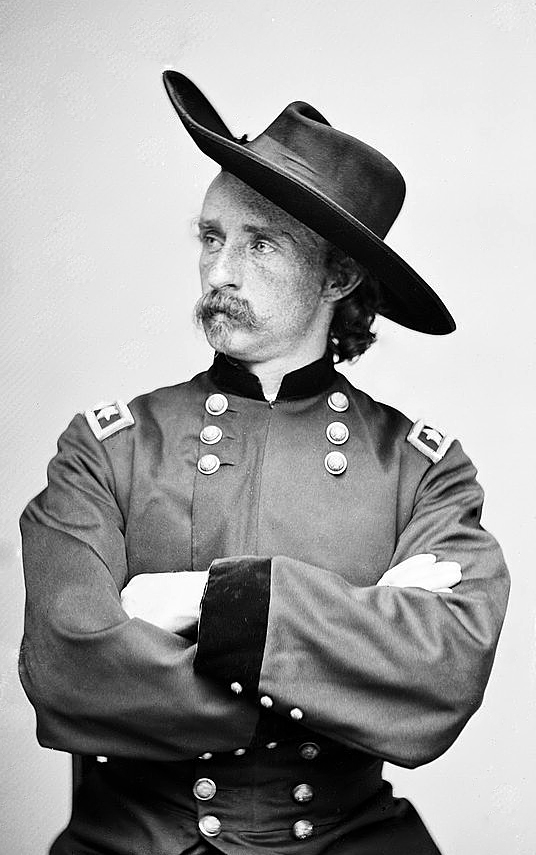
General Custer's Contribution


A consumer's guide to national intelligence networks

Friday, June 05, 2009

Not crude at all

...America is not the crude stereotype of a self-interested empire...


If you say so, Barry. We do, however, fit the stereotype of a dysfunctional self-destructive narcissistic empire.


There are some you'd better tell first.

A 'Gazillion'

...A Secret Service spokesman said there will be no further comment on the case because it involves protective intelligence.

"This is one of a gazillion cases, " the spokesman told ABC News. "It's not that out of the ordinary. We see this day in and day out."


Sure, I'm sure there are people that deposit a legitimate $85,000 check, make threats of violence against everyone, and withdraw it again every day.

We call such people "criminals".

Usually we call the people who let them do it- or believe such explanations from the Feds about it- "idiots".

Thursday, June 04, 2009

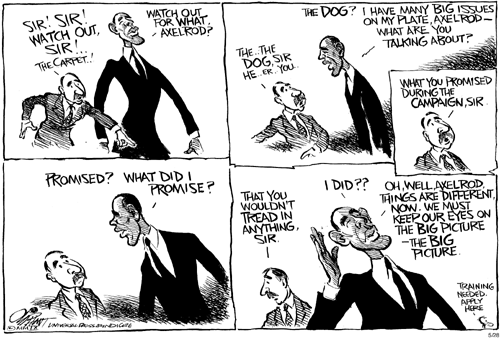
The Big Picture Underfoot


Jack Kennedy ignored the Big Picture according to the Company. One suspects this lesson came home quite clearly to the One. It certainly did to LBJ.

Dick Nixon saw the Big Picture quite clearly until he started to ignore his backers.


The One observed this lesson, too.

Wednesday, June 03, 2009

Liar

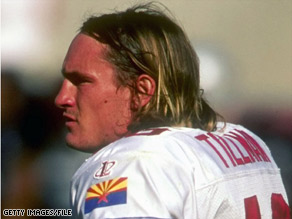
So says Pat Tillman's mom:

WASHINGTON (CNN) -- The latest explanation for why Pat Tillman's Silver Star citation failed to mention that friendly fire killed the former NFL star in Afghanistan is another lie by the U.S. military, Tillman's mother said Tuesday.

Mary Tillman was responding to remarks made Tuesday by the general nominated to lead Allied forces in Afghanistan, who apologized before a Senate committee for his role in the matter.

Lt. Gen. Stanley McChrystal told the Senate Armed Services Committee that he helped expedite the Silver Star award for Tillman before confirming that the Army corporal was killed by friendly fire in 2004.

Tillman's family has long complained that the memorial service, which included the Silver Star presentation, deliberately avoided mention of fratricide.

McChrystal acknowledged the problem Tuesday, calling it a mistake. He said the Silver Star citation was "not well-written" but denied any intent to mislead.

"I didn't see any activity by anyone to deceive," he said.

Mary Tillman said McChrystal knew at the memorial service that her son died from friendly fire.

"McChrystal was lying," she said of his comments Tuesday. "He said he didn't know for certain Pat was killed by fratricide. That isn't true in and of itself, but the fact is, it doesn't matter whether he knew it for certain."

... "If the Army chain of command didn't know what happened to Pat, why did it present us with a false story" at the memorial service? Tillman asked. "That is not an error; that is not a misstep; that is deliberate deception. McCain was at Pat's service. He was read a false narrative like the rest of us. Where is his outrage? Did he know all along?"

Investigations by the Army's Criminal Investigations Division and the Defense Department's inspector general concluded that officers in Tillman's chain of command knew almost immediately that he had been killed by fire from his own platoon. That information, however, was withheld from his family for more than a month, in violation of Army regulations...


The ruthless will always use the noble to achieve their own ends. Especially if the noble see something the ruthless want to hide, and let the ruthless know they're walking and talking about it. Anyone remember this?

SAN FRANCISCO Army medical examiners were suspicious about the close proximity of the three bullet holes in Pat Tillman's forehead and tried without success to get authorities to investigate whether the former NFL player's death amounted to a crime, according to documents obtained by The Associated Press.

"The medical evidence did not match up with the, with the scenario as described," a doctor who examined Tillman's body after he was killed on the battlefield in Afghanistan in 2004 told investigators.

The doctors - whose names were blacked out - said that the bullet holes were so close together that it appeared the Army Ranger was cut down by an M-16 fired from a mere 10 yards or so away.

Ultimately, the Pentagon did conduct a criminal investigation, and asked Tillman's comrades whether he was disliked by his men and whether they had any reason to believe he was deliberately killed. The Pentagon eventually ruled that Tillman's death at the hands of his comrades was a friendly-fire accident.

The medical examiners' suspicions were outlined in 2,300 pages of testimony released to the AP this week by the Defense Department in response to a Freedom of Information Act request.

Among other information contained in the documents:

-- In his last words moments before he was killed, Tillman snapped at a panicky comrade under fire to shut up and stop "sniveling."

-- Army attorneys sent each other congratulatory e-mails for keeping criminal investigators at bay as the Army conducted an internal friendly-fire investigation that resulted in administrative, or non-criminal, punishments.

-- The three-star general who kept the truth about Tillman's death from his family and the public told investigators some 70 times that he had a bad memory and couldn't recall details of his actions.

-- No evidence at all of enemy fire was found at the scene - no one was hit by enemy fire, nor was any government equipment struck...


That General who lied 70 times?

Lt. Gen. Stanley McChrystal, soon to be our Man in the AfPak theater.

The Biggest Social Issues in America

...are not, of course, what The New York Pravda wants you to think they are.

There are all kinds of culture wars in America today. I would suggest that, as he was during most of the Bu$h administration, Mr. Brooks is engaging in wishful thinking.

Unfortunately, Guns, Gays and Abortions really aren’t the biggest social issue in America today, again regardless of what Mr. Brooks believes. However, they do provide nice distractions for the main$tream to waste time prattling about. They also serve to invoke the wrath of the shortsighted.

The biggest issues are the looting of America by the banksters, the Endless War for Empire, and the dominance of their financial-military industrial complex. Most of America exists in a state of debt peonage, and our corporate owners won’t be happy until we all live in a state of post-industrial feudalism. However, it does not profit Pravda to raise this issue.

The Company's Guy in Afghanistan


This can't possibly go wrong:

Yes, Stanley McChrystal is the general from the dark side (and proud of it). So the recent sacking of Afghan commander General David McKiernan after less than a year in the field and McChrystal's appointment as the man to run the Afghan War seems to signal that the Obama administration is going for broke. It's heading straight into what, in the Vietnam era, was known as "the big muddy."

General McChrystal comes from a world where killing by any means is the norm and a blanket of secrecy provides the necessary protection. For five years he commanded the Pentagon's super-secret Joint Special Operations Command (JSOC), which, among other things, ran what Seymour Hersh has described as an "executive assassination wing" out of Vice President Cheney's office. (Cheney just returned the favor by giving the newly appointed general a ringing endorsement: "I think you'd be hard put to find anyone better than Stan McChrystal.")


...In the Bush years, McChrystal was reputedly extremely close to Secretary of Defense Donald Rumsfeld. The super-secret force he commanded was, in fact, part of Rumsfeld's effort to seize control of, and Pentagonize, the covert, on-the-ground activities that were once the purview of the CIA.


Behind McChrystal lies a string of targeted executions that may run into the hundreds, as well as accusations of torture and abuse by troops under his command (and a role in the cover-up of the circumstances surrounding the death of Army Ranger and former National Football League player Pat Tillman). The general has reportedly long thought of Afghanistan and Pakistan as a single battlefield, which means that he was a premature adherent to the idea of an Af-Pak -- that is, expanded -- war. While in Afghanistan in 2008, the New York Times reported, he was a "key advocate... of a plan, ultimately approved by President George W. Bush, to use American commandos to strike at Taliban sanctuaries in Pakistan." This end-of-term Bush program provoked such anger and blowback in Pakistan that it was reportedly halted after two cross-border raids, one of which killed civilians.

...And here's the good news: We luv the guy. Just luv him to death.

We loved him back in 2006, when Bush first outed him and Newsweek reporters Michael Hirsh and John Barry dubbed him "a rising star" in the Army and one of the "Jedi Knights who are fighting in what Cheney calls 'the shadows.'"

It's no different today in what's left of the mainstream news analysis business. In that mix of sports lingo, Hollywood-ese, and just plain hyperbole that makes armchair war strategizing just so darn much fun, Washington Post columnist David Ignatius, for instance, claimed that Centcom commander General David Petraeus, who picked McChrystal as his man in Afghanistan, is "assembling an all-star team" and that McChrystal himself is "a rising superstar who, like Petraeus, has helped reinvent the US Army." Is that all?

When it came to pure, instant hagiography, however, the prize went to Elisabeth Bumiller and Mark Mazzetti of the New York Times, who wrote a front-pager, "A General Steps from the Shadows," that painted a picture of McChrystal as a mutant cross between Superman and a saint.

Among other things, it described the general as "an ascetic who... usually eats just one meal a day, in the evening, to avoid sluggishness. He is known for operating on a few hours' sleep and for running to and from work while listening to audio books on an iPod... [He has] an encyclopedic, even obsessive, knowledge about the lives of terrorists... [He is] a warrior-scholar, comfortable with diplomats, politicians..." and so on. The quotes Bumiller and Mazzetti dug up from others were no less spectacular: "He's got all the Special Ops attributes, plus an intellect." "If you asked me the first thing that comes to mind about General McChrystal... I think of no body fat."


From the gush of good cheer about his appointment, you might almost conclude that the general was not human at all, but an advanced android (a good one, of course!) and the "elite" world (of murder and abuse) he emerged from an unbearably sexy one.

Above all, as we're told here and elsewhere, what's so good about the new appointment is that General McChrystal is "more aggressive" than his stick-in-the-mud predecessor. He will, as Bumiller and Thom Shanker report in another piece, bring "a more aggressive and innovative approach to a worsening seven-year war." The general, we're assured, likes operations without body fat, but with plenty of punch. And though no one quite says this, given his closeness to Rumsfeld and possibly Cheney, both desperately eager to "take the gloves off" on a planetary scale, his mentality is undoubtedly a global-war-on-terror one, which translates into no respect for boundaries, restraints, or the sovereignty of others. After all, as journalist Gareth Porter pointed out recently in a thoughtful Asia Times portrait of the new Afghan War commander, Secretary of Defense Donald Rumsfeld granted the parent of JSOC, the Special Operations Command (SOCOM), "the authority to carry out actions unilaterally anywhere on the globe."

Think of McChrystal's appointment, then, as a decision in Washington to dispatch the bull directly to the China shop with the most meager of hopes that the results won't be smashed Afghans and Pakistanis. The Post's Ignatius even compares McChrystal's boss Petraeus and Obama's special envoy to the region, Richard Holbrooke, to "two headstrong bulls in a small paddock." He then concludes his paean to all of them with this passage -- far more ominous than he means it to be:

"Obama knows the immense difficulty of trying to fix a broken Afghanistan and make it a functioning, modern country. But with his two bulls, Petraeus and Holbrooke, he's marching his presidency into the 'graveyard of empires' anyway."

McChrystal is evidently the third bull, the one slated to start knocking over the tombstones...


Now this is only a small fraction of the interesting reading [with a tip o'teh tinfoil to the Dark Wraith] about the comedy of errors erupting from Barry O.'s trust of the Company to end its favorite passtime: the Endless War on Terra.

Not Exactly Your Average Arab

Somebody should really tell Barry O. holding hands with King Abdullah isn't the way you "open a Muslim dialogue".

Tuesday, June 02, 2009

Welcome to the Desert of the Real

Dean Baker:

Last week we got a whole series of bad reports on the state of the economy. New and existing home sales both remain near their lowest level for the downturn, as house prices continue to drop at the rate of 2% a month. New orders for capital goods, a key measure of investment demand, fell by 2% in April. Excluding the volatile transportation sector, new orders were still down by 1.5%.

On Friday, the Chicago Purchasing Managers Index fell by more than 5 percentage points from its April level, approaching its low for the downturn. The employment component of the index did hit a new low.

These reports might have led to gloomy news stories, but not in the US media. The folks who could not see an $8 trillion housing bubble are still determined to find the silver lining in even the worst economic news.

For example, National Public Radio told listeners that the new home sales figure reported for April was up from the March level. While this was true, the April figure was only 1,000 higher than a March level that had just been revised down by 5,000. April new home sales were 4,000 below the sales level that had originally been reported for March. USA Today touted a "surge" in durable goods orders, which was also based on a sharp downward revision to the prior month's data.

The media have obviously abandoned economic reporting and instead have adopted the role of cheerleader, touting whatever good news it can find and inventing good news when none can be found. This leaves the responsibility of reporting on the economy to others.

Any serious examination of the data shows that recovery is nowhere in sight. The basic story of the downturn is painfully simple. We have seen a collapse of a housing bubble which has devastated the construction sector and also caused consumption to plunge.

The construction sector is suffering from the enormous overbuilding during the bubble years. Measured in months of sales, the inventories of both new and existing homes are close to double their normal levels. This inventory will ensure that construction remains badly depressed at least through 2010, if not much longer.

The plunge in house prices has sent consumption plummeting. The problem is not consumer attitudes, as many commentators seem to believe. Rather, the reason that most homeowners aren't buying a lot right now is the same reason that homeless people don't buy a lot of things: they don't have the money...

...There are other ways in which the government could quickly generate new demand, but these will not be seriously discussed until there is more general recognition that additional stimulus is needed. At some point it will be impossible to conceal the bad news and Congress' attention will return to stimulus. But the media's reality defying happy talk on the economy is delaying this moment.


Sorry, Mr. Baker. The only stimulus the Feds are interested in are bucks for the banksters that own them. This recession is doing exactly what it was intended to do: enforce debt peonage on the American people.

It's Not Easy to Steal These Commons

But they'll keep trying.

The internet was cobbled together by the D.o'D. with the aid of a lot of independence oriented engineers and scientists. Since its inception it's been the favorite of the most educated, although since Al Gore opened the way to its commercialization many of us feel it's gone downhill. When the Company comes to town that's inevitable.

Net neutrality has been central to keeping the wilds of cyberspace open.

But the banksters don't like it.

SAN FRANCISCO (Reuters) - If the global recession has made companies focus on business plans with solid financial returns, the Internet remains its own autonomous trade zone, free from the reach of the standard rules.

Executives from the world's top technology and media companies convened near San Diego last week to discuss the future of their businesses and to tout new products that make the Internet more social and more mobile.

But from Hulu.com to Twitter to Microsoft Corp (MSFT.O), the heady talk of new Web technology and innovation was matched by the continuing inability by many of the industry's leaders to make money from their creations, no matter how popular.

"The consumer is deciding where they're going to spend their time, now we've got to figure out what the monetization model is," said Raj Kapoor, a managing director at the Mayfield Fund venture capital firm, who attended the All Things Digital conference...


The problem being of course the hardened denizens of cyberspace refuse to consume what the ad men push. Ignoring the ads. Making shareware to block pop-ups and site redirection. Writing their own code. Forming and debating and independently assessing information and opinions without the guidence of the main$tream.

Many of us prefer the label citizens to consumers and there lies the rub.

The banksters have sewn up the stealing the goose from off the common, but without pay-per-click they can not steal the common from the goose.

Monday, June 01, 2009

Green Shoots

Hey, Larry!

...Last month, a little-known company where Summers served on the board of directors received a $42 million investment from a group of investors, including three banks that Summers, Obama’s effective “economy czar,” has been doling out billions in bailout money to: Goldman Sachs, Citigroup and Morgan Stanley. The banks invested into the small startup company Revolution Money, right at the time when Summers was administering the “stress test” to these same banks.

A month after they invested in Summers’ former company, all three banks came out of the stress test much better than anyone expected—thanks to the fact that the banks themselves were allowed to help decide how bad their problems were. (Citigroup “negotiated” down its financial hole from $35 billion to $5.5 billion...)


Good to see where some of those Incentive bucks are going.

Other Options

Some people just do not get it:

WASHINGTON (Reuters) - The Federal Reserve is studying significant moves in the U.S. government bond market last week that could have big implications for the central bank's strategy to combat the country's recession.

But the Fed is not really sure what is driving the sharp rise in long-dated bond yields, and especially a widening gap between short and long term yields.

Do rising U.S. Treasury yields and a steepening yield curve suggest an economic recovery is more certain, meaning less need for safe haven government bonds and a healthy demand for credit? If so, there might be less need for the Fed to expand the money supply by buying more U.S. Treasuries.

Or does the steepening yield curve mean investors are worried about the deterioration in the U.S. fiscal outlook, or the potential for a collapse in the U.S. dollar as the Fed floods the world with newly minted currency as part of its quantitative easing program. This might be an argument to augment to step up asset purchases.

Another possibility is that China, the largest foreign holder of U.S. Treasury debt, has decided to refocus its portfolio by leaning more heavily on shorter-term maturities...


Try this one on for size, campers: Chaos is the plan, and there is a lot of money to be made if Obama can not produce a recovery.

Not to mention Preznit Jebbie in 2012.