Saturday, April 26, 2008


Qualifying Exam
Dick Cavett seems to have gotten a server full of comments for saying that General Petreus's chest full of medals would be awfully impressive to a 12 year old.
So just to be clear, he talks about the special test that West Point gave for another General.
How about sit in the Pentagon at head of Centcom, and send those men into that camp from the comfort of your office to make sure all those shiny medals don't get mussed?
So just to be clear, he talks about the special test that West Point gave for another General.
...Problem: One of your men, a 30-year veteran of the Indian Wars, informs you that the largest encampment of Indians he has ever seen, comprising countless Sioux, Cheyenne and a few Arapaho lodges, stretches for several miles along the river bank and would contain an estimated 1,200 armed warriors. You have fewer than 300 men. You should:
A. Laugh in his face.
B. Get into the center of a large city.
C. Charge into the middle of the camp and speak to those savages in no uncertain terms.
D. Wish that cell phones had been invented.
E. Give them presents. They are like children and love anything shiny. Should you have a copy of “The Golden Treasury of Poetry,” Sitting Bull is fond of Emily Dickinson.
F. Attack them boldly, kissing your men, your arse and your scalp goodbye.
How about sit in the Pentagon at head of Centcom, and send those men into that camp from the comfort of your office to make sure all those shiny medals don't get mussed?
Friday, April 25, 2008
The Matrix of Endless War
How deep is the rabbit hole? Nick Turse definitely ate the red pill. You need to read the whole thing to get the feel of the Matrix, but here's the highlights:
How are you going to end a war that everyone who's anyone makes billions off of?
How are you going to end a war that's becoming more than the fabric- the food, the water, the air of a nation's economy?
How can you end a war that those who would Rule strive to make more essential to everyone every day?
...the Pentagon has long poured U.S. tax dollars into private coffers to arm and outfit the military and enable it to function. At the time of Eisenhower's farewell address, New York Times reporter Jack Raymond noted that the Pentagon was spending "$23,000,000,000 a year for services and procurement of guns, missiles, airplanes, electronic devices, vehicles, tanks, ammunition, clothing and other military goods." Today, that would equal around $200 billion. In 2007, the Department of Defense's stated budget was $439 billion. Counting the costs of its wars in Iraq and Afghanistan, the number jumps to over $600 billion. Factoring in all the many related activities carried out by other agencies, actual U.S. national security spending is nearly $1 trillion per year.
Back in Eisenhower's day, arms dealers and mega-corporations, such as Lockheed and General Motors, held sway over the corporate side of the military-industrial complex. Companies like these still play an extremely powerful role today, but they are dwarfed by the sheer number of contractors that stretch from coast to coast and across the globe. Looking at the situation in 1970, almost 10 years after Eisenhower's farewell speech, Sidney Lens, a journalist and expert on U.S. militarism, noted that there were 22,000 prime contractors doing business with the U.S. Department of Defense. Today, the number of prime contractors tops 47,000 with subcontractors reaching well over the 100,000 mark, making for one massive conglomerate touching nearly every sector of society, from top computer manufacturer Dell (the 50th-largest DoD contractor in 2006) to oil giant ExxonMobil (the 30th) to package-shipping titan FedEx (the 26th).
In fact, the Pentagon payroll is a veritable who's who of the top companies in the world: IBM; Time-Warner; Ford and General Motors; Microsoft; NBC and its parent company, General Electric; Hilton and Marriott; Columbia TriStar Films and its parent company, Sony; Pfizer; Sara Lee; Procter & Gamble; M&M Mars and Hershey; Nestlé; ESPN and its parent company, Walt Disney; Bank of America; and Johnson & Johnson among many other big-name firms. But the difference between now and then isn't only in scale. As this list suggests, Pentagon spending is reaching into previously neglected areas of American life: entertainment, popular consumer brands, sports. This penetration translates into a remarkable variety of forms of interaction with the public.
...Today, just about every supermarket staple -- from Ballpark Franks (Sara Lee) and Eggo waffles (Kelloggs) to Jell-O (Kraft) and Coffee Mate (Nestle) -- has ties to the Pentagon. The same holds for many household appliances...
...During Ike's time, when civilian firms like Ford and AT&T were the big military suppliers, the payroll showed an utter lack of cool companies. Now, the Pentagon is reaching into virgin territory in new ways with new partners. Today, hip firms like Apple, Google, and Starbucks are also on DoD contractors' lists. And while Ike's complex was typified by brass bands and patriotic parades, today's variant is a flashy digitized world of video games, extreme sports, and everything cool that appeals to potential young recruits.
...At one point in his farewell speech, Eisenhower presaged this point, suggesting, "The total influence -- economic, political, even spiritual -- [of the conjunction of the military establishment and the large arms industry] is felt in every city, every State house, every office of the Federal government." But only Hollywood has yet managed to capture the essence of today's omnipresent, all-encompassing, cleverly hidden system of systems that invades all our lives; this new military-industrial-technological-entertainment-academic-scientific- media-intelligence-homeland security-surveillance-national security-corporate complex that has truly taken hold of America.
How are you going to end a war that everyone who's anyone makes billions off of?
How are you going to end a war that's becoming more than the fabric- the food, the water, the air of a nation's economy?
How can you end a war that those who would Rule strive to make more essential to everyone every day?
Faery Tales
There are people whose main job it is to catapult the propaganda, but some memes are decidedly more destructive than others.
Case in point.

David Brooks is such an utter moron I don't bother reading his columns. It's because almost every premise the man has is deeply flawed. Apparently his column this week was a particular trip into never-land, asking for a return to the midieval days of Knights Errant and Crusades and all that Arthurian sense of wonder.
It was called the Dark Ages for a reason, Bobo.
I'll let the letters to the Editor for Pravda do the heavy lifting:
David Brooks, like William Kristol, is a propagandist hired by edict of the Carlyle Group controlled Board of Directors of The New York Pravda.
But sometimes he comes out with things that are decidedly unprofitable for many in the Company. This was certainly one of them: the Editors saw no reason to support it even faintly, and likely the Directors didn't like it either. He is, thankfully, not posting today.
Case in point.
David Brooks is such an utter moron I don't bother reading his columns. It's because almost every premise the man has is deeply flawed. Apparently his column this week was a particular trip into never-land, asking for a return to the midieval days of Knights Errant and Crusades and all that Arthurian sense of wonder.
It was called the Dark Ages for a reason, Bobo.
I'll let the letters to the Editor for Pravda do the heavy lifting:
...It is preposterous to view the Middle Ages with such nostalgia. The “spiritual powers” that led to such great events as the Inquisition and other mass killings of Jews and the Crusades were most certainly influenced by the false interpretation of celestial configurations and misuse of religious and secular power.
To yearn for such a “faith”-based Arthurian time is naïve. Is this the fantasy world to which conservatives would like to return? Before we wax poetic about the Black Death, we should realize that medieval Europe was a miserable, intolerant place where human life was cheap.
I can certainly think of many other civilizations to wax poetic about, but medieval Europe with its astrological-religious culture is not one of them. The faith-based life of that time serves as a demonstration of how faith can be twisted by those in power or, as we see in the present, those trying to win elections.
Jerry Becker
Albuquerque, April 22, 2008
...We have been “populated with creatures, symbols and tales” for the past seven years. They’ve occupied the White House...
Robert H. Feuerstein
Upper Saddle River, N.J., April 22, 2008
...First, crusading could not have worked any better in our world than it did in the past. The failure of medieval crusades was well known in 2001, for few historical subjects have been so well studied.
Second, just when Europe was full of unfettered violent bullies, some resourceful people invented government to serve the public interest, together with the taxes required to support it. They rightly thought government to be a “good thing...”
Thomas N. Bisson
Cambridge, Mass., April 22, 2008
...The current state of affairs in the Middle East is way too medieval for me.
Jean-ellen McSharry
Stony Creek, Conn., April 22, 2008
...the modern Western world is no less enchanted than the medieval one — it may be more so. Fantasy and science fiction are among the most pervasive forms of contemporary culture. Many people live virtual lives on the Internet.
Rather than fostering a deficit of the imagination, modernity permits people to inhabit multiple worlds of the imagination and to create provisional narratives that impart meaning to daily existence.
This free, rational and ironic use of the imagination — a disenchanted form of enchantment — provides the possibility for greater diversity, tolerance and change than ever existed in the medieval period.
Michael Saler
Davis, Calif., April 22, 2008
...David Brooks is nostalgic for a bygone age when people had a different mentality than today.
In those days, with “childlike emotional intensity” we may have imagined the heavens as “a magical place,” “a ceiling of moving spheres, rippling with signs and symbols.” If only nature could inspire as rich a human imagination in us as it did in them.
That happens continually to us modern scientists. Doing science, whose essence is to understand nature, inspires awe. As a geologist, I plant one foot (metaphorically) in the present day and the other foot in Deep Time.
Yonder sandstone cliff was once the bed of a great flowing river. Imagine that! I wasn’t there then, but the evidence says it literally was so.
Real science is more bizarre, more full of possibilities than medieval people could have imagined. We scientists are just as passionate, romantic and as awe-filled as they were.
Leon E. Long
Austin, Tex., April 23, 2008
David Brooks, like William Kristol, is a propagandist hired by edict of the Carlyle Group controlled Board of Directors of The New York Pravda.
But sometimes he comes out with things that are decidedly unprofitable for many in the Company. This was certainly one of them: the Editors saw no reason to support it even faintly, and likely the Directors didn't like it either. He is, thankfully, not posting today.
Diversionary Tactics
...the sniping among the small and the silly continues, as the real issues are covered up in the preznitial race in 2008.
Then there's the not-so-small and the not-so-silly, that seem to see a bit of the real picture even as they send off a round or two towards the other camp.
From that Clintonista Paul Krugman today Self-Inflicted Confusion
Incorrect, but as far as the main$tream media is willing to talk about, Krugman's right. Both the Oborg and HHHillary have serious policy changes to offer. It's just they aren't that different. None of the talking heads on the tube are addressing them, though.
Back to Krugman:
Well said, Dr. Krugman, except you're delusional if you think HHHillary's been any different. We're all delusional if we think we can keep on letting the main$tream frame the argument for their corporate bosses. If we do, we're faced with the choice of the batshit crazy rethuglican Mc$ame this fall, and a kinder gentler rethuglican.
To metaphrase what Truman said, when a rethuglican and a rethuglican face off against each other, the best thug always wins.
Then there's the not-so-small and the not-so-silly, that seem to see a bit of the real picture even as they send off a round or two towards the other camp.
From that Clintonista Paul Krugman today Self-Inflicted Confusion
...From the beginning, I wondered what Mr. Obama’s soaring rhetoric, his talk of a new politics and declarations that “we are the ones we’ve been waiting for” (waiting for to do what, exactly?) would mean to families troubled by lagging wages, insecure jobs and fear of losing health coverage. The answer, from Ohio and Pennsylvania, seems pretty clear: not much. Mrs. Clinton has been able to stay in the race, against heavy odds, largely because her no-nonsense style, her obvious interest in the wonkish details of policy, resonate with many voters in a way that Mr. Obama’s eloquence does not.
Yes, I know that there are lots of policy proposals on the Obama campaign’s Web site. But addressing the real concerns of working Americans isn’t the campaign’s central theme...
Incorrect, but as far as the main$tream media is willing to talk about, Krugman's right. Both the Oborg and HHHillary have serious policy changes to offer. It's just they aren't that different. None of the talking heads on the tube are addressing them, though.
Back to Krugman:
...The question Democrats, both inside and outside the Obama campaign, should be asking themselves is this: now that the magic has dissipated, what is the campaign about? More generally, what are the Democrats for in this election?
That should be an easy question to answer. Democrats can justly portray themselves as the party of economic security, the party that created Social Security and Medicare and defended those programs against Republican attacks — and the party that can bring assured health coverage to all Americans.
They can also portray themselves as the party of prosperity: the contrast between the Clinton economy and the Bush economy is the best free advertisement that Democrats have had since Herbert Hoover.
But the message that Democrats are ready to continue and build on a grand tradition doesn’t mesh well with claims to be bringing a “new politics” and rhetoric that places blame for our current state equally on both parties.
And unless Democrats can get past this self-inflicted state of confusion, there’s a very good chance that they’ll snatch defeat from the jaws of victory this fall.
Well said, Dr. Krugman, except you're delusional if you think HHHillary's been any different. We're all delusional if we think we can keep on letting the main$tream frame the argument for their corporate bosses. If we do, we're faced with the choice of the batshit crazy rethuglican Mc$ame this fall, and a kinder gentler rethuglican.
To metaphrase what Truman said, when a rethuglican and a rethuglican face off against each other, the best thug always wins.
Thursday, April 24, 2008
Energy Futures
It's just how the game is played.
It looks pretty much like they're hedging their bets this year (tip o'teh tinfoil to the Center for Responsive Politics).
That's over a million they gave Rudy! 9u11iani and the Mittster. HHHillary's gotten almost as much ($289,950) as Mc$ame ($291,685), and both are a long way ahead of Obama ($163,840).
But it's pretty clear none of these three are likely to stop the bleeding and none of them are really going to talk about what needs to be done.
By Dan Morain, Los Angeles Times Staff Writer
10:45 PM PDT, April 23, 2008
Sen. Barack Obama continued accepting donations from oil company executives and employees last month even as he aired ads in which he stated he took no oil company money, his campaign finance reports show.
Obama has taken at least $263,000 from oil company executives, family members and employees since entering the presidential race last year, including $46,000 last month. At least $140,000 has come in chunks of between $1,000 and $2,300, the maximum permitted under federal law.
Texas oil executive Robert L. Cavnar of Milagro Exploration and his wife, Gracie, have helped the Illinois Democrat raise at least another $50,000 by helping host a fundraiser earlier in the campaign.
Other oil industry donors have included Sinclair Oil President Ross Matthews of Texas and John B. Hess, chairman of Hess Corp., a New York-based oil producer and retailer with operations worldwide. Hess, who has given to other presidential candidates, including Sen. John McCain, gave $2,300 to Obama last year, as did his wife, Susan. Hess gave $14,000 to Obama's Senate run in 2003. The oil executives did not return phone calls.
In the weeks leading up to the Pennsylvania primary, Obama aired a campaign spot in Indiana and Pennsylvania that sought to reinforce his theme that he would change the Washington culture, while also tapping into voter distress about the high price of gasoline. In the ad, he called for a windfall profits "penalty."
"Since the gas lines of the '70s, Democrats and Republicans have talked about energy independence but nothing's changed -- except now Exxon's making $40 billion a year and we're paying $3.50 for gas. I'm Barack Obama. I don't take money from oil companies or Washington lobbyists, and I won't let them block change anymore," says the spot, which aired as recently as April 8.
Obama's ad is factually correct. He does not take money from oil companies. A 1907 federal law bars all corporations from giving money to political candidates. However, oil company employees can make donations.
It looks pretty much like they're hedging their bets this year (tip o'teh tinfoil to the Center for Responsive Politics).
That's over a million they gave Rudy! 9u11iani and the Mittster. HHHillary's gotten almost as much ($289,950) as Mc$ame ($291,685), and both are a long way ahead of Obama ($163,840).
But it's pretty clear none of these three are likely to stop the bleeding and none of them are really going to talk about what needs to be done.
The Non-Video Video
The video of the perfidous Norkies in Syria is really a PowerPoint of stills. With some pictures apparently from 1992. [tip o'teh tinfoil to b]
Cheneyburton sure could use a nice new war about now.
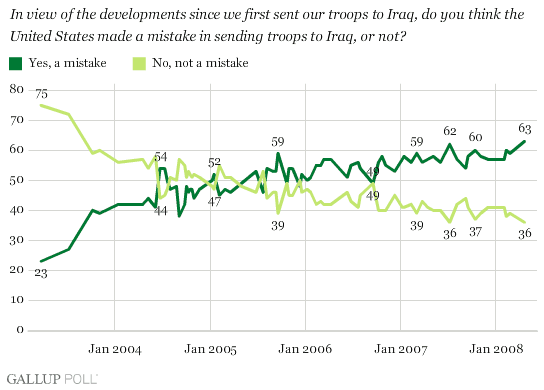
Glenn Greenwald does a better job of deconstructing this than I could. Yes Virginia, it is a non-video video.
Cheneyburton sure could use a nice new war about now.
Glenn Greenwald does a better job of deconstructing this than I could. Yes Virginia, it is a non-video video.
Wednesday, April 23, 2008
The Turning Tide

No, but they may have created a black hole.
It's defeat from the jaws of victory in 2008, but the optimists look on the bright side.

Not likely, alas. Even the bad solution offered by the Clintonista is better than this:

Speaking of black holes [tip o'the tinfoil to Atrios], apparently the American Taliban just joined the McCainiacs who are gonna run wild on you.
It's okay to hate Americans as long as you love 'Murika, as the gyre tightens.

Tuesday, April 22, 2008

Serious Solutions from $erious $oldiers
Digby says that if we're going to try to stop the privatization of the U.S. military, now's the time.
Once upon a time there were professional military who disdained the use of mercenaries.
No more. Now we're told they're part of the Serious solution to the War on Terra.
From Hayden to Petraeus on down, the patriots have been replaced by the Company zealots.
"We're doing a lot of good in Iraq", the man in the dusty Future Combat Warfighter costume says against a ancient barren backgroud, "I'm glad to be here".
The Marines serve as a training ground for Blackwater. The Air Force produces the zealots that inhabit CSC/ DynCorp, which with In-Q-Tel rules NASA for its spy satellite network.
Defund them? We'll be lucky to survive them. Any politician who just tries to cut off their black budgets will be sanctioned with extreme prejudice.
We have to defuse this time bomb clicking down to an Apocalypse designed to produce hegemony.
Monday, April 21, 2008
$peculators
Energy came first, prey fallen to the forces of deregulation.
Now they're after your food supply.
Let's check Krugman's take on this:
That's particularly true if the Company thinks it can get an edge on it.
But the problem lies in knowing where the edge is and which way to cut. But here's something from someone who's seen the edge of the flat earth approaching for awhile. Kevin Phillips has a new book out:
It's a pretty safe bet the Big Shitpile will end up as golden fertilizer for someone.
In this corner of the multiverse, everything goes somewhere, and usually them that has the gold makes the rules.
Now they're after your food supply.
Let's check Krugman's take on this:
...the global surge in commodity prices is reviving a question we haven’t heard much since the 1970s: Will limited supplies of natural resources pose an obstacle to future world economic growth?
How you answer this question depends largely on what you believe is driving the rise in resource prices. Broadly speaking, there are three competing views.
The first is that it’s mainly speculation — that investors, looking for high returns at a time of low interest rates, have piled into commodity futures, driving up prices. On this view, someday soon the bubble will burst and high resource prices will go the way of Pets.com.
The second view is that soaring resource prices do, in fact, have a basis in fundamentals — especially rapidly growing demand from newly meat-eating, car-driving Chinese — but that given time we’ll drill more wells, plant more acres, and increased supply will push prices right back down again.
The third view is that the era of cheap resources is over for good — that we’re running out of oil, running out of land to expand food production and generally running out of planet to exploit.
I find myself somewhere between the second and third views.
There are some very smart people — not least, George Soros — who believe that we’re in a commodities bubble (although Mr. Soros says that the bubble is still in its “growth phase”). My problem with this view, however, is this: Where are the inventories?
Normally, speculation drives up commodity prices by promoting hoarding. Yet there’s no sign of resource hoarding in the data: inventories of food and metals are at or near historic lows, while oil inventories are only normal.
The best argument for the second view, that the resource crunch is real but temporary, is the strong resemblance between what we’re seeing now and the resource crisis of the 1970s.
What Americans mostly remember about the 1970s are soaring oil prices and lines at gas stations. But there was also a severe global food crisis, which caused a lot of pain at the supermarket checkout line — I remember 1974 as the year of Hamburger Helper — and, much more important, helped cause devastating famines in poorer countries.
In retrospect, the commodity boom of 1972-75 was probably the result of rapid world economic growth that outpaced supplies, combined with the effects of bad weather and Middle Eastern conflict. Eventually, the bad luck came to an end, new land was placed under cultivation, new sources of oil were found in the Gulf of Mexico and the North Sea, and resources got cheap again.
But this time may be different: concerns about what happens when an ever-growing world economy pushes up against the limits of a finite planet ring truer now than they did in the 1970s.
For one thing, I don’t expect growth in China to slow sharply anytime soon. That’s a big contrast with what happened in the 1970s, when growth in Japan and Europe, the emerging economies of the time, downshifted — and thereby took a lot of pressure off the world’s resources.
Meanwhile, resources are getting harder to find. Big oil discoveries, in particular, have become few and far between, and in the last few years oil production from new sources has been barely enough to offset declining production from established sources.
And the bad weather hitting agricultural production this time is starting to look more fundamental and permanent than El Niño and La Niña, which disrupted crops 35 years ago. Australia, in particular, is now in the 10th year of a drought that looks more and more like a long-term manifestation of climate change.
Suppose that we really are running up against global limits. What does it mean?
Even if it turns out that we’re really at or near peak world oil production, that doesn’t mean that one day we’ll say, “Oh my God! We just ran out of oil!” and watch civilization collapse into “Mad Max” anarchy.
But rich countries will face steady pressure on their economies from rising resource prices, making it harder to raise their standard of living. And some poor countries will find themselves living dangerously close to the edge — or over it.
Don’t look now, but the good times may have just stopped rolling.
That's particularly true if the Company thinks it can get an edge on it.
But the problem lies in knowing where the edge is and which way to cut. But here's something from someone who's seen the edge of the flat earth approaching for awhile. Kevin Phillips has a new book out:
... Mr. Phillips begins with an overview of the current debt debacle. The 1980s were the start of “three profligate decades,” when the expansion of mortgage credit and the invention of financial instruments like collateralized debt obligations (C.D.O.’s) led to an orgy of leveraging and irresponsible speculation. The Federal Reserve kept the bubble afloat with easy money, while regulators and ratings agencies looked the other way.
By 2007 total indebtedness was three times the size of the gross domestic product, a ratio that surpassed the record set in the years of the Great Depression. From 2001 to 2007 alone, domestic financial debt grew to $14.5 trillion from $8.5 trillion, and home mortgage debt ballooned to almost $10 trillion from $4.9 trillion, an increase of 102 percent. A crisis in the mortgage market in August 2007 brought the party to an end. Since then we have been living in a twilight zone of what a security analyst quoted in the book calls “one of the slowest-moving train wrecks we’ve seen.”
The second component of the perfect storm is the upheaval in the oil industry. Domestic production peaked in 1971, and there are signs that production worldwide is also peaking. (Mr. Phillips cites experts who believe it already has.) And with the emergence of new economic powers like China and India, demand has risen dramatically and prices have been climbing steadily; by 2004 a rapidly growing China had become the second largest oil consumer, after the United States. Despite the bad news at the gas pump, however, America has actually been getting a cost break, because the major suppliers price their oil in dollars. But with the dollar falling, OPEC has been talking about moving into other currencies. Were that to happen, “the effects,” Mr. Phillips says tersely, “could be painful.”
Finally, Mr. Phillips turns to what he terms America’s “calcified” political system. We may need new regulations to deal with the debt mess, along with an energy policy to address the changing world of oil, but Washington, he says, has become dedicated to “the politics of evasion,” reluctant to pass dramatic reforms or to call for sacrifice from the public. Democrats and Republicans alike are so entrenched, so dependent on campaign money and special interests, that “the notion of a breath of fresh air has become almost a contradiction in terms.” Instead of a “vital center” in Washington, we now have a “venal center.” Mr. Phillips holds out little hope of improvement from a new president; he doubts that any administration could do much, even though “the crisis is no longer in the future, but upon us...”
...Mr. Phillips writes that the inventors and marketers of the new financial instruments didn’t entirely understand them. An executive of Fidelity International says a panicky feeling has set in on Wall Street because no one knows where the risks really are. The finance minister of France observes that investments may have reached such a level of complexity that no one can assess them. And Charles R. Morris, in his own gloomy book, “The Trillion Dollar Meltdown,” reports that even Citigroup’s chief financial officer “did not know how to value his holdings...”
It's a pretty safe bet the Big Shitpile will end up as golden fertilizer for someone.
In this corner of the multiverse, everything goes somewhere, and usually them that has the gold makes the rules.
Sunday, April 20, 2008
Fair & Balanced
We find out yet again that the security-industrial complex controls the media's analysis of the War on Terra, but not to worry, you know, 'cause it's fair and balanced.

The The Pentagon and mercenary corporations being the two items you're weighing.
It's the competition of the Imperial Court.
So if the media is controlled by the corpocracy perhaps it's not surprising in a time where the economy is falling apart due to corporate policy masquerading as government the media fails to become the message despite its best attempts to Disneyfication of the process:
Note that even in reporting the ineffectiveness of the reporting of their competition, ABC, the corporate line is maintained by Pravda always. "Mr. Obama did sound condescending" stating the obvious fact that the main$tream won't touch. People are mad as hell. They're bitter.
But that is something the main$tream thinks its ad men can talk you out of.
Meanwhile, the Empire continues to function as a smooth machine at the best task it's capable of doing, putting all the fossil carbon back into the atmosphere, which, you know, is all China's fault.

Doubtless this is all China's fault too, according to our fair and balanced analysts. But don't worry, the free market is a rising tide that lifts all boats. The floating ones, anyway.
The rest just have to adjust to their place in the Bu$h economy:

The The Pentagon and mercenary corporations being the two items you're weighing.
...military analysts represent more than 150 military contractors either as lobbyists, senior executives, board members or consultants. The companies include defense heavyweights, but also scores of smaller companies, all part of a vast assemblage of contractors scrambling for hundreds of billions in military business generated by the administration’s war on terror. It is a furious competition, one in which inside information and easy access to senior officials are highly prized...
It's the competition of the Imperial Court.
So if the media is controlled by the corpocracy perhaps it's not surprising in a time where the economy is falling apart due to corporate policy masquerading as government the media fails to become the message despite its best attempts to Disneyfication of the process:
...ABC would not have been so widely pilloried had it not tapped into a larger national discontent with news media fatuousness. The debate didn’t happen in a vacuum; it was the culmination of the orgy of press hysteria over Mr. Obama’s remarks about “bitter” small-town voters. For nearly a week, you couldn’t change channels without hearing how Mr. Obama had destroyed his campaign with this single slip at a San Francisco fund-raiser. By Wednesday night, the public was overdosing.
Mr. Obama did sound condescending, an unappealing trait that was even more naked in his “You’re likable enough, Hillary” gibe many debates ago. But the overreaction to this latest gaffe backfired on the media more than it damaged him. For all the racket about “Bittergate” — and breathless intimations of imminent poll swings and superdelegate stampedes — the earth did not move. The polls hardly budged, and superdelegates continued to migrate mainly in Mr. Obama’s direction...
Note that even in reporting the ineffectiveness of the reporting of their competition, ABC, the corporate line is maintained by Pravda always. "Mr. Obama did sound condescending" stating the obvious fact that the main$tream won't touch. People are mad as hell. They're bitter.
But that is something the main$tream thinks its ad men can talk you out of.
Meanwhile, the Empire continues to function as a smooth machine at the best task it's capable of doing, putting all the fossil carbon back into the atmosphere, which, you know, is all China's fault.
Doubtless this is all China's fault too, according to our fair and balanced analysts. But don't worry, the free market is a rising tide that lifts all boats. The floating ones, anyway.
The rest just have to adjust to their place in the Bu$h economy:
Saturday, April 19, 2008
Another Episode of What Bob Herbert Said
Reproduced in part here for your education:
Absolutely agreed. From a reality-based perspective, every time the Republicans open their mouths about policy they drive more voters into the Democratic camp. The Republicans have to keep trying to catapult the Company propaganda, even though they try very hard to seem as vacuous as possible.
Most would be Democrats are hampered by the sense of the Unthinkable. It's unthinkable that the United States is an imperial power. It's unthinkable that the Shock Doctrine really defines the face of Amerika to the world. It's unthinkable that people who wear flag pin lapels should be mostly concerned with dismantling the Constitution, or that the last thing the republicans or democratic leadership want is Republican Democracy.
The sense of denial in the American people, the tendency of Democrats to fight about trivial ego, and the willingness of the republican corpocracy to simply lie will lose this election yet.
Road Map to Defeat
...what are the Democrats doing? The Clintons are running around with flamethrowers, gleefully trying to incinerate the prospects of the party’s leading candidate, Barack Obama. As Bill Clinton put it last month: “If a politician doesn’t want to get beat up, he shouldn’t run for office.”
Senator Obama, for his part, seems to have lost sight of the unifying message that proved so compelling early in his campaign and has stumbled into weird cultural predicaments that have caused some people to rethink his candidacy.
While some of those predicaments raise legitimate concerns (his former pastor, his comments in San Francisco) and some do not (stupid questions about wearing a flag pin), he has allowed them to fester unnecessarily. The way for a candidate to eventually change the subject is to offer policy prescriptions so creative and compelling that they generate excitement among the electorate and can’t be ignored by the press.
Voters want more from Senator Obama. He’s given a series of wonderful speeches, but he has to add more meat to those rhetorical bones. He needs to be clear about where he wants to lead this country and how he plans to do it. That’s how a candidate defines himself or herself.
Instead, Mr. Obama is allowing the Clintons and the news media to craft a damaging persona of him as some kind of weak-kneed brother from another planet, out of touch with mainstream America, and perhaps a loser.
...The big issues of our time are being left behind as pettiness and mean-spirited partisanship carry the day.
Voters across the country seem disgusted with this state of affairs. George Stephanopoulos and Charles Gibson of ABC News are being pilloried for the way they conducted Wednesday’s debate. Hillary Clinton’s disapproval ratings have climbed into a zone that makes it legitimate to wonder whether she could defeat Senator McCain. And much of the excitement and enthusiasm surrounding Mr. Obama’s candidacy has cooled.
That raucous laughter you hear in the background is coming from the likes of Karl Rove, Dick Cheney, President Bush and Senator McCain. They can’t believe their good fortune.
The issues still favor the Democrats. More and more Americans are losing their jobs, and many of those still employed are working fewer hours and cashing smaller paychecks. Vacation plans are being curtailed because of declining family income and sky-high gasoline prices. The value of the family home is eroding.
Instead of capitalizing on the political advantages presented by these issues, the Democrats, with their increasingly small-minded approach to this election, are squandering them...
It’s not too late for the Democrats to pull this off. But there’s already blood on the floor from the nomination fight, and the fight ain’t over. The G.O.P.’s fondest wish is that the Democrats keep doing what they’re doing.
Absolutely agreed. From a reality-based perspective, every time the Republicans open their mouths about policy they drive more voters into the Democratic camp. The Republicans have to keep trying to catapult the Company propaganda, even though they try very hard to seem as vacuous as possible.
Most would be Democrats are hampered by the sense of the Unthinkable. It's unthinkable that the United States is an imperial power. It's unthinkable that the Shock Doctrine really defines the face of Amerika to the world. It's unthinkable that people who wear flag pin lapels should be mostly concerned with dismantling the Constitution, or that the last thing the republicans or democratic leadership want is Republican Democracy.
The sense of denial in the American people, the tendency of Democrats to fight about trivial ego, and the willingness of the republican corpocracy to simply lie will lose this election yet.
Friday, April 18, 2008
They're Going to Steal It
You can not make this up. Trolling Think Progress tonight smacks me with a simple realization:
Bu$hie claims to be at the cutting edge of the War on Carbon.
Meanwhile, McCain's economic advisers tout that he's gonna win the War on Social Security just in time for the boomers to retire totally broke instead of mostly broke.
Meanwhile, that slimy Newt Gingrich sez “People will give up all their liberties" to be $ecure and avoid Terra.
The anti-elitist New York Pravda poster boy William Kristol sez he's “disdainful” of the majority of Americans who are weary of the war in Iraq, implying that many of them are neither “decent” nor “serious,” but rather “feckless”
Meanwhile the old Straight Talker hisself sez "There's been great progress economically since Bu$h took office"
Well Hell, yes. Our long national nightmare of peace and prosperity is not only over, you can forget about dating that beotch evah agin.
They're going to steal it this fall. Again. There is simply no way they could honestly win it in this bubble of the multiverse.
Thursday, April 17, 2008
The Voice in the Wilderness Has a New Slide Show
Check it out.
If he had black hair, he'd look just like Al Gore.
The Cassandra curse has turned it grey, and thinned it.
Still, he talks to the new wave of the free market in Monterey, and they all clap, and nod their heads, and pay their thousands of dollars to hear him and others of the Great and the Wise speak of what they will.
As it ends, they fly in leather seats and drink liquid fire, burning gas into the sky on to their lands of travail, seeing the way of peace but turning their back on it.
This is the path of power, for to follow the path of wisdom is to destroy the way of power, and the pretenders to the Great and the Wise never do that.
The InGrate Debate
Last evening I was too busy planting Metasequoia  in the swamps of Michigan to listen to the damage the main$tream framers were doing to the candiates and the process.
Metasequoia is largely a fossil genus until recently thought to be extinct, until somebody realized a Chinese ornamental was the last remaining member.
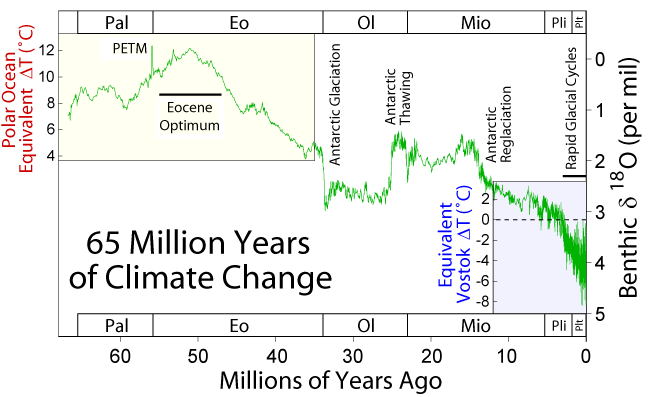
I figure if the corpocracy is determined to recreate the conditions of the Paleocene-Eocene Thermal Maximum I might as well have something that grows nicely. It liked North America then, so when the poles melt and the Gulf of Mexico extends all the way north to Paducah it should flourish here again.
Meanwhile, back to documenting the atrocities. From what I've read this morning the sliming was pretty universal last night of both the candidates and the process, although HHHillary and her minions seem to think she's somehow proved herself more $electable. There's only one thing a student of the situation can do in response to statements like that: what Atrios suggests. As long as Skrulls are the masterdebaters , anyway.
Seriously, this election has been a farce from its ridiculous wind-up a year ago and produced only candidates acceptable to the security-industrial complex. Now we're seeing a fine tuning of the process as the more acceptable corporate candidate ascends to the top of the DINOcrat party. If HHHillary thinks she's more $electable than anyone else in this process, she's in for a rude surprise in November.
The fix was in on this $election from the beginning.
McCain, and the fourth branch of government, are guaranteed to be awarded the booby prize, no matter the economy, no matter the war, no matter the security State.
There's a storm coming, and you'd best think ahead.
in the swamps of Michigan to listen to the damage the main$tream framers were doing to the candiates and the process.Metasequoia is largely a fossil genus until recently thought to be extinct, until somebody realized a Chinese ornamental was the last remaining member.
I figure if the corpocracy is determined to recreate the conditions of the Paleocene-Eocene Thermal Maximum I might as well have something that grows nicely. It liked North America then, so when the poles melt and the Gulf of Mexico extends all the way north to Paducah it should flourish here again.
Meanwhile, back to documenting the atrocities. From what I've read this morning the sliming was pretty universal last night of both the candidates and the process, although HHHillary and her minions seem to think she's somehow proved herself more $electable. There's only one thing a student of the situation can do in response to statements like that: what Atrios suggests. As long as Skrulls are the masterdebaters
, anyway.Seriously, this election has been a farce from its ridiculous wind-up a year ago and produced only candidates acceptable to the security-industrial complex. Now we're seeing a fine tuning of the process as the more acceptable corporate candidate ascends to the top of the DINOcrat party. If HHHillary thinks she's more $electable than anyone else in this process, she's in for a rude surprise in November.
The fix was in on this $election from the beginning.
McCain, and the fourth branch of government, are guaranteed to be awarded the booby prize, no matter the economy, no matter the war, no matter the security State.
There's a storm coming, and you'd best think ahead.

Terra Video
All the right people hate this video.
More on the War on Greed here.
I particularly like their facts page.
Doubtless these are exactly the kind of people the Department of Fatherland Security want on their Terra watchlist.
More on the War on Greed here.
I particularly like their facts page.
Doubtless these are exactly the kind of people the Department of Fatherland Security want on their Terra watchlist.
Wednesday, April 16, 2008
Before the Plunge
Quoth the Dark Wraith:
A word link from the farmer to one of Molly Ivins's last posts:
Of course, change that sticks isn't part of the program. Chaos is.
There's a lot of posts over at Common Dreams tonight that see the writing on the wall, or the stains in the porcelain as we swirl down the drain.
Ted Rall says the Calvary Isn't Coming:
The Old Ones must be pleased.
Jim Goodman sees the nature of the next bubble for Wall Street to speculate on:
You might think a jump in food prices might be good for farmers, but not if they're all Monsanto.
If you like what the Corpocracy has done for real estate and credit, then you'll just love what they do for cuisine.
Soylent Green, anyone?
When John McCain becomes President, somebody should kick both Clinton and Obama in the ass: Clinton for being willing to wreck the Dems' chances just so she can be the nominee; Obama for not kicking Clinton in the ass before she wrecked the Dems' chances.
(Not, by the way, that any of these lousy finalists are what this country needs; but then again, this is the electorate that votes by the tens of millions for absolute morons like George W. Bush. That means this country won't get what it needs, but it will get what it deserves.)
A word link from the farmer to one of Molly Ivins's last posts:
...I understand Hillary's sense of outrage. It makes me mad too. Sure, we lost our base in the South; our boys voted for Gingrich. But let me tell you something. I know these boys. I grew up with them. Hardworking, poor, white boys, who feel left out, feel that our reforms always come at their expense. Think about it, every progressive advance our country has made since the Civil War has been on their backs. They're the ones asked to pay the price of progress. Now, we are the party of progress, but let me tell you, until we find a way to include these boys in our programs, until we stop making them pay the whole price of liberty for others, we are never going to unite our party, never really going to have change that sticks...
Of course, change that sticks isn't part of the program. Chaos is.
There's a lot of posts over at Common Dreams tonight that see the writing on the wall, or the stains in the porcelain as we swirl down the drain.
Ted Rall says the Calvary Isn't Coming:
...There is no short-term fix. In the long term, we must put more money into more people’s pockets. That means higher wages and lower taxes for the poor and middle class. Some of what is needed is easy to see: a more progressive tax code, repealing laws that allow employers to harass and fire those who try to organize unions, nationalizing industries run by vampire capitalists — health insurers, private hospitals, colleges and universities. Banks encourage predatory lending while stifling saving. They ought to be re-regulated. What madness permits them to charge 30 percent on credit cards while paying one percent on passbook savings accounts?
More — much more — is necessary to prevent the wholesale collapse of the U.S. economic system. A maximum wage should be imposed — the highest paid American should earn no more than ten times the lowest paid. I know, I know — none of this will happen. There will be nothing but Band-Aids and lazy rhetoric as we plummet into the abyss. It cannot be otherwise, for our politics are ossified, the media is corporatized, and we the people are dull and apathetic.
The Old Ones must be pleased.
Jim Goodman sees the nature of the next bubble for Wall Street to speculate on:
..An abundance of food is something we take for granted, but we have money. Collectively as a nation, food has always been there, and we could buy whatever we wanted. What if that changed? What if food became really scarce and really expensive? Could it happen? It has already started.
* Total world stocks of all grains are close to their lowest level in 30 years.
* USDA predicts wheat surpluses to be the smallest in 60 years.
* A virulent strain of wheat rust that can reduce yields to zero is spreading worldwide.
* Wheat prices have risen well over 50 percent from a year ago.
* The FAO cites 37 countries as facing a food crisis due to rising prices.
Food price is dependent on the price and availability of grain. Since 1960 the world grain harvest has tripled, and the world population has doubled. So why isn’t there more grain available at a lower price? Why have the prices jumped?
You might think a jump in food prices might be good for farmers, but not if they're all Monsanto.
If you like what the Corpocracy has done for real estate and credit, then you'll just love what they do for cuisine.
Soylent Green, anyone?
Tuesday, April 15, 2008
Sweet Elitism on the Run

Bob Herbert:
...Senator Obama has spent his campaign trying to dodge the race issue, which in America is like trying to dodge the wind. So when he fielded the question in San Francisco, he didn’t say: “A lot of folks are not with me because I’m black — but I’m trying to make my case and bring as many around as I can.”
Instead, he fell back on a tortured response that was demonstrably incorrect. Referring to the long-term economic distress of many working-class voters, Mr. Obama said: “It’s not surprising then they get bitter, they cling to guns or religion or antipathy to people who aren’t like them or anti-immigrant sentiment or antitrade sentiment as a way to explain their frustrations.”
He danced all around the truth. Unless you’re Fred Astaire, if your dance steps get too intricate you’re bound to make a misstep. This was a big one.
But there is something perverse in the effort to portray Senator Obama — who has tried hard to promote a message of unity and healing — as some kind of divisive figure. He has spoken with great insight and empathy, most notably in his race speech in Philadelphia, about the anxiety and frustration of middle- and working-class Americans.
In his San Francisco comments, Senator Obama fouled up when he linked frustration and bitterness over economic hard times with America’s romance with guns and embrace of religion. But, please, let’s get a grip. What we ought to be worked up about is the racism that still prevents some people from giving a candidate a fair chance because of his skin color.
Are working people bitter? There’s no doubt that many are extremely bitter over the economic hand they’ve been dealt. Those who believed that America’s industrial heartland was secure and everlasting have been forced to adjust over the past several years to an extremely bitter reality. Jobs and pensions have vanished. The value of the family home is sinking. Health care is increasingly unaffordable. For many, the cost of college is out of reach.
But “bitter” has a connotation that is generally not helpful in a political campaign. Bitter suggests powerlessness and a smallness of spirit. Most people would prefer to be characterized as “angry” — a term that suggests empowerment — rather than “bitter,” with its undertone of defeat...
Perhaps they're bitter because they have yet another Preznitial $election with the candidates Puttin' on the Ritz around the real problems. Which is pretty much what Obama said.
The elite Corpocracy had to nip that talk in the bud. Hence the McCain-Clinton Unity accusations following the Rovian program: accuse your opponent of what you've been doing all along.
Barbara at TPM Cafe:
...There's no controversy to what he said. But I think he touched a nerve with corporate america and corporate media. His words told truth to power to these people and if it had gone on uncontested, then these people might just realize that they've been oppressed for so long and wake up and start a revolution.
This affects all of corporate america. They can't have poor people starting to descent and go against everything that they had been brainwashed with since they were young.
If they wake up and revolt, media loses the control they have over them...
And apparently the tighter they squeeze, the more the main$tream feels the control slipping through their fingers. FOX went out to look for rural Pennsylvanians outraged by The Elitist who dared suggest they were bitter- and couldn't find any. That had to hurt.
But perhaps this primary may get a bit out of hand.
Why? Because Obama seems to be moving away from his "reconciliation" with the Elder Gods of Washington. In an interview yesterday to Will Bunch:
"I know you've talked about reconciliation and moving on, but there's also the issue of justice, and a lot of people -- certainly around the world and certainly within this country -- feel that crimes were possibly committed" regarding torture, rendition, and illegal wiretapping. I wanted to know how whether his Justice Department "would aggressively go after and investigate whether crimes have been committed."
Here's his answer, in its entirety:
What I would want to do is to have my Justice Department and my Attorney General immediately review the information that's already there and to find out are there inquiries that need to be pursued. I can't prejudge that because we don't have access to all the material right now. I think that you are right, if crimes have been committed, they should be investigated. You're also right that I would not want my first term consumed by what was perceived on the part of Republicans as a partisan witch hunt because I think we've got too many problems we've got to solve.
So this is an area where I would want to exercise judgment -- I would want to find out directly from my Attorney General -- having pursued, having looked at what's out there right now -- are there possibilities of genuine crimes as opposed to really bad policies. And I think it's important-- one of the things we've got to figure out in our political culture generally is distinguishing betyween really dumb policies and policies that rise to the level of criminal activity. You know, I often get questions about impeachment at town hall meetings and I've said that is not something I think would be fruitful to pursue because I think that impeachment is something that should be reserved for exceptional circumstances. Now, if I found out that there were high officials who knowingly, consciously broke existing laws, engaged in coverups of those crimes with knowledge forefront, then I think a basic principle of our Constitution is nobody above the law -- and I think that's roughly how I would look at it.
Now that puts Obama in a class by himself: willing to prosecute. No wonder the others think he's a snob.
Subscribe to:
Posts (Atom)