It seems they succeed despite not having the common interests and values and TheoCon warrior virtues real Amerikans (like Petraeus Caesar) share with their Likudnik brothers.
Ahhh, the connection.
Could it be, perhaps, that there is some degree of consanguinity, and believe it or not, I am not talking about jewishness.
The same people were intimately involved with the founding of the jewish state after the second world war, the founding of the CIA after that war, and the funding of the Nazi war machine at the beginning of that war.
I'm talking about the Walker, Bush, and Dulles families.
The same corporate bloodlines were connected with every bit of imperialism in the latter half of the twentieth century. Their descendants, both neocon corporate adoptees and literal bloodline, are deeply involved with the drive for global hegemony today.
Believe it or not, conspiracies do exist in the real world. Every thing we encounter in our society is the result of people working together to produce it, distribute, or consume it. Why should politics or policy be any different? What is a Party other than a large number of people working together for a common goal?
But if you think the Bush- Dulles connection to the CIA and the founding of Israel as a base for American policy in the Middle East is all conspiracy theory, look at the facts.
Similarly, if the Harriman- Bush- Axis banking connection seems like conspiracy theory to you, again, look at the facts.
Just as fear and irrational speculation has fogged the real criminals behind 9/11, so it has for the real political connection between America and Israel. It is buried underneath the understandable and honest desire of many Americans to perpetuate their culture in the land of its historic origins. If you don't think the old money isn't above exploiting that for its own political and financial gains, then you aren't paying attention.
The Israeli government smells so much like Cheneyburton because both of their systems work to profit the same extended Company family.
Religion and ethnicity have nothing to do with it.
Religion and ethnicity have everything to do with the facade the hegemons use to keep the rubes at the carnival.
Wednesday, April 30, 2008


Tuesday, April 29, 2008
Roots of the Fourth Reich of Government
Len Hart, The Existentialist Cowboy, pulls together a bunch of loose threads for those who are unfamiliar with the story.
I particularly like the timeline he links to.
Because, you can see, even Hitler was simply an agent of greater Powers, and his great error was he forgot what those Powers were.
I particularly like the timeline he links to.
Because, you can see, even Hitler was simply an agent of greater Powers, and his great error was he forgot what those Powers were.
The Fourth Branch of Government Sez "Make Me"
...to John Conyers.
Who promptly replies he's gonna "...consider the use of compulsory process."
You know, he can just do that. Throw it at Cheneyburton with Nancy Pelosi's tasteful fruit tray of persuasion. They'll both do about the same amount of good against David Addington's Fourth Reich.
The same people that run the Fourth Reich of Cheneyburton own Congress and the Supremes.
Conyers will do nothing that endangers his own campaign war chest. Therefore, any action will be limited to limited noisemaking in the Halls of Congress and on his website, because it sure won't make the main$tream. This is because the main$tream is owned by the Big Boys too.
Oh yeah not to mention these guys. Or these. Or these.
Conyers is going exactly nowhere, as long as Cheneyburton's war on Terra makes a buck for the guys at the top.
Who promptly replies he's gonna "...consider the use of compulsory process."
You know, he can just do that. Throw it at Cheneyburton with Nancy Pelosi's tasteful fruit tray of persuasion. They'll both do about the same amount of good against David Addington's Fourth Reich.
The same people that run the Fourth Reich of Cheneyburton own Congress and the Supremes.
Conyers will do nothing that endangers his own campaign war chest. Therefore, any action will be limited to limited noisemaking in the Halls of Congress and on his website, because it sure won't make the main$tream. This is because the main$tream is owned by the Big Boys too.
Oh yeah not to mention these guys. Or these. Or these.
Conyers is going exactly nowhere, as long as Cheneyburton's war on Terra makes a buck for the guys at the top.
Stooges
Jonathan Schwarz talks about the kinds of people in the world, linking to the wisdom of the Church of the SubGenius:
Nyuk nyuk nyuk
...There are three kinds of people -- I call them Larrys, Curlys, and Moes. The Larrys don't even know that there are three types; if they're told, it's an abstraction, because they cannot imagine anything beyond Larry-ness. The Curlys know about it, and recognize the pecking order, but find ways of living with it cheerfully...for they are the imaginative, creative ones. The Moes not only know about it, but exploit and perpetuate it.
The naive, pleasant believers of all kinds are Larrys -- ineffectual, well-meaning do-gooders destined always to be victims, often without once guessing their status. Like sheep, they don't want to hear the unpleasant legends about "the slaughterhouse"; they trust the strange two-legged beings who feed them. The artists, unsung scientific geniuses, political writers, and earnest disciples of the stranger cults are Curlys -- engaging, original, accident-prone but full of life, intuitively aware of the Moe forces plotting against them and trying to fight back. They can never defeat the Moes, however, without BECOMING Moes, which is impossible for a true Curly.
The Moes, then, are the fanatics, the ranters, the cult gurus, the Uri Gellers AND the Debunkers; they are the Resistance Leaders and the Ruling Class Bankers. They hate each other, but only because they want to control ALL the Larrys and Curlys themselves....Larrys and Curlys die in wars started by rival Moes -- the Larrys willingly, the Curlys with great regret.
Nyuk nyuk nyuk
Monday, April 28, 2008
The Economy hearts the War on Terra
...if you think the pirates on Wall Street are the Economy. I know they certainly do.
Chalmers Johnson has a new post and he pretty much says it like is.
It's a longish post, the way most of Dr. Johnson's are, but he pretty much breaks down it all.
His main myopia is that he comes right up to the edge of night without admitting the damage is intentional. It's the big unthinkable conclusion. All of the subterfuge, all of the lies, and all of the coming crash are designed to break the bank of the American dream machine. The wolf isn't just at the door, he's hired the experts who're telling you the best way to stay secure is to open all the doors and give that big dog the run of the house.
Chalmers Johnson has a new post and he pretty much says it like is.
...There are three broad aspects to the U.S. debt crisis. First, in the current fiscal year (2008) we are spending insane amounts of money on "defense" projects that bear no relation to the national security of the U.S. We are also keeping the income tax burdens on the richest segment of the population at strikingly low levels.
Second, we continue to believe that we can compensate for the accelerating erosion of our base and our loss of jobs to foreign countries through massive military expenditures -- "military Keynesianism" (which I discuss in detail in my book Nemesis: The Last Days of the American Republic). By that, I mean the mistaken belief that public policies focused on frequent wars, huge expenditures on weapons and munitions, and large standing armies can indefinitely sustain a wealthy capitalist economy. The opposite is actually true.
Third, in our devotion to militarism (despite our limited resources), we are failing to invest in our social infrastructure and other requirements for the long-term health of the U.S. These are what economists call opportunity costs, things not done because we spent our money on something else. Our public education system has deteriorated alarmingly. We have failed to provide health care to all our citizens and neglected our responsibilities as the world's number one polluter. Most important, we have lost our competitiveness as a manufacturer for civilian needs, an infinitely more efficient use of scarce resources than arms manufacturing...
It's a longish post, the way most of Dr. Johnson's are, but he pretty much breaks down it all.
His main myopia is that he comes right up to the edge of night without admitting the damage is intentional. It's the big unthinkable conclusion. All of the subterfuge, all of the lies, and all of the coming crash are designed to break the bank of the American dream machine. The wolf isn't just at the door, he's hired the experts who're telling you the best way to stay secure is to open all the doors and give that big dog the run of the house.
Sunday, April 27, 2008
But Elizabeth, they don't want you to
Elizabeth Edwards notices something funny about the main$tream:
Elizabeth, the main$tream is exactly doing the job it's paid to do, which is nothing like the job the Founders envisioned.
Of course, the Founders didn't pay well either. Nor did they look so good on camera, I'll bet.
The job of the main$tream is control of the people for the Empire, and they do a knock-up job of that.
Good luck with that preznitcy thing this fall. You- and everyone else- will need it.
For the last month, news media attention was focused on Pennsylvania and its Democratic primary. Given the gargantuan effort, what did we learn?
Well, the rancor of the campaign was covered. The amount of money spent was covered. But in Pennsylvania, as in the rest of the country this political season, the information about the candidates’ priorities, policies and principles — information that voters will need to choose the next president — too often did not make the cut. After having spent more than a year on the campaign trail with my husband, John Edwards, I’m not surprised.
Why? Here’s my guess: The vigorous press that was deemed an essential part of democracy at our country’s inception is now consigned to smaller venues, to the Internet and, in the mainstream media, to occasional articles...
...every analysis that is shortened, every corner that is cut, moves us further away from the truth until what is left is the Cliffs Notes of the news, or what I call strobe-light journalism, in which the outlines are accurate enough but we cannot really see the whole picture.
...Did you, for example, ever know a single fact about Joe Biden’s health care plan? Anything at all? But let me guess, you know Barack Obama’s bowling score. We are choosing a president, the next leader of the free world. We are not buying soap, and we are not choosing a court clerk with primarily administrative duties.
What’s more, the news media cut candidates like Joe Biden out of the process even before they got started. Just to be clear: I’m not talking about my husband. I’m referring to other worthy Democratic contenders. Few people even had the chance to find out about Joe Biden’s health care plan before he was literally forced from the race by the news blackout that depressed his poll numbers, which in turn depressed his fund-raising.
And it’s not as if people didn’t want this information. In focus groups that I attended or followed after debates, Joe Biden would regularly be the object of praise and interest: “I want to know more about Senator Biden,” participants would say.
But it was not to be. Indeed, the Biden campaign was covered more for its missteps than anything else. Chris Dodd, also a serious candidate with a distinguished record, received much the same treatment. I suspect that there was more coverage of the burglary at his campaign office in Hartford than of any other single event during his run other than his entering and leaving the campaign.
Who is responsible for the veil of silence over Senator Biden? Or Senator Dodd? Or Gov. Tom Vilsack? Or Senator Sam Brownback on the Republican side?
The decision was probably made by the same people who decided that Fred Thompson was a serious candidate. Articles purporting to be news spent thousands upon thousands of words contemplating whether he would enter the race, to the point that before he even entered, he was running second in the national polls for the Republican nomination. Second place! And he had not done or said anything that would allow anyone to conclude he was a serious candidate. A major weekly news magazine put Mr. Thompson on its cover, asking — honestly! — whether the absence of a serious campaign and commitment to raising money or getting his policies out was itself a strategy.
...Watching the campaign unfold, I saw how the press gravitated toward a narrative template for the campaign, searching out characters as if for a novel: on one side, a self-described 9/11 hero with a colorful personal life, a former senator who had played a president in the movies, a genuine war hero with a stunning wife and an intriguing temperament, and a handsome governor with a beautiful family and a high school sweetheart as his bride. And on the other side, a senator who had been first lady, a young African-American senator with an Ivy League diploma, a Hispanic governor with a self-deprecating sense of humor and even a former senator from the South standing loyally beside his ill wife. Issues that could make a difference in the lives of Americans didn’t fit into the narrative template and, therefore, took a back seat to these superficialities.
News is different from other programming on television or other content in print. It is essential to an informed electorate. And an informed electorate is essential to freedom itself. But as long as corporations to which news gathering is not the primary source of income or expertise get to decide what information about the candidates “sells,” we are not functioning as well as we could if we had the engaged, skeptical press we deserve.
And the future of news is not bright. Indeed, we’ve heard that CBS may cut its news division, and media consolidation is leading to one-size-fits-all journalism. The state of political campaigning is no better: without a press to push them, candidates whose proposals are not workable avoid the tough questions. All of this leaves voters uncertain about what approach makes the most sense for them. Worse still, it gives us permission to ignore issues and concentrate on things that don’t matter. (Look, the press doesn’t even think there is a difference!)
...If voters want a vibrant, vigorous press, apparently we will have to demand it. Not by screaming out our windows as in the movie “Network” but by talking calmly, repeatedly, constantly in the ears of those in whom we have entrusted this enormous responsibility. Do your job, so we can — as voters — do ours.
Elizabeth, the main$tream is exactly doing the job it's paid to do, which is nothing like the job the Founders envisioned.
Of course, the Founders didn't pay well either. Nor did they look so good on camera, I'll bet.
The job of the main$tream is control of the people for the Empire, and they do a knock-up job of that.
Good luck with that preznitcy thing this fall. You- and everyone else- will need it.
Hostile Takeover
While the geriatric trailer park crew raids their Sam's Club for an extra 40 lb bag of rice, we are told that the failure of the wheat crop in Africa- and mebbe Latin America- this year will be "total".
Unless, of course, the Free Market and Monsanto can save the day. Money quote from Pravda:
Well, certainly, but this isn't what's going on with global food prices right now is it? The surge in the commodities market is due to the action of speculators busy blowing a new shiny bubble.
And once again, we see the shock doctrine at work, and the corporate drive to replace all the crops in the world with food genetically resistant to Monsanto's pesticides and unable to reproduce outside of the industrial agriculture laboratories of Monsanto.
Unless, of course, the Free Market and Monsanto can save the day. Money quote from Pravda:
...With food prices soaring throughout Asia, Africa and Latin America, and shortages threatening hunger and political chaos, the time could not be worse for an epidemic of stem rust in the world’s wheat crops. Yet millions of wheat farmers, small and large, face this spreading and deadly crop infection.
The looming catastrophe can be avoided if the world’s wheat scientists pull together to develop a new generation of stem-rust-resistant varieties of wheat. But scientists must quickly turn their attention to replacing almost all of the commercial wheat grown in the world today. This will require a commitment from many nations, especially the United States, which has lately neglected its role as a leader in agricultural science.
Stem rust, the most feared of all wheat diseases, can turn a healthy crop of wheat into a tangled mass of stems that produce little or no grain. The fungus spores travel in the wind, causing the infection to spread quickly. It has caused major famines since the beginning of history. In North America, huge grain losses occurred in 1903 and 1905 and from 1950 to ’54...
Well, certainly, but this isn't what's going on with global food prices right now is it? The surge in the commodities market is due to the action of speculators busy blowing a new shiny bubble.
And once again, we see the shock doctrine at work, and the corporate drive to replace all the crops in the world with food genetically resistant to Monsanto's pesticides and unable to reproduce outside of the industrial agriculture laboratories of Monsanto.
Saturday, April 26, 2008
Cointelpro Op?
In case you've forgotten, this is what Cointelpro was, and yes, Virginia, they actually did stuff like that during the VietNam War. Remember Chicago in 1968?
This is what Somebody is planning in 2008 in Denver, it's incredibly stupid, and it smells like a Company Trojan Horse.
Rush is already salivating.
And yes, Virginia, Chaos is the Company plan.
This is what Somebody is planning in 2008 in Denver, it's incredibly stupid, and it smells like a Company Trojan Horse.
Rush is already salivating.
And yes, Virginia, Chaos is the Company plan.

Qualifying Exam
Dick Cavett seems to have gotten a server full of comments for saying that General Petreus's chest full of medals would be awfully impressive to a 12 year old.
So just to be clear, he talks about the special test that West Point gave for another General.
How about sit in the Pentagon at head of Centcom, and send those men into that camp from the comfort of your office to make sure all those shiny medals don't get mussed?
So just to be clear, he talks about the special test that West Point gave for another General.
...Problem: One of your men, a 30-year veteran of the Indian Wars, informs you that the largest encampment of Indians he has ever seen, comprising countless Sioux, Cheyenne and a few Arapaho lodges, stretches for several miles along the river bank and would contain an estimated 1,200 armed warriors. You have fewer than 300 men. You should:
A. Laugh in his face.
B. Get into the center of a large city.
C. Charge into the middle of the camp and speak to those savages in no uncertain terms.
D. Wish that cell phones had been invented.
E. Give them presents. They are like children and love anything shiny. Should you have a copy of “The Golden Treasury of Poetry,” Sitting Bull is fond of Emily Dickinson.
F. Attack them boldly, kissing your men, your arse and your scalp goodbye.
How about sit in the Pentagon at head of Centcom, and send those men into that camp from the comfort of your office to make sure all those shiny medals don't get mussed?
Friday, April 25, 2008
The Matrix of Endless War
How deep is the rabbit hole? Nick Turse definitely ate the red pill. You need to read the whole thing to get the feel of the Matrix, but here's the highlights:
How are you going to end a war that everyone who's anyone makes billions off of?
How are you going to end a war that's becoming more than the fabric- the food, the water, the air of a nation's economy?
How can you end a war that those who would Rule strive to make more essential to everyone every day?
...the Pentagon has long poured U.S. tax dollars into private coffers to arm and outfit the military and enable it to function. At the time of Eisenhower's farewell address, New York Times reporter Jack Raymond noted that the Pentagon was spending "$23,000,000,000 a year for services and procurement of guns, missiles, airplanes, electronic devices, vehicles, tanks, ammunition, clothing and other military goods." Today, that would equal around $200 billion. In 2007, the Department of Defense's stated budget was $439 billion. Counting the costs of its wars in Iraq and Afghanistan, the number jumps to over $600 billion. Factoring in all the many related activities carried out by other agencies, actual U.S. national security spending is nearly $1 trillion per year.
Back in Eisenhower's day, arms dealers and mega-corporations, such as Lockheed and General Motors, held sway over the corporate side of the military-industrial complex. Companies like these still play an extremely powerful role today, but they are dwarfed by the sheer number of contractors that stretch from coast to coast and across the globe. Looking at the situation in 1970, almost 10 years after Eisenhower's farewell speech, Sidney Lens, a journalist and expert on U.S. militarism, noted that there were 22,000 prime contractors doing business with the U.S. Department of Defense. Today, the number of prime contractors tops 47,000 with subcontractors reaching well over the 100,000 mark, making for one massive conglomerate touching nearly every sector of society, from top computer manufacturer Dell (the 50th-largest DoD contractor in 2006) to oil giant ExxonMobil (the 30th) to package-shipping titan FedEx (the 26th).
In fact, the Pentagon payroll is a veritable who's who of the top companies in the world: IBM; Time-Warner; Ford and General Motors; Microsoft; NBC and its parent company, General Electric; Hilton and Marriott; Columbia TriStar Films and its parent company, Sony; Pfizer; Sara Lee; Procter & Gamble; M&M Mars and Hershey; Nestlé; ESPN and its parent company, Walt Disney; Bank of America; and Johnson & Johnson among many other big-name firms. But the difference between now and then isn't only in scale. As this list suggests, Pentagon spending is reaching into previously neglected areas of American life: entertainment, popular consumer brands, sports. This penetration translates into a remarkable variety of forms of interaction with the public.
...Today, just about every supermarket staple -- from Ballpark Franks (Sara Lee) and Eggo waffles (Kelloggs) to Jell-O (Kraft) and Coffee Mate (Nestle) -- has ties to the Pentagon. The same holds for many household appliances...
...During Ike's time, when civilian firms like Ford and AT&T were the big military suppliers, the payroll showed an utter lack of cool companies. Now, the Pentagon is reaching into virgin territory in new ways with new partners. Today, hip firms like Apple, Google, and Starbucks are also on DoD contractors' lists. And while Ike's complex was typified by brass bands and patriotic parades, today's variant is a flashy digitized world of video games, extreme sports, and everything cool that appeals to potential young recruits.
...At one point in his farewell speech, Eisenhower presaged this point, suggesting, "The total influence -- economic, political, even spiritual -- [of the conjunction of the military establishment and the large arms industry] is felt in every city, every State house, every office of the Federal government." But only Hollywood has yet managed to capture the essence of today's omnipresent, all-encompassing, cleverly hidden system of systems that invades all our lives; this new military-industrial-technological-entertainment-academic-scientific- media-intelligence-homeland security-surveillance-national security-corporate complex that has truly taken hold of America.
How are you going to end a war that everyone who's anyone makes billions off of?
How are you going to end a war that's becoming more than the fabric- the food, the water, the air of a nation's economy?
How can you end a war that those who would Rule strive to make more essential to everyone every day?
Faery Tales
There are people whose main job it is to catapult the propaganda, but some memes are decidedly more destructive than others.
Case in point.

David Brooks is such an utter moron I don't bother reading his columns. It's because almost every premise the man has is deeply flawed. Apparently his column this week was a particular trip into never-land, asking for a return to the midieval days of Knights Errant and Crusades and all that Arthurian sense of wonder.
It was called the Dark Ages for a reason, Bobo.
I'll let the letters to the Editor for Pravda do the heavy lifting:
David Brooks, like William Kristol, is a propagandist hired by edict of the Carlyle Group controlled Board of Directors of The New York Pravda.
But sometimes he comes out with things that are decidedly unprofitable for many in the Company. This was certainly one of them: the Editors saw no reason to support it even faintly, and likely the Directors didn't like it either. He is, thankfully, not posting today.
Case in point.
David Brooks is such an utter moron I don't bother reading his columns. It's because almost every premise the man has is deeply flawed. Apparently his column this week was a particular trip into never-land, asking for a return to the midieval days of Knights Errant and Crusades and all that Arthurian sense of wonder.
It was called the Dark Ages for a reason, Bobo.
I'll let the letters to the Editor for Pravda do the heavy lifting:
...It is preposterous to view the Middle Ages with such nostalgia. The “spiritual powers” that led to such great events as the Inquisition and other mass killings of Jews and the Crusades were most certainly influenced by the false interpretation of celestial configurations and misuse of religious and secular power.
To yearn for such a “faith”-based Arthurian time is naïve. Is this the fantasy world to which conservatives would like to return? Before we wax poetic about the Black Death, we should realize that medieval Europe was a miserable, intolerant place where human life was cheap.
I can certainly think of many other civilizations to wax poetic about, but medieval Europe with its astrological-religious culture is not one of them. The faith-based life of that time serves as a demonstration of how faith can be twisted by those in power or, as we see in the present, those trying to win elections.
Jerry Becker
Albuquerque, April 22, 2008
...We have been “populated with creatures, symbols and tales” for the past seven years. They’ve occupied the White House...
Robert H. Feuerstein
Upper Saddle River, N.J., April 22, 2008
...First, crusading could not have worked any better in our world than it did in the past. The failure of medieval crusades was well known in 2001, for few historical subjects have been so well studied.
Second, just when Europe was full of unfettered violent bullies, some resourceful people invented government to serve the public interest, together with the taxes required to support it. They rightly thought government to be a “good thing...”
Thomas N. Bisson
Cambridge, Mass., April 22, 2008
...The current state of affairs in the Middle East is way too medieval for me.
Jean-ellen McSharry
Stony Creek, Conn., April 22, 2008
...the modern Western world is no less enchanted than the medieval one — it may be more so. Fantasy and science fiction are among the most pervasive forms of contemporary culture. Many people live virtual lives on the Internet.
Rather than fostering a deficit of the imagination, modernity permits people to inhabit multiple worlds of the imagination and to create provisional narratives that impart meaning to daily existence.
This free, rational and ironic use of the imagination — a disenchanted form of enchantment — provides the possibility for greater diversity, tolerance and change than ever existed in the medieval period.
Michael Saler
Davis, Calif., April 22, 2008
...David Brooks is nostalgic for a bygone age when people had a different mentality than today.
In those days, with “childlike emotional intensity” we may have imagined the heavens as “a magical place,” “a ceiling of moving spheres, rippling with signs and symbols.” If only nature could inspire as rich a human imagination in us as it did in them.
That happens continually to us modern scientists. Doing science, whose essence is to understand nature, inspires awe. As a geologist, I plant one foot (metaphorically) in the present day and the other foot in Deep Time.
Yonder sandstone cliff was once the bed of a great flowing river. Imagine that! I wasn’t there then, but the evidence says it literally was so.
Real science is more bizarre, more full of possibilities than medieval people could have imagined. We scientists are just as passionate, romantic and as awe-filled as they were.
Leon E. Long
Austin, Tex., April 23, 2008
David Brooks, like William Kristol, is a propagandist hired by edict of the Carlyle Group controlled Board of Directors of The New York Pravda.
But sometimes he comes out with things that are decidedly unprofitable for many in the Company. This was certainly one of them: the Editors saw no reason to support it even faintly, and likely the Directors didn't like it either. He is, thankfully, not posting today.
Diversionary Tactics
...the sniping among the small and the silly continues, as the real issues are covered up in the preznitial race in 2008.
Then there's the not-so-small and the not-so-silly, that seem to see a bit of the real picture even as they send off a round or two towards the other camp.
From that Clintonista Paul Krugman today Self-Inflicted Confusion
Incorrect, but as far as the main$tream media is willing to talk about, Krugman's right. Both the Oborg and HHHillary have serious policy changes to offer. It's just they aren't that different. None of the talking heads on the tube are addressing them, though.
Back to Krugman:
Well said, Dr. Krugman, except you're delusional if you think HHHillary's been any different. We're all delusional if we think we can keep on letting the main$tream frame the argument for their corporate bosses. If we do, we're faced with the choice of the batshit crazy rethuglican Mc$ame this fall, and a kinder gentler rethuglican.
To metaphrase what Truman said, when a rethuglican and a rethuglican face off against each other, the best thug always wins.
Then there's the not-so-small and the not-so-silly, that seem to see a bit of the real picture even as they send off a round or two towards the other camp.
From that Clintonista Paul Krugman today Self-Inflicted Confusion
...From the beginning, I wondered what Mr. Obama’s soaring rhetoric, his talk of a new politics and declarations that “we are the ones we’ve been waiting for” (waiting for to do what, exactly?) would mean to families troubled by lagging wages, insecure jobs and fear of losing health coverage. The answer, from Ohio and Pennsylvania, seems pretty clear: not much. Mrs. Clinton has been able to stay in the race, against heavy odds, largely because her no-nonsense style, her obvious interest in the wonkish details of policy, resonate with many voters in a way that Mr. Obama’s eloquence does not.
Yes, I know that there are lots of policy proposals on the Obama campaign’s Web site. But addressing the real concerns of working Americans isn’t the campaign’s central theme...
Incorrect, but as far as the main$tream media is willing to talk about, Krugman's right. Both the Oborg and HHHillary have serious policy changes to offer. It's just they aren't that different. None of the talking heads on the tube are addressing them, though.
Back to Krugman:
...The question Democrats, both inside and outside the Obama campaign, should be asking themselves is this: now that the magic has dissipated, what is the campaign about? More generally, what are the Democrats for in this election?
That should be an easy question to answer. Democrats can justly portray themselves as the party of economic security, the party that created Social Security and Medicare and defended those programs against Republican attacks — and the party that can bring assured health coverage to all Americans.
They can also portray themselves as the party of prosperity: the contrast between the Clinton economy and the Bush economy is the best free advertisement that Democrats have had since Herbert Hoover.
But the message that Democrats are ready to continue and build on a grand tradition doesn’t mesh well with claims to be bringing a “new politics” and rhetoric that places blame for our current state equally on both parties.
And unless Democrats can get past this self-inflicted state of confusion, there’s a very good chance that they’ll snatch defeat from the jaws of victory this fall.
Well said, Dr. Krugman, except you're delusional if you think HHHillary's been any different. We're all delusional if we think we can keep on letting the main$tream frame the argument for their corporate bosses. If we do, we're faced with the choice of the batshit crazy rethuglican Mc$ame this fall, and a kinder gentler rethuglican.
To metaphrase what Truman said, when a rethuglican and a rethuglican face off against each other, the best thug always wins.
Thursday, April 24, 2008
Energy Futures
It's just how the game is played.
It looks pretty much like they're hedging their bets this year (tip o'teh tinfoil to the Center for Responsive Politics).
That's over a million they gave Rudy! 9u11iani and the Mittster. HHHillary's gotten almost as much ($289,950) as Mc$ame ($291,685), and both are a long way ahead of Obama ($163,840).
But it's pretty clear none of these three are likely to stop the bleeding and none of them are really going to talk about what needs to be done.
By Dan Morain, Los Angeles Times Staff Writer
10:45 PM PDT, April 23, 2008
Sen. Barack Obama continued accepting donations from oil company executives and employees last month even as he aired ads in which he stated he took no oil company money, his campaign finance reports show.
Obama has taken at least $263,000 from oil company executives, family members and employees since entering the presidential race last year, including $46,000 last month. At least $140,000 has come in chunks of between $1,000 and $2,300, the maximum permitted under federal law.
Texas oil executive Robert L. Cavnar of Milagro Exploration and his wife, Gracie, have helped the Illinois Democrat raise at least another $50,000 by helping host a fundraiser earlier in the campaign.
Other oil industry donors have included Sinclair Oil President Ross Matthews of Texas and John B. Hess, chairman of Hess Corp., a New York-based oil producer and retailer with operations worldwide. Hess, who has given to other presidential candidates, including Sen. John McCain, gave $2,300 to Obama last year, as did his wife, Susan. Hess gave $14,000 to Obama's Senate run in 2003. The oil executives did not return phone calls.
In the weeks leading up to the Pennsylvania primary, Obama aired a campaign spot in Indiana and Pennsylvania that sought to reinforce his theme that he would change the Washington culture, while also tapping into voter distress about the high price of gasoline. In the ad, he called for a windfall profits "penalty."
"Since the gas lines of the '70s, Democrats and Republicans have talked about energy independence but nothing's changed -- except now Exxon's making $40 billion a year and we're paying $3.50 for gas. I'm Barack Obama. I don't take money from oil companies or Washington lobbyists, and I won't let them block change anymore," says the spot, which aired as recently as April 8.
Obama's ad is factually correct. He does not take money from oil companies. A 1907 federal law bars all corporations from giving money to political candidates. However, oil company employees can make donations.
It looks pretty much like they're hedging their bets this year (tip o'teh tinfoil to the Center for Responsive Politics).
That's over a million they gave Rudy! 9u11iani and the Mittster. HHHillary's gotten almost as much ($289,950) as Mc$ame ($291,685), and both are a long way ahead of Obama ($163,840).
But it's pretty clear none of these three are likely to stop the bleeding and none of them are really going to talk about what needs to be done.
The Non-Video Video
The video of the perfidous Norkies in Syria is really a PowerPoint of stills. With some pictures apparently from 1992. [tip o'teh tinfoil to b]
Cheneyburton sure could use a nice new war about now.
Glenn Greenwald does a better job of deconstructing this than I could. Yes Virginia, it is a non-video video.
Cheneyburton sure could use a nice new war about now.
Glenn Greenwald does a better job of deconstructing this than I could. Yes Virginia, it is a non-video video.
Wednesday, April 23, 2008
The Turning Tide

No, but they may have created a black hole.
It's defeat from the jaws of victory in 2008, but the optimists look on the bright side.

Not likely, alas. Even the bad solution offered by the Clintonista is better than this:

Speaking of black holes [tip o'the tinfoil to Atrios], apparently the American Taliban just joined the McCainiacs who are gonna run wild on you.
It's okay to hate Americans as long as you love 'Murika, as the gyre tightens.

Tuesday, April 22, 2008

Serious Solutions from $erious $oldiers
Digby says that if we're going to try to stop the privatization of the U.S. military, now's the time.
Once upon a time there were professional military who disdained the use of mercenaries.
No more. Now we're told they're part of the Serious solution to the War on Terra.
From Hayden to Petraeus on down, the patriots have been replaced by the Company zealots.
"We're doing a lot of good in Iraq", the man in the dusty Future Combat Warfighter costume says against a ancient barren backgroud, "I'm glad to be here".
The Marines serve as a training ground for Blackwater. The Air Force produces the zealots that inhabit CSC/ DynCorp, which with In-Q-Tel rules NASA for its spy satellite network.
Defund them? We'll be lucky to survive them. Any politician who just tries to cut off their black budgets will be sanctioned with extreme prejudice.
We have to defuse this time bomb clicking down to an Apocalypse designed to produce hegemony.
Once upon a time there were professional military who disdained the use of mercenaries.
No more. Now we're told they're part of the Serious solution to the War on Terra.
From Hayden to Petraeus on down, the patriots have been replaced by the Company zealots.
"We're doing a lot of good in Iraq", the man in the dusty Future Combat Warfighter costume says against a ancient barren backgroud, "I'm glad to be here".
The Marines serve as a training ground for Blackwater. The Air Force produces the zealots that inhabit CSC/ DynCorp, which with In-Q-Tel rules NASA for its spy satellite network.
Defund them? We'll be lucky to survive them. Any politician who just tries to cut off their black budgets will be sanctioned with extreme prejudice.
We have to defuse this time bomb clicking down to an Apocalypse designed to produce hegemony.
Monday, April 21, 2008
$peculators
Energy came first, prey fallen to the forces of deregulation.
Now they're after your food supply.
Let's check Krugman's take on this:
That's particularly true if the Company thinks it can get an edge on it.
But the problem lies in knowing where the edge is and which way to cut. But here's something from someone who's seen the edge of the flat earth approaching for awhile. Kevin Phillips has a new book out:
It's a pretty safe bet the Big Shitpile will end up as golden fertilizer for someone.
In this corner of the multiverse, everything goes somewhere, and usually them that has the gold makes the rules.
Now they're after your food supply.
Let's check Krugman's take on this:
...the global surge in commodity prices is reviving a question we haven’t heard much since the 1970s: Will limited supplies of natural resources pose an obstacle to future world economic growth?
How you answer this question depends largely on what you believe is driving the rise in resource prices. Broadly speaking, there are three competing views.
The first is that it’s mainly speculation — that investors, looking for high returns at a time of low interest rates, have piled into commodity futures, driving up prices. On this view, someday soon the bubble will burst and high resource prices will go the way of Pets.com.
The second view is that soaring resource prices do, in fact, have a basis in fundamentals — especially rapidly growing demand from newly meat-eating, car-driving Chinese — but that given time we’ll drill more wells, plant more acres, and increased supply will push prices right back down again.
The third view is that the era of cheap resources is over for good — that we’re running out of oil, running out of land to expand food production and generally running out of planet to exploit.
I find myself somewhere between the second and third views.
There are some very smart people — not least, George Soros — who believe that we’re in a commodities bubble (although Mr. Soros says that the bubble is still in its “growth phase”). My problem with this view, however, is this: Where are the inventories?
Normally, speculation drives up commodity prices by promoting hoarding. Yet there’s no sign of resource hoarding in the data: inventories of food and metals are at or near historic lows, while oil inventories are only normal.
The best argument for the second view, that the resource crunch is real but temporary, is the strong resemblance between what we’re seeing now and the resource crisis of the 1970s.
What Americans mostly remember about the 1970s are soaring oil prices and lines at gas stations. But there was also a severe global food crisis, which caused a lot of pain at the supermarket checkout line — I remember 1974 as the year of Hamburger Helper — and, much more important, helped cause devastating famines in poorer countries.
In retrospect, the commodity boom of 1972-75 was probably the result of rapid world economic growth that outpaced supplies, combined with the effects of bad weather and Middle Eastern conflict. Eventually, the bad luck came to an end, new land was placed under cultivation, new sources of oil were found in the Gulf of Mexico and the North Sea, and resources got cheap again.
But this time may be different: concerns about what happens when an ever-growing world economy pushes up against the limits of a finite planet ring truer now than they did in the 1970s.
For one thing, I don’t expect growth in China to slow sharply anytime soon. That’s a big contrast with what happened in the 1970s, when growth in Japan and Europe, the emerging economies of the time, downshifted — and thereby took a lot of pressure off the world’s resources.
Meanwhile, resources are getting harder to find. Big oil discoveries, in particular, have become few and far between, and in the last few years oil production from new sources has been barely enough to offset declining production from established sources.
And the bad weather hitting agricultural production this time is starting to look more fundamental and permanent than El Niño and La Niña, which disrupted crops 35 years ago. Australia, in particular, is now in the 10th year of a drought that looks more and more like a long-term manifestation of climate change.
Suppose that we really are running up against global limits. What does it mean?
Even if it turns out that we’re really at or near peak world oil production, that doesn’t mean that one day we’ll say, “Oh my God! We just ran out of oil!” and watch civilization collapse into “Mad Max” anarchy.
But rich countries will face steady pressure on their economies from rising resource prices, making it harder to raise their standard of living. And some poor countries will find themselves living dangerously close to the edge — or over it.
Don’t look now, but the good times may have just stopped rolling.
That's particularly true if the Company thinks it can get an edge on it.
But the problem lies in knowing where the edge is and which way to cut. But here's something from someone who's seen the edge of the flat earth approaching for awhile. Kevin Phillips has a new book out:
... Mr. Phillips begins with an overview of the current debt debacle. The 1980s were the start of “three profligate decades,” when the expansion of mortgage credit and the invention of financial instruments like collateralized debt obligations (C.D.O.’s) led to an orgy of leveraging and irresponsible speculation. The Federal Reserve kept the bubble afloat with easy money, while regulators and ratings agencies looked the other way.
By 2007 total indebtedness was three times the size of the gross domestic product, a ratio that surpassed the record set in the years of the Great Depression. From 2001 to 2007 alone, domestic financial debt grew to $14.5 trillion from $8.5 trillion, and home mortgage debt ballooned to almost $10 trillion from $4.9 trillion, an increase of 102 percent. A crisis in the mortgage market in August 2007 brought the party to an end. Since then we have been living in a twilight zone of what a security analyst quoted in the book calls “one of the slowest-moving train wrecks we’ve seen.”
The second component of the perfect storm is the upheaval in the oil industry. Domestic production peaked in 1971, and there are signs that production worldwide is also peaking. (Mr. Phillips cites experts who believe it already has.) And with the emergence of new economic powers like China and India, demand has risen dramatically and prices have been climbing steadily; by 2004 a rapidly growing China had become the second largest oil consumer, after the United States. Despite the bad news at the gas pump, however, America has actually been getting a cost break, because the major suppliers price their oil in dollars. But with the dollar falling, OPEC has been talking about moving into other currencies. Were that to happen, “the effects,” Mr. Phillips says tersely, “could be painful.”
Finally, Mr. Phillips turns to what he terms America’s “calcified” political system. We may need new regulations to deal with the debt mess, along with an energy policy to address the changing world of oil, but Washington, he says, has become dedicated to “the politics of evasion,” reluctant to pass dramatic reforms or to call for sacrifice from the public. Democrats and Republicans alike are so entrenched, so dependent on campaign money and special interests, that “the notion of a breath of fresh air has become almost a contradiction in terms.” Instead of a “vital center” in Washington, we now have a “venal center.” Mr. Phillips holds out little hope of improvement from a new president; he doubts that any administration could do much, even though “the crisis is no longer in the future, but upon us...”
...Mr. Phillips writes that the inventors and marketers of the new financial instruments didn’t entirely understand them. An executive of Fidelity International says a panicky feeling has set in on Wall Street because no one knows where the risks really are. The finance minister of France observes that investments may have reached such a level of complexity that no one can assess them. And Charles R. Morris, in his own gloomy book, “The Trillion Dollar Meltdown,” reports that even Citigroup’s chief financial officer “did not know how to value his holdings...”
It's a pretty safe bet the Big Shitpile will end up as golden fertilizer for someone.
In this corner of the multiverse, everything goes somewhere, and usually them that has the gold makes the rules.
Sunday, April 20, 2008
Fair & Balanced
We find out yet again that the security-industrial complex controls the media's analysis of the War on Terra, but not to worry, you know, 'cause it's fair and balanced.

The The Pentagon and mercenary corporations being the two items you're weighing.
It's the competition of the Imperial Court.
So if the media is controlled by the corpocracy perhaps it's not surprising in a time where the economy is falling apart due to corporate policy masquerading as government the media fails to become the message despite its best attempts to Disneyfication of the process:
Note that even in reporting the ineffectiveness of the reporting of their competition, ABC, the corporate line is maintained by Pravda always. "Mr. Obama did sound condescending" stating the obvious fact that the main$tream won't touch. People are mad as hell. They're bitter.
But that is something the main$tream thinks its ad men can talk you out of.
Meanwhile, the Empire continues to function as a smooth machine at the best task it's capable of doing, putting all the fossil carbon back into the atmosphere, which, you know, is all China's fault.

Doubtless this is all China's fault too, according to our fair and balanced analysts. But don't worry, the free market is a rising tide that lifts all boats. The floating ones, anyway.
The rest just have to adjust to their place in the Bu$h economy:

The The Pentagon and mercenary corporations being the two items you're weighing.
...military analysts represent more than 150 military contractors either as lobbyists, senior executives, board members or consultants. The companies include defense heavyweights, but also scores of smaller companies, all part of a vast assemblage of contractors scrambling for hundreds of billions in military business generated by the administration’s war on terror. It is a furious competition, one in which inside information and easy access to senior officials are highly prized...
It's the competition of the Imperial Court.
So if the media is controlled by the corpocracy perhaps it's not surprising in a time where the economy is falling apart due to corporate policy masquerading as government the media fails to become the message despite its best attempts to Disneyfication of the process:
...ABC would not have been so widely pilloried had it not tapped into a larger national discontent with news media fatuousness. The debate didn’t happen in a vacuum; it was the culmination of the orgy of press hysteria over Mr. Obama’s remarks about “bitter” small-town voters. For nearly a week, you couldn’t change channels without hearing how Mr. Obama had destroyed his campaign with this single slip at a San Francisco fund-raiser. By Wednesday night, the public was overdosing.
Mr. Obama did sound condescending, an unappealing trait that was even more naked in his “You’re likable enough, Hillary” gibe many debates ago. But the overreaction to this latest gaffe backfired on the media more than it damaged him. For all the racket about “Bittergate” — and breathless intimations of imminent poll swings and superdelegate stampedes — the earth did not move. The polls hardly budged, and superdelegates continued to migrate mainly in Mr. Obama’s direction...
Note that even in reporting the ineffectiveness of the reporting of their competition, ABC, the corporate line is maintained by Pravda always. "Mr. Obama did sound condescending" stating the obvious fact that the main$tream won't touch. People are mad as hell. They're bitter.
But that is something the main$tream thinks its ad men can talk you out of.
Meanwhile, the Empire continues to function as a smooth machine at the best task it's capable of doing, putting all the fossil carbon back into the atmosphere, which, you know, is all China's fault.
Doubtless this is all China's fault too, according to our fair and balanced analysts. But don't worry, the free market is a rising tide that lifts all boats. The floating ones, anyway.
The rest just have to adjust to their place in the Bu$h economy:
Saturday, April 19, 2008
Another Episode of What Bob Herbert Said
Reproduced in part here for your education:
Absolutely agreed. From a reality-based perspective, every time the Republicans open their mouths about policy they drive more voters into the Democratic camp. The Republicans have to keep trying to catapult the Company propaganda, even though they try very hard to seem as vacuous as possible.
Most would be Democrats are hampered by the sense of the Unthinkable. It's unthinkable that the United States is an imperial power. It's unthinkable that the Shock Doctrine really defines the face of Amerika to the world. It's unthinkable that people who wear flag pin lapels should be mostly concerned with dismantling the Constitution, or that the last thing the republicans or democratic leadership want is Republican Democracy.
The sense of denial in the American people, the tendency of Democrats to fight about trivial ego, and the willingness of the republican corpocracy to simply lie will lose this election yet.
Road Map to Defeat
...what are the Democrats doing? The Clintons are running around with flamethrowers, gleefully trying to incinerate the prospects of the party’s leading candidate, Barack Obama. As Bill Clinton put it last month: “If a politician doesn’t want to get beat up, he shouldn’t run for office.”
Senator Obama, for his part, seems to have lost sight of the unifying message that proved so compelling early in his campaign and has stumbled into weird cultural predicaments that have caused some people to rethink his candidacy.
While some of those predicaments raise legitimate concerns (his former pastor, his comments in San Francisco) and some do not (stupid questions about wearing a flag pin), he has allowed them to fester unnecessarily. The way for a candidate to eventually change the subject is to offer policy prescriptions so creative and compelling that they generate excitement among the electorate and can’t be ignored by the press.
Voters want more from Senator Obama. He’s given a series of wonderful speeches, but he has to add more meat to those rhetorical bones. He needs to be clear about where he wants to lead this country and how he plans to do it. That’s how a candidate defines himself or herself.
Instead, Mr. Obama is allowing the Clintons and the news media to craft a damaging persona of him as some kind of weak-kneed brother from another planet, out of touch with mainstream America, and perhaps a loser.
...The big issues of our time are being left behind as pettiness and mean-spirited partisanship carry the day.
Voters across the country seem disgusted with this state of affairs. George Stephanopoulos and Charles Gibson of ABC News are being pilloried for the way they conducted Wednesday’s debate. Hillary Clinton’s disapproval ratings have climbed into a zone that makes it legitimate to wonder whether she could defeat Senator McCain. And much of the excitement and enthusiasm surrounding Mr. Obama’s candidacy has cooled.
That raucous laughter you hear in the background is coming from the likes of Karl Rove, Dick Cheney, President Bush and Senator McCain. They can’t believe their good fortune.
The issues still favor the Democrats. More and more Americans are losing their jobs, and many of those still employed are working fewer hours and cashing smaller paychecks. Vacation plans are being curtailed because of declining family income and sky-high gasoline prices. The value of the family home is eroding.
Instead of capitalizing on the political advantages presented by these issues, the Democrats, with their increasingly small-minded approach to this election, are squandering them...
It’s not too late for the Democrats to pull this off. But there’s already blood on the floor from the nomination fight, and the fight ain’t over. The G.O.P.’s fondest wish is that the Democrats keep doing what they’re doing.
Absolutely agreed. From a reality-based perspective, every time the Republicans open their mouths about policy they drive more voters into the Democratic camp. The Republicans have to keep trying to catapult the Company propaganda, even though they try very hard to seem as vacuous as possible.
Most would be Democrats are hampered by the sense of the Unthinkable. It's unthinkable that the United States is an imperial power. It's unthinkable that the Shock Doctrine really defines the face of Amerika to the world. It's unthinkable that people who wear flag pin lapels should be mostly concerned with dismantling the Constitution, or that the last thing the republicans or democratic leadership want is Republican Democracy.
The sense of denial in the American people, the tendency of Democrats to fight about trivial ego, and the willingness of the republican corpocracy to simply lie will lose this election yet.
Friday, April 18, 2008
They're Going to Steal It
You can not make this up. Trolling Think Progress tonight smacks me with a simple realization:
Bu$hie claims to be at the cutting edge of the War on Carbon.
Meanwhile, McCain's economic advisers tout that he's gonna win the War on Social Security just in time for the boomers to retire totally broke instead of mostly broke.
Meanwhile, that slimy Newt Gingrich sez “People will give up all their liberties" to be $ecure and avoid Terra.
The anti-elitist New York Pravda poster boy William Kristol sez he's “disdainful” of the majority of Americans who are weary of the war in Iraq, implying that many of them are neither “decent” nor “serious,” but rather “feckless”
Meanwhile the old Straight Talker hisself sez "There's been great progress economically since Bu$h took office"
Well Hell, yes. Our long national nightmare of peace and prosperity is not only over, you can forget about dating that beotch evah agin.
They're going to steal it this fall. Again. There is simply no way they could honestly win it in this bubble of the multiverse.
Bu$hie claims to be at the cutting edge of the War on Carbon.
Meanwhile, McCain's economic advisers tout that he's gonna win the War on Social Security just in time for the boomers to retire totally broke instead of mostly broke.
Meanwhile, that slimy Newt Gingrich sez “People will give up all their liberties" to be $ecure and avoid Terra.
The anti-elitist New York Pravda poster boy William Kristol sez he's “disdainful” of the majority of Americans who are weary of the war in Iraq, implying that many of them are neither “decent” nor “serious,” but rather “feckless”
Meanwhile the old Straight Talker hisself sez "There's been great progress economically since Bu$h took office"
Well Hell, yes. Our long national nightmare of peace and prosperity is not only over, you can forget about dating that beotch evah agin.
They're going to steal it this fall. Again. There is simply no way they could honestly win it in this bubble of the multiverse.
Thursday, April 17, 2008
The Voice in the Wilderness Has a New Slide Show
Check it out.
If he had black hair, he'd look just like Al Gore.
The Cassandra curse has turned it grey, and thinned it.
Still, he talks to the new wave of the free market in Monterey, and they all clap, and nod their heads, and pay their thousands of dollars to hear him and others of the Great and the Wise speak of what they will.
As it ends, they fly in leather seats and drink liquid fire, burning gas into the sky on to their lands of travail, seeing the way of peace but turning their back on it.
This is the path of power, for to follow the path of wisdom is to destroy the way of power, and the pretenders to the Great and the Wise never do that.
If he had black hair, he'd look just like Al Gore.
The Cassandra curse has turned it grey, and thinned it.
Still, he talks to the new wave of the free market in Monterey, and they all clap, and nod their heads, and pay their thousands of dollars to hear him and others of the Great and the Wise speak of what they will.
As it ends, they fly in leather seats and drink liquid fire, burning gas into the sky on to their lands of travail, seeing the way of peace but turning their back on it.
This is the path of power, for to follow the path of wisdom is to destroy the way of power, and the pretenders to the Great and the Wise never do that.
The InGrate Debate
Last evening I was too busy planting Metasequoia  in the swamps of Michigan to listen to the damage the main$tream framers were doing to the candiates and the process.
Metasequoia is largely a fossil genus until recently thought to be extinct, until somebody realized a Chinese ornamental was the last remaining member.
I figure if the corpocracy is determined to recreate the conditions of the Paleocene-Eocene Thermal Maximum I might as well have something that grows nicely. It liked North America then, so when the poles melt and the Gulf of Mexico extends all the way north to Paducah it should flourish here again.
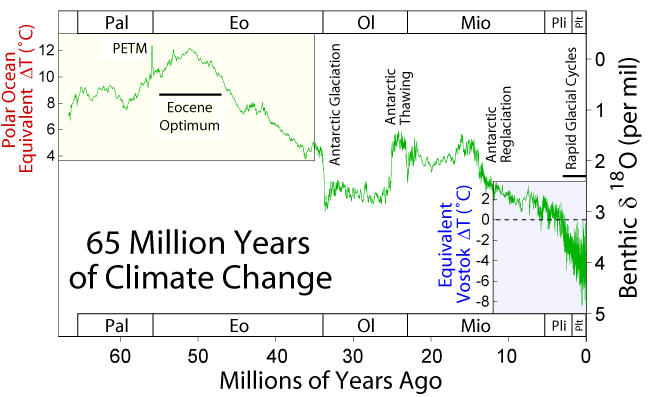
Meanwhile, back to documenting the atrocities. From what I've read this morning the sliming was pretty universal last night of both the candidates and the process, although HHHillary and her minions seem to think she's somehow proved herself more $electable. There's only one thing a student of the situation can do in response to statements like that: what Atrios suggests. As long as Skrulls are the masterdebaters , anyway.
Seriously, this election has been a farce from its ridiculous wind-up a year ago and produced only candidates acceptable to the security-industrial complex. Now we're seeing a fine tuning of the process as the more acceptable corporate candidate ascends to the top of the DINOcrat party. If HHHillary thinks she's more $electable than anyone else in this process, she's in for a rude surprise in November.
The fix was in on this $election from the beginning.
McCain, and the fourth branch of government, are guaranteed to be awarded the booby prize, no matter the economy, no matter the war, no matter the security State.
There's a storm coming, and you'd best think ahead.
in the swamps of Michigan to listen to the damage the main$tream framers were doing to the candiates and the process.Metasequoia is largely a fossil genus until recently thought to be extinct, until somebody realized a Chinese ornamental was the last remaining member.
I figure if the corpocracy is determined to recreate the conditions of the Paleocene-Eocene Thermal Maximum I might as well have something that grows nicely. It liked North America then, so when the poles melt and the Gulf of Mexico extends all the way north to Paducah it should flourish here again.
Meanwhile, back to documenting the atrocities. From what I've read this morning the sliming was pretty universal last night of both the candidates and the process, although HHHillary and her minions seem to think she's somehow proved herself more $electable. There's only one thing a student of the situation can do in response to statements like that: what Atrios suggests. As long as Skrulls are the masterdebaters
, anyway.Seriously, this election has been a farce from its ridiculous wind-up a year ago and produced only candidates acceptable to the security-industrial complex. Now we're seeing a fine tuning of the process as the more acceptable corporate candidate ascends to the top of the DINOcrat party. If HHHillary thinks she's more $electable than anyone else in this process, she's in for a rude surprise in November.
The fix was in on this $election from the beginning.
McCain, and the fourth branch of government, are guaranteed to be awarded the booby prize, no matter the economy, no matter the war, no matter the security State.
There's a storm coming, and you'd best think ahead.

Terra Video
All the right people hate this video.
More on the War on Greed here.
I particularly like their facts page.
Doubtless these are exactly the kind of people the Department of Fatherland Security want on their Terra watchlist.
More on the War on Greed here.
I particularly like their facts page.
Doubtless these are exactly the kind of people the Department of Fatherland Security want on their Terra watchlist.
Wednesday, April 16, 2008
Before the Plunge
Quoth the Dark Wraith:
A word link from the farmer to one of Molly Ivins's last posts:
Of course, change that sticks isn't part of the program. Chaos is.
There's a lot of posts over at Common Dreams tonight that see the writing on the wall, or the stains in the porcelain as we swirl down the drain.
Ted Rall says the Calvary Isn't Coming:
The Old Ones must be pleased.
Jim Goodman sees the nature of the next bubble for Wall Street to speculate on:
You might think a jump in food prices might be good for farmers, but not if they're all Monsanto.
If you like what the Corpocracy has done for real estate and credit, then you'll just love what they do for cuisine.
Soylent Green, anyone?
When John McCain becomes President, somebody should kick both Clinton and Obama in the ass: Clinton for being willing to wreck the Dems' chances just so she can be the nominee; Obama for not kicking Clinton in the ass before she wrecked the Dems' chances.
(Not, by the way, that any of these lousy finalists are what this country needs; but then again, this is the electorate that votes by the tens of millions for absolute morons like George W. Bush. That means this country won't get what it needs, but it will get what it deserves.)
A word link from the farmer to one of Molly Ivins's last posts:
...I understand Hillary's sense of outrage. It makes me mad too. Sure, we lost our base in the South; our boys voted for Gingrich. But let me tell you something. I know these boys. I grew up with them. Hardworking, poor, white boys, who feel left out, feel that our reforms always come at their expense. Think about it, every progressive advance our country has made since the Civil War has been on their backs. They're the ones asked to pay the price of progress. Now, we are the party of progress, but let me tell you, until we find a way to include these boys in our programs, until we stop making them pay the whole price of liberty for others, we are never going to unite our party, never really going to have change that sticks...
Of course, change that sticks isn't part of the program. Chaos is.
There's a lot of posts over at Common Dreams tonight that see the writing on the wall, or the stains in the porcelain as we swirl down the drain.
Ted Rall says the Calvary Isn't Coming:
...There is no short-term fix. In the long term, we must put more money into more people’s pockets. That means higher wages and lower taxes for the poor and middle class. Some of what is needed is easy to see: a more progressive tax code, repealing laws that allow employers to harass and fire those who try to organize unions, nationalizing industries run by vampire capitalists — health insurers, private hospitals, colleges and universities. Banks encourage predatory lending while stifling saving. They ought to be re-regulated. What madness permits them to charge 30 percent on credit cards while paying one percent on passbook savings accounts?
More — much more — is necessary to prevent the wholesale collapse of the U.S. economic system. A maximum wage should be imposed — the highest paid American should earn no more than ten times the lowest paid. I know, I know — none of this will happen. There will be nothing but Band-Aids and lazy rhetoric as we plummet into the abyss. It cannot be otherwise, for our politics are ossified, the media is corporatized, and we the people are dull and apathetic.
The Old Ones must be pleased.
Jim Goodman sees the nature of the next bubble for Wall Street to speculate on:
..An abundance of food is something we take for granted, but we have money. Collectively as a nation, food has always been there, and we could buy whatever we wanted. What if that changed? What if food became really scarce and really expensive? Could it happen? It has already started.
* Total world stocks of all grains are close to their lowest level in 30 years.
* USDA predicts wheat surpluses to be the smallest in 60 years.
* A virulent strain of wheat rust that can reduce yields to zero is spreading worldwide.
* Wheat prices have risen well over 50 percent from a year ago.
* The FAO cites 37 countries as facing a food crisis due to rising prices.
Food price is dependent on the price and availability of grain. Since 1960 the world grain harvest has tripled, and the world population has doubled. So why isn’t there more grain available at a lower price? Why have the prices jumped?
You might think a jump in food prices might be good for farmers, but not if they're all Monsanto.
If you like what the Corpocracy has done for real estate and credit, then you'll just love what they do for cuisine.
Soylent Green, anyone?
Tuesday, April 15, 2008
Sweet Elitism on the Run

Bob Herbert:
...Senator Obama has spent his campaign trying to dodge the race issue, which in America is like trying to dodge the wind. So when he fielded the question in San Francisco, he didn’t say: “A lot of folks are not with me because I’m black — but I’m trying to make my case and bring as many around as I can.”
Instead, he fell back on a tortured response that was demonstrably incorrect. Referring to the long-term economic distress of many working-class voters, Mr. Obama said: “It’s not surprising then they get bitter, they cling to guns or religion or antipathy to people who aren’t like them or anti-immigrant sentiment or antitrade sentiment as a way to explain their frustrations.”
He danced all around the truth. Unless you’re Fred Astaire, if your dance steps get too intricate you’re bound to make a misstep. This was a big one.
But there is something perverse in the effort to portray Senator Obama — who has tried hard to promote a message of unity and healing — as some kind of divisive figure. He has spoken with great insight and empathy, most notably in his race speech in Philadelphia, about the anxiety and frustration of middle- and working-class Americans.
In his San Francisco comments, Senator Obama fouled up when he linked frustration and bitterness over economic hard times with America’s romance with guns and embrace of religion. But, please, let’s get a grip. What we ought to be worked up about is the racism that still prevents some people from giving a candidate a fair chance because of his skin color.
Are working people bitter? There’s no doubt that many are extremely bitter over the economic hand they’ve been dealt. Those who believed that America’s industrial heartland was secure and everlasting have been forced to adjust over the past several years to an extremely bitter reality. Jobs and pensions have vanished. The value of the family home is sinking. Health care is increasingly unaffordable. For many, the cost of college is out of reach.
But “bitter” has a connotation that is generally not helpful in a political campaign. Bitter suggests powerlessness and a smallness of spirit. Most people would prefer to be characterized as “angry” — a term that suggests empowerment — rather than “bitter,” with its undertone of defeat...
Perhaps they're bitter because they have yet another Preznitial $election with the candidates Puttin' on the Ritz around the real problems. Which is pretty much what Obama said.
The elite Corpocracy had to nip that talk in the bud. Hence the McCain-Clinton Unity accusations following the Rovian program: accuse your opponent of what you've been doing all along.
Barbara at TPM Cafe:
...There's no controversy to what he said. But I think he touched a nerve with corporate america and corporate media. His words told truth to power to these people and if it had gone on uncontested, then these people might just realize that they've been oppressed for so long and wake up and start a revolution.
This affects all of corporate america. They can't have poor people starting to descent and go against everything that they had been brainwashed with since they were young.
If they wake up and revolt, media loses the control they have over them...
And apparently the tighter they squeeze, the more the main$tream feels the control slipping through their fingers. FOX went out to look for rural Pennsylvanians outraged by The Elitist who dared suggest they were bitter- and couldn't find any. That had to hurt.
But perhaps this primary may get a bit out of hand.
Why? Because Obama seems to be moving away from his "reconciliation" with the Elder Gods of Washington. In an interview yesterday to Will Bunch:
"I know you've talked about reconciliation and moving on, but there's also the issue of justice, and a lot of people -- certainly around the world and certainly within this country -- feel that crimes were possibly committed" regarding torture, rendition, and illegal wiretapping. I wanted to know how whether his Justice Department "would aggressively go after and investigate whether crimes have been committed."
Here's his answer, in its entirety:
What I would want to do is to have my Justice Department and my Attorney General immediately review the information that's already there and to find out are there inquiries that need to be pursued. I can't prejudge that because we don't have access to all the material right now. I think that you are right, if crimes have been committed, they should be investigated. You're also right that I would not want my first term consumed by what was perceived on the part of Republicans as a partisan witch hunt because I think we've got too many problems we've got to solve.
So this is an area where I would want to exercise judgment -- I would want to find out directly from my Attorney General -- having pursued, having looked at what's out there right now -- are there possibilities of genuine crimes as opposed to really bad policies. And I think it's important-- one of the things we've got to figure out in our political culture generally is distinguishing betyween really dumb policies and policies that rise to the level of criminal activity. You know, I often get questions about impeachment at town hall meetings and I've said that is not something I think would be fruitful to pursue because I think that impeachment is something that should be reserved for exceptional circumstances. Now, if I found out that there were high officials who knowingly, consciously broke existing laws, engaged in coverups of those crimes with knowledge forefront, then I think a basic principle of our Constitution is nobody above the law -- and I think that's roughly how I would look at it.
Now that puts Obama in a class by himself: willing to prosecute. No wonder the others think he's a snob.
Monday, April 14, 2008
You Can Spy on Your Friends and Families for the Fatherland
Ladies, Gentlemen, and Cyborgs, the Department of Homeland Security gives you the Neighborhood Network Watch:

How exciting! Obviously all your Democrat neighbors are a bunch ofObama Osama-loving terrorists. Perhaps they are even members of the Sierra Club. Or even Quakers.
[The original title of this post was "for the Feds", but let's get real. The Feds don't really have the proper security for the fourth branch of government. Only the free market private sector can be trusted to disregard the Constitution and do what needs to be done for the greater good of the free market private sector.]
You too can be a member of the Hitler Homeland Brigade, keep tabs on their online activity, and report it to the Authorities. Who knows, when we raid their home some morning about 5AM, we might even invite you along for coffee and doughnuts. And debriefing.
The Neighborhood Network Watch announced today the start of a new community program, the Home Network Awareness Program (HNAP). HNAP is aimed at providing an easy way for people to get involved and to contribute to the efforts of the Neighborhood Network Watch as well as providing the group with valuable information on the states of networks that reside in the homes of our nation.
Participants in HNAP would collect sample network traffic from their own home networks as well as samples from networks within the vicinity. The Neighborhood Network Watch will be making a set of freely available instructions on how to capture network traffic, using the open source packet sniffer TCPDUMP, and how to log onto nearby wireless networks that may be being operated by neighbors.
These samples of network traffic would then be sent to the Neighborhood Network Watch for analysis using the latest revision of the NNWKAA. The participants would then be sent back a rating for each network along with a rating for the area as a whole.
This allows the participants to not only find out how their own home network is being used but also valuable information about those around their home that may have large amounts of terrorist related traffic flowing over them. This also provides the Neighborhood Network Watch with the ability to see if there is potential terrorist cell activity in or around the participants homes.
How exciting! Obviously all your Democrat neighbors are a bunch of
[The original title of this post was "for the Feds", but let's get real. The Feds don't really have the proper security for the fourth branch of government. Only the free market private sector can be trusted to disregard the Constitution and do what needs to be done for the greater good of the free market private sector.]
You too can be a member of the Hitler Homeland Brigade, keep tabs on their online activity, and report it to the Authorities. Who knows, when we raid their home some morning about 5AM, we might even invite you along for coffee and doughnuts. And debriefing.
Another slip of the tongue
The farmer has a good series of posts up.
Here he notices Jack Cafferty comes out and says the Unthinkable in deriding the latest McCain-Clinton slime:
Obama has a hard fight ahead. For people, for self-proclaimed Democrats to call him elitist simply because he points out the elitism that's manipulated working class whites against working class blacks for the last century is rank hypocrisy.
You could see the neocon advice of Rove for the McCain camp to do it.
For the Clinton camp? Well, they're revealed as a pack of slavering neoliberals of the Bobbitt school. DINOcrats. Again.
Here he notices Jack Cafferty comes out and says the Unthinkable in deriding the latest McCain-Clinton slime:
...They call it the rust belt for a reason. The great jobs and the economic prosperity left that part of the country two or three decades ago. The people are frustrated. The people have no economic opportunity. What happens to folks like that in the Middle East, you ask? Well, take a look. They go to places like al Qaeda training camps. I mean there's nothing new here.
And what Barack Obama was suggesting is not that the people of Pennsylvania are to blame for any of it. It's that the jerks in Washington, D.C. , as represented by the 10 years of the Bushes and the Clintons and the McCains, who have lied to and misled these people for all of this time while they shipped the jobs overseas and signed phony trade deals like NAFTA, are to blame for the deteriorating economic conditions among America's middle class. I mean I'm a college dropout and I can read the damn thing and figure it out...
Obama has a hard fight ahead. For people, for self-proclaimed Democrats to call him elitist simply because he points out the elitism that's manipulated working class whites against working class blacks for the last century is rank hypocrisy.
You could see the neocon advice of Rove for the McCain camp to do it.
For the Clinton camp? Well, they're revealed as a pack of slavering neoliberals of the Bobbitt school. DINOcrats. Again.
Sunday, April 13, 2008
Rationale for Empire and War Without End, Amen
And you thought you lived in a Constitutional Republic.
A prominent academic advocate of empire reviews a propaganda tome in The New York Pravda, and if you can stomach it you see the rationale those who would rule have sold their minions.
These people can promote their grandoise schemes as a "...reinvention of the dominant role of the trans-Atlantic alliance..." to be ... read with pleasure by men of a certain age, class and education from Manhattan’s Upper East Side to London’s West End.
Don't give me that bitterness line. That's real elitism.
It gets worse, or better from a MST 3000 viewpoint.
In other words, this book is a serious trip into neocon Chicago school neverland.
But be very afraid. For your consideration, the credentials of this author, one Philip Bobbitt.
Welcome to the market-state of Amerika, brought to you by one of your DINOcratic party's intellectual leaders.
Now perhaps you know why I'm a little uneasy about HHHillary.
But there's more to this review, which is, after all a song of praise to the endless war.
By that, somehow I don't think they're talking about General Dynamics selling hardware to the Turks who re-sale it to Iran.
Ah, yes, Al Qaeda, he must be talking about the CIA giving weapons to the Saudis, factions of whom, after all, keep Al Qaeda in business. Along with the CIA, of course.
But seriously, this is the source of McCain's (and others') confusion. Ya seen one Ay-rab, ya seen 'em all. The white man's burden...
You know, it's not our freedom they hate us for, it's our willful stupidity. Ferguson is a professor at Harvard University and Harvard Business School, a fellow of Jesus College, Oxford, and a senior fellow of the Hoover Institution at Stanford reviewing this book. He knows better than this tripe of Bobbitt's.
Al Qaeda is a fundamentalist Sunni Wahhabist guerilla movement. It is an offshoot of the Saudi Royal House dedicated to takeover of the House and the Saudi nation. It fights America globally because America is the chief client state of the Saudis, not the other way around. Period.
But these miscalculations aren't the sum of Fergie's message. There's teh Terra:
Now that's entertainment. "...terrorism is a negative externality of our borderless world". You're either with us or against us, and since we are everywhere anywhere that isn't us is antimatter. One supposes.
Which is a statement about as rational as anything else the neocons have to say here.
There's the neocon lack of contriteness: the endless war on terror isn't the error, it's just the flawed vessel of Bush administration... but really, we can't have ...“states of consent,” in which the rule of law exists to uphold individual liberty and rights without the consent of the right people.
Bu$hie just forgot to ask the free market about what modifications of the law to make first, and to use coercive techniques.
And for god's sake, don't let the grunts bring their camera phones to war.
There's more madness.
The Elder Gods will continue to dine well off of the fruit of work of the neocon elite.
A prominent academic advocate of empire reviews a propaganda tome in The New York Pravda, and if you can stomach it you see the rationale those who would rule have sold their minions.
These people can promote their grandoise schemes as a "...reinvention of the dominant role of the trans-Atlantic alliance..." to be ... read with pleasure by men of a certain age, class and education from Manhattan’s Upper East Side to London’s West End.
Don't give me that bitterness line. That's real elitism.
It gets worse, or better from a MST 3000 viewpoint.
... “Terror and Consent” is much more than that readership might suggest. This is quite simply the most profound book to have been written on the subject of American foreign policy since the attacks of 9/11 — indeed, since the end of the cold war. I have no doubt it will be garlanded with prizes. It deserves to be. It is more important that it should be read, marked and inwardly digested by all three of the remaining candidates to succeed George W. Bush as president of the United States.
In other words, this book is a serious trip into neocon Chicago school neverland.
But be very afraid. For your consideration, the credentials of this author, one Philip Bobbitt.
...Bobbitt’s originality lies in his almost unique ability to synthesize three quite different traditions of scholarship. The first is history. The second is law, particularly constitutional law. The third is military strategy. This synthesis owes as much to the corridors of power as to the sequestered groves of academe. Bobbitt was an associate counsel to President Carter, legal counsel to the Senate’s Iran-Contra committee and a senior director on the National Security Council under President Clinton.
In his last book, “The Shield of Achilles” (2002), Bobbitt advanced a bold argument about the history of international relations since the time of the Treaty of Westphalia (1648). His central argument was that, in the aftermath of the cold war, the traditional post-Westphalian ideal of the sovereign nation-state had become obsolescent. In the increasingly borderless world we associate with globalization, something new was emerging, which Bobbitt called (and continues to call) the “market-state.” This state’s relationship to its citizens resembles that between a corporation and consumers. Its counterpart — and enemy — is the terrorist network. The central problem raised in “The Shield of Achilles” was how far the market-state could and should go to defeat such networks, particularly when they were in some measure sponsored by traditional nation-states...
Welcome to the market-state of Amerika, brought to you by one of your DINOcratic party's intellectual leaders.
Now perhaps you know why I'm a little uneasy about HHHillary.
But there's more to this review, which is, after all a song of praise to the endless war.
...Some reviewers took it to be a neoconservative work, and Bobbitt’s support for the invasion of Iraq in 2003 lent credence to that view. However, read as a work of history, it was no such thing. Rather, it was a reflection on the decline of national sovereignty in an age of globalization.
“Terror and Consent” is less historical; indeed, it is more concerned with the future and how best we should anticipate its challenges. Did I say “the future”? Bobbitt has learned from the scenario-builders of Royal Dutch Shell the essential point that there is really no such thing as the future — only futures (plural). The task he has set himself here is to challenge nearly all our existing ideas about the so-called wars on terror (note, once again, the plural), in the belief that only a root-and-branch rethinking will equip us to deal with the problems posed by “the proliferation of weapons of mass destruction, mass terrorist atrocities and humanitarian crises that bring about or are brought about by terror.”
By that, somehow I don't think they're talking about General Dynamics selling hardware to the Turks who re-sale it to Iran.
Bobbitt’s central premise is that today’s Islamic terrorist network, which he calls Al Qaeda for short, is like a distorted mirror image of the post-Westphalian market-state: decentralized, privatized, outsourced and in some measure divorced from territorial sovereignty...
Ah, yes, Al Qaeda, he must be talking about the CIA giving weapons to the Saudis, factions of whom, after all, keep Al Qaeda in business. Along with the CIA, of course.
But seriously, this is the source of McCain's (and others') confusion. Ya seen one Ay-rab, ya seen 'em all. The white man's burden...
You know, it's not our freedom they hate us for, it's our willful stupidity. Ferguson is a professor at Harvard University and Harvard Business School, a fellow of Jesus College, Oxford, and a senior fellow of the Hoover Institution at Stanford reviewing this book. He knows better than this tripe of Bobbitt's.
Al Qaeda is a fundamentalist Sunni Wahhabist guerilla movement. It is an offshoot of the Saudi Royal House dedicated to takeover of the House and the Saudi nation. It fights America globally because America is the chief client state of the Saudis, not the other way around. Period.
But these miscalculations aren't the sum of Fergie's message. There's teh Terra:
... The terrorists are at once parasitical on, and at the same time hostile toward, the globalized economy, the Internet and the technological revolution in military affairs... terrorism is a negative externality of our borderless world.
...Al Qaeda is different. Its members seek to undermine the market-state by turning its own technological achievements against it in a protracted worldwide war, the ultimate goal of which is to create a Sharia-based “terror-state” in the form of a new caliphate. Osama bin Laden and his confederates want to acquire nuclear or biological weapons of mass destruction. Precisely because of the nature of the market-state, as well as the actions of rogue nation-states, the key components and knowledge are very close to being available to them — witness the nuclear Wal-Mart run in Pakistan by A. Q. Khan. With such weapons, the terrorists will be able to unleash a super-9/11, with scarcely imaginable human and psychological costs.
In short, we are in a war. Those who say that you cannot fight an abstract noun have misunderstood that “terror” itself is being deployed as a weapon against us by a hostile and calculating nongovernmental organization. To refine his argument, Bobbitt introduces a distinction. Both the market-states and the nation-states of the West are democratic; they are “states of consent,” in which the rule of law exists to uphold individual liberty and rights. Our adversaries aim to replace our consent-based order with a “state of terror.”
Now that's entertainment. "...terrorism is a negative externality of our borderless world". You're either with us or against us, and since we are everywhere anywhere that isn't us is antimatter. One supposes.
Which is a statement about as rational as anything else the neocons have to say here.
There's the neocon lack of contriteness: the endless war on terror isn't the error, it's just the flawed vessel of Bush administration... but really, we can't have ...“states of consent,” in which the rule of law exists to uphold individual liberty and rights without the consent of the right people.
...Bush’s instinct was not wrong. In this war, we do need pre-emptive detention of suspected terrorists; we do need a significant increase of surveillance, particularly of electronic communications; we do need, in some circumstances, to use coercive techniques (short of torture) to elicit information from terrorists. The administration’s fatal mistake was its failure to understand that these things could be achieved by appropriate modifications of the law. By doing what indeed was needed, but doing it outside the law, the administration undermined the legitimacy of American policy at home as well as abroad. Bobbitt is emphatic: all branches of government must act in conformity with the Constitution and the law.
Bu$hie just forgot to ask the free market about what modifications of the law to make first, and to use coercive techniques.
And for god's sake, don't let the grunts bring their camera phones to war.
There's more madness.
...Bobbitt argues for a radical overhaul of our intelligence system, arguing that traditional antinomies (United States citizen/foreigner, gathering/analysis, private/public) are now an obstacle to effective action. Yes, we really do need something like the abortive Total Information Awareness program, pooling every available piece of data and mining it for clues about the next 9/11. We also need to take large-scale precautions to ensure that constitutional and legal order do not break down in the event of a terrorist attack or natural disaster...
The Elder Gods will continue to dine well off of the fruit of work of the neocon elite.
War Crimes
Tristero:
How and why do they get away with war crimes, how and why do they get away with the destruction of the Constitution and the Republic?
Because they can.
There is no longer the shadow of a doubt that the torture of prisoners was planned at the highest levels of the US government with the explicit knowledge and approval of the president. How do we know this? Bush himself admitted it.
Bush Aware of Advisers' Interrogation Talks
President Says He Knew His Senior Advisers Discussed Tough Interrogation Methods
By JAN CRAWFORD GREENBURG, HOWARD L. ROSENBERG and ARIANE de VOGUE
April 11, 2008—
President Bush says he knew his top national security advisers discussed and approved specific details about how high-value al Qaeda suspects would be interrogated by the Central Intelligence Agency, according to an exclusive interview with ABC News Friday.
"Well, we started to connect the dots in order to protect the American people." Bush told ABC News White House correspondent Martha Raddatz. "And yes, I'm aware our national security team met on this issue. And I approved."
As first reported by ABC News Wednesday, the most senior Bush administration officials repeatedly discussed and approved specific details of exactly how high-value al Qaeda suspects would be interrogated by the CIA.
The high-level discussions about these "enhanced interrogation techniques" were so detailed, these sources said, some of the interrogation sessions were almost choreographed -- down to the number of times CIA agents could use a specific tactic.
These top advisers signed off on how the CIA would interrogate top al Qaeda suspects -- whether they would be slapped, pushed, deprived of sleep or subjected to simulated drowning, called waterboarding, sources told ABC news.
The advisers were members of the National Security Council's Principals Committee, a select group of senior officials who met frequently to advise President Bush on issues of national security policy.
At the time, the Principals Committee included Vice President Dick Cheney, former National Security Adviser Condoleezza Rice, Defense Secretary Donald Rumsfeld and Secretary of State Colin Powell, as well as CIA Director George Tenet and Attorney General John Ashcroft.
As the national security adviser, Rice chaired the meetings, which took place in the White House Situation Room and were typically attended by most of the principals or their deputies...
How and why do they get away with war crimes, how and why do they get away with the destruction of the Constitution and the Republic?
Because they can.
Look Away, Dixieland
Frank Rich talks about the total nonengagement of the Amerikan public on just about anything outside of the commercials at the Superbowl.
Mr. Rich wants to put the shame as the central reason behind this.
Mr. Rich reads too much of his own feelings into the issue.
It's the same reason why the average Roman was more concerned with the Circus than the encroaching Visigoths. It's the same reason why the poor Christian Southerner embraced the slavery of the African even though the most he got out of all that black flesh was an occasional visit to the cathouse and someone to clean his outhouse. It's why cheap yard labor from Mexico and Chinese-made trinkets at Wal-Mart continue to immobilize the poor in their social strata like a Kansas trailer parker's addiction to OxyContin keeps them from affording to live anywhere but in tornado alley.
It's a result of the cultural mind control that keeps the rubes shelling over their pennies for the freak show that gives their limbic system the barest of tickles.
Old times there are not forgotten, whether they ever really existed or not.
...Iraq is to moviegoers what garlic is to vampires.
This is not merely a showbiz phenomenon but a leading indicator of where our entire culture is right now. It’s not just torture we want to avoid. Most Americans don’t want to hear, see or feel anything about Iraq, whether they support the war or oppose it. They want to look away, period, and have been doing so for some time...
Mr. Rich wants to put the shame as the central reason behind this.
Mr. Rich reads too much of his own feelings into the issue.
It's the same reason why the average Roman was more concerned with the Circus than the encroaching Visigoths. It's the same reason why the poor Christian Southerner embraced the slavery of the African even though the most he got out of all that black flesh was an occasional visit to the cathouse and someone to clean his outhouse. It's why cheap yard labor from Mexico and Chinese-made trinkets at Wal-Mart continue to immobilize the poor in their social strata like a Kansas trailer parker's addiction to OxyContin keeps them from affording to live anywhere but in tornado alley.
It's a result of the cultural mind control that keeps the rubes shelling over their pennies for the freak show that gives their limbic system the barest of tickles.
Old times there are not forgotten, whether they ever really existed or not.
Saturday, April 12, 2008
Would You Buy a Used Satellite Surveillance System From This Man?

He just wants to see everything you're doing as well well as eavesdrop on all your conversations and read all your email. All the time. For your own good.
If you love Amerika you'll let him.
After all, they're the Feds, and they never abuse their power. Just Because.
Slip of the Tongue
The Candidate Once Called the Unibama makes the mistake of noticing there isn't anything like unity in Amerika
Spin it as the main$tream tries, the regular people are noticing.
The Former Unibama would do well to lose the criteria for that name, be less accomodating to the Powers, and actually, you know, take them on.
There are some people you just can't Unite with, because they're better to fight with.
Numerian at the Agonist follows this more closely and transcribes Obama's response to the criticism:
This is a very good thing for Obama to do, and one can only hope it a harbinger of a move away from the fake "centrism" that only perpetuates Empire.
MUNCIE, Ind. — Senator Barack Obama stepped back slightly from comments he made Sunday about small-town Americans whose economic hardships had made them “bitter,” but he continued to rebut criticisms from both Democratic and Republican opponents that his comments were elitist and “out-of-touch.”
Many dispirited voters believe politicians will not solve their problems, Mr. Obama argued in Muncie, Ind., so they base their votes on wedge issues like gun rights or gay marriage rather than voting for their economic interests...
Spin it as the main$tream tries, the regular people are noticing.
The Former Unibama would do well to lose the criteria for that name, be less accomodating to the Powers, and actually, you know, take them on.
There are some people you just can't Unite with, because they're better to fight with.
Numerian at the Agonist follows this more closely and transcribes Obama's response to the criticism:
...Lou Dobbs canvassed his viewers on this very point, offering them a yes or no alternative on the following question: Do you believe that Senator Barack Obama's comments reveal his elitist attitude toward every hardworking American? The only surprise to this sort of loaded question was that 50% of the respondents said No.
Maybe that is significant. Maybe the general public isn’t listening anymore to the demagoguery that for 25 years has played the middle class against the poor, the religious against the secular, black against white, straight against gay, and everybody against the immigrants – all while the wealthy keep reaping an increasing amount of society’s production. Or maybe people actually read Obama’s extended response on this “controversy”:When I go around and I talk to people there is frustration and there is anger and there is bitterness. And what's worse is when people are expressing their anger then politicians try to say what are you angry about? This just happened - I want to make a point here today.
I was in San Francisco talking to a group at a fundraiser and somebody asked how're you going to get votes in Pennsylvania? What's going on there? We hear that's its hard for some working class people to get behind you're campaign. I said, "Well look, they're frustrated and for good reason. Because for the last 25 years they've seen jobs shipped overseas. They've seen their economies collapse. They have lost their jobs. They have lost their pensions. They have lost their healthcare.
And for 25, 30 years Democrats and Republicans have come before them and said we're going to make your community better. We're going to make it right and nothing ever happens. And of course they're bitter. Of course they're frustrated. You would be too. In fact many of you are. Because the same thing has happened here in Indiana. The same thing happened across the border in Decatur. The same thing has happened all across the country. Nobody is looking out for you. Nobody is thinking about you. And so people end up- they don't vote on economic issues because they don't expect anybody's going to help them. So people end up, you know, voting on issues like guns, and are they going to have the right to bear arms. They vote on issues like gay marriage. And they take refuge in their faith and their community and their families and things they can count on. But they don't believe they can count on Washington. So I made this statement-- so, here's what rich. Senator Clinton says 'No, I don't think that people are bitter in Pennsylvania. You know, I think Barack's being condescending.' John McCain says, 'Oh, how could he say that? How could he say people are bitter? You know, he's obviously out of touch with people.'
Out of touch? Out of touch? I mean, John McCain--it took him three tries to finally figure out that the home foreclosure crisis was a problem and to come up with a plan for it, and he's saying I'm out of touch? Senator Clinton voted for a credit card-sponsored bankruptcy bill that made it harder for people to get out of debt after taking money from the financial services companies, and she says I'm out of touch? No, I'm in touch. I know exactly what's going on. I know what's going on in Pennsylvania. I know what's going on in Indiana. I know what's going on in Illinois. People are fed-up.
They're angry and they're frustrated and they're bitter. And they want to see a change in Washington and that's why I'm running for President of the United States of America.
This is dangerous stuff. It challenges in some fundamental way the manner in which government and corporations have been running things for a quarter of a century. It is a pithy summary of arguments made in Thomas Frank’s book What’s the Matter with Kansas: How Conservatives Won the Heart of America...
This is a very good thing for Obama to do, and one can only hope it a harbinger of a move away from the fake "centrism" that only perpetuates Empire.
Tinpot Patsies
Dick Cavett got this week's Petraeus & Crocker show right.
Compared to Dear Leader, the bloody-handed and ill-fated General Custer was an amateur.
...I can’t look at Petraeus — his uniform ornamented like a Christmas tree with honors, medals and ribbons — without thinking of the great Mort Sahl at the peak of his brilliance. He talked about meeting General Westmoreland in the Vietnam days. Mort, in a virtuoso display of his uncanny detailed knowledge — and memory — of such things, recited the lengthy list (”Distinguished Service Medal, Croix de Guerre with Chevron, Bronze Star, Pacific Campaign” and on and on), naming each of the half-acre of decorations, medals, ornaments, campaign ribbons and other fripperies festooning the general’s sternum in gaudy display. Finishing the detailed list, Mort observed, “Very impressive!” Adding, “If you’re twelve.”
...Never in this breathing world have I seen a person clog up and erode his speaking — as distinct from his reading — with more “uhs,” “ers” and “ums” than poor Crocker. Surely he has never seen himself talking: “Uh, that is uh, a, uh, matter that we, er, um, uh are carefully, uh, considering.” (Not a parody, an actual Crocker sentence. And not even the worst.)
These harsh-on-the-ear insertions, delivered in his less than melodious, hoarse-sounding tenor, are maddening. And their effect is to say that the speaker is painfully unsure of what he wants, er, um, to say.
If Crocker’s collection of these broken shards of verbal crockery were eliminated from his testimony, everyone there would get home at least an hour earlier.
Petraeus commits a different assault on the listener. And on the language. In addition to his own pedantic delivery, there is his turgid vocabulary. It reminds you of Copspeak, a language spoken nowhere on earth except by cops and firemen when talking to “Eyewitness News.” Its rule: never use a short word where a longer one will do. It must be meant to convey some misguided sense of “learnedness” and “scholasticism” — possibly even that dread thing, “intellectualism” — to their talk. Sorry, I mean their “articulation.”
No crook ever gets out of the car. A “perpetrator exits the vehicle.” (Does any cop say to his wife at dinner, “Honey, I stubbed my toe today as I exited our vehicle”?) No “man” or “woman” is present in Copspeak. They are replaced by that five-syllable, leaden ingot, the “individual.” The other day, there issued from a fire chief’s mouth, “It contributed to the obfuscation of what eventually eventuated.” This from a guy who looked like he talked, in real life, like Rocky Balboa. And there’s nothing wrong with that.
Who imposes this phony, academic-sounding verbal junk on brave and hard-working men and women who don’t need the added burden of trying to talk like effete characters from Victorian novels?
And, General, there is no excuse anywhere on earth for a stillborn monster like “ethnosectarian conflict,” as Jon Stewart so hilariously pointed out.
What would the general be forced to say if it weren’t for the icky, precious-sounding “challenge” that he leans so heavily on? That politically correct term, which was created so that folks who are legally blind, deaf, clumsy, crippled, impotent, tremor-ridden, stupid, addicted or villainously ugly are really none of those unhappy things at all. They are merely challenged. (Are these euphemisms supposed to make them feel better?) And no one need be unlucky enough to be dead or hideously wounded anymore. Those unfortunates are merely “casualties” — a sort of restful-sounding word.
(I have a friend who would like the opportunity to say to our distinguished warrior, “General Petraeus, my son was killed in one of your challenges.”)
Petraeus uses “challenge” for a rich variety of things. It covers ominous developments, threats, defeats on the battlefield and unfound solutions to ghastly happenings. And of course there’s that biggest of challenges, that slapstick band of silent-movie comics called, flatteringly, the Iraqi “fighting forces.” (A perilous one letter away from “fighting farces.”) The ones who are supposed to allow us to bring troops home but never do.
Petraeus’s verbal road is full of all kinds of bumps and lurches and awkward oddities. How about “ongoing processes of substantial increases in personnel”?
Try talking English, General. You mean more soldiers.
It’s like listening to someone speaking a language you only partly know. And who’s being paid by the syllable. You miss a lot. I guess a guy bearing up under such a chestload of hardware — and pretty ribbons in a variety of decorator colors — can’t be expected to speak like ordinary mortals, for example you and me. He should try once saying — instead of “ongoing process of high level engagements” — maybe something in colloquial English? Like: “fights” or “meetings” (or whatever the hell it’s supposed to mean).
I find it painful to watch this team of two straight men, straining on the potty of language. Only to deliver such . . . what? Such knobbed and lumpy artifacts of superfluous verbiage? (Sorry, now I’m doing it…)
But I must hand it to his generalship. He did say something quite clearly and admirably and I am grateful for his frankness. He told us that our gains are largely imaginary: that our alleged “progress” is “fragile and reversible.” (Quite an accomplishment in our sixth year of war.) This provides, of course, a bit of pre-emptive covering of the general’s hindquarters next time that, true to Murphy’s Law, things turn sour again.
Back to poor Crocker. His brows are knitted. And he has a perpetually alarmed expression, as if, perhaps, he feels something crawling up his leg.
Could it be he is being overtaken by the thought that an honorable career has been besmirched by his obediently doing the dirty work of the tinpot Genghis Khan of Crawford, Texas? The one whose foolish military misadventure seems to increasingly resemble that of Gen. George Armstrong Custer at Little Bighorn?
Not an apt comparison, I admit.
Custer only sent 258 soldiers to their deaths.
Compared to Dear Leader, the bloody-handed and ill-fated General Custer was an amateur.
Subscribe to:
Posts (Atom)