I just saw the trailer for the new "GI Joe" flick.
Friday, July 31, 2009


It's the economy, stupid...
Ian Welsh calls the reason for the fall of the DINOcrat Congress next year and quite likely the discorporation of the Oborg in 2012:
Of course, according to Bu$hie's Ba$e, now in fact Obama's Ba$e, the recovery is coming along quite nicely, thank you. The banksters still have theirs, and they are likely to get more. Of course, the original definition of a recession has to do with levels of unemployment. By this criteria, the United States is still in the Great Recession that Bu$hie started in spring 2001.
Brilliant!A compilation of major polling resources shows that republicans have nearly closed the gap with democrats in a generic congressional vote. This is a poll where voters are asked, without naming any specific names, if they are likely to republicans or democrats in the upcoming 2010 midterm elections. Democrats now lead by only 1.5% after the gap had been well into double digits at the time President Obama took office.
The Village consensus on this is going to be that if only Democrats had been more bipartisan that the numbers would be better. Debunking such nonsense is a waste of my time and your brain cells. There are two main reasons why these numbers are where they are:
Republicans understand opposition politics: when you’re in the opposition, you don’t smile bipartisanly, you gnaw at the ankles of the ruling party...
Continuation of ineffective Bush policies. Not to put too fine a point on it, but in too many cases Obama and the new Congress are pursuing Bush lite policies.
* Escalate in Afghanistan
* Spend more money on the military
* Get out of Iraq around about the time Bush wanted to anyway
* Continue the Bush/Paulson financial policies
* A stimulus bill which was 40% tax cuts (granted, not tax cuts for the rich, but still tax cuts)
Americans voted for Democrats because they were sick of Bush and Bush era policies. And here Congress is repeatedly voting for Bush era policies...
Proper governance liberal style works like this. Pass effective bills even if it requires not being bipartisan. When those effective bills create good effects (a good economy, everyone having good health care) reap the benefits of voters being happy with good jobs and not going bankrupt over health care.
Congress’s stimulus bill was crap. Congress’s cap and trade bill is crap. Every indication is that the health care bill is likely to be… crap.
Why would people be happy with this?
It’s the economy stupid. By choosing to bail out financial companies instead of the real economy Obama and Congress cast their die. It has not lead to a recovery in the real economy, and by the time the next recession happens my prediction and that of many others is that jobs will still not have recovered to pre-recession levels...
Of course, according to Bu$hie's Ba$e, now in fact Obama's Ba$e, the recovery is coming along quite nicely, thank you. The banksters still have theirs, and they are likely to get more. Of course, the original definition of a recession has to do with levels of unemployment. By this criteria, the United States is still in the Great Recession that Bu$hie started in spring 2001.
Thursday, July 30, 2009
The Real Issue
Gore Vidal writes about the police state of Amerika:
Vidal is correct. The national $ecurity state has clout for one reason only: to enforce the Golden Rule. Those that have the gold make the rules.
...It would be nice if the media realized how dangerous they when they begin to falsify motives which, to be blunt, they have no authority to do. If a black person is in any way in a jam of any kind, it is because he is responding to racism or if a white person goes berserk over anything with anybody, racism drove him to it. This is a great, great red herring like some giant whale gliding across the pages of police dockets.
So let me mention the real issue. The real issue is class. We have the greatest divide between the very rich and the very poor of any country on Earth, surpassing even France. And this division gets wider and wider as financial disasters overwhelm us. We were already in pretty bad shape before things began to fall apart a year or two ago. We must acknowledge that our character, never much good in these matters, is now reprehensible, and the police seem to have taken it upon themselves to exact revenge for a full professor and his—plainly, in their view—insulting income, which they figure must be considerable. The days of greed through which we all lived now have not done us much good, nor have they taught us any lessons, but you cannot live long with such divisions, which in my view as an outsider overlooking the scene seems to be a nation of total liars. Everybody is lying. Television lies, candidates lie. And everyone says, “Oh they always have.” I love that excuse. Well they haven’t always done that. Sometimes lying to the people is a great mistake. And it is well-known that the rich will tell almost any lie to avoid paying taxes...
Vidal is correct. The national $ecurity state has clout for one reason only: to enforce the Golden Rule. Those that have the gold make the rules.
Wednesday, July 29, 2009
"government doesn’t exist to protect voters from interests, it exists to protect interests from voters"
Matt Taibbi pretty much sums it up for me:
Amerikan government works fine for the Company.
It’s funny, earlier this summer I was watching the Federer-Roddick Wimbledon Final. Great match in a way, final set was 30 games long, one of the all-time epic battles. And yet, as I watched it, I thought to myself, “This has to be the least suspenseful epic sporting event of all time.” Because there was never any doubt in my mind that Federer was going to win the match. I simply could not envision a scenario where anything else than a Federer victory could happen. I think I even turned it off at 7-7 in the final set, figuring I could catch Federer’s award ceremony later on.
It’s the same with this health care bill. Who among us did not know this would happen? It’s been clear from the start that the Democrats would make a great show of doing something real, then they would fold prematurely, ram through some piece-of-shit bill with some incremental/worthless change in it, and then in the end blame everything on Max Baucus and Bill Nelson, saying, “By golly, we tried our best!”
Make no mistake, this has nothing to do with Max Baucus, Bill Nelson, or anyone else. If the Obama administration wanted to pass a real health care bill, they would do what George Bush and Tom DeLay did in the first six-odd years of this decade whenever they wanted to pass some nightmare piece of legislation (ie the Prescription Drug Bill or CAFTA): they would take the recalcitrant legislators blocking their path into a back room at the Capitol, and beat them with rubber hoses until they changed their minds.
The reason a real health-care bill is not going to get passed is simple: because nobody in Washington really wants it. There is insufficient political will to get it done. It doesn’t matter that it’s an urgent national calamity, that it is plainly obvious to anyone with an IQ over 8 that our system could not possibly be worse and needs to be fixed very soon, and that, moreover, the only people opposing a real reform bill are a pitifully small number of executives in the insurance industry who stand to lose the chance for a fifth summer house if this thing passes.
It won’t get done, because that’s not the way our government works. Our government doesn’t exist to protect voters from interests, it exists to protect interests from voters. The situation we have here is an angry and desperate population that at long last has voted in a majority that it believes should be able to pass a health care bill. It expects something to be done. The task of the lawmakers on the Hill, at least as they see things, is to create the appearance of having done something. And that’s what they’re doing. Personally, I think they’re doing a lousy job even of that. I lauded Roddick for playing out the string with heart, and giving a good show. But these Democrats aren’t even pretending to give a shit, not really. I mean, they’re not even willing to give up their vacations.
This whole business, it was a litmus test for whether or not we even have a functioning government. Here we had a political majority in congress and a popular president armed with oodles of political capital and backed by the overwhelming sentiment of perhaps 150 million Americans, and this government could not bring itself to offend ten thousand insurance men in order to pass a bill that addresses an urgent emergency...
Amerikan government works fine for the Company.
A break in the weather

After the economic troubles of the last year, Pravda would have us believe the worst is over.
Or is it just the eye of the storm?
Paul Wilmott:
... The idea is straightforward: Computers take information — primarily “real-time” share prices — and try to predict the next twitch in the stock market. Using an algorithmic formula, the computers can buy and sell stocks within fractions of seconds, with the bank or fund making a tiny profit on the blip of price change of each share.
There’s nothing new in using all publicly available information to help you trade; what’s novel is the quantity of data available, the lightning speed at which it is analyzed and the short time that positions are held.
You will hear people talking about “latency,” which means the delay between a trading signal being given and the trade being made. Low latency — high speed — is what banks and funds are looking for. Yes, we really are talking about shaving off the milliseconds that it takes light to travel along an optical cable.
So, is trading faster than any human can react truly worrisome? The answers that come back from high-frequency proponents, also rather too quickly, are “No, we are adding liquidity to the market” or “It’s perfectly safe and it speeds up price discovery.” In other words, the traders say, the practice makes it easier for stocks to be bought and sold quickly across exchanges, and it more efficiently sets the value of shares.
Those responses disturb me. Whenever the reply to a complex question is a stock and unconsidered one, it makes me worry all the more. Leaving aside the question of whether or not liquidity is necessarily a great idea (perhaps not being able to get out of a trade might make people think twice before entering it), or whether there is such a thing as a price that must be discovered (just watch the price of unpopular goods fall in your local supermarket — that’s plenty fast enough for me), l want to address the question of whether high-frequency algorithm trading will distort the underlying markets and perhaps the economy.
It has been said that the October 1987 stock market crash was caused in part by something called dynamic portfolio insurance, another approach based on algorithms. Dynamic portfolio insurance is a way of protecting your portfolio of shares so that if the market falls you can limit your losses to an amount you stipulate in advance. As the market falls, you sell some shares. By the time the market falls by a certain amount, you will have closed all your positions so that you can lose no more money.
It’s a nice idea, and to do it properly requires some knowledge of option theory as developed by the economists Fischer Black of Goldman Sachs, Myron S. Scholes of Stanford and Robert C. Merton of Harvard. You type into some formula the current stock price, and this tells you how many shares to hold. The market falls and you type the new price into the formula, which tells you how many to sell.
By 1987, however, the problem was the sheer number of people following the strategy and the market share that they collectively controlled. If a fall in the market leads to people selling according to some formula, and if there are enough of these people following the same algorithm, then it will lead to a further fall in the market, and a further wave of selling, and so on — until the Standard & Poor’s 500 index loses over 20 percent of its value in single day: Oct. 19, Black Monday. Dynamic portfolio insurance caused the very thing it was designed to protect against.
This is the sort of feedback that occurs between a popular strategy and the underlying market, with a long-lasting effect on the broader economy. A rise in price begets a rise. (Think bubbles.) And a fall begets a fall. (Think crashes.) Volatility rises and the market is destabilized. All that’s needed is for a large number of people to be following the same type of strategy. And if we’ve learned only one lesson from the recent financial crisis it is that people do like to copy each other when they see a profitable idea.
...Thus the problem with the sudden popularity of high-frequency trading is that it may increasingly destabilize the market. Hedge funds won’t necessarily care whether the increased volatility causes stocks to rise or fall, as long as they can get in and out quickly with a profit. But the rest of the economy will care.
Buying stocks used to be about long-term value, doing your research and finding the company that you thought had good prospects. Maybe it had a product that you liked the look of, or perhaps a solid management team. Increasingly such real value is becoming irrelevant. The contest is now between the machines — and they’re playing games with real businesses and real people.
And real money, or the closest approximation we have these days.

More for your money,
but only more of the same
Tuesday, July 28, 2009
How Northrop Grumman Sells Its Death Products to All Sides
...by gee whiz geek blurbs like this:
Which, of course, is why you're moving them for your commission on the side, right?
I'll bet there are sales of these all over the world- before they're Classified, of course...
The U.S. Navy’s four Special Forces-optimized submarines are using a wide range of robots in combat in coastal areas, the Navy’s top officer for irregular warfare said in a surprisingly candid interview. The Ohio-class guided-missile subs, modified from surplus ballistic-missile boats, have been outfitted with robotic mini-subs and at least two types of unmanned aerial vehicle, according to Rear Adm. Mark W. Kenny. It seems Kenny’s comments, to Special Operations Technology reporter Scott Gourley, just barely slipped under a descending veil of secrecy. “These get classified real fast because we’re using these vehicles in operations,” Kenny admitted...
Which, of course, is why you're moving them for your commission on the side, right?
* Sea Stalker, a torpedo-size underwater robot that specializes in snooping on radio signals and other communications. “The [concept] is to launch these from submarines at night,” Kenny said. “They will transit to offshore, anchor, put their antennas out and begin collection. Ideally you would have a series of these … to cover different ports or hotbeds of terrorist activity. And then you would collate that information on board the ship.”
* Scan Eagle, the 45-pound aerial bot that has seen heavy use by the Marines in Iraq and Afghanistan. Kenny says Special Operations Command is looking at boosting Scan Eagle with extra fuel and sensors — and maybe even weapons, like the Air Force’s armed Predators and Reapers. It seems Scan Eagle is launched from a sub’s deck while she is surfaced, but that could change. “We’re looking at launch and recovery from an SSGN payload tube to allow clandestine close-in operations,” Kenny said.
* BUSTER, a 15-pound UAV that Kenny says is particularly useful when working with foreign armies. “We’ve … done some very successful operations with allies, doing foreign internal defense, training them to operate this vehicle.” The allied armies launch BUSTER from land, while the submarine “pull[s] in the full motion video and the infrared, correlate[s] it and fuse[s] it in our battle management centers on board.”
I'll bet there are sales of these all over the world- before they're Classified, of course...
Monday, July 27, 2009
Not a shock
Taser's built a multifire police weapon, and hopes to improve their line.
Digby's come up with a real idea for them:
No Democrat? Can anyone do anything else? Does anyone who stays out of jail do anything else when the Man comes to call?
But really, Digby's a bit dated. There is also the wireless taser , which can be fired from a shotgun, or a robot, and has a range of 100 feet. I'm sure there are whole new product lines coming out now that the
 Depression Recession market readjustment is over for everyone except the unemployed and the little people who have to work for a living.
Digby's come up with a real idea for them:
...I hear Taser is working on something really innovative: a chip that can be implanted in every citizen which can be activated by remote control to drop you to the ground writing in pain whenever the authorities perceive that you are being uncooperative. Wouldn't that solve all of these problems? And seriously, what would be the principle against against it?
Oh, by the way, here's some very special news:...the devices are in line the costs of other law enforcement tools, and... Taser hopes law enforcement agencies can tap tap federal stimulus funds.
I guess that's one way to define "stimulus."
This would be an outrage. Joe Biden has said they can't spend stimulus money for public swimming pools. I can't see how they can justify spending it on new and better torture weapons. But I won't be surprised if they do it anyway. I think we've seen with the Gates controversy that the cops are now part of the "troops" --- no Democrat will be allowed to do anything but bow and scrape before the badge.
No Democrat? Can anyone do anything else? Does anyone who stays out of jail do anything else when the Man comes to call?
But really, Digby's a bit dated. There is also the wireless taser
, which can be fired from a shotgun, or a robot, and has a range of 100 feet. I'm sure there are whole new product lines coming out now that the Sunday, July 26, 2009
More Kabuki from the $ong Remains the $ame Theater
When are aggressive moves against industrial giants not aggressive moves against industrial giants?
When they're turf wars between different corporations, of course:
Little AT&T is getting marginalized, huh? I'd be really curious as to how small those agricultural operations are.
Larry Summers as a disinterested party. Now, that's entertainment!
When they're turf wars between different corporations, of course:
WASHINGTON — President Obama’s top antitrust official and some senior Democratic lawmakers are preparing to rein in a host of major industries, including airline and railroad giants, moving so aggressively that they are finding some resistance from officials within the administration.
The official, Christine A. Varney, the antitrust chief at the Justice Department, has begun examining complaints by the phone companies Verizon and AT&T that their rivals — major cable operators like Cablevision and Cox Communications — improperly prevent them from buying sports shows and other programs that the cable companies produce, industry lawyers said.
At the request of some lawmakers, notably Senator Bernard Sanders, independent of Vermont, Ms. Varney is examining whether small agricultural operations are being hampered unfairly by large food processors, particularly in the milk industry, congressional aides said...
Little AT&T is getting marginalized, huh? I'd be really curious as to how small those agricultural operations are.
...One clash played out recently when the Transportation Department, rejecting many of Ms. Varney’s recommendations, approved an antitrust immunity request involving a global alliance of nine airlines; Continental Airlines wanted to join the alliance to share routes, marketing and revenue.
The antitrust division argued the immunity was unnecessary for approving the newly reconstituted alliance and that it could lead to rates rising from 6 to 15 percent for many routes, according to public filings. The Transportation Department rejected that analysis for most of the routes and instead endorsed a policy popular during the Bush administration that favored such industry agreements out of a desire for efficiency.
The disagreement became so heated that the president’s chief economic adviser, Lawrence H. Summers, was called in to mediate.
Administration officials said that Mr. Summers did not take sides in the dispute but urged the two agencies to reach an agreement as they sought to balance the interests of the industry against those of consumers...
Larry Summers as a disinterested party. Now, that's entertainment!
They keep on keeping on

All this blame of Cheneyburton is sheer scapegoating. Of course, Cheney has plenty of goat to scape, but really he was just a front man for the Company.
James Bamford:
This summer, on a remote stretch of desert in central Utah, the National Security Agency will begin work on a massive, 1 million-square-foot data warehouse. Costing more than $1.5 billion, the highly secret facility is designed to house upward of trillions of intercepted phone calls, e-mail messages, Internet searches and other communications intercepted by the agency as part of its expansive eavesdropping operations. The NSA is also completing work on another data warehouse, this one in San Antonio, Texas, which will be nearly the size of the Alamodome.
The need for such extraordinary data storage capacity stems in part from the Bush administration's decision to open the NSA's surveillance floodgates following the 9/11 attacks. According to a recently released Inspectors General report, some of the NSA's operations -- such as spying on American citizens without warrants -- were so questionable, if not illegal, that they nearly caused the resignations of the most senior officials of both the FBI and the Justice Department.
Last July, many of those surveillance techniques were codified into law as part of the Foreign Intelligence Surveillance Amendments Act (FAA). In fact, according to the Inspectors General report, "this legislation gave the government even broader authority to intercept international communications" than the warrantless surveillance operations had. Yet despite this increased power, congressional oversight committees have recently discovered that the agency has been over-collecting on the domestic communications of Americans, thus even exceeding the excessive reach granted them by the FAA...
There is plenty of criminality to indict in Bu$hCo. That criminality continues today with the mismanagement of the DINOcrats instead of the Rethuglicans. Any DINOcrat probe of Cheney is guaranteed to spend a lot of time and blow a lot of hot air right up to the 2010 midterms.
And indict absolutely no one.
Saturday, July 25, 2009
Change and Change Again
The Dark Wraith deconstructs some appointments that Barry O. has made. In 2012, you can be sure, when a Republican runs against a Republican the Republican will always win.
Just another brick
...in the Wall.
This message is brought to you by the Amerikan Taliban, who bring good things to life.
The Christian right is making a fresh push to force religion onto the school curriculum in Texas with the state's education board about to consider recommendations that children be taught that there would be no United States if it had not been for God.
Members of a panel of experts appointed by the board to revise the state's history curriculum, who include a Christian fundamentalist preacher who says he is fighting a war for America's moral soul, want lessons to emphasise the part played by Christianity in the founding of the US and that religion is a civic virtue...
One of the panel, David Barton, founder of a Christian heritage group called WallBuilders, argues that the curriculum should reflect the fact that the US Constitution was written with God in mind including that "there is a fixed moral law derived from God and nature", that "there is a creator" and "government exists primarily to protect God-given rights to every individual".
Barton says children should be taught that Christianity is the key to "American exceptionalism" because the structure of its democratic system is a recognition that human beings are fallible, and that religion is at the heart of being a virtuous citizen...
This message is brought to you by the Amerikan Taliban, who bring good things to life.

Friday, July 24, 2009
The more things Change the more they stay the $trange
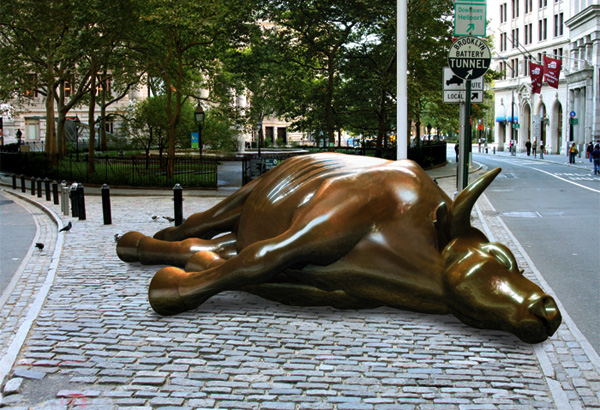
Avedon is reiterating that Barry O. is more of the $ame, while pointing to this lovely little piece by Ron Beasley:
...Those of us who voted for Barack Obama and cheered his victory thought we could see a potential greatness. That greatness required the change Obama talked about change but has yet to deliver. What I see is Obama's ego accepting a half ass health care plan so he can claim a victory. Politics as usual not change you can believe in.
Superficial change does seem to be the only change you can count on.
Don't count on getting even that half ass health care plan the way the main$tream has begun to hyperventilate and the DINOcrats have begun to equivocate. The talking heads are all saying that Barry O.'s fall in the polls is a right wing resurgence even though anyone with two live neurons to slap together realizes that something altogether different has happened.
Barry O. has blown off the Progressive Liberals, and they are pretty much parting ways. Jamie Dimon and The Rahmster's moved the J.P. Morgan Chase bankster board meetings to D.C. and The Rahmster's sitting in on the action. The Oborg D.o'J.'s fired the whistlerblower who uncovered Karl Rove's actions to railroad former Alabama Governor Don Siegelman [thanks WGG].
The pigs are walking on two legs, drinking a toast with their former oppressors, who are still planning for bacon.
That's the only Change I can believe in.
I honestly think at some point some Company man played Barry O. the complete Dallas 1963 tapes of what happened to the last genuine reform minded Democrat...
Thursday, July 23, 2009
The Flathead Too Dumb to Write
The Moustache of Understanding misses the point again.

Inevitably.
Which is why when they were first driven out of power in 2002 the production of poppies skyrocketed and have broken records every year since.
I'll bet Little Tommy "the world is flat" Friedman just ate that up.
Nyah nyah, nyah nyah nyah Dr. Cole and the rest of you fancy pants who bother to learn languages. 'Cause the Flatworld Moustache said so.


Teh stupid of this Company mouthpiece, it burns me.
To Flatworld Tommy, winning isn't important. Fighting for rational reasons isn't either. Playing hopeful footsie with the Great is. One wonders how many thousands of dollars Mr. Friedman had to pay his therapist to figure that gem out.

And if they simply use us, wasting all of Petraeus Caesar's efforts invading and civilizing and trying to Flatten their world like those ingrates the Iraqis did, why we'll just declare victory, retire to our monstrous bases in the countryside guarding the Afghan gas and poppy fields, and let the cities go to Hell.
We'll stop counting our casualties, too.
Just like our successful Iraqi strategery.
Inevitably.
...I’m here in Helmand Province in southern Afghanistan. This is the most dangerous part of the country. It’s where mafia and mullah meet. This is where the Taliban harvest the poppies that get turned into heroin that funds their insurgency...
Which is why when they were first driven out of power in 2002 the production of poppies skyrocketed and have broken records every year since.
...Adm. Mike Mullen, the chairman of the Joint Chiefs of Staff, is addressing soldiers in a makeshift theater.
“Let me see a show of hands,” says Admiral Mullen, “how many of you are on your first deployment?” A couple dozen hands go up. “Second deployment?” More hands go up. “Third deployment?” Still lots of hands are raised. “Fourth deployment?” A good dozen hands go up. “Fifth deployment?” Still hands go up. “Sixth deployment?” One hand goes up. Admiral Mullen asks the soldier to step forward to shake his hand...
I'll bet Little Tommy "the world is flat" Friedman just ate that up.
...The reason for optimism? All those deployments have left us with a deep cadre of officers with experience in Iraq and Afghanistan, now running both wars — from generals to captains. They know every mistake that has been made, been told every lie, saw their own soldiers killed by stupidity, figured out solutions and built relationships with insurgents, sheikhs and imams on the ground that have given the best of them a granular understanding of the “real” Middle East that would rival any Middle East studies professor.
Nyah nyah, nyah nyah nyah Dr. Cole and the rest of you fancy pants who bother to learn languages. 'Cause the Flatworld Moustache said so.
I’ve long argued that there should be a test for any officer who wants to serve in Iraq or Afghanistan — just one question: “Do you think the shortest distance between two points is a straight line?” If you answer “yes,” you can go to Germany, South Korea or Japan, but not to Iraq or Afghanistan. Well, this war has produced a class of officers who are very out-of-the-box thinkers. They learned everything the hard way — not in classes at Annapolis or West Point, but on the streets of Fallujah and Kandahar.
...When all seemed lost in Iraq, they were just too stubborn to quit and figured out a new anti-insurgency strategy. It has not produced irreversible success yet — and may never. But it has kept the hope of a decent outcome alive. The same people are now trying to do the same thing in Afghanistan. Their biggest strategic insight? “We don’t count enemy killed in action anymore,” one of their officers told me.
...Early in both Iraq and Afghanistan our troops did body counts, à la Vietnam. But the big change came when the officers running these wars understood that R.B.’s (“relationships built”) actually matter more than K.I.A.’s. One relationship built with an Iraqi or Afghan mayor or imam or insurgent was worth so much more than one K.I.A. Relationships bring intelligence; they bring cooperation. One good relationship can save the lives of dozens of soldiers and civilians. One reason torture and Abu Ghraib got out of control was because our soldiers had built so few relationships that they tried to beat information out of people instead...
Teh stupid of this Company mouthpiece, it burns me.
To Flatworld Tommy, winning isn't important. Fighting for rational reasons isn't either. Playing hopeful footsie with the Great is. One wonders how many thousands of dollars Mr. Friedman had to pay his therapist to figure that gem out.
...they have a strategy: Clear areas of the Taliban, hold them in partnership with the Afghan Army, rebuild these areas by building relationships with district governors and local assemblies to help them upgrade their ability to deliver services to the Afghan people — particularly courts, schools and police — so they will support the Afghan government...
And if they simply use us, wasting all of Petraeus Caesar's efforts invading and civilizing and trying to Flatten their world like those ingrates the Iraqis did, why we'll just declare victory, retire to our monstrous bases in the countryside guarding the Afghan gas and poppy fields, and let the cities go to Hell.
We'll stop counting our casualties, too.
Just like our successful Iraqi strategery.
It says so right there on the label
LONDON — Entering a debate that has stirred political tumult in Britain, Vice President Joseph R. Biden Jr. said in an interview broadcast Thursday that more coalition troops will die in Afghanistan but the war was “worth the effort.”
Speaking during a tour of Ukraine and Georgia, Mr. Biden told the BBC that the lawless region along the Afghanistan-Pakistan border was “a place that, if it doesn’t get straightened out, will continue to wreak havoc on Europe and the United States.”
You know, just like it wrecked havoc on the Soviet Union until they straightened it out...
Wednesday, July 22, 2009
War Without End
Amen
David Bromwich: How Serial War Became the American Way of Life

“We’re trying to recognize that warfare may come in a lot of different flavors in the future,” said Michele Flournoy, one of the highest-ranking women in the history of the Pentagon.
And such yummy flavors, for the Company, too.
For when a DINOcrat with a friendly face is in office, the progressive liberal masses all go complacently comatose, certain their Leaders have their best possible interests at heart or at least the best possible compromise even when it is War without end.
Amen.
David Bromwich: How Serial War Became the American Way of Life
...On July 16, in a speech to the Economic Club of Chicago, Secretary of Defense Robert Gates said that the "central question" for the defense of the United States was how the military should be "organized, equipped -- and funded -- in the years ahead, to win the wars we are in while being prepared for threats on or beyond the horizon." The phrase beyond the horizon ought to sound ominous. Was Gates telling his audience of civic-minded business leaders to spend more money on defense in order to counter threats whose very existence no one could answer for? Given the public acceptance of American militarism, he could speak in the knowledge that the awkward challenge would never be posed.
We have begun to talk casually about our wars; and this should be surprising for several reasons. To begin with, in the history of the United States war has never been considered the normal state of things. For two centuries, Americans were taught to think war itself an aberration, and "wars" in the plural could only have seemed doubly aberrant. Younger generations of Americans, however, are now being taught to expect no end of war -- and no end of wars...
...A new-modeled usage has been brought into English to ease the change of view. In the language of think-tank papers and journalistic profiles over the past two years, one finds a strange conceit beginning to be presented as matter-of-fact: namely the plausibility of the U.S. mapping with forethought a string of wars. Robert Gates put the latest thinking into conventional form, once again, on 60 Minutes in May. Speaking of the Pentagon's need to focus on the war in Afghanistan, Gates said: "I wanted a department that frankly could walk and chew gum at the same time, that could wage war as we are doing now, at the same time we plan and prepare for tomorrow's wars."
The weird prospect that this usage -- "tomorrow's wars" -- renders routine is that we anticipate a good many wars in the near future. We are the ascendant democracy, the exceptional nation in the world of nations. To fight wars is our destiny and our duty. Thus the word "wars" -- increasingly in the plural -- is becoming the common way we identify not just the wars we are fighting now but all the wars we expect to fight.
A striking instance of journalistic adaptation to the new language appeared in Elisabeth Bumiller's recent New York Times profile of a key policymaker in the Obama administration, Undersecretary of Defense for Policy Michele Flournoy. Unlike her best-known predecessor in that position, Douglas Feith -- a neoconservative evangelist for war who defined out of existence the rights of prisoners-of-war -- Flournoy is not an ideologue. The article celebrates that fact. But how much comfort should we take from the knowledge that a calm careerist today naturally inclines to a plural acceptance of "our wars"? Flournoy's job, writes Bumiller,
"boils down to this: assess the threats against the United States, propose the strategy to counter them, then put it into effect by allocating resources within the four branches of the armed services. A major question for the Q.D.R. [Quadrennial Defense Review], as it is called within the Pentagon, is how to balance preparations for future counterinsurgency wars, like those in Iraq and Afghanistan, with plans for conventional conflicts against well-equipped potential adversaries, like North Korea, China or Iran.
"Another quandary, given that the wars in both Iraq and Afghanistan have lasted far longer than the American involvement in World War II, is how to prepare for conflicts that could tie up American forces for decades."
Notice the progression of the nouns in this passage: threats, wars, conflicts, decades. Our choice of wars for a century may be varied with as much cunning as our choice of cars once was. The article goes on to admire the coolness of Flournoy's manner in an idiom of aesthetic appreciation:
"Already Ms. Flournoy is a driving force behind a new military strategy that will be a central premise of the Q.D.R., the concept of 'hybrid' war, which envisions the conflicts of tomorrow as a complex mix of conventional battles, insurgencies and cyber threats. 'We're trying to recognize that warfare may come in a lot of different flavors in the future,' Ms. Flournoy said."
Between the reporter's description of a "complex mix" and the planner's talk of "a lot of different flavors," it is hard to know whether we are sitting in a bunker or at the kitchen table. But that is the point. We are coming to look on our wars as a trial of ingenuity and an exercise of taste...
“We’re trying to recognize that warfare may come in a lot of different flavors in the future,” said Michele Flournoy, one of the highest-ranking women in the history of the Pentagon.
And such yummy flavors, for the Company, too.
For when a DINOcrat with a friendly face is in office, the progressive liberal masses all go complacently comatose, certain their Leaders have their best possible interests at heart or at least the best possible compromise even when it is War without end.
Amen.
Tuesday, July 21, 2009
Holy War, Wholly Insane
It's not a muslim, jewish, or christian phenomenon alone. Chris Floyd:
...The armies of the world are being filled up with soldiers -- and even more so, with officers -- on fire with the deranged certitudes of violent fundamentalism. Their enemies -- both heathenish foreigners and the "spiritual terrorists" among their own ranks, their own families and fellow citizens -- are agents of absolute evil. And there is no such thing as "collateral damage," no killing of innocents in their holy war -- for God Himself has targeted them for destruction, just to prove how righteous His warriors are.
Of course, militarism is itself a virulent cult; without any need for divine sanction, a vast war machine will seek to follow the logic of its construction and do what it was created for: make war. It takes a tremendous -- and ever-failing -- effort to restrain the machine even under the best circumstances. Stoking it with religious extremists committed to blind obedience and violence in the name of God is an unbelievably dangerous and stupid thing to do; yet, as Sharlet and others make clear, the Pentagon's top brass -- including the generals appointed or "continued" by Obama, such as David Petraeus, are deliberately choosing this course, giving their implicit -- and sometimes explicit -- approval to the growth of fanaticism in the ranks. Why not? It's easier to fight wars of imperial domination with soldiers who, in their slavish, unthinking submission, identify their superiors' agenda with God's will...
Misleading images

Frankly, any man who wouldn't glance at that color in that crowd of conservative gray is too oblivious to be trusted with anything.
I am referring, of course, to the $1.8 billion of green.
Monday, July 20, 2009
Are You Experienced?

...have you ever been experienced...?
Well, I have... May 12, 1967, Jimi Hendrix
Looks like the Oborg have picked up Bu$hCo's habit of announcing things low under the radar on Friday afternoon...
...WASHINGTON -- The Obama administration picked Goldman Sachs Group Inc. Vice Chairman Robert Hormats to be the State Department's undersecretary for economic, energy and agricultural affairs, the White House announced Friday.
Mr. Hormats, if confirmed by the Senate, will buttress Secretary of State Hillary Clinton's campaign to use economic, trade and environmental issues to redefine Washington's relationship with nations such as China, India and Russia, said administration officials.
Mr. Hormats also will play a central role in managing Washington's "strategic and economic dialogue" with Beijing, a diplomatic exchange overseen by Mrs. Clinton and Treasury Secretary Timothy Geithner. The first Obama administration U.S.-China dialogue is slated for this month in Washington, according to the State Department.
Mr. Hormats "will be key in Secretary Clinton's efforts to bring more visibility to the work of the department on economic matters," a senior U.S. official said Friday.
...Before joining Goldman Sachs, Mr. Hormats had a career in public service, holding posts in Republican and Democratic administrations.
He served during the 1970s as an economic adviser in the White House to former national security adviser Zbigniew Brzezinski. Mr. Hormats helped to manage the Nixon administration's opening of diplomatic relations with China's communist government.
A true Bipartisan, he will Experience you no matter which Party he works for.
Ending the War by making it bigger
The D.o'D. continues with its jobs program in Iraq and Afghanistan:
The standard two years. Now that's funny.
WASHINGTON — Defense Secretary Robert M. Gates on Monday announced a temporary increase in the size of the Army of up to 22,000 troops to meet what he called the “persistent pace” of operations in Iraq and Afghanistan.
The increase, to occur over the next three years, will raise the size of the Army to 569,000 active-duty soldiers. An expansion to 547,000 soldiers, announced by Mr. Gates in 2007, was completed in May.
Currently there are about 130,000 American troops in Iraq and about 60,000 expected in Afghanistan by the end of the year. Although there is a scheduled reduction of close to 80,000 troops in Iraq, most will not start to come home until after March 2010.
“The Army faces a period where its ability to continue to deploy combat units at acceptable fill rates is at risk,” Mr. Gates said, meaning that he was concerned that Army units sent to Iraq and Afghanistan in the future might not have enough soldiers...
Pentagon officials said they expected to boost the size of the Army through more recruitment and increased retention of the existing force. Recruitment is already up this year because the recession has lured people to the steady paychecks of the military. Officials said they also expected the Army to encourage re-enlistment so more soldiers would serve beyond the standard two years...
The standard two years. Now that's funny.
Forget the Right Stuff
The remastered Director's Cut version:
Tom Wolfe pretty much nailed it:
Which is what happens when the Company provides the backing for a technology initiative.
As Mr. Wolfe says, space exploration and the expansion of humanity to the stars ranked dead last among all the motivations of NASA. The moon shots were designed to upstage the Soviets. The moon shots were designed to be the focus of extensive national cheerleading, the Right part of My Country Right or Wrong. The moon shots were designed to provide a lot of lip-smackin' pork for the Company.
The moon shots could not fail to fail in all of those endeavors...
The moon shots couldn't fail to fail once the D.o'D. took over.
Star Trek just doesn't work in the Star Wars universe.
I won't address whether or not the landings were faked. There is pretty strong evidence they weren't. Which doesn't mean the Company didn't fake a lot of the footage that came along at the time.
But the original astronauts will get pissed off enough to punch you in the face if you say their real work was faked. For real work it was, dangerous and not glamorous at all. Which is another reason why we didn't go back. After Apollo 13 it became apparent to the Company the astronauts weren't just bellyaching. This shit was no walk in the park.
The astronauts, of course, still want to do it again.
Some people aren't intimidated just because something's difficult.
The astronauts, of course, sometimes see real UFOs when they're up there, too.
All the more reason for a Bu$hCo Regent University graduate mole to make sure the original video was erased. Anything that might inspire curiosity about the world is something the Amerikan Taliban is against. There is a strong anti technology faction in the Company. Anti technology enough to want to keep the grunts in the dirt anyway. Anti technology enough to write speeches for Bu$hie advocating, "Mars, you beotches", while sucking the life blood out of any real effort.
The simple fact is that there will be no real space program until some Mom and Pop (or Mom and Mom, or Pop and Pop) operation figures out how to get there, and stay there, and get back again, and make sure the banksters make a sweet buck off it. Find a way to line the pockets, and the National $ecurity objections will disappear.
We are a long way for that point, but certainly not so far away as we were 40 years ago, when the entire computing prowess of NASA was less than my laptop's today.
Tom Wolfe pretty much nailed it:
...That was a small step for Neil Armstrong, a giant leap for mankind and a real knee in the groin for NASA...
Which is what happens when the Company provides the backing for a technology initiative.
As Mr. Wolfe says, space exploration and the expansion of humanity to the stars ranked dead last among all the motivations of NASA. The moon shots were designed to upstage the Soviets. The moon shots were designed to be the focus of extensive national cheerleading, the Right part of My Country Right or Wrong. The moon shots were designed to provide a lot of lip-smackin' pork for the Company.
The moon shots could not fail to fail in all of those endeavors...
The moon shots couldn't fail to fail once the D.o'D. took over.
Star Trek just doesn't work in the Star Wars universe.
I won't address whether or not the landings were faked. There is pretty strong evidence they weren't. Which doesn't mean the Company didn't fake a lot of the footage that came along at the time.
But the original astronauts will get pissed off enough to punch you in the face if you say their real work was faked. For real work it was, dangerous and not glamorous at all. Which is another reason why we didn't go back. After Apollo 13 it became apparent to the Company the astronauts weren't just bellyaching. This shit was no walk in the park.
The astronauts, of course, still want to do it again.
Some people aren't intimidated just because something's difficult.
The astronauts, of course, sometimes see real UFOs when they're up there, too.
All the more reason for a Bu$hCo Regent University graduate mole to make sure the original video was erased. Anything that might inspire curiosity about the world is something the Amerikan Taliban is against. There is a strong anti technology faction in the Company. Anti technology enough to want to keep the grunts in the dirt anyway. Anti technology enough to write speeches for Bu$hie advocating, "Mars, you beotches", while sucking the life blood out of any real effort.
The simple fact is that there will be no real space program until some Mom and Pop (or Mom and Mom, or Pop and Pop) operation figures out how to get there, and stay there, and get back again, and make sure the banksters make a sweet buck off it. Find a way to line the pockets, and the National $ecurity objections will disappear.
We are a long way for that point, but certainly not so far away as we were 40 years ago, when the entire computing prowess of NASA was less than my laptop's today.
Sunday, July 19, 2009
Because they always follow orders

No pesky moral qualms at all.
...An Air Force study, released without much fanfare on Wednesday, suggests that tomorrow’s dogfighers might not have pilots in the cockpit. The Unmanned Aircraft System Flight Plan. which sketches out possible drone development through the year 2047, comes with plenty of qualifiers. But it envisions a radical future. In an acronym-dense 82 pages, the Air Force explains how ever-larger and more sophisticated flying robots could eventually replace every type of manned aircraft in its inventory — everything from speedy, air-to-air fighters to lumbering bombers and tankers...
This, Petraeus Caesar thinks, is doubtless working well.


Saturday, July 18, 2009
Tar Baby
Via Digby, the LA Pravda speaks of the ...political problem caused by how the CIA handled a secret counter-terrorism program.
Not to be out done, The New York Pravda describes the bait the Congress has been offered:
Here's why the Oborg don't want to go there: they don't want to indict Bu$hCo for Al Qaeda assasination squads because Clinton did it first.
And if you count predator drone hits on hundreds of civilians in Afghanistan by now, Obama is still doing it.
This is all a tar baby. Cheneyburton-Bu$hCo will come out of it smelling all Patriotic, and the Democrats will come out of it stuck to the issue and smelling like hypocrites.
Not to be out done, The New York Pravda describes the bait the Congress has been offered:
... The agency’s director, Leon E. Panetta, called emergency meetings with the House and Senate Intelligence Committees last month to inform them about the program, which he had canceled a day earlier. Mr. Panetta told the lawmakers that the program had initially been concealed from Congress at the behest of Dick Cheney, then vice president.
One Democratic member of the House committee, Representative Jan Schakowsky of Illinois, said that in addition to the plans for killing Qaeda leaders, the review would cover what she described as the failure to inform Congress fully or accurately about three other issues: C.I.A. involvement in the downing of a missionary plane mistaken for a narcotics flight in Peru in 2001, and two matters that remain classified.
In addition, the inquiry is likely to look at the Bush administration’s program of eavesdropping without warrants and its detention and interrogation program.
Current and former intelligence officials have said that the scuttled assassination program was troubled by logistical problems and never progressed beyond the planning stage. Ms. Schakowsky, however, said she believed that the program had gone beyond planning and training, though she declined to discuss details...
Here's why the Oborg don't want to go there: they don't want to indict Bu$hCo for Al Qaeda assasination squads because Clinton did it first.
And if you count predator drone hits on hundreds of civilians in Afghanistan by now, Obama is still doing it.
This is all a tar baby. Cheneyburton-Bu$hCo will come out of it smelling all Patriotic, and the Democrats will come out of it stuck to the issue and smelling like hypocrites.
Friday, July 17, 2009
Planned Obsolescence and a Choice of Chains
It's moved beyond some moonbat bloggers, to pop writers in Rolling Pravda, and now it's being written by a Nobel laureate in the editorial pages of The New York Pravda:
Well yeah.
But I'll go with Stirling Newberry here. This goes way beyond a little indulgence for some lobbyists who'll pad your campaign nest. It's Homeland inSecurity:
Chaos is the plan.
Still. Sustainably. There will not be uncontrolled unprofitable disaster. There will be no unprofitable transformation or salvation. There will be mass media manipulation of the public, and the system will be maintained.
Stirling, years ago you wrote something I'd link to except it no longer exists on the original site- but I kept it anyway (Fair Use and all that- I am a totally not-for-profit organization):
Except Karl wasn't the mastermind- he was (and is) just another puppet the Hand wears sometimes. I think Karl and Dick and Rummy all forgot they weren't the Masters of the Universe. The real Masters- well, I think we're all getting closer to seeing who they are. We certainly see what they are.
They aren't Republicans, they aren't Democrats, they aren't Liberals, they aren't Conservatives. But their goal remains the same as it ever was.
A post-industrial neo feudal order once the oil is gone.
And until it is, the Company is doing a great job of staying on top.
The Joy of Sachs
By Paul Krugman
Published: July 16, 2009
The American economy remains in dire straits, with one worker in six unemployed or underemployed. Yet Goldman Sachs just reported record quarterly profits — and it’s preparing to hand out huge bonuses, comparable to what it was paying before the crisis. What does this contrast tell us?
First, it tells us that Goldman is very good at what it does. Unfortunately, what it does is bad for America.
Second, it shows that Wall Street’s bad habits — above all, the system of compensation that helped cause the financial crisis — have not gone away.
Third, it shows that by rescuing the financial system without reforming it, Washington has done nothing to protect us from a new crisis, and, in fact, has made another crisis more likely.
Let’s start by talking about how Goldman makes money.
Over the past generation — ever since the banking deregulation of the Reagan years — the U.S. economy has been “financialized.” The business of moving money around, of slicing, dicing and repackaging financial claims, has soared in importance compared with the actual production of useful stuff. The sector officially labeled “securities, commodity contracts and investments” has grown especially fast, from only 0.3 percent of G.D.P. in the late 1970s to 1.7 percent of G.D.P. in 2007.
Such growth would be fine if financialization really delivered on its promises — if financial firms made money by directing capital to its most productive uses, by developing innovative ways to spread and reduce risk. But can anyone, at this point, make those claims with a straight face? Financial firms, we now know, directed vast quantities of capital into the construction of unsellable houses and empty shopping malls. They increased risk rather than reducing it, and concentrated risk rather than spreading it. In effect, the industry was selling dangerous patent medicine to gullible consumers.
Goldman’s role in the financialization of America was similar to that of other players, except for one thing: Goldman didn’t believe its own hype. Other banks invested heavily in the same toxic waste they were selling to the public at large. Goldman, famously, made a lot of money selling securities backed by subprime mortgages — then made a lot more money by selling mortgage-backed securities short, just before their value crashed. All of this was perfectly legal, but the net effect was that Goldman made profits by playing the rest of us for suckers.
And Wall Streeters have every incentive to keep playing that kind of game.
The huge bonuses Goldman will soon hand out show that financial-industry highfliers are still operating under a system of heads they win, tails other people lose. If you’re a banker, and you generate big short-term profits, you get lavishly rewarded — and you don’t have to give the money back if and when those profits turn out to have been a mirage. You have every reason, then, to steer investors into taking risks they don’t understand.
And the events of the past year have skewed those incentives even more, by putting taxpayers as well as investors on the hook if things go wrong.
I won’t try to parse the competing claims about how much direct benefit Goldman received from recent financial bailouts, especially the government’s assumption of A.I.G.’s liabilities. What’s clear is that Wall Street in general, Goldman very much included, benefited hugely from the government’s provision of a financial backstop — an assurance that it will rescue major financial players whenever things go wrong.
You can argue that such rescues are necessary if we’re to avoid a replay of the Great Depression. In fact, I agree. But the result is that the financial system’s liabilities are now backed by an implicit government guarantee.
Now the last time there was a comparable expansion of the financial safety net, the creation of federal deposit insurance in the 1930s, it was accompanied by much tighter regulation, to ensure that banks didn’t abuse their privileges. This time, new regulations are still in the drawing-board stage — and the finance lobby is already fighting against even the most basic protections for consumers.
If these lobbying efforts succeed, we’ll have set the stage for an even bigger financial disaster a few years down the road. The next crisis could look something like the savings-and-loan mess of the 1980s, in which deregulated banks gambled with, or in some cases stole, taxpayers’ money — except that it would involve the financial industry as a whole.
The bottom line is that Goldman’s blowout quarter is good news for Goldman and the people who work there. It’s good news for financial superstars in general, whose paychecks are rapidly climbing back to precrisis levels. But it’s bad news for almost everyone else.
Well yeah.
But I'll go with Stirling Newberry here. This goes way beyond a little indulgence for some lobbyists who'll pad your campaign nest. It's Homeland inSecurity:
...This is hard to say, hard to read, and hard as a diamond. It is the one true thing: America now, morally, is at a point as low as the era of chattel slavery, in that it is willing to destroy the lives of millions, in order to have one more day, week, month, year, or decade, of fast food, fast cars, and fast bucks. But it is what history will write about this era: that it was a pathetic moment. We stand sticking ribbon stickers on the back of the huge SUV that is Bush's version of America. But we have not scrapped it, we will not, and we cannot yet.
The Progressive movement is, increasingly, divided between the paid capitulationist and the outsider idealist. The political wing of the movement sells FAIL by the bucket. Their reality -- "We're fails! We're snails! Get used to it!" -- is incrementalism and careerism. But the idealists are no better, even though I am certainly to be numbered among them. There is no one in America who is more than a stone's throw away from one of the following: the military, the land casino, or the global warming enterprise. Every day and every dollar is smeared with the blood of those who will starve, drown, or die, in the future we are making. The idealist will not bend his knees, to compromise, but must bend his or her knees, to enterprise. It is merely one's choice of chains that is at issue.
...The coalition of catastrophe is already forming: a resurgent neo-Hooverism, which hopes to have borrowed enough to bail out the financial system, but not pay taxes to pay it back, is already gathering. This catastrophe coalition wants to burn carbon fuels, save the banks, and hope for one more land boom. Obama's economy is Bush's economy with muscular dystrophy: a war, a financial bubble based on cheap dollars for banks, attracting foreign credit, and the prayer for another land boom. Energy and stimulus have already been massive FAILs, and it is going to be joined by domestic labor law.
The promise of hope is less visible, simply because it has no billionaires backing it. That promise is that after the torrential wash of the Republican swing that will follow Obama's time in power, be it 4 or 8 years, America will be faced with a very stark choice. China's patience is not forever: When they can make cars and have built enough roads, they will open their domestic demand. They are using this economic crisis the way FDR did: to develop for the future. They are building the equivalent of their interstate highway system. This crisis is the compression stroke of an engine that will expand. Already global growth, and global resource inflation, are driven from China.
...That the coalition of catastrophe is gathering, preaching burn and churn as its new policy -- burn carbon, churn land --- is evident to anyone who can read Dick Morris' new book, or watch MSNBC. Hooverism hovers close. Don't believe me, believe Paul Krugman.
So what is now? What is now is to realize that the fix is in, your leaders are selling you out, and they will present the dregs of capitulation, mixed with little real compromise, and some sparse victories, as great and sweeping. There is tremendous pressure to lie and say otherwise. I will not.
Could things have been different? Perhaps. Could they be different now? Yes, but only in the abstract sense. That the leadership of the Democratic Party and the Progressive Movement are ready, willing, and eager, to sell out is not invisible to the Republicans. The right knows that if they leave a narrow gap, that the Democrats and Progressives will rush through it, and be slaughtered politically. The right is at a low ebb, its ideology discredited, its powerful financial backers -- temporarily -- coopted, its public figures so clearly third and fourth generation. A muscular left would spend this moment to shatter and remake the American consensus. But that is not what is being done. The only people the leadership of the left can bully are members of the left. They have no problem with that...
Chaos is the plan.
Still. Sustainably. There will not be uncontrolled unprofitable disaster. There will be no unprofitable transformation or salvation. There will be mass media manipulation of the public, and the system will be maintained.
Stirling, years ago you wrote something I'd link to except it no longer exists on the original site- but I kept it anyway (Fair Use and all that- I am a totally not-for-profit organization):
...There are three basic pillars of constitutional order: the mandate of the government, the meaning which binds the people and the government together, and the mechanism by which the government pursues the mandate given to it by the people. Of the various mechanisms, money is the most important, though not in the crude sense merely of who gets money, but how money works, how it is created. Money determines, to no small extent, the incentives and range of actions that an individual has available to him.
The New Deal instituted a new kind of money, money based on assets that banks could show on their books, and backed by the Federal Reserve and deposit insurance. One of the key programs that the New Deal used to make this new kind of money work was Social Security. This money replaced the gold-backed money of the previous constitutional order, and changed, fundamentally, the way America worked as a nation. The mandate of the government was to balance the economy; the meaning was based on consensus for action; if there was a problem, or even a potential problem, then the public sense was that it had to be met head on.
Karl Rove has, more than any other single political operative, been responsible for designing a means of attacking that political order, and he has, in no small measure, accomplished this. Gone is the great spirit of bi-partisanship that dominated government from the chaotic early days of 1933 when "we weren't Democrats or Republicans, just Americans trying to save the banking system," in the words of one treasury official.
This cycle of American constitutional change, in which financial crisis leads, first, to a reactionary attempt to force the old system to work, has been seen three times before. Before the Constitution of 1787 was the financial crisis of the 1780s and the Articles of Confederation. Before the Civil War was a massive financial panic, and the infamous Dredd Scott decision, which overturned the Compromise of 1850, and opened the Great Plains to slavery. And before FDR were Hoover's futile attempts to save the gold standard and a government which was less involved in the economy than in religion.
This reactionary order has always failed in the past, because it must consume every cent of the economy. That is its nature: it is an attempt to preserve rent, which is any economic advantage that comes from position in time or space, even if it must sink the entire national surplus in the attempt. This is why the Republicans must borrow to effectively abolish Social Security; Rove knows that in order to secure Republican domination for a generation or more, he must place a weight on the back of government so heavy that no one can remove it. Should a Democrat manage to take the White House, then all that need happen is that a Republican Congress stop doing the behind-the-scenes juggling that keeps the economy going, a recession will ensue, and the Oval office will return to Republican control...
Except Karl wasn't the mastermind- he was (and is) just another puppet the Hand wears sometimes. I think Karl and Dick and Rummy all forgot they weren't the Masters of the Universe. The real Masters- well, I think we're all getting closer to seeing who they are. We certainly see what they are.
They aren't Republicans, they aren't Democrats, they aren't Liberals, they aren't Conservatives. But their goal remains the same as it ever was.
A post-industrial neo feudal order once the oil is gone.
And until it is, the Company is doing a great job of staying on top.
But it's okay when we do it!
The disinformation train rolls on...
Via Chris Floyd, a link to Jeremy Scahill:
For one thing, the Company makes one helluva lot more money with a predator.
Chris has also posted this:
Via Chris Floyd, a link to Jeremy Scahill:
...As [the Democrats now pretending to be scandalized by the recent Cheney allegations] well know, President Obama has continued the Bush targeted assassination program using weaponized drones and special forces teams hunting "high value targets." As former CIA Counter-terrorism chief Vincent Cannistraro and others have pointed out, "The CIA runs drones and targets al-Qaeda safe houses all the time." Cannistraro told Talking Points Memo that there is no important difference between those kinds of attacks and "assassinations" with a gun or a knife.
For one thing, the Company makes one helluva lot more money with a predator.
.....It is pretty clear that when the Bush administration took over, it picked up the Clinton administration’s policy on assassination and ran with it — albeit with more of a missionary zeal for killing and a removal of some of the layers of lawyering. In short, the Bush team expanded and streamlined the longstanding U.S. government assassination program.
Throughout the 1990s, the question of covert assassinations was a source of major discussion within the Clinton White House and it is clear assassinations were attempted with presidential approval. Newsweek magazine reported on how, in 1995, U.S. Special Forces facilitated the assassination of a Libyan "terrorist" in Bosnia, saying, "American authorities justified the assassination under a little-known 1993 ‘lethal finding’ signed by President Bill Clinton that gave permission to target terrorists." A former senior Clinton official speaking shortly after 9/11 called on the Bush administration not to escalate the U.S. assassination program, saying "We have a war on drugs, too, but we don’t kill drug lords." But then, with no apparent sense of contradiction, the official added, "we have proxies who do."
...The truth is, under Clinton, it wasn’t just proxies authorized to do the assassinations. ... Clinton did authorize what amounted to assassination squads to hunt down and kill bin Laden and other "al-Qaeda leaders." That happened officially in 1998 with Clinton’s signing of a Memorandum of Notification authorizing the CIA to carry out covert assassinations. George W. Bush was not the president and Dick Cheney was not the vice president. Of course, current CIA Director Leon Panetta was Clinton’s chief of staff from 1994 to 1997 and would have been party to years worth of discussion on this issue when Clinton was president. Under Clinton, the Justice Department’s Office of Legal Counsel issued secret rulings stating that the Ford/Reagan ban on assassinations did not apply to "military targets" or "to attacks carried out in preemptive self-defense," according to Steve Coll, Pulitzer-Prize winning author of Ghost Wars.
Shortly after 9/11, Clinton stated this position publicly, supporting the Bush administration’s "war on terror" targeted assassination policy, saying on NBC News, "The ban that was put in effect under President Ford only applies to heads of state. It doesn’t apply to terrorists."
Chris has also posted this:
...All of this is very curious. For the established, confirmed, published fact of the matter is that a CIA assassination program run by the White House on direct orders from the president was put into operation in late 2001. It was operative for many years (and might still be operative; we of course do not know what program Panetta actually terminated -- or if he really has terminated any program). Nor was this assassination program aimed solely at "top al Qaeda leaders": it targeted any number of "suspected" terrorists, whose guilt -- and sentence of death -- was arbitrary decided by the president, or by the agents in the field to whom Bush issued a literal license to kill. The first known victim of this CIA death squad was an American citizen, killed by a CIA-fired drone missile in Yemen. By Bush's own public admission -- in a nationally televised appearance before both houses of Congress in 2003 -- many "suspected terrorists" (his own description) had been killed by American agents.
None of this was secret. All of the above facts were reported in reputable, mainstream newspapers and journals -- the New York Times, the Washington Post, the Washington Times, the New Yorker, etc. -- beginning in October 2001. And these stories themselves were based on statements by Administration officials, who in many instances were eager to brag about "taking the gloves off" and other macho locutions. Or as one CIA operative in Afghanistan told the Boston Globe in 2002: "We are doing things I never believed we would do -- and I mean killing people."
Thursday, July 16, 2009
Idiotic Twits
I'll let Cryptogon speak for me on this:
But, of course, now that Barry O.'s in charge of things, they've Changed.
Except, of course, where they've never been particularly hidden in the first place.
The NSA wouldn’t have to ask Twitter for permission to install a dump feed because NSA already has it. It’s very safe to assume that NSA is already splitting everything off from NTT/Verio, Twitter’s hosting provider. In other words, the NSA had the capability in place long before Twitter was even a glimmer. There’s no mystery about where the traffic is going. Maybe the people at ValleyWag have amnesia and don’t remember terms like Mark Klein and NarusInsight Intercept Suite.
Besides, check this out: U.S. State Department speaks to Twitter over Iran:
The U.S. State Department said on Tuesday it had contacted the social networking service Twitter to urge it to delay a planned upgrade that would have cut daytime service to Iranians who are disputing their election.
Confirmation that the U.S. government had contacted Twitter came as the Obama administration sought to avoid suggestions it was meddling in Iran’s internal affairs as the Islamic Republic battled to control deadly street protests over the election result.
And if you believe that the U.S. State Department thought up the idea to call Twitter over the Iran thing all by themselves, I’ve got a bridge to sell you...
But, of course, now that Barry O.'s in charge of things, they've Changed.
Except, of course, where they've never been particularly hidden in the first place.
Tuesday, July 14, 2009
Smoke in a Hall of Mirrors
Over at Lambert's place starshapedscar is speculating the real story is that Cheney used the CIA and NSA surveillance to form domestic hit squads.
Well, maybe. Anthrax comes to my mind more than Wellstone.
Lambert himself, as well as Digby, agree this smells like a disinformation campaign.
But over on the RI board among the UFOs and Men in Black we get some more controlled speculation:
Good call, that.
Well, maybe. Anthrax comes to my mind more than Wellstone.
Lambert himself, as well as Digby, agree this smells like a disinformation campaign.
But over on the RI board among the UFOs and Men in Black we get some more controlled speculation:
...This is not even a limited hangout, in my opinion. A limited hangout (the phrase is more often abused than not) is a controlled admission, under pressure of a developing scandal, of previously unrevealed true information about wrongdoing, for the purpose of diverting from more inciminating circumstances and creating the appearance of disclosure, in the hope of closure. True limited hangouts are genuinely interesting attempts to limit damage and can serve as intermediary stages toward further revelations, or at least point us at what's really going on.
This is also not aimed at cutting down Cheney in response to the political pressure he has applied to the new administration as the champion apologist of Guantanamo and the Bush renditions and torture policy. That was my initial impression, but I think it was wrong. Rather, this aids Cheney by reinforcing the myth that the regime at worst committed due-process violations in its zeal to punish the terrorists responsible for attacking America and kill the ones who were planning sequels to 9/11. The revelation of assassination squads - that were supposedly never even deployed - barely qualifies as news. It's nothing we didn't already know they were actually doing through a variety of other means, like the drone missile strikes and renditions and torture killings of prisoners that were covered extensively while Bush was still in power.
I do not believe this is even a cover-up... that Panetta discovered something so incriminating, horrible and incendiary that they quickly decided to pretend the discovery instead was of the failure to report to the overseers about an assassination program that was not even activated. Didn't Panetta already know about crimes worse than preparing an assassination squad prior even to taking office (as we did)?
This is kabuki. This is psyops, with the intent of putting to rest the outstanding criminal issues of the Bush regime. This is a propaganda script: The new intel and national security officials are shocked, shocked that their predecessors failed to follow oversight disclosure procedures in zealously preparing (not even implementing) a program to kill "al-Qaeda" leaders before they kill more Americans. And that is the worst of what they have "discovered." They will make a big deal of it in a show of revelation and leave it at that, because after all the program was an over-reaction to a genuine threat that didn't even kill anyone.
Forget about the "Shadow Government," domestic surveillance or actual assassinations, all of which were reported on during the last eight years. Forget about domestic psyops, or the truth about anthrax or the motives for the Iraq war (let alone Sept. 11). The new admin found out Cheney was doing something wrong on procedure in the service of a good cause, makes a cathartic show of criticizing it (but not prosecuting it as that would be distracting and unpopular among Americans who, after all, support killing "al-Qaeda" leaders), and then pretends justice is served by some form of long-term historic understanding, and we can move on past the excesses of the Bush era...
Good call, that.
Pay no attention to that oil rig where the olive grove used to be over there

Of course, it's the small farmer's fault.
...The Euphrates is drying up. Strangled by the water policies of Iraq’s neighbors, Turkey and Syria; a two-year drought; and years of misuse by Iraq and its farmers, the river is significantly smaller than it was just a few years ago. Some officials worry that it could soon be half of what it is now...
All that petrochemical heavy industry has nothing to do with it.

After all, even though it just recently started to dry up, the Euphrates had 5,000 years of abuse from small farmers.
Oh, yeah, and The New York Pravda is certainly above pandering to sell its schtick:
...The shrinking of the Euphrates, a river so crucial to the birth of civilization that the Book of Revelation prophesied its drying up as a sign of the end times, has decimated farms along its banks, has left fishermen impoverished and has depleted riverside towns as farmers flee to the cities looking for work...
Of course, it's the good Christian folks from a faraway land who built that heavy petrochemical industry (that isn't even mentioned in the article and has nothing, nothing to do with the encroaching desert) for the locals.
It's the good Christian folks' puppet Saddam they built it for only to take it away from him, bombing many of the locals into the sand.
It's the good Christian folks who have currently withdrawn to bases that hold the heavy petrochemical industry and who might like to see all those marshes and their pesky hard to find and kill locals dry up and blow away in the wind.
It's the good Christian folks who might take all that Revelation mythology more seriously, or at least as a good Christian motivation to keep good Christian sons and daughters fighting to hold oil for fat old men in a land far away.
Monday, July 13, 2009
Dis information
"...misinformation that is deliberately disseminated in order to influence or confuse.."
Today, from Leon E. Panetta. You know, the titular Spook-in-Chief:
The best way to lie is to tell part of the truth, and then shut up...
Today, from Leon E. Panetta. You know, the titular Spook-in-Chief:
WASHINGTON — Since 2001, the Central Intelligence Agency has developed plans to dispatch small teams overseas to kill senior al Qaeda terrorists, according to current and former government officials.
The plans were never carried out, the officials said, and Leon E. Panetta, the C.I.A. director, canceled the program last month.
Officials at the spy agency over the years ran into myriad logistical, legal and diplomatic obstacles. How could the role of the United States be masked? Should allies be informed and might they block the access of the C.I.A. teams to their targets? What if American officers or their foreign surrogates were caught in the midst of an operation? Would such activities violate international law or American restrictions on assassinations overseas?
Yet year after year, according to officials briefed on the program, the plans were never completely shelved because the Bush administration sought an alternative to killing terror suspects with missiles fired from drone aircraft or seizing them overseas and imprisoning them in secret C.I.A. jails.
Mr. Panetta scuttled the program, which would have relied on paramilitary teams, shortly after the C.I.A.’s counterterrorism center recently informed him of its existence. The next day, June 24, he told Congressional intelligence committees that the plan had been hidden from lawmakers, initially at the instruction of former Vice President Dick Cheney...
The best way to lie is to tell part of the truth, and then shut up...
A Trip Down Memory Lane
...with Those who have found a way be that drain:
He documents the atrocities and the piracy for those of us caught in the circle down around it.
Remember all of this -- the $700 billion bank bailout, the AIG scandal, dark and scary threats of imminent global meltdown if there wasn't full-scale capitulation by the citizenry to the immense transfer of public wealth to the private investment banking sector? Such distant, hazy memories: so many exciting celebrity deaths and riveting celebrity resignations ago...
He documents the atrocities and the piracy for those of us caught in the circle down around it.
Sunday, July 12, 2009
SLP Up
Looks like the FBI hasn't been paid properly- or monitoring its Agents closely enough- they're showing an interest in Goldman-$achs since a Russian mafia mole an independent analyst made off with the program that let Goldman-$ack Wall Street.
Stay tuned- this could turn out to be the most embarrassing moment for $kull and Bone$ since Dubya choked on a pretzel.
Incidently, the Goldman $acking of Amerika has been very, very good lately.

Stay tuned- this could turn out to be the most embarrassing moment for $kull and Bone$ since Dubya choked on a pretzel.
Incidently, the Goldman $acking of Amerika has been very, very good lately.
...Up and down Wall Street, analysts and traders are buzzing that Goldman, which only recently paid back its government bailout money, will report blowout profits from trading on Tuesday.
Analysts predict the bank earned more than $2 billion in the March-June period, thanks to its trading prowess across world markets. If they are right, the bank’s rivals will once again be left to wonder exactly how Goldman, long the envy of Wall Street, could have rebounded so dramatically only months after the nation’s financial industry was shaken to its foundations.
The obsessive speculation has already begun, along with banter about how Goldman’s rapid return to minting money will be perceived by lawmakers and taxpayers who aided Goldman with a multibillion-dollar cushion last fall.
“They exist, and others don’t, and taxpayers made it possible,” said one industry consultant, who, like many people interviewed for this article, declined to be named for fear of jeopardizing business relationships...
Officially the First to Do and the Last to Know
Lisa Pease gets this about right. The righteous indignation of Congress is part of the political show.

The supposed complacency of the American people to the depredations of the Company is a carefully maintained media illusion. As is the indignation of Congress about the lies they've been officially getting. Nobody's fooling anybody, but the liars use the kabuki to advance themselves in the game of the Village.
An amusing facet of the act is that the secret eavesdropping program is now Officially ended.
Trust us now, the Company says, because we're honest about the fact we are liars.
We'd never monitor your every move and statement for a National $ecurity only we are qualified to judge and execute with extreme sanction.
Meanwhile,
Well, yeah, but the question is whether this is an act leading to a Barry O. squelch before really taking off. A speech from Sy Hersch last spring:
Now that's not likely to get rehashed in Congress- despite being public information. CIA operated assasination rings? If there are, count on Ms. Feinstein to profess totally ignorance of this kind of thing ever occuring, and Mr. Panetta's assurances we'd never do this kind of thing.
Where anybody could see it or survive to report on it anyway.
The Agency has a long history of manipulating Congress and others to support its programs. That this was posed as an actual question reveals the media’s historical illiteracy in this matter.
In fact, when a House select committee investigated the CIA in the 1970s, the CIA convinced the House to suppress its own report, begging the question of who was overseeing whom. Nevertheless, a copy of the House report was leaked, via Daniel Schorr, to the Village Voice. The report opened with this disturbing sentence:
“If this Committee’s recent experience is any test, intelligence agencies that are to be controlled by Congressional lawmaking are, today, beyond the lawmakers’ scrutiny.”
In the wake of revelations that CIA Director Leon Panetta just recently learned of an eight-year CIA operation that had never been revealed to, much less approved by, Congress, Reps. Anna Eshoo, D-California, and Rush Holt, D-New Jersey, echoed similar sentiments.
On Andrea Mitchell’s show on MSNBC Thursday, Eshoo and Holt stated that Panetta’s revelation challenged his earlier statement that the CIA did not mislead Congress.
Eshoo made clear that, contrary to accusations from some Republicans, the charge has nothing to do with protecting House Speaker Nancy Pelosi, who earlier claimed the CIA lied to and misled Congress regarding its use of waterboarding and other brutal interrogation methods.
“This isn’t anything personal,” Eshoo said emphatically. “This is strictly about business, and this is deadly serious business, if I might characterize it that way.
“The issue here is the national security of our nation. There are very few members of Congress that [sic] are chosen to serve on the House Intelligence Committee. And in that role, we are reliant upon the intelligence community to inform us – in fact, they are obligated, under the National Security Act of 1947 – to fully and completely inform the Congress.
“So this is about accountability. If in fact we do not get the proper information, how can we conduct our oversight which we are responsible for in the oath that we take, as well as shaping policy based on that information?”
Rep. Rush Holt focused the key issue for Andrea Mitchell:
“A moment ago, [you] said the relationship between Speaker Pelosi and Director Panetta and who told what [to] whom when is the bigger issue. No, that’s the smaller issue. The bigger issue is, how well-examined are the activities of the CIA? Is the CIA doing things that are not in the best national interest? Who knows, if you don’t have the oversight and the examination? So that’s what this is about.”
As the only full-scale House investigation focused on the CIA – the one led by Rep. Otis Pike in the mid-1970s determined – overseeing the CIA is a challenging task, at best, and one at which government had repeatedly failed...
If we study history, we’ll find rather quickly that the CIA has repeatedly, systematically, misled Congress.
Miles Copeland, one of the founding fathers of the CIA, talked of the use of “Byzantine intrigues” designed to keep Congress off its back.
Tom Braden noted that CIA Director Allen Dulles and CIA counterintelligence chief James Angleton used to discuss each morning, in the guise of fishing talk, the “take” from the night before, i.e., intelligence gathered on prominent denizens of Capitol Hill from CIA taps sprinkled throughout the community.
(Braden, who died recently, is famously cited for writing an article titled “Why I’m Glad the CIA is Immoral.” Few commentators note that, in a later article, penned in the wake of disclosures about the Agency’s wrongdoings, Braden advocated the abolition of the CIA.)
Angleton said at one point that if the CIA couldn’t find out its own future from tapping the Hill, it had no business being in intelligence.
It should go without saying that “gossip” could easily become blackmail material, especially where illicit sexual liaisons were involved.
E. Howard Hunt, the notorious figure who at the time of Watergate was on his ostensible third retirement from the CIA, described how, during the 1960s, he penned a series of spy novels to aid the CIA, but “quit” the agency when his pen name became linked to his real name.
After he “quit,” he was instantly rehired as a contract agent, answerable solely to the CIA director’s deputy Thomas Karamessines. In his own words, Hunt explained he did this as a “cautionary” move “in the event some Congressman might raise a question.” In other words, he “quit” to hide a CIA media operation from congressional scrutiny...
And nowhere is the CIA’s deception and independent action more evident than in the Castro assassination plots.
When Congress first got a whiff of these plots thanks to a couple of articles by Jack Anderson and others, what did the CIA tell Congress?
“[W]ith the exception of one case which is under review by the Committee staff, there is no substance to the charges that CIA directed agents to assassinate Castro.” (Letter from Walter Elder to the Staff Director of the Church Committee, dated Aug. 21, 1975.)
As both Elder and the Church Committee later learned, the CIA of course had directed numerous agents to assassinate Castro in a variety of ways. But, the CIA suggested publicly, they were acting under presidential authority.
Privately, however, according to the CIA’s own Inspector General Report, the CIA never informed President John F. Kennedy of the Phase I Castro plots until they had ended, and never informed Kennedy of the ongoing Phase II plots at all.
In its own report, the CIA asks itself, can we claim executive approval for these plots, and answers its own question, “No.” (This report was not declassified until the late 1990s, and should be considered the final word on the subject.)
The legacy of the investigations of the CIA in the 1970s was the perception, though not the reality, that effective CIA oversight had been implemented.
We’re now seeing that, in reality, almost nothing changed. The troubling insights of the committees that investigated the CIA were all but forgotten. No one went to jail for breaking laws or committing perjury.
(In 1977, former CIA Director Richard Helms was convicted of misleading Congress about the Nixon administration’s covert action to oust Chile’s socialist President Salvador Allende, who died in a 1973 coup. Helms received a two-year suspended sentence and a $2,000 fine, which was paid by friends at the CIA. Until his death in 2002, Helms wore the conviction as a badge of honor, and President Ronald Reagan awarded him the National Security Medal in 1983.)
(In the 1980s, CIA Director William J. Casey delighted in mumbling through his congressional testimony making it nearly impossible for the Intelligence Committee members to understand what he was saying or grasp its import. When the deceptions of the Iran-Contra Affair were exposed in 1986, Casey was accused of misleading Congress but died in May 1987 before any legal action could be taken. Three other implicated CIA officers were pardoned by President George H.W. Bush on Christmas Eve 1992.)
While both the Senate and House have intelligence oversight committees, the CIA is always in control of what Congress knows about its operations, as we were reminded again on Thursday. How can that be changed? Who has the political will to demand true openness?
It appears that President Obama has no desire to demand any change in the current system of intelligence community oversight. That’s unfortunate, and dangerous to our Democracy.
How can there be consent of the governed, as our Constitution demands, if the governed, or at least, their representatives, have no knowledge of what they are consenting to?
Should we then demand a new investigation of the intelligence communities? Of course we should, and regularly. But we should also do so with a genuine desire for change.
We shouldn’t spend the time and money unless there’s a determination to get to the truth and follow through on lessons learned. We shouldn’t start unless we have the stomach to face our past with a view towards protecting our future.
We elect our leaders. We have chosen whom we want to entrust with our secrets. How dare the CIA decide our representatives are unworthy of our trust and keep secrets from them? Is this a government of the people, by the people, and for the people? Or do we live under a government run by covert operators for purposes undisclosed?
We can’t know if we don’t ask the hard questions and perform a serious investigation into all that has been kept from us to date.
The supposed complacency of the American people to the depredations of the Company is a carefully maintained media illusion. As is the indignation of Congress about the lies they've been officially getting. Nobody's fooling anybody, but the liars use the kabuki to advance themselves in the game of the Village.
An amusing facet of the act is that the secret eavesdropping program is now Officially ended.
Trust us now, the Company says, because we're honest about the fact we are liars.
We'd never monitor your every move and statement for a National $ecurity only we are qualified to judge and execute with extreme sanction.
Meanwhile,
Senator Dianne Feinstein, the chairwoman of the Senate Intelligence Committee, said on Sunday that the Bush administration may have broken the law if the Central Intelligence Agency concealed a covert spy program from Congress...
Well, yeah, but the question is whether this is an act leading to a Barry O. squelch before really taking off. A speech from Sy Hersch last spring:
...After 9/11, I haven’t written about this yet, but the Central Intelligence Agency was very deeply involved in domestic activities against people they thought to be enemies of the state. Without any legal authority for it. They haven’t been called on it yet. That does happen.
"Right now, today, there was a story in the New York Times that if you read it carefully mentioned something known as the Joint Special Operations Command -- JSOC it’s called. It is a special wing of our special operations community that is set up independently. They do not report to anybody, except in the Bush-Cheney days, they reported directly to the Cheney office. They did not report to the chairman of the joint chiefs of staff or to Mr. [Robert] Gates, the secretary of defense. They reported directly to him. ...
"Congress has no oversight of it. It’s an executive assassination ring essentially, and it’s been going on and on and on. Just today in the Times there was a story that its leaders, a three star admiral named [William H.] McRaven, ordered a stop to it because there were so many collateral deaths.
"Under President Bush’s authority, they’ve been going into countries, not talking to the ambassador or the CIA station chief, and finding people on a list and executing them and leaving. That’s been going on, in the name of all of us.
"It’s complicated because the guys doing it are not murderers, and yet they are committing what we would normally call murder. It’s a very complicated issue. Because they are young men that went into the Special Forces. The Delta Forces you’ve heard about. Navy Seal teams. Highly specialized.
"In many cases, they were the best and the brightest. Really, no exaggerations. Really fine guys that went in to do the kind of necessary jobs that they think you need to do to protect America. And then they find themselves torturing people.
"I’ve had people say to me -- five years ago, I had one say: ‘What do you call it when you interrogate somebody and you leave them bleeding and they don’t get any medical committee and two days later he dies. Is that murder? What happens if I get before a committee?’
"But they’re not gonna get before a committee.”
Now that's not likely to get rehashed in Congress- despite being public information. CIA operated assasination rings? If there are, count on Ms. Feinstein to profess totally ignorance of this kind of thing ever occuring, and Mr. Panetta's assurances we'd never do this kind of thing.
Where anybody could see it or survive to report on it anyway.
Subscribe to:
Posts (Atom)